
Half-banded kuhli loach
Pangio semicincta
11 views
A slender loach with half-dark bands. It lives on the bottom in a group and is often sold as a kuhli loach.
3 min read · 368 words
Quick facts
The profile values are backed by one source.
Home & range
Every named country gets a frame and a circle around known waters in or near that area. Hotspots are orientation, not collection sites. A filled area is the range only when the source names a particular water body.
Overview
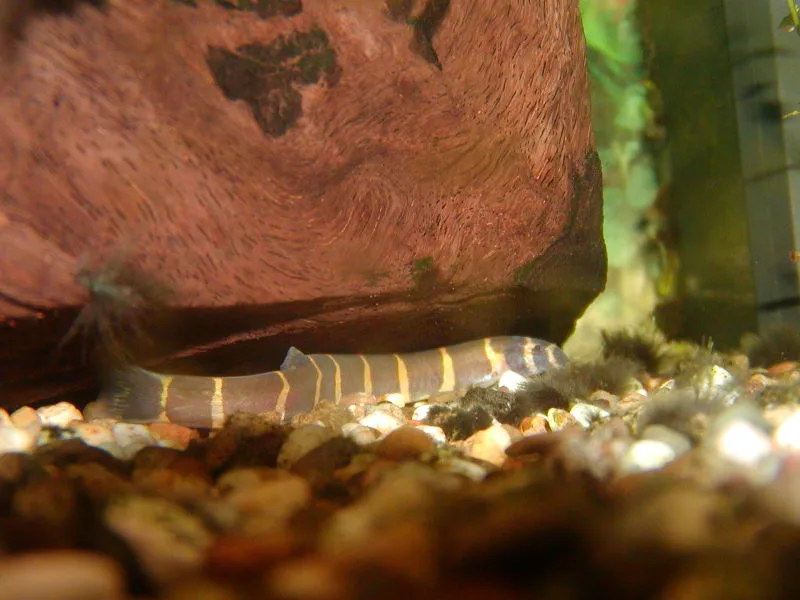
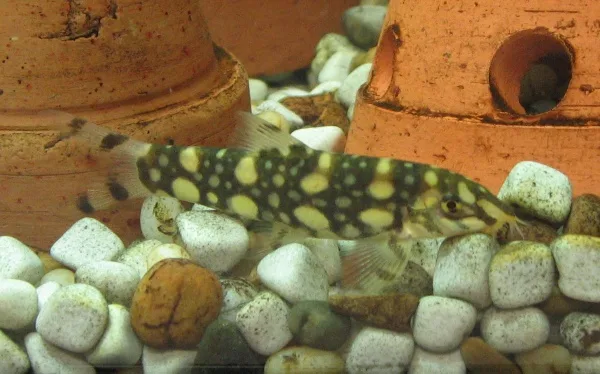
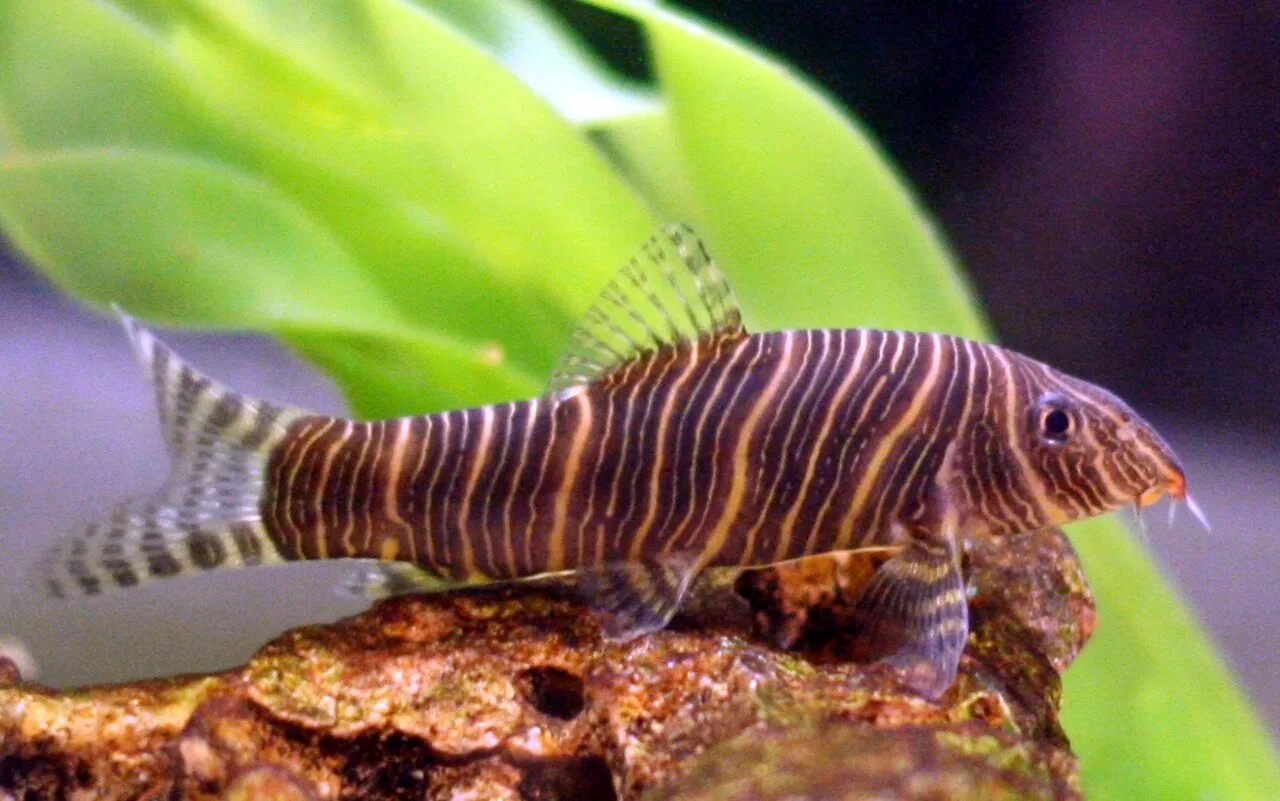
Pangio semicincta reaches about 8 to 10 cm and stays pencil-thin. The dark bands often do not run around the whole body, which is where the name half-banded comes from. That separates it from the spotted kuhli loach Pangio kuhlii, with which it is mixed in the trade. The barbels are short. The body is built to thread through leaf litter and fine gravel.
The species is active by day only when it feels safe. Otherwise it comes out at dusk and after feeding. An empty, bright tank shows an empty bottom for weeks, although the fish are there.
Origin & habitat
This describes the origin, not how to furnish the aquarium.
Slow, plant- and leaf-rich waters of the Malay Peninsula and Sumatra. A soft bottom, hiding places, little glaring light. The origin stays coarse. A sharp gravel bottom injures the barbels and the belly.
Care
Layout
24 to 28 °C, pH 6 to 7. A group from six, tanks from about 60 litres with a lot of floor area. Fine sand, leaf litter, tight tubes, roots, dim light. The cover has to be close. The fish squeeze through small gaps at the filter and at the rim of the lid.
Company
Calm fish that do not dig the bottom over. Large cichlids and hungry barbs eat the loaches or stress them so that they never come out. Shrimp are sometimes grabbed by the legs. Adult shrimp usually stay unharmed.
Diet
Frozen food and tablets that lie on the sand. Mosquito larvae, brine shrimp, a fine granule in the evening. Food that is eaten by the tetras in the first seconds does not reach the loaches. A feed after the light goes out is often the only one that arrives.
Behavior
A group. Single fish become shy to the point of invisibility. The animals often lie several together in one tube. That is normal and not a lack of space, as long as further tubes are free. A fish that lies on its side in the open sand by day and no longer reacts to disturbance is ill. A short rest in the group is not.
Reproduction
Breeding in the aquarium is rare. The fish spawn as a group in fine plant growth, without brood care. For keeping, the visible, fed group is what counts, not a breeding setup.
More species in this group
Sources & assertions 1
Wikipedia (deutsch)
Texte in Aquarisma sind eigenständig formuliert. Zahlenbereiche folgen den verlinkten Wikipedia-Artikeln, Lizenz CC BY-SA.
- Haltungsbereich nach https://de.wikipedia.org/wiki/Pangio_semicincta