
Dwarf oto
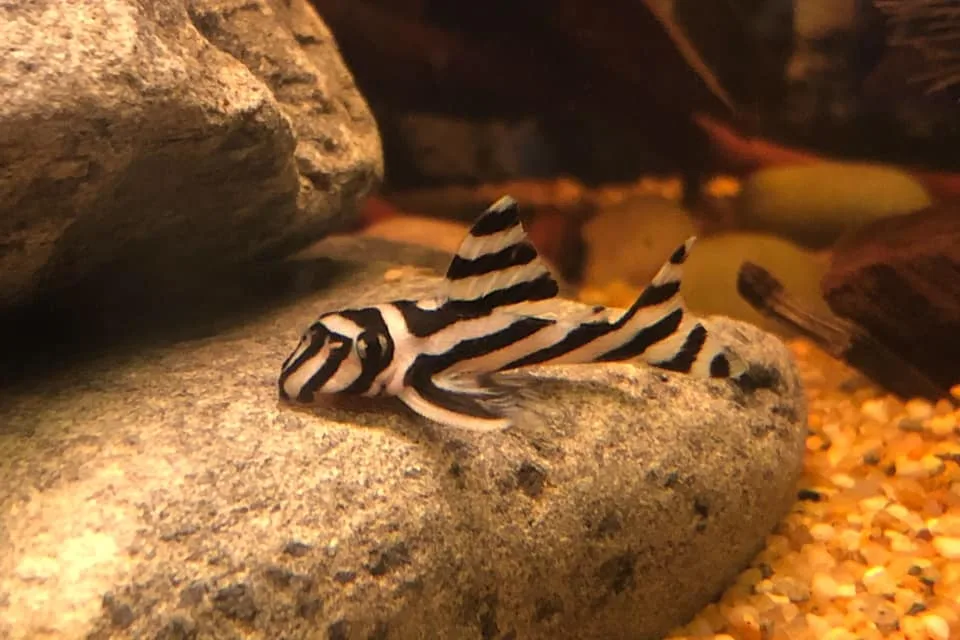
Otocinclus vittatus
22 views
The source is the genus article on Otocinclus, not a species monograph of Otocinclus vittatus. Genus statements are not presented as measurements of this species.
2 min read · 340 words
Quick facts
The profile values are backed by one source.
Home & range
Every named country gets a frame and a circle around known waters in or near that area. Hotspots are orientation, not collection sites. A filled area is the range only when the source names a particular water body.
Overview
The name Otocinclus combines “ear” and “lattice” and refers to the lattice-like posttemporal bone. The genus contains small armoured catfish. The span of 2.4 cm in O. tapirape to 5.5 cm in O. flexilis is a genus span, not the length of O. vittatus. The older sheet value of four centimetres is not in this text. The body is elongated and slightly flattened in front, and the caudal peduncle is almost rectangular in cross-section. Naked zones interrupt the bony plates on the belly. Like the callichthyid catfishes, Otocinclus are intestinal breathers and can survive in relatively oxygen-poor water if they can reach the surface.
Origin & habitat
This describes the origin, not how to furnish the aquarium.
The genus article does not treat South America west of the Andes as one range for this single species. It lists Brazil, Colombia, Venezuela, Paraguay, Ecuador, Peru and Bolivia for the genus, plus the Amazon and the Río de la Plata. Forest streams and small rivers with dense bank vegetation, driftwood and water plants are described as genus habitat. That is not turned into a country list for O. vittatus.
Care
What is supported is the warning to add the fish only to mature tanks, because biofilm builds slowly at first. The trade advertises them as omnivores and algae eaters. The article calls that a frequent wrong feeding.
Diet
Otocinclus are biofilm grazers. Besides young algae they take plant remains and driftwood, and an important part of the food is the microorganisms living on those surfaces. A meat-only diet does not follow from the text. Spinach or courgette are not named in the article.
Behavior
The genus article does not state a group size. Intestinal breathing requires that the surface stays reachable.
Reproduction
The genus responds to changes in air pressure and temperature followed by water rich in suspended matter, as in the rainy season. Males then chase females. Eggs are laid between stones and roots and fertilised by the males. Larvae hatch after about three to four days and swim free a few days later. Breeding in captivity is rare. Trade animals are almost exclusively wild-caught.
More species in this group

Sources & assertions 1
Wikipedia (deutsch)
Texte in Aquarisma sind eigenständig formuliert. Zahlenbereiche folgen den verlinkten Wikipedia-Artikeln, Lizenz CC BY-SA.
- Haltungsbereich nach https://de.wikipedia.org/wiki/Otocinclus