
Petricola catfish
Synodontis petricola
17 views
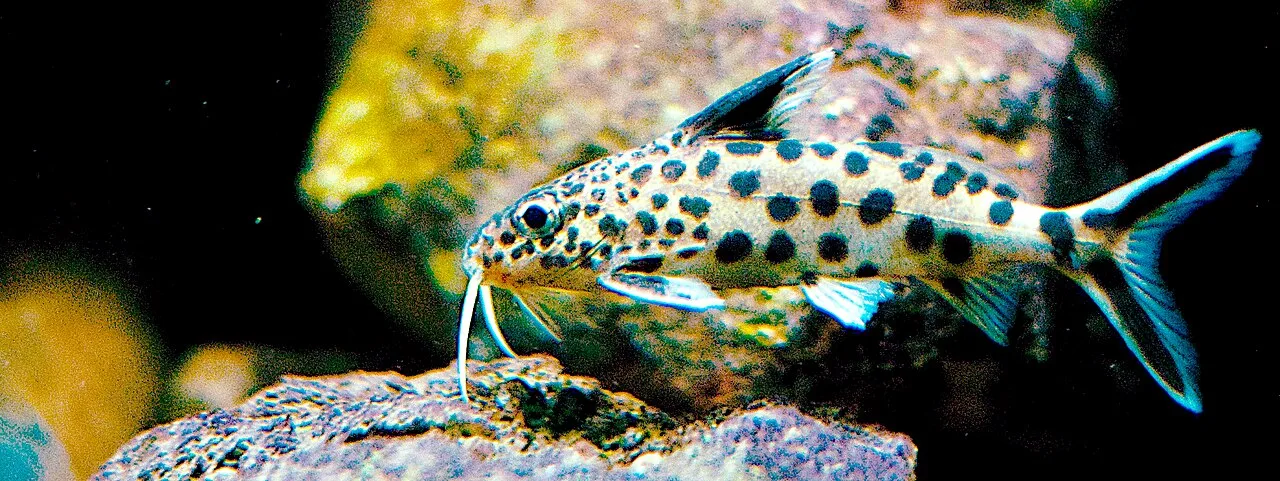
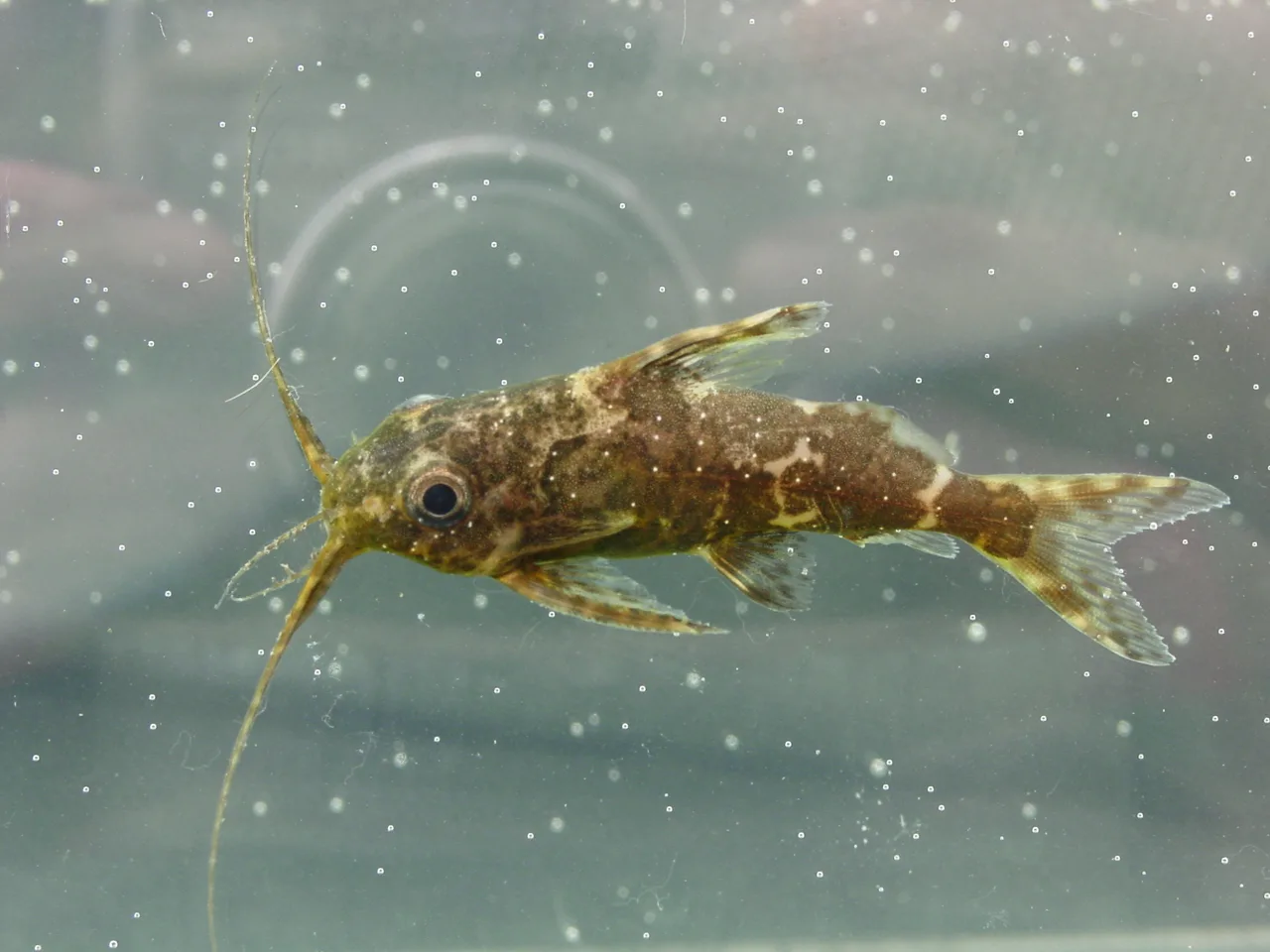
A small squeaker catfish from Lake Tanganyika with dark spots. It needs hard water and hiding places and is not a glass cleaner.
2 min read · 313 words
Quick facts
The profile values are backed by one source.
Home & range
Every named country gets a frame and a circle around known waters in or near that area. Hotspots are orientation, not collection sites. A filled area is the range only when the source names a particular water body.
Overview
Synodontis petricola reaches about 10 cm. The body is pale with many dark spots, the fins often with a pale edge. The barbels are long. The species is clearly smaller than many other Synodontis and therefore one of the few that fit a medium Tanganyika tank. It is still not an otocinclus and does not eat algae as its main food.
Juveniles are shy and come out only at dusk. In a tank with many cracks they also stand at the cave mouth by day.
Origin & habitat
This describes the origin, not how to furnish the aquarium.
Rock and transition zones of Lake Tanganyika. Clear, alkaline, oxygen-rich water. The lake is the origin. Soft acidic water is the wrong chemistry, even if the fish survive for a while.
Care
Layout
24 to 27 °C, pH 8 to 9, hard. From about 150 litres and 80 cm for a small group, with rock cracks, tubes and sand. More hiding places than fish. Current and oxygen must not be scarce.
Company
Other Tanganyika species. Shell dwellers below and leptosoma above can fit if the petricola has tubes of its own. Malawi mbuna are the poorer mix. Shrimp are eaten. The catfish digs little, but it pushes sand in front of the entrance.
Diet
Frozen food, granules and tablets that sink into the cave mouths. Mosquito larvae, brine shrimp. Food only at the surface misses it. Feed in the evening, when the tetras or mouthbrooders are less dominant.
Behavior
Social at dusk, cave-bound by day. Several fish share a large crack, but they argue over the best tube if too few exist. A fish that tumbles in open water all the time usually has a problem with oxygen or with the water chemistry.
Reproduction
The species is a cuckoo spawner: it gives eggs to mouthbrooders that guard a brood. That matters in a Tanganyika species tank and is not a behaviour to expect in a community tank with angelfish. Deliberate breeding is a matter for experienced keepers.
More species in this group

Sources & assertions 1
Wikipedia (deutsch)
Texte in Aquarisma sind eigenständig formuliert. Zahlenbereiche folgen den verlinkten Wikipedia-Artikeln, Lizenz CC BY-SA.
- Haltungsbereich nach https://de.wikipedia.org/wiki/Synodontis_petricola