
Water fern
Azolla filiculoides
15 views
A tiny floating fern that turns red in a lot of light and closes an area in days. It must not be released.
2 min read · 262 words
Care profile
The care profile is backed by one source.
Lighting
High lightThe profile says high light.
CO₂
No CO₂Added CO₂ is not required.
Growth rate
FastThe profile describes fast growth.
Nutrient demand
MediumNutrient demand is moderate.
Beginner friendly
Beginner friendlyThe published judgement is suitable for beginners.
- Attach
Placement in the aquarium
Only the stored position or growth form is highlighted, not every possible layout.
- Water surface
Home & range
Every named country gets a frame and a circle around known waters in or near that area. Hotspots are orientation, not collection sites. A filled area is the range only when the source names a particular water body.
Botanical overview
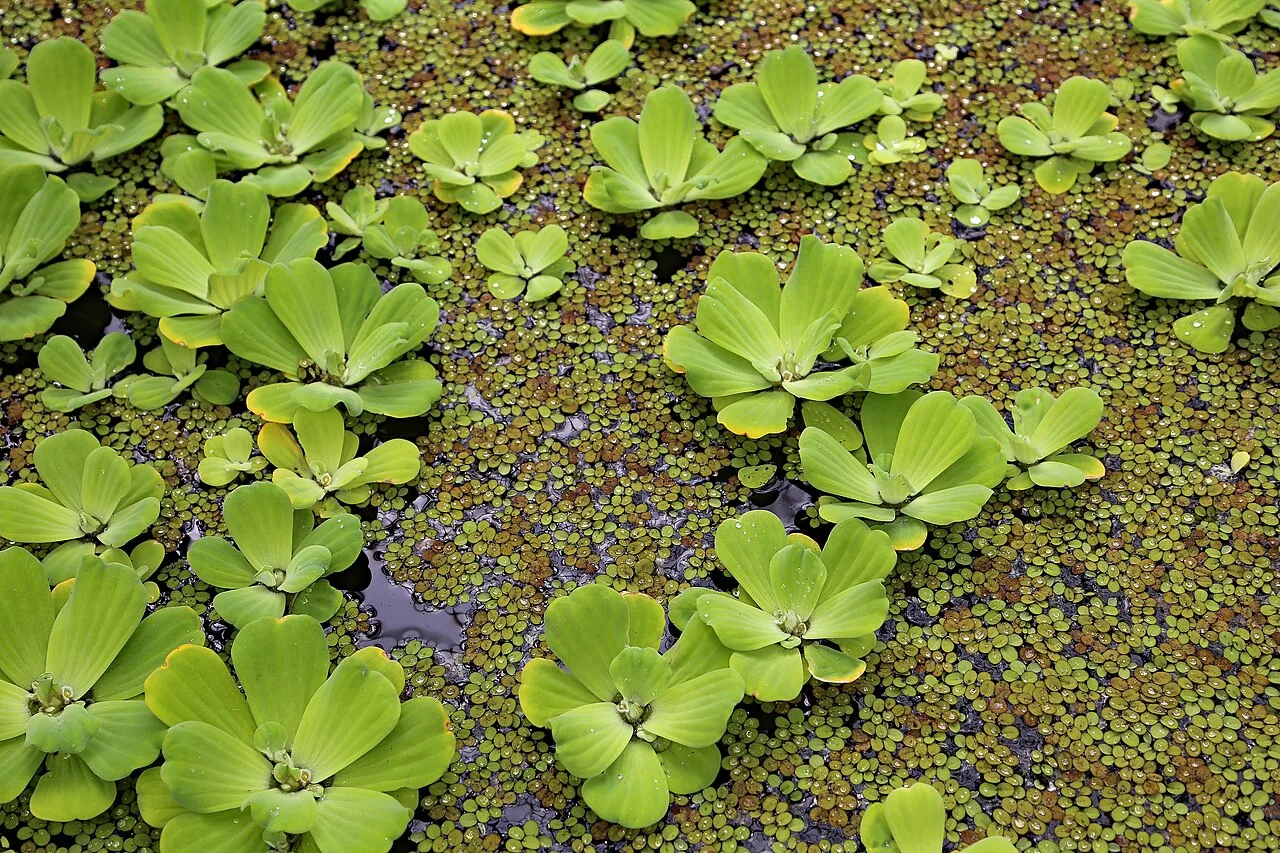
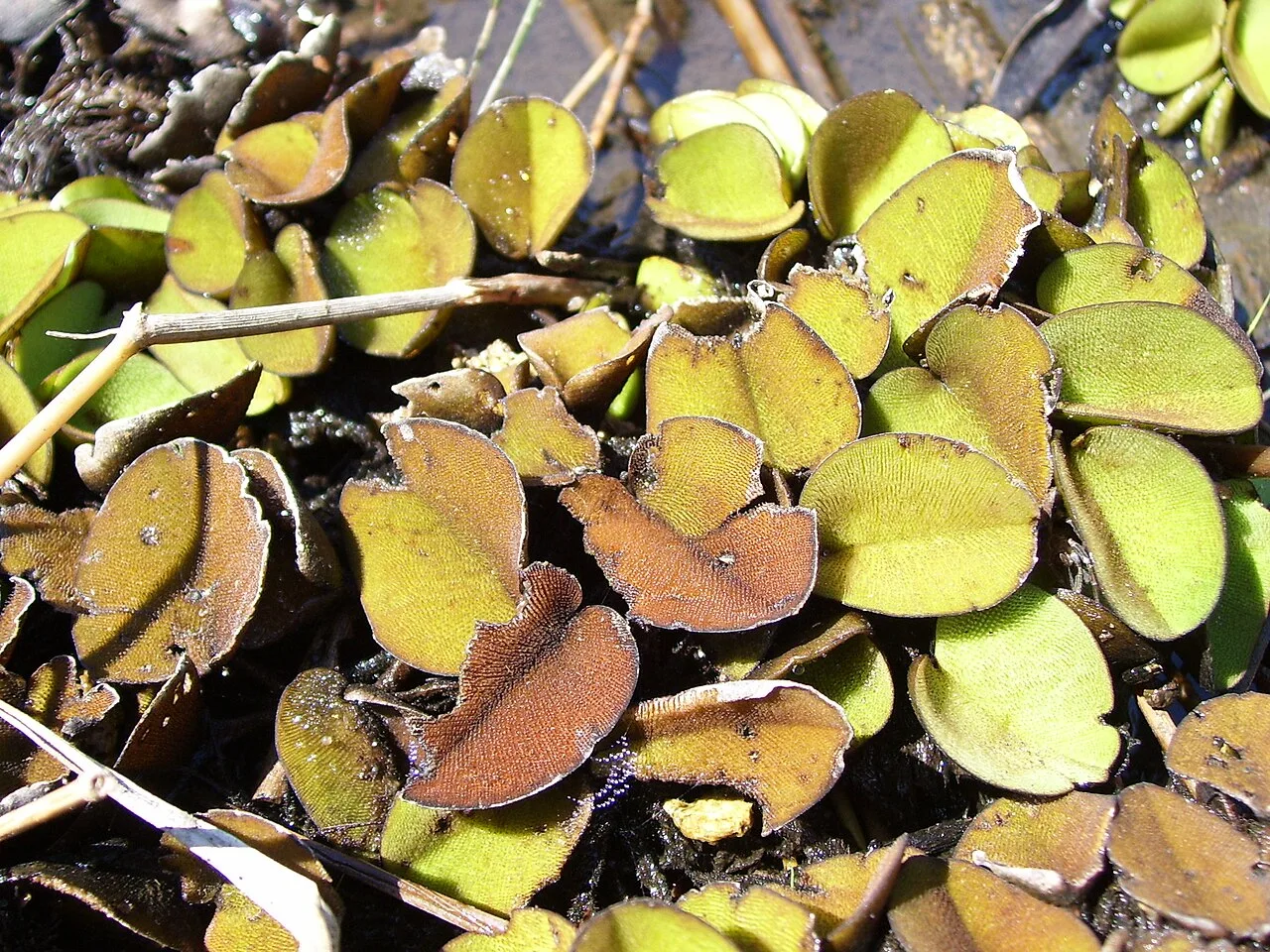
Azolla filiculoides forms small, overlapping leaflets on the water surface. In little light it stays green. In a lot of light and with little nitrogen it turns red. The individual plants are a few millimetres across and multiply by division so fast that a handful covers the tank in a week.
It is not Java moss and not Riccia. It floats and does not attach to wood. In Europe it is naturalised and a problem. Aquarium leftovers belong in the waste.
Natural origin
This describes the origin, not how to furnish the aquarium.
Still waters of the Americas, now introduced further. The origin of the species is the Americas, not every ditch in which it now drifts. For the tank the floating cover is what counts.
Light, CO₂ and position
Keeping
High light for the red form, medium light for a green cover. No CO₂ required, 15 to 28 °C. A quiet surface, no strong outlet. The cover has to be limited, or gas exchange and the plants below suffocate.
Use
In a maturing tank it draws nitrogen. That is useful and, at the same time, the reason not to leave it unlimited. Labyrinth fish use the cover. A lawn below it does not.
Growth and trimming
Harvest with a net, not only when everything is dark. Red colour with green growth often means a lot of light and scarce nitrogen, not a shortage one has to push away with still more fertiliser. If it turns yellow and dissolves, the water is too clean or too moving.
Propagation
Every fragment keeps growing. That is why the waste, and not the drain. One forgotten plant in a bucket is enough to colonise a natural water.
More species in this group
Sources & assertions 1
Wikipedia (deutsch)
Texte in Aquarisma sind eigenständig formuliert. Zahlenbereiche folgen den verlinkten Wikipedia-Artikeln, Lizenz CC BY-SA.
- Haltungsbereich nach https://de.wikipedia.org/wiki/Azolla_filiculoides