
Blyxa japonica
Blyxa japonica
19 views
A grass-like rosette from East Asia that turns bronze under strong light and falls apart without CO₂.
2 min read · 321 words
Care profile
The care profile is backed by one source.
Lighting
High lightThe profile says high light.
CO₂
High CO₂Added CO₂ is part of the described culture.
Growth rate
MediumThe profile describes moderate growth.
Nutrient demand
HighNutrient demand is high.
Beginner friendly
AdvancedThe published judgement is demanding.
- Runners
Placement in the aquarium
Only the stored position or growth form is highlighted, not every possible layout.
- Midground
Home & range
Every named country gets a frame and a circle around known waters in or near that area. Hotspots are orientation, not collection sites. A filled area is the range only when the source names a particular water body.
Botanical overview
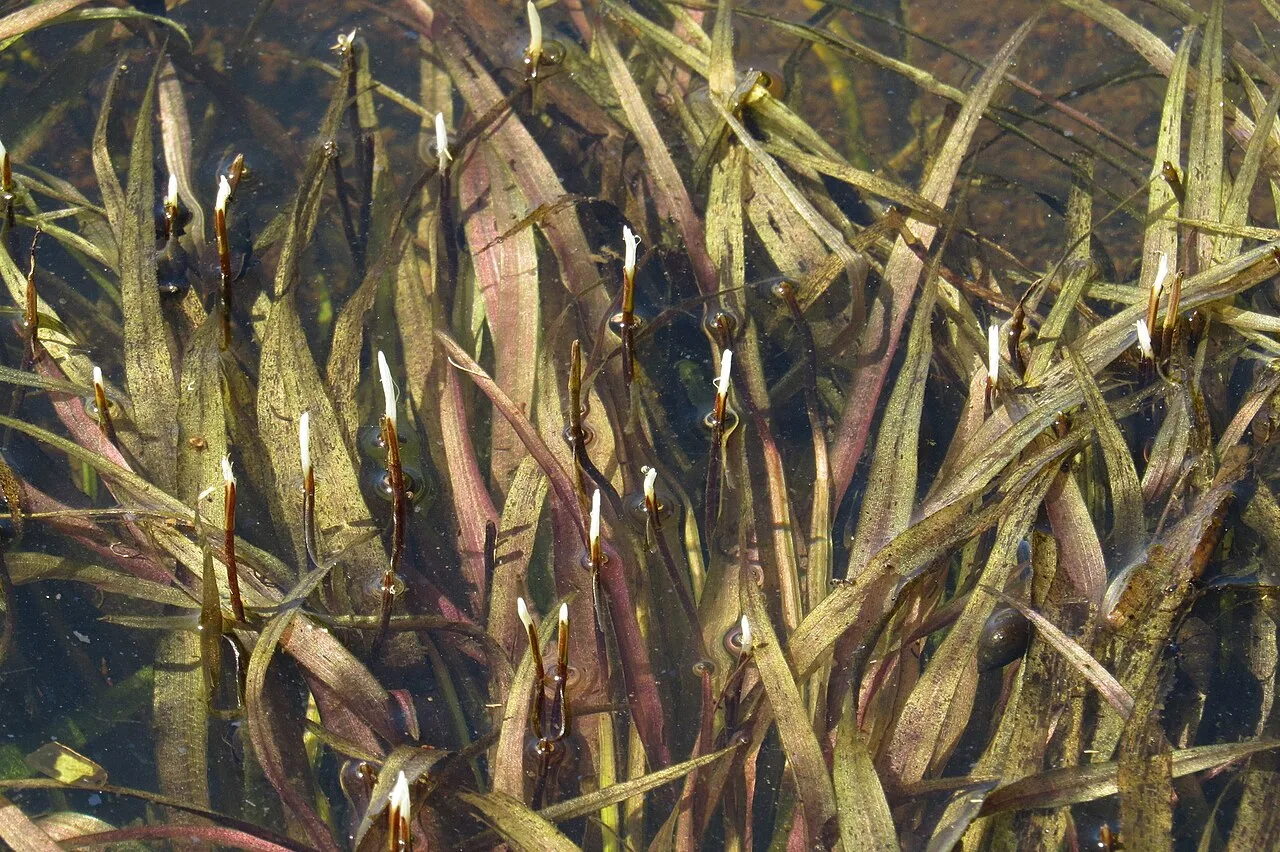
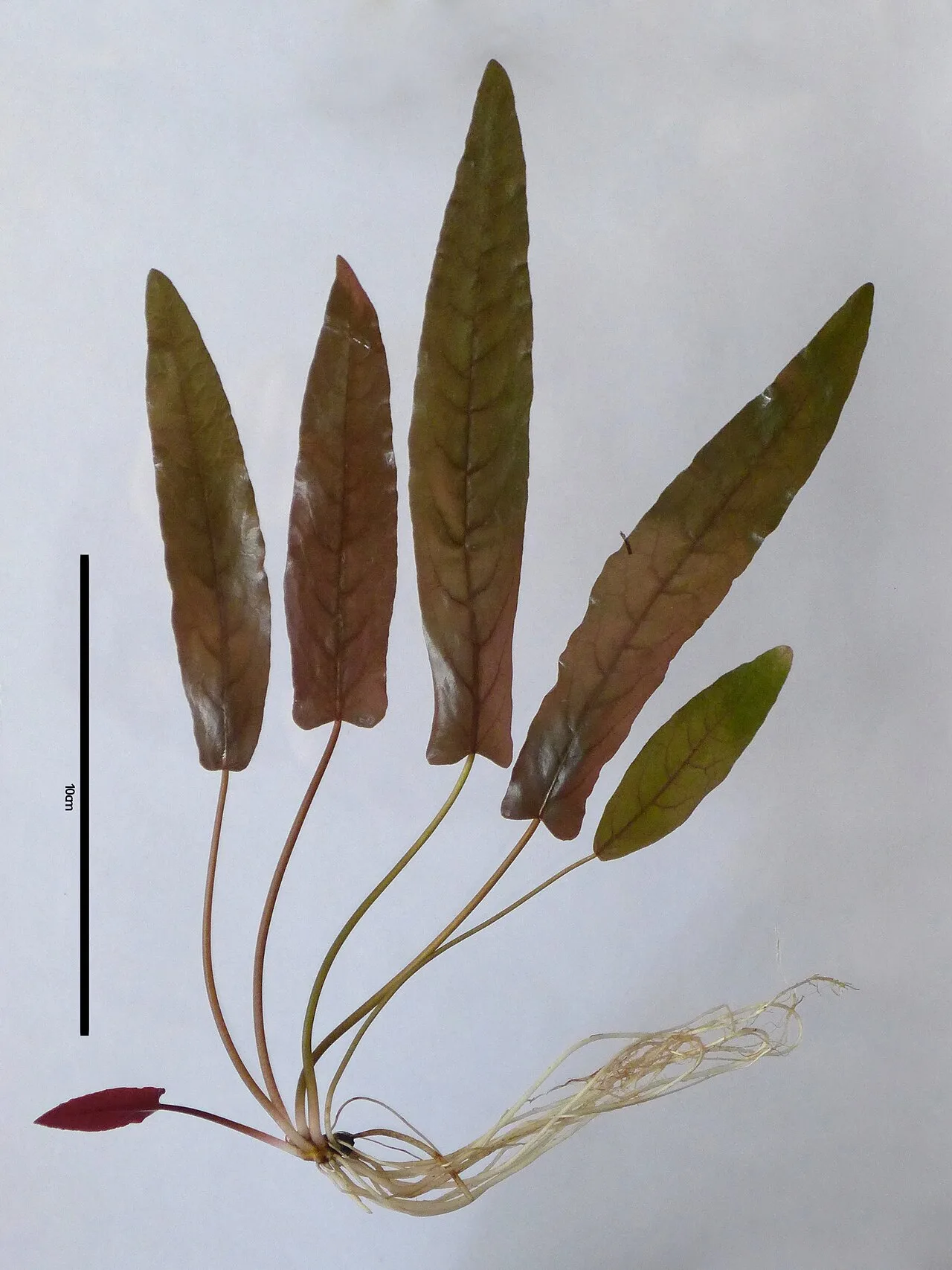
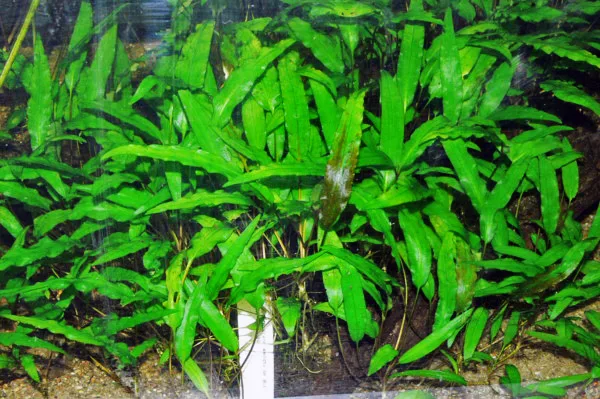
Blyxa japonica forms a rosette of narrow leaves that arch outward. With a lot of light and CO₂ the tips become red-brown. In shade everything stays green and stretched. The plant is not a grass in the sense of a runner lawn. Each rosette stays a bush that is propagated by division.
The leaves are brittle. Transport and coarse tweezers cost the tips. After planting the plant often looks worse than in the pot and recovers if the conditions really are right.
Natural origin
This describes the origin, not how to furnish the aquarium.
Rice fields, ditches and shallow, bright waters in Japan, China and the neighbouring region. Warm in summer, bright, nutrient-rich. The countries stay a coarse origin. The bronze colour is the sunny form, not a separate clone that can be kept without light.
Light, CO₂ and position
Demand
High light, CO₂, 22 to 28 °C, regular fertilising. Midground, in small groups, each rosette on its own, not as an impenetrable lump. The substrate may be rich. The plant also takes from the water column. Without CO₂ the leaves become long and pale and fall from the outside.
Stability
Blyxa reacts to large jumps. A water change that shifts temperature and hardness hard, or a light that is doubled from one day to the next, costs the outer leaves. Better constantly medium-high than glaring and dark in turn.
Growth and trimming
Take off outer leaves that turn brown and slimy, at the base. Do not pull the centre apart. There is no cut-back like a stem plant. If the rosette goes bare below and tips over, it is divided and the parts that are still firm are replanted.\n\nThe bronze colour fades when nitrate is very high and the light is only medium. Check the light and the planting density first, then the fertiliser.
Propagation
Division of the rosette. The crown is divided with a clean cut so that each piece keeps leaves and roots. Set the pieces at once. Torn single leaves do not root.
More species in this group

Sources & assertions 1
Wikipedia (deutsch)
Texte in Aquarisma sind eigenständig formuliert. Zahlenbereiche folgen den verlinkten Wikipedia-Artikeln, Lizenz CC BY-SA.
- Haltungsbereich nach https://de.wikipedia.org/wiki/Blyxa_japonica