
Bala shark
Balantiocheilos melanopterus
13 views
A slender schooling fish with black fin edges. It grows large, jumps and does not belong in a small community tank.
2 min read · 222 words
Quick facts
The profile values are backed by one source.
Home & range
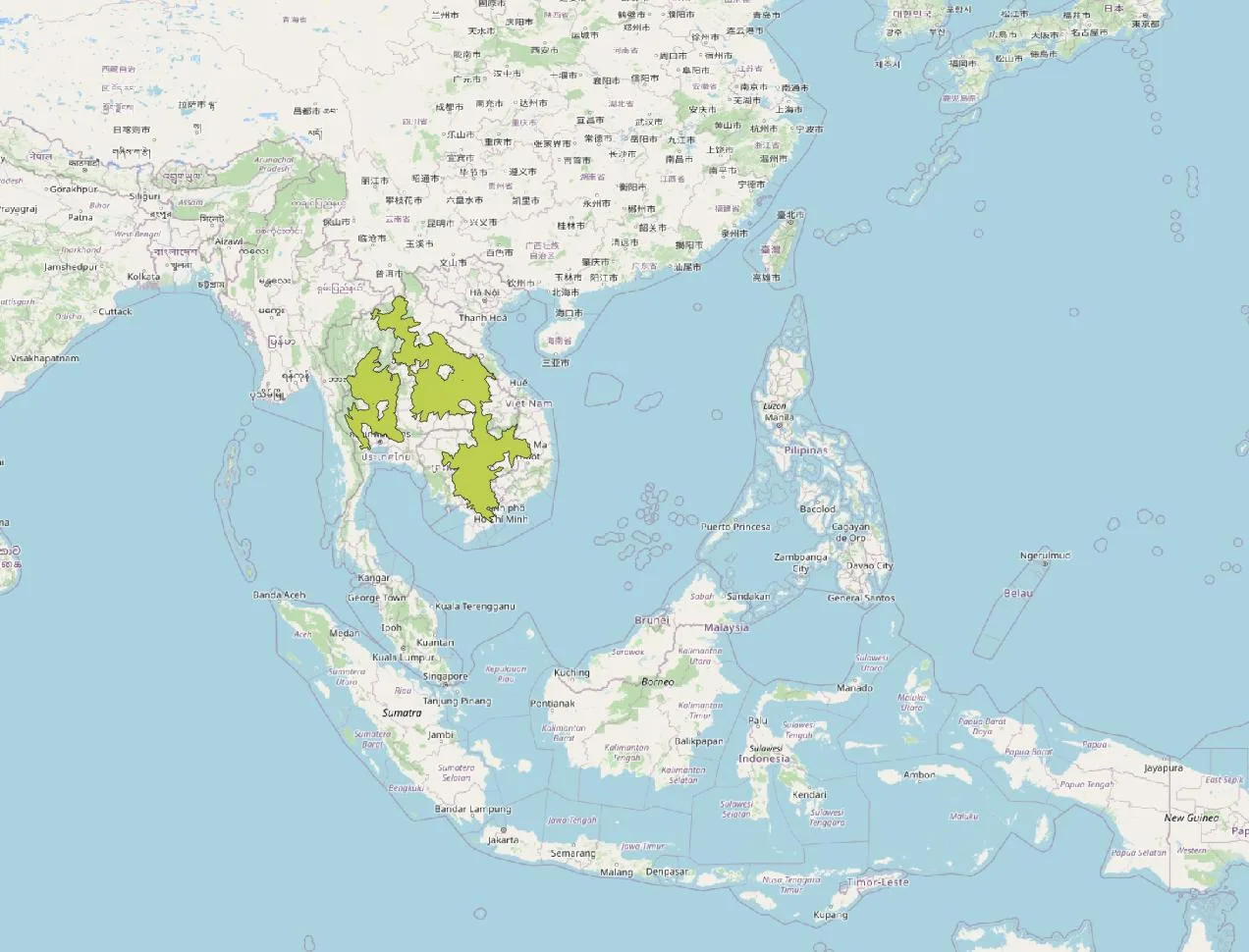
Every named country gets a frame and a circle around known waters in or near that area. Hotspots are orientation, not collection sites. A filled area is the range only when the source names a particular water body.
Overview
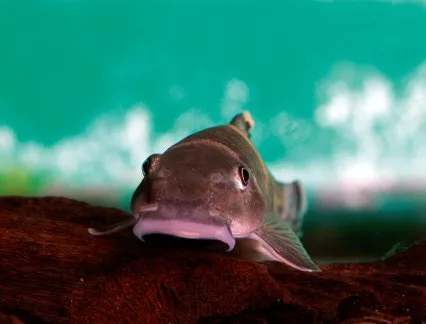
The bala shark reaches about 30 cm. The body is silvery, the fins carry a black edge. The mouth is underneath. Juveniles are sold as small, peaceful schooling fish and then grow over years into a tank they never had.
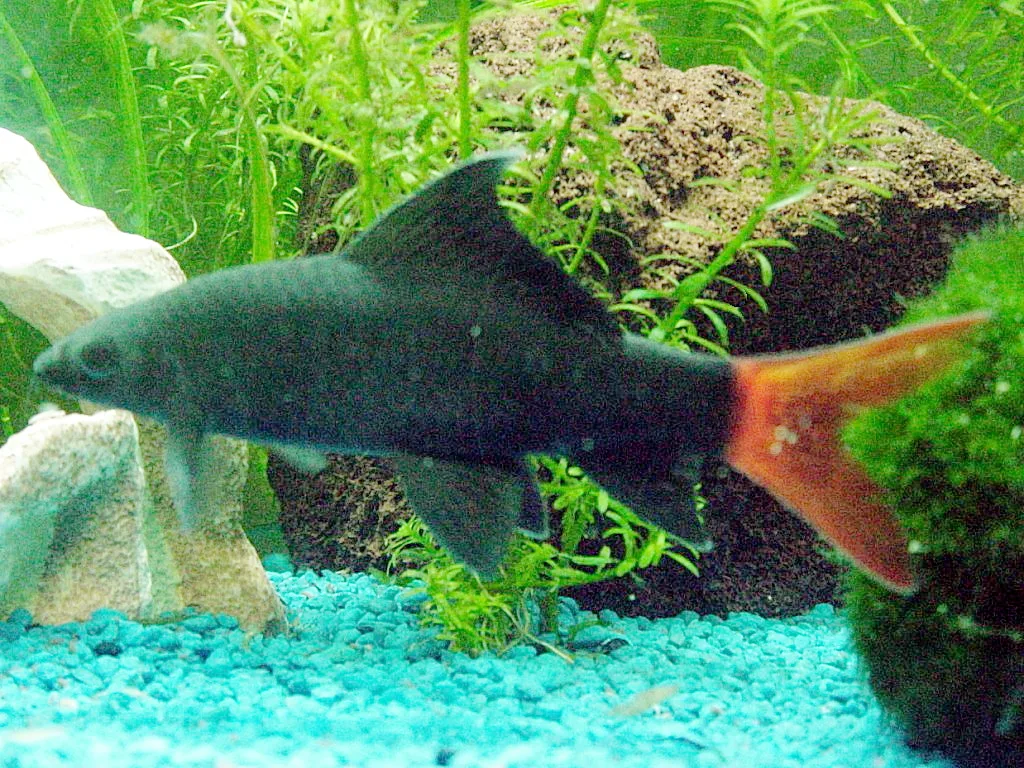
It is not a shark and not a rainbow shark. The body is torpedo-shaped, the fins are not red. The species stands in midwater and jumps into the cover when startled.
Origin & habitat
This describes the origin, not how to furnish the aquarium.
Rivers of Southeast Asia, now rare in many stocks. The origin stays coarse. Aquarium fish should be captive-bred. The habitat is wide and rich in oxygen.
Care
Size
24 to 28 °C, pH 6.5 to 7.5. A group from six, tanks from about 500 litres and over 150 cm, with a cover, current and an open run. A single fish becomes shy.
Company
Other large, peaceful fish. Small species are eaten by accident once the mouth is large enough. The bala shark itself is not aggressive, only large and fast.
Diet
A prepared food that arrives in midwater. Granules, flakes, frozen food, a plant share. Several feeds. They are not algae eaters.
Behavior
A close, fast school. Too few fish lose their calm. The cover is mandatory. A gap at the filter is enough for a jump.
Reproduction
Egg scatterer. Breeding in a private tank is rare. The keeping is decided by the tank size, not by a breeding trick.
More species in this group
Sources & assertions 1
Wikipedia (deutsch)
Texte in Aquarisma sind eigenständig formuliert. Zahlenbereiche folgen den verlinkten Wikipedia-Artikeln, Lizenz CC BY-SA.
- Haltungsbereich nach https://de.wikipedia.org/wiki/Haibarbe