
Tape grass
Vallisneria spiralis
12 views
The text is the genus article. Vallisneria spiralis is one of about 14 species and is named there as invasive in some places, without a species monograph.
3 min read · 354 words
Care profile
The care profile is backed by one source.
Lighting
Medium lightThe profile says moderate light.
CO₂
Low CO₂Added CO₂ is stored as helpful, not mandatory.
Growth rate
FastThe profile describes fast growth.
Nutrient demand
MediumNutrient demand is moderate.
Beginner friendly
Beginner friendlyThe published judgement is suitable for beginners.
- Rhizome
- Runners
- In some places the species is invasive and must not be released from the aquarium into natural waters.
Placement in the aquarium
Only the stored position or growth form is highlighted, not every possible layout.
- Background
Home & range
Every named country gets a frame and a circle around known waters in or near that area. Hotspots are orientation, not collection sites. A filled area is the range only when the source names a particular water body.
Botanical overview
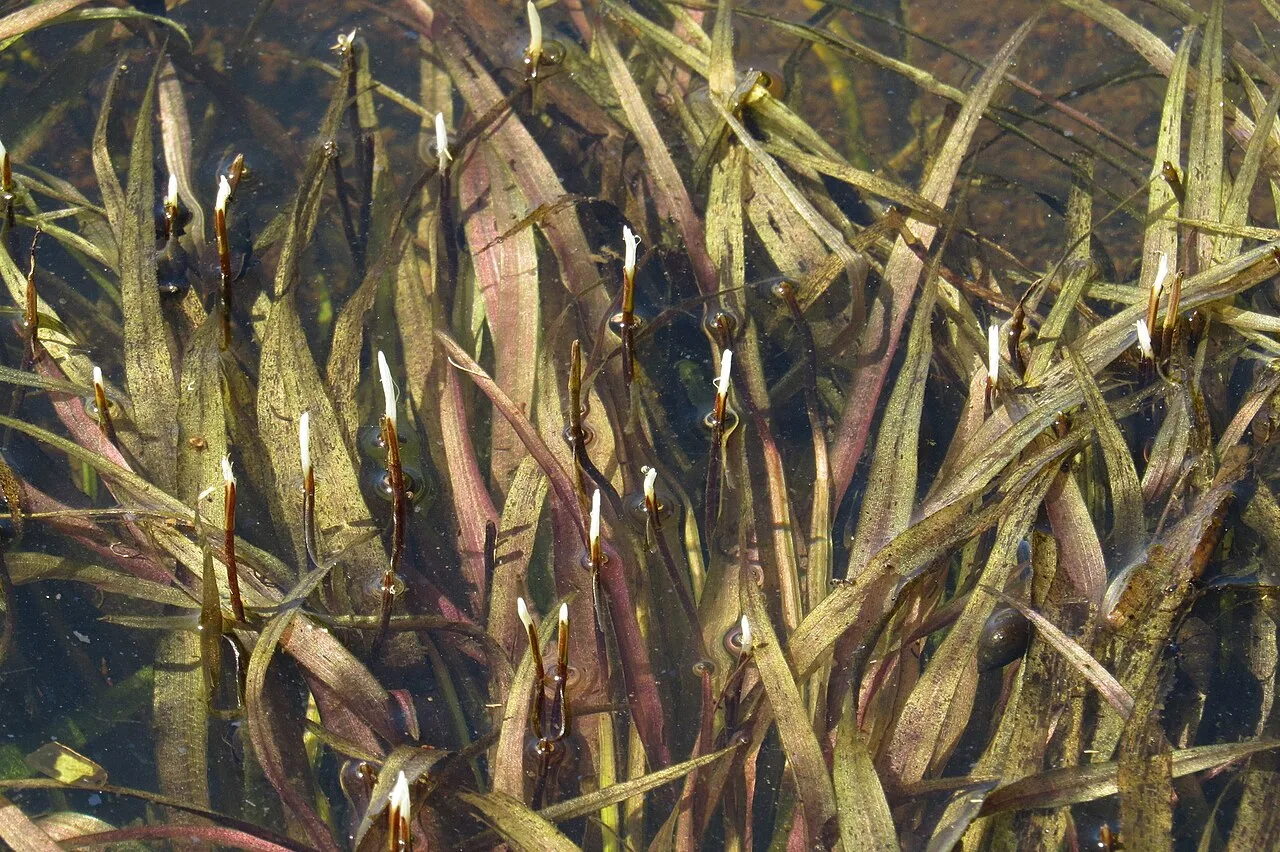
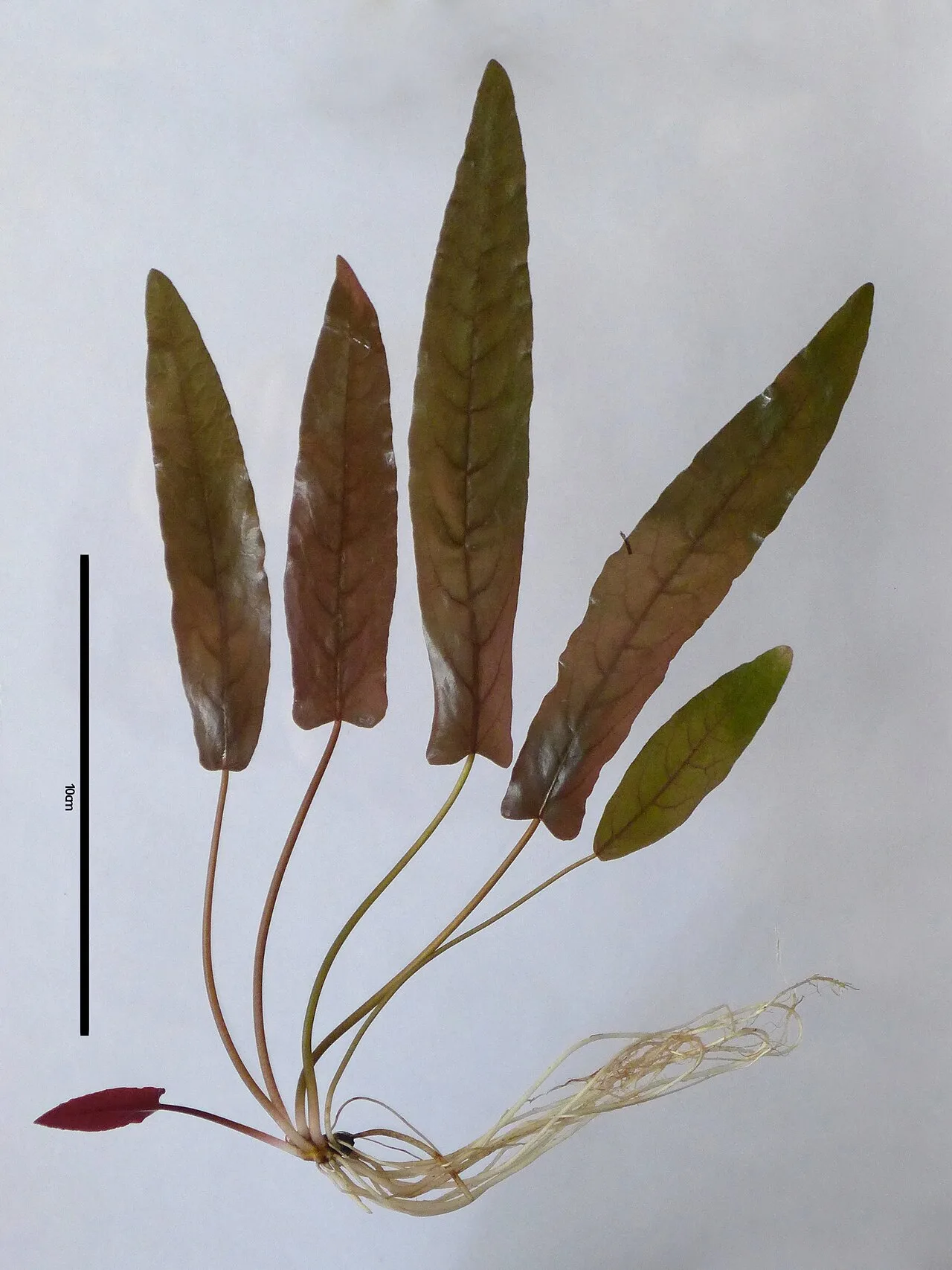
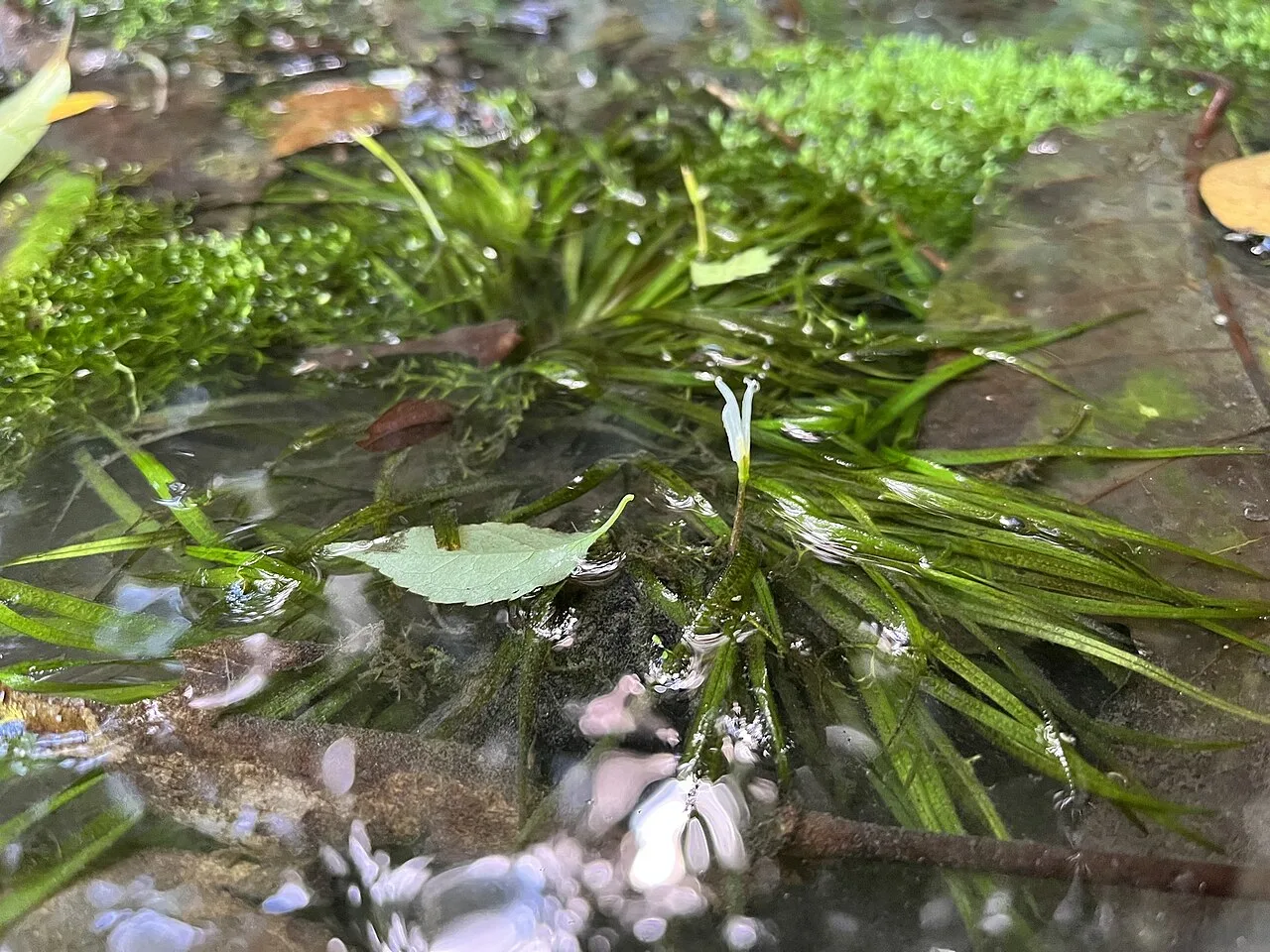
Vallisnerias are dioecious frogbit plants. The leaves are strap-shaped and basal. Stands form by rhizomes or runners. Male flowers detach and float to the surface. After fertilisation the scape coils and holds the fruit under the surface. That is the process the genus is named for, not a trimming measurement.
Natural origin
This describes the origin, not how to furnish the aquarium.
The genus grows submerged in fresh and brackish water of the subtropics and tropics almost worldwide. V. spiralis is named as invasive in places including Hawaii, New Zealand and Germany. Those are examples, not a complete country list and not a native map. No countries are added.
Light, CO₂ and position
spiralis. The older scale of 20–28 °C, medium light, low CO₂ and fast growth remains the previous sheet. Strap leaves that fold at the surface are not described as a care mistake. In some places the species is invasive and must not be released from the aquarium into natural waters.
Ribbon and runners
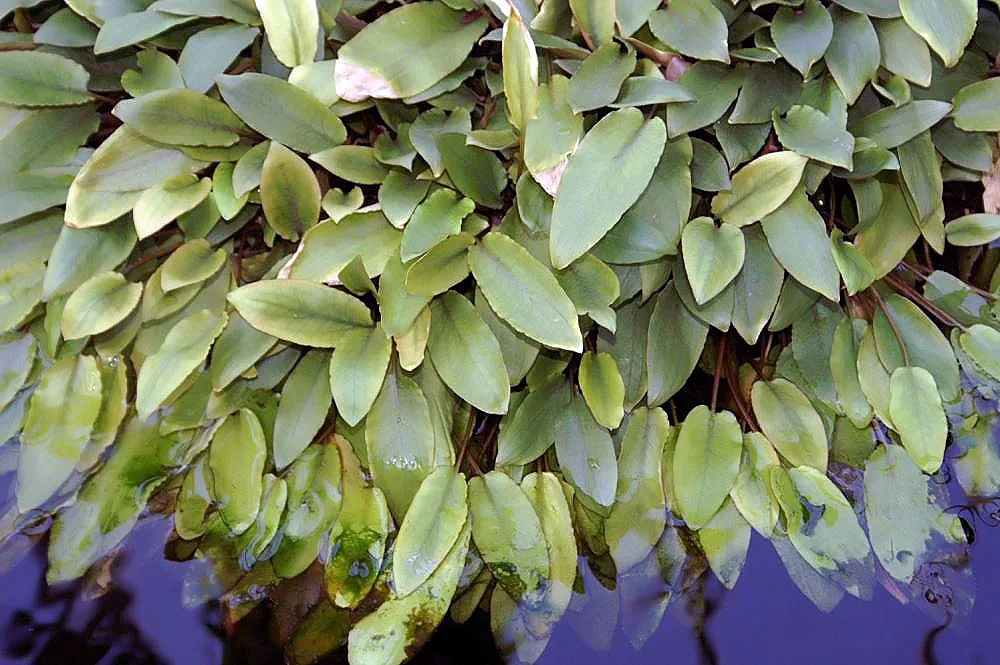
Tape grass is a background plant that forms a stand by runners. The leaves grow as long as the tank is high and then lie on the surface. That shades everything below. Anyone who wants the foreground clear pulls runners that wander forward in time, and does not shorten every leaf to an artificial height, because the cut edge turns brown and does not keep growing.
A nutrient-rich substrate matters more than a high dose of CO₂. Without food in the substrate the leaves stay narrow and pale, even in strong light.
Growth and trimming
Runners cover the bottom. How far they are cut is not in the text.
Further care
Populations in Florida, Alabama, Mississippi and Central America can carry up to 30 female flowers in one spathe. The genus norm is one female flower. The sentence does not say this is V. spiralis.
Propagation
Runners and the described water pollination. In the aquarium, vegetative propagation is the practical route. A sowing guide is missing.
Limiting the stand
Daughter plants are separated once they have their own roots. An unlimited stand fills a tank in one summer. Surplus is pulled, not released into a natural water. The species has already been moved into warm regions outside its original range.
More species in this group

Sources & assertions 1
Wikipedia (deutsch)
Texte in Aquarisma sind eigenständig formuliert. Zahlenbereiche folgen den verlinkten Wikipedia-Artikeln, Lizenz CC BY-SA.
- Haltungsbereich nach https://de.wikipedia.org/wiki/Vallisneria