
Amazon sword
Echinodorus grisebachii
14 views
The text is the genus article. Echinodorus grisebachii carries the trade names amazonicus and bleherae there as synonyms, and the proposal Aquarius grisebachii.
3 min read · 368 words
Care profile
The care profile is backed by one source.
Lighting
Medium lightThe profile says moderate light.
CO₂
Low CO₂Added CO₂ is stored as helpful, not mandatory.
Growth rate
MediumThe profile describes moderate growth.
Nutrient demand
HighNutrient demand is high.
Beginner friendly
ModerateThe published judgement sits between easy and demanding.
Placement in the aquarium
Only the stored position or growth form is highlighted, not every possible layout.
- Background
Home & range
Every named country gets a frame and a circle around known waters in or near that area. Hotspots are orientation, not collection sites. A filled area is the range only when the source names a particular water body.
Botanical overview
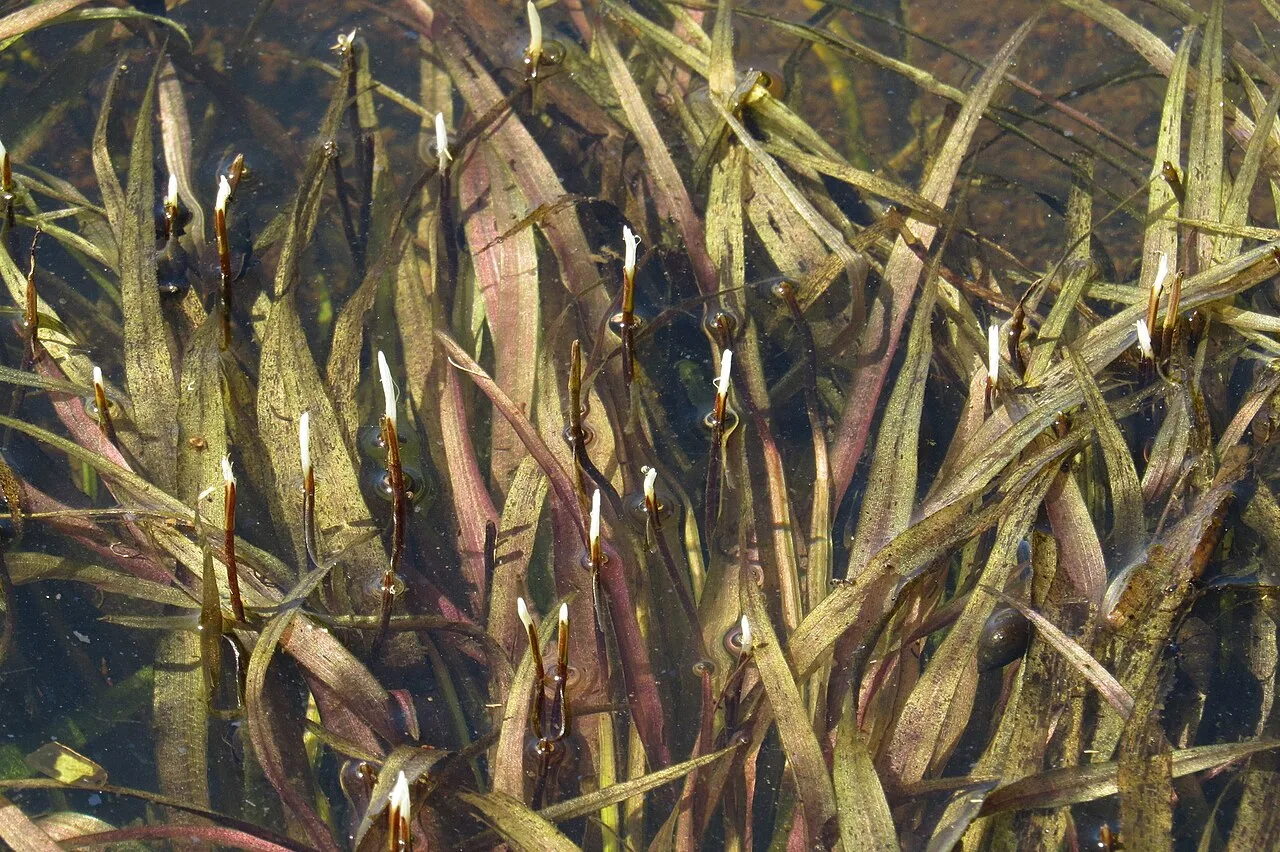
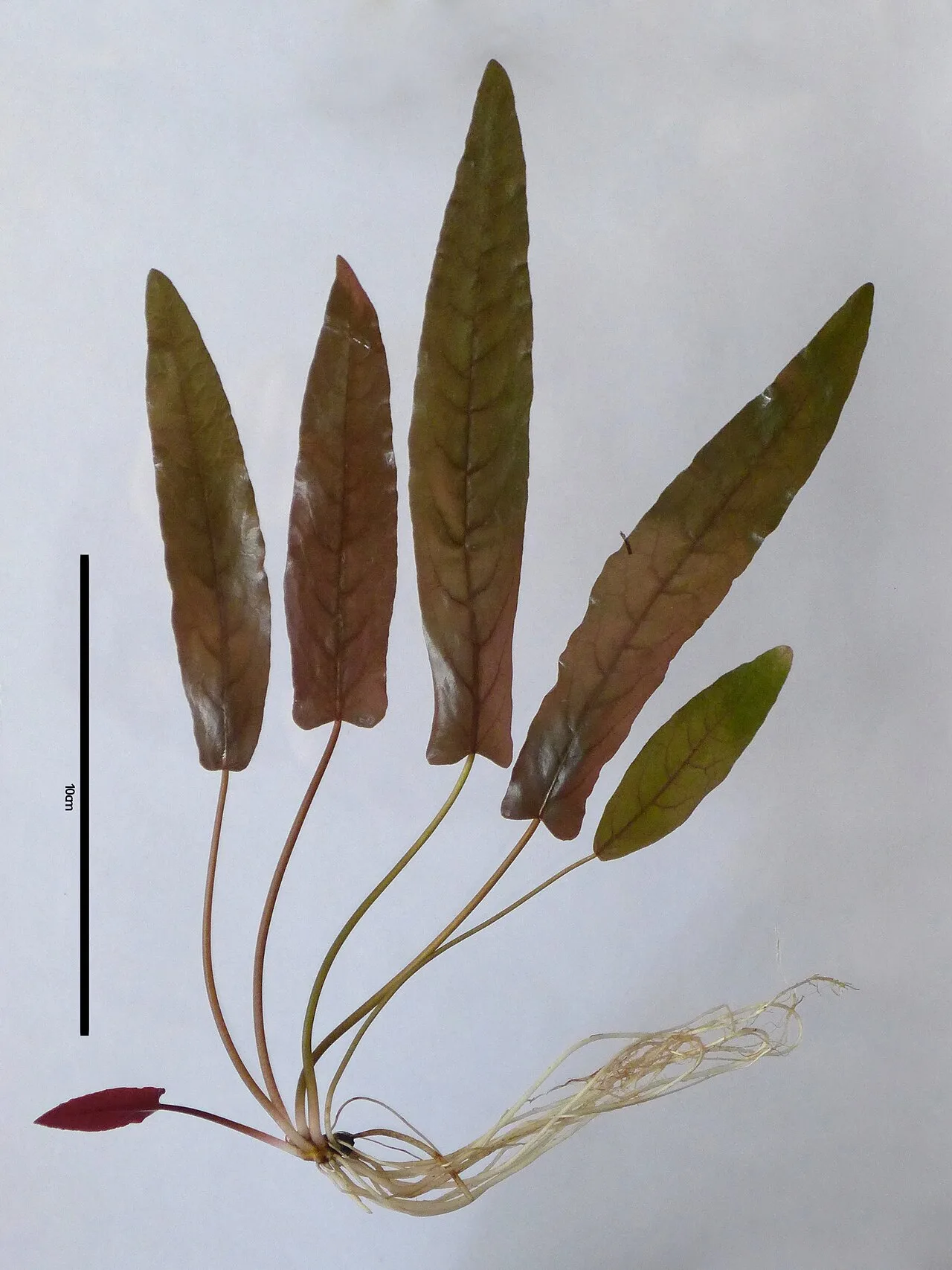
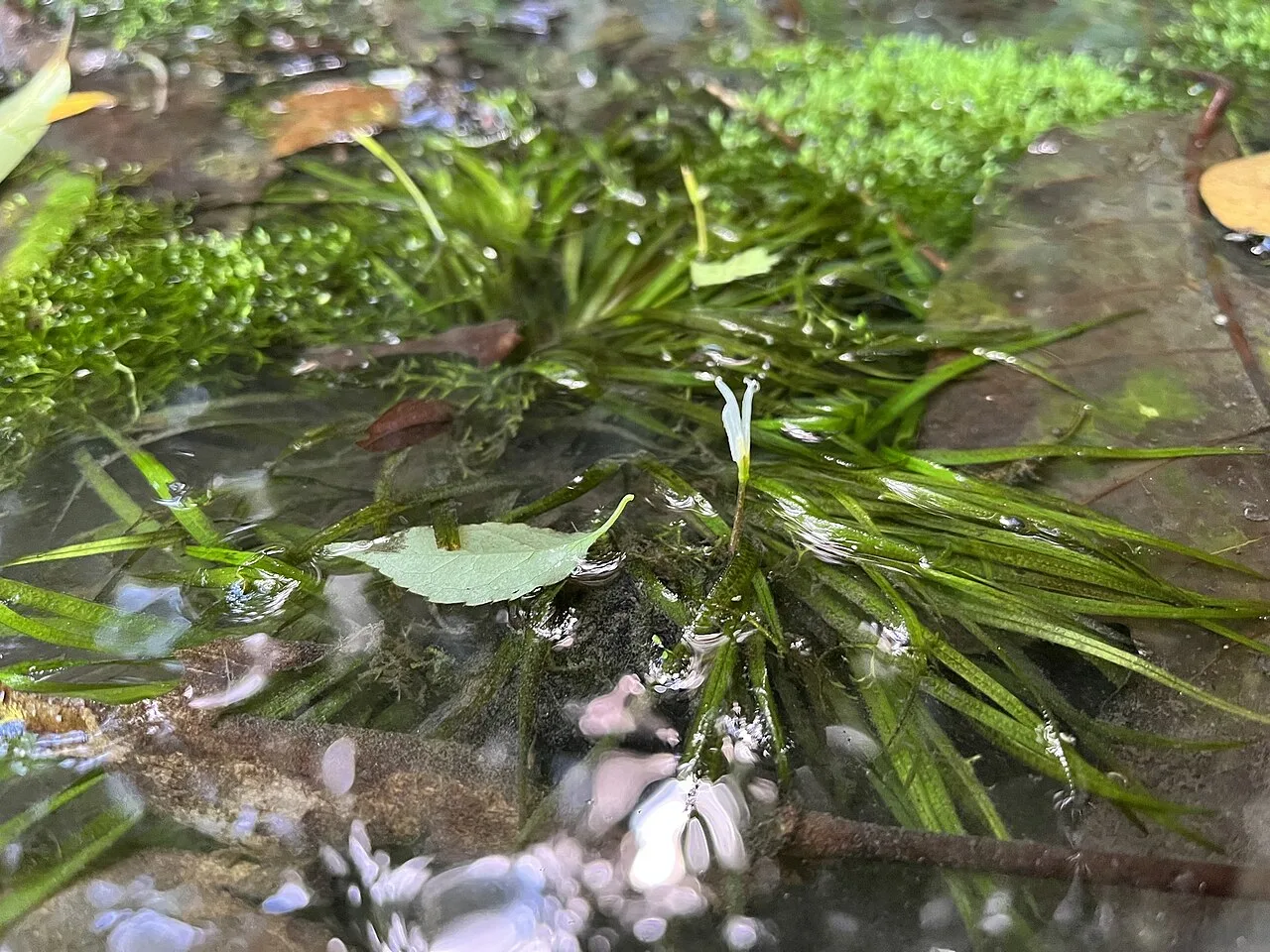
The genus belongs to the water-plantain family. 28 to 32 species are native to the New World. For E. grisebachii the article names the synonyms amphibius, gracilis, amazonicus, bleherae, parviflorus and peruensis, and the variety minor. Christenhusz and Byng place it in Aquarius grisebachii. The catalogue name remains Echinodorus grisebachii. The trade name Amazon sword therefore falls on this synonym group, not on a freely chosen second species.
Natural origin
This describes the origin, not how to furnish the aquarium.
The genus is New World. No individual countries are named for this species in that section. No map is added.
Light, CO₂ and position
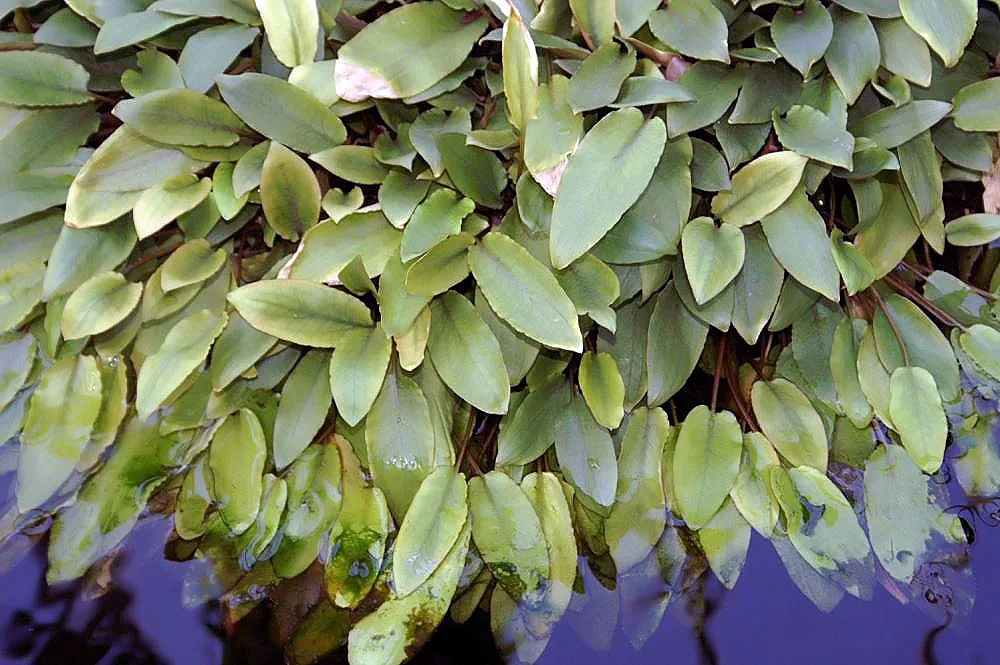
Most species of the genus need large tanks because they grow large. Nurseries have bred smaller cultivars, often with reddish leaves. Wild forms are mostly light to medium green. With space and good light most trade species are undemanding and grow at ordinary living-room temperatures. Some species from temperate regions tolerate about 10 °C briefly. Tropical species cope with about 30 °C. Both are genus statements, not the span of this one species. The older scale of 22–28 °C, medium light, low CO₂ and high nutrient demand remains the previous sheet.
Rosette and space
The Amazon sword needs an open rosette. Neighbouring stems that grow into the centre are cut, or the new leaves stay small. The root ball is large. A shop pot is freed of rock wool and set so that the growing point stays free. Set too deep, the new growth stalls.
Fertiliser capsules in the root zone carry the plant for months. A sword fed only through the water column turns pale and makes small leaves, even though the water measures as nutrient-rich.
Growth and trimming
Removing outer old leaves and not setting the rosette too deep is not stated in the genus section. Room for the rosette follows from the size remark.
Outer leaves
Yellow outer leaves are cut at the stalk right at the rosette. The centre stays untouched. A flower stalk with adventitious plants is a way to propagate and, at the same time, a sign that the plant is sending a lot of energy upward. Anyone who does not want daughters cuts the stalk early and leaves the strength in the clump.
Further care
Reddish cultivars are not separate species. The article separates them from the green wild forms.
More species in this group

Sources & assertions 1
Wikipedia (deutsch)
Texte in Aquarisma sind eigenständig formuliert. Zahlenbereiche folgen den verlinkten Wikipedia-Artikeln, Lizenz CC BY-SA.
- Haltungsbereich nach https://de.wikipedia.org/wiki/Echinodorus