
Water sprite
Ceratopteris thalictroides
15 views
A fast fern that roots or floats. There is no German species page under this name.
3 min read · 450 words
Care profile
The care profile is backed by one source.
Lighting
Medium lightThe profile says moderate light.
CO₂
Low CO₂Added CO₂ is stored as helpful, not mandatory.
Growth rate
FastThe profile describes fast growth.
Nutrient demand
HighNutrient demand is high.
Beginner friendly
Beginner friendlyThe published judgement is suitable for beginners.
Placement in the aquarium
Only the stored position or growth form is highlighted, not every possible layout.
- Water surface
Home & range
Every named country gets a frame and a circle around known waters in or near that area. Hotspots are orientation, not collection sites. A filled area is the range only when the source names a particular water body.
Botanical overview
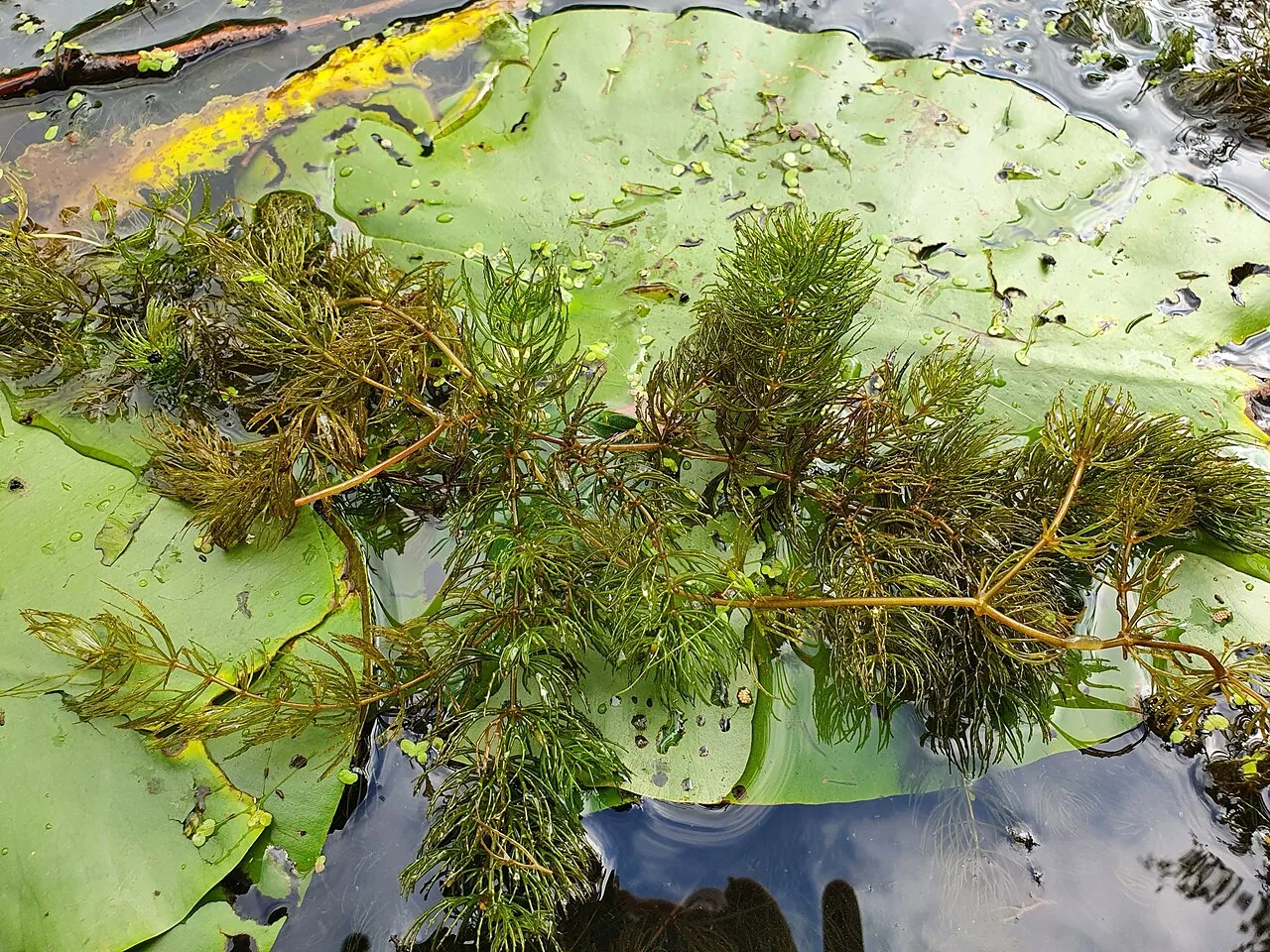
Ceratopteris thalictroides belongs to the pteridoid ferns. Names in the English article include water sprite and Indian fern. In the Philippines it is called pakung-sungay. Stipes of mature plants are 3 to 15 mm thick, spongy and air-filled, 4 to 60 cm long including the stipe. Fertile fronds reach 15 to 100 cm and more. Buds sit in the axils of fertile pinnae. Two chromosome counts are given, 2n = 126 and 2n = 154. The article leaves open whether that splits the species internally.
Natural origin
This describes the origin, not how to furnish the aquarium.
Widespread in the tropics and subtropics, north to Korea and south to western Australia. Korea is not split into north and south. Those endpoints are not drawn as the only countries, because the article gives no country list in between. Sites are still water, slow rivers, swamps and ponds, often on driftwood, from sea level to 1300 m, mostly below 500 m. Full sun to moderate shade. In some regions it matures in the dry season and loses the sterile fronds. It can renew from spores like an annual. In cultivation the lifespan is indefinite. Maturity can be reached in 29 days.
Light, CO₂ and position
In the aquarium it is used floating and rooted. Temperature, CO₂ and a light figure are missing. The older scale of medium light, low CO₂, 22–28 °C and fast growth remains the previous sheet. Floating plants shade the bottom. That follows from the floating use, not from a lux figure.
Floating or rooted
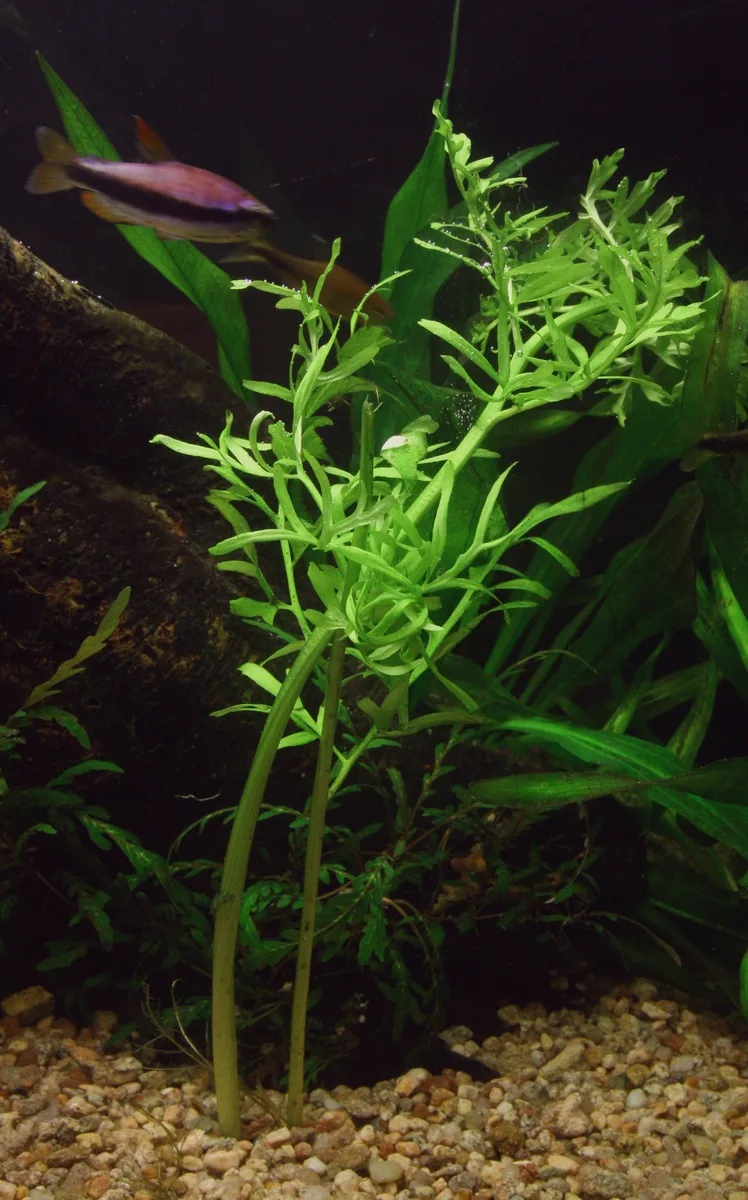
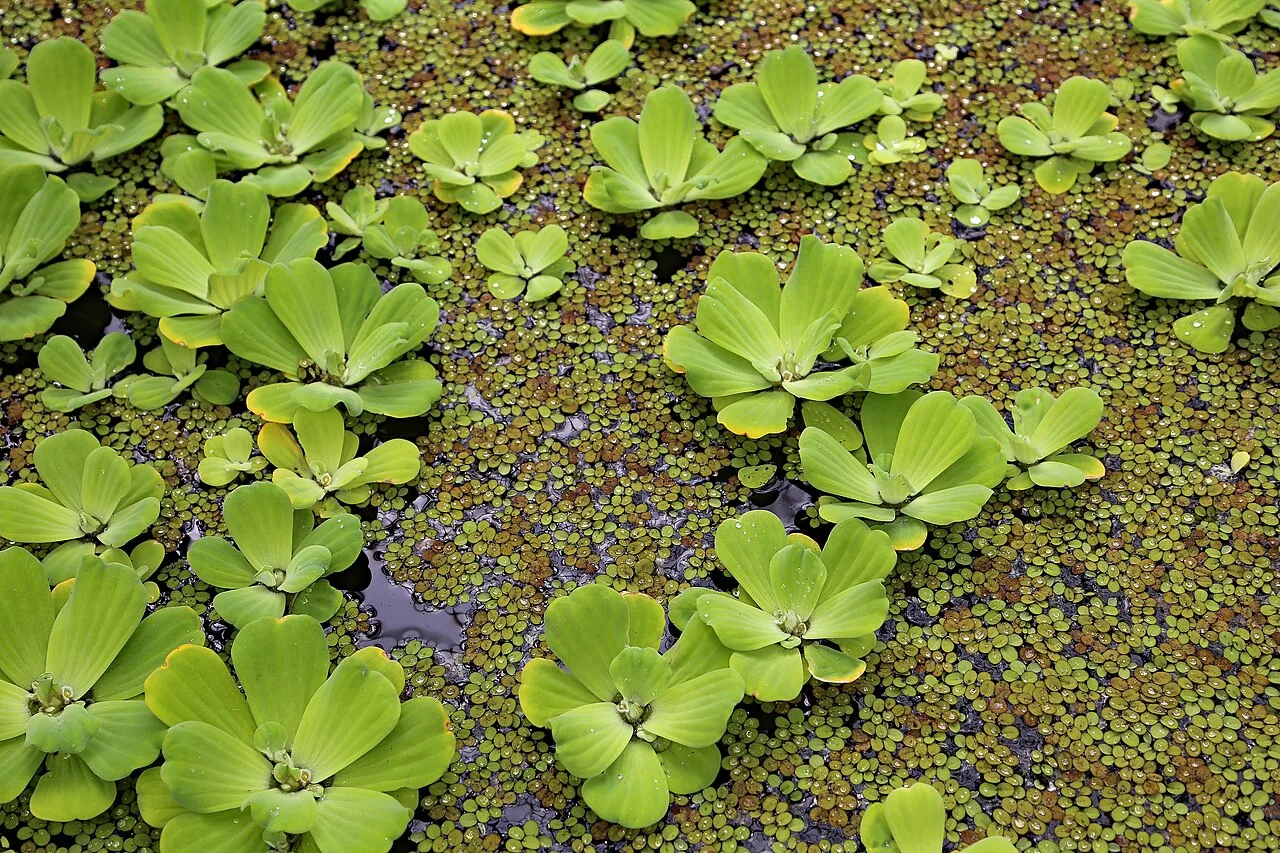
Water sprite can float on the surface or be set in the substrate. Floating, the leaves become tougher and the roots hang free. Rooted, it becomes finer and taller if the light is enough. Both forms draw a lot of nutrients and help a new tank. Both shade as soon as they close the surface or the background.
Daughter plants appear on the leaves. They are taken off when they have a leaf and a root of their own, and are replanted or left to float.
Growth and trimming
Oversized rosettes are divided or removed. A fertiliser amount is not in the text. It is named as green manure for rice. That is agriculture, not an aquarium dose. Young fronds are eaten in some countries. The article warns that some ferns may be carcinogenic when eaten, and that this may apply here. That is not a recipe.
Mass
Rosettes that are too large are divided or removed. A fern that covers half the tank is not a substitute for a filter. It is a light problem. Yellow, glassy leaves come with iron shortage or when the plant stands in its own shade. Thin it first, then fertilise.
Further care
Adventitious buds sit on the fertile fronds. That is vegetative propagation beside the spores.
Propagation
Adventitious buds and spores. In cultivation it lives longer than the seasonal wild form.
More species in this group
Sources & assertions 1
Wikipedia (deutsch)
Texte in Aquarisma sind eigenständig formuliert. Zahlenbereiche folgen den verlinkten Wikipedia-Artikeln, Lizenz CC BY-SA.
- Haltungsbereich nach https://en.wikipedia.org/wiki/Ceratopteris_thalictroides