
Crystalwort
Riccia fluitans
11 views
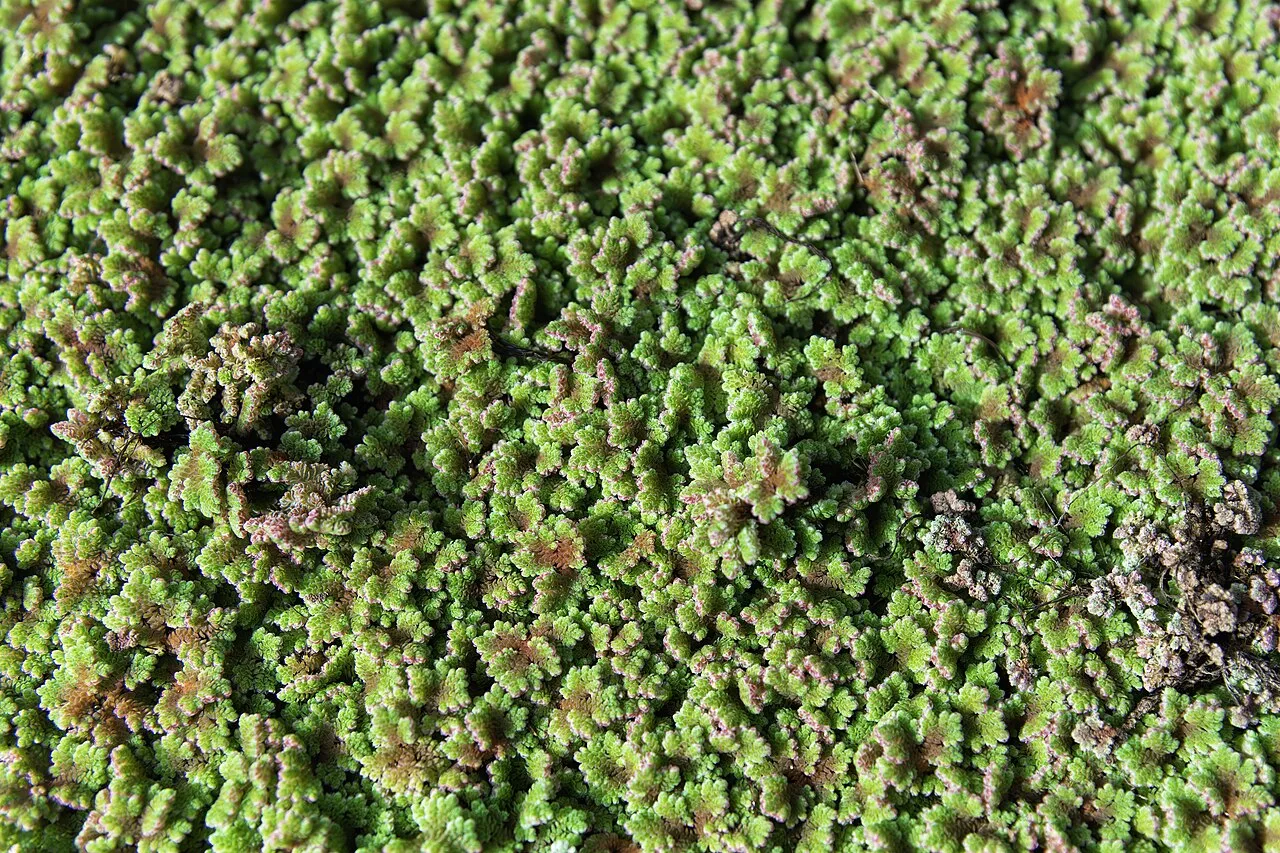
A floating liverwort that, under strong light and CO₂, is also kept as a tied cushion under water. Untied, it forms a closed cover.
2 min read · 303 words
Care profile
The care profile is backed by one source.
Lighting
High lightThe profile says high light.
CO₂
Medium CO₂Added CO₂ is recommended for the described growth.
Growth rate
FastThe profile describes fast growth.
Nutrient demand
MediumNutrient demand is moderate.
Beginner friendly
ModerateThe published judgement sits between easy and demanding.
Placement in the aquarium
Only the stored position or growth form is highlighted, not every possible layout.
- Water surface
Home & range
Every named country gets a frame and a circle around known waters in or near that area. Hotspots are orientation, not collection sites. A filled area is the range only when the source names a particular water body.
Botanical overview
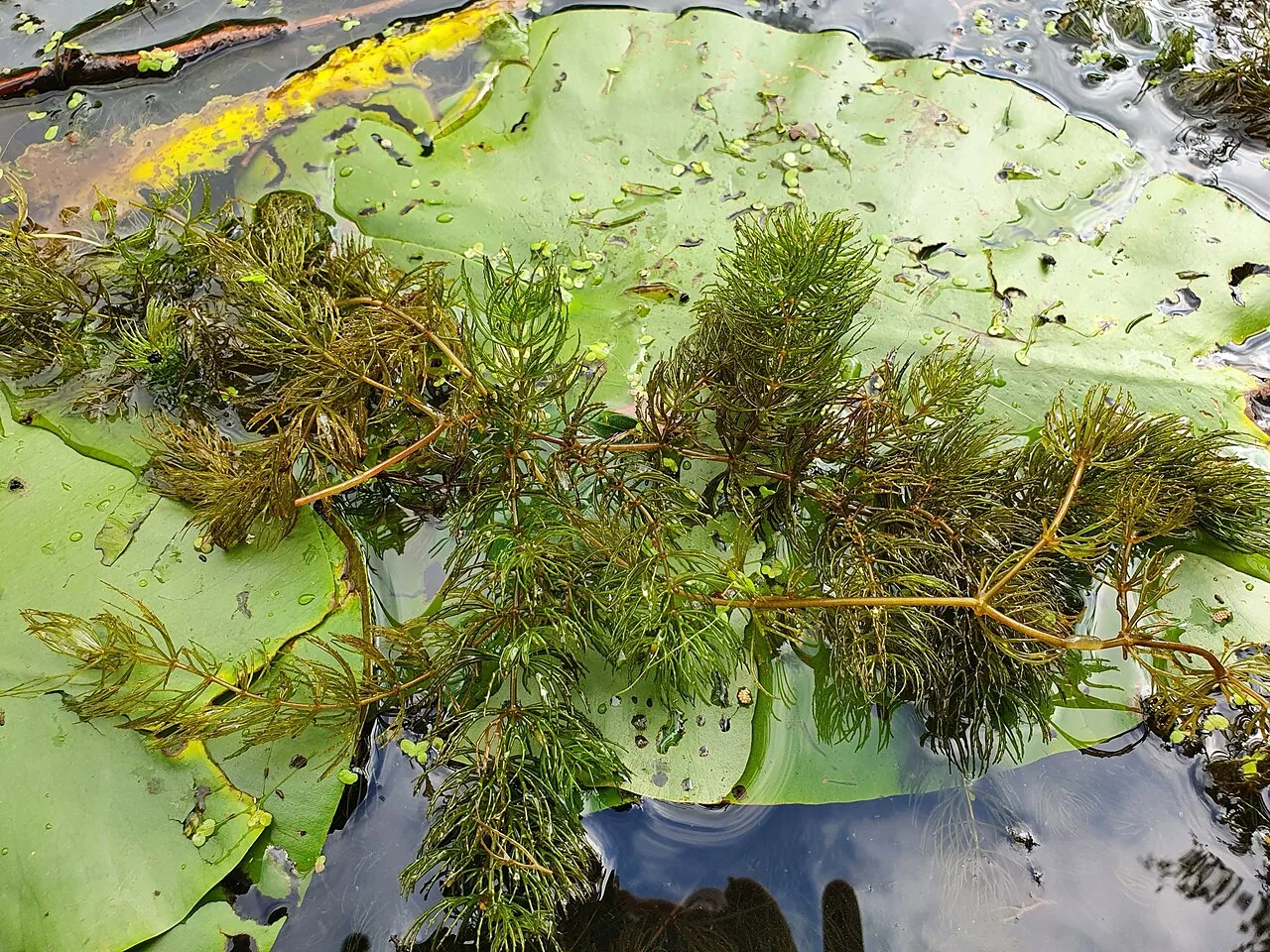
Riccia fluitans is a liverwort without true leaves. The thalli fork and trap air, which is why it floats. Under water, tied to a stone, it stays a firm, bright green cushion only with CO₂ and light. Without those conditions it comes loose and floats again.
The species is not Java moss. It has no threads that claw into wood. A thread or a mesh has to hold it until it is dense enough to carry itself.
Natural origin
This describes the origin, not how to furnish the aquarium.
Still and slow, nutrient-rich waters worldwide in temperate and warm zones, at the surface. The wide distribution is not a licence to release aquarium material. For the tank the floating form matters, and the more demanding tied form.
Light, CO₂ and position
Two ways of keeping
Floating: medium light, no CO₂ required, 18 to 28 °C, thin it regularly. Tied: high light, CO₂, thin under a mesh on stone, or the cushion rises and takes the planting with it. Moderate current, or the moss wanders into the filter.
Fish
Labyrinth fish use the floating cover for the bubble nest. Ground covers lose their light under it. Plant-eating barbs pull the thalli apart. In a scape with tied Riccia those fish are the most common reason the cushion is at the surface every morning.
Growth and trimming
Floating covers are halved weekly. Tied cushions are kept flat. If the cushion grows thicker than a centimetre, the underside rots and the whole thing rises. Then tie it on thinly again. Do not press the rotten layer down.\n\nRiccia pulls a lot of nitrate from the water. In a young tank that helps. In a tank of already hungry stem plants it competes with them.
Propagation
Division. Every piece of thallus keeps growing. That is the reason for the thinning, and the reason not to put leftovers into a drain that leads to a natural water.
More species in this group
Sources & assertions 1
Wikipedia (deutsch)
Texte in Aquarisma sind eigenständig formuliert. Zahlenbereiche folgen den verlinkten Wikipedia-Artikeln, Lizenz CC BY-SA.
- Haltungsbereich nach https://de.wikipedia.org/wiki/Riccia_fluitans