
Vallisneria nana
Vallisneria nana
13 views
A narrow background plant that forms a stand by runners and needs less width than tape grass.
2 min read · 305 words
Care profile
The care profile is backed by one source.
Lighting
Medium lightThe profile says moderate light.
CO₂
Low CO₂Added CO₂ is stored as helpful, not mandatory.
Growth rate
MediumThe profile describes moderate growth.
Nutrient demand
MediumNutrient demand is moderate.
Beginner friendly
Beginner friendlyThe published judgement is suitable for beginners.
- Runners
Placement in the aquarium
Only the stored position or growth form is highlighted, not every possible layout.
- Background
Home & range
Every named country gets a frame and a circle around known waters in or near that area. Hotspots are orientation, not collection sites. A filled area is the range only when the source names a particular water body.
Botanical overview
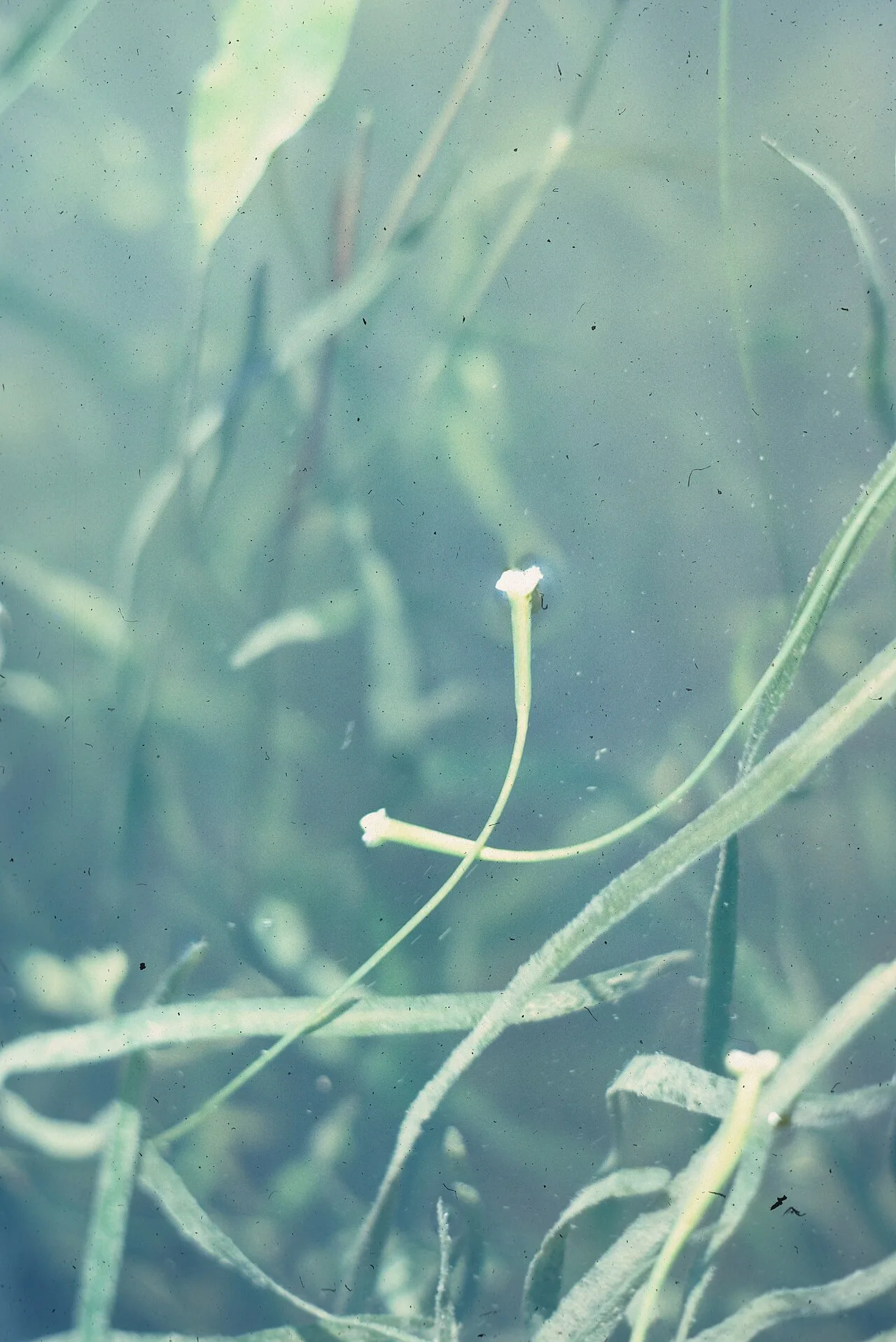
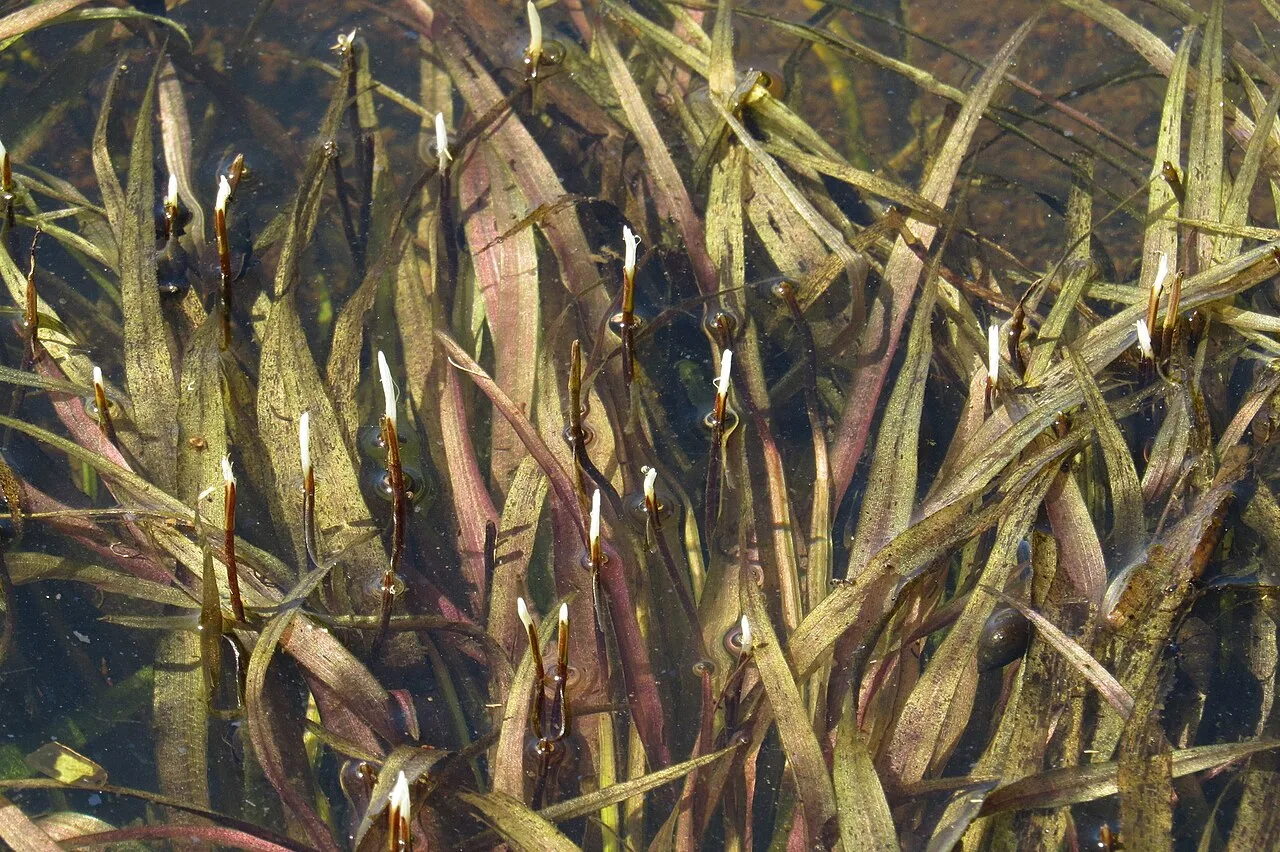
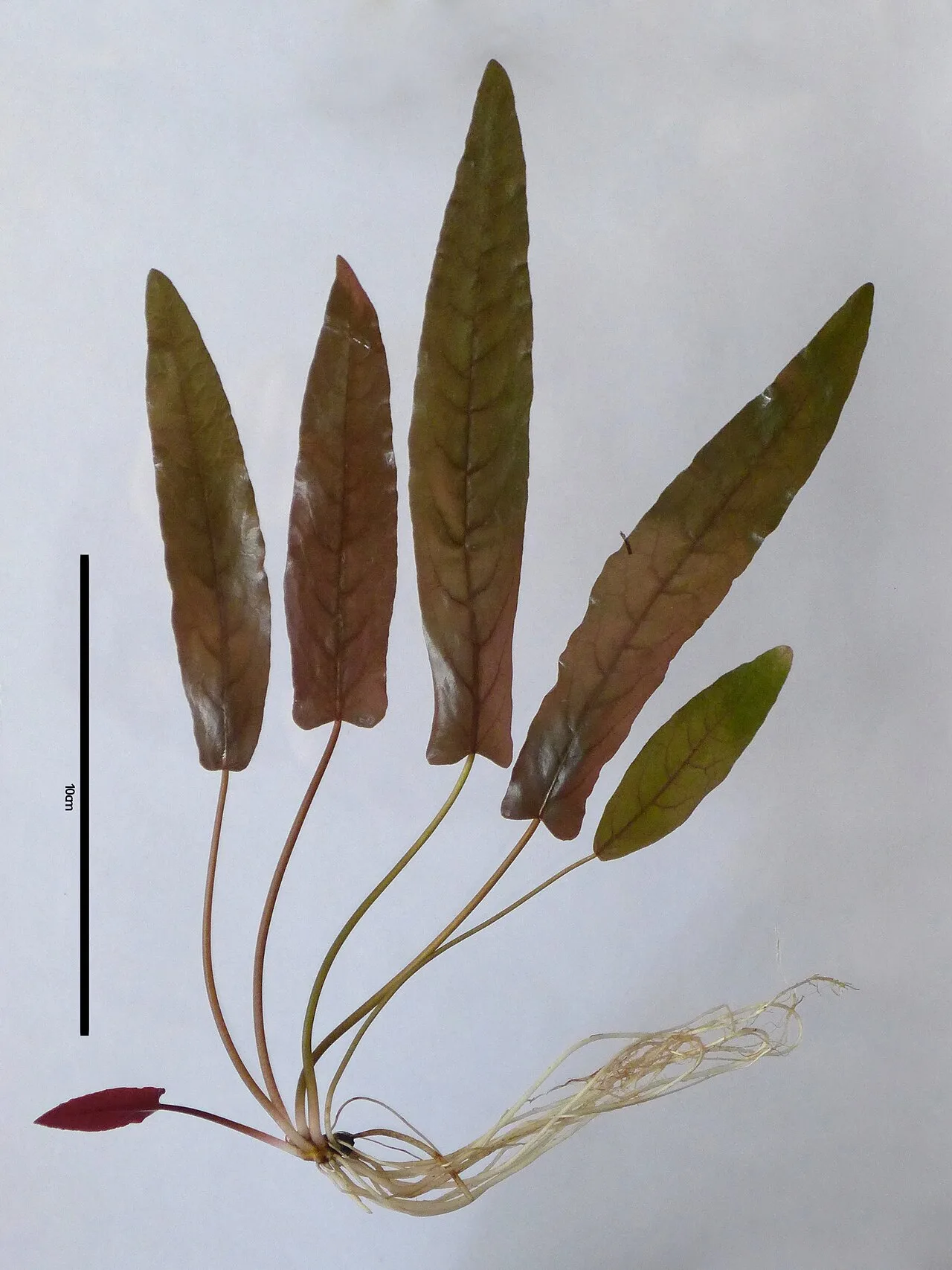
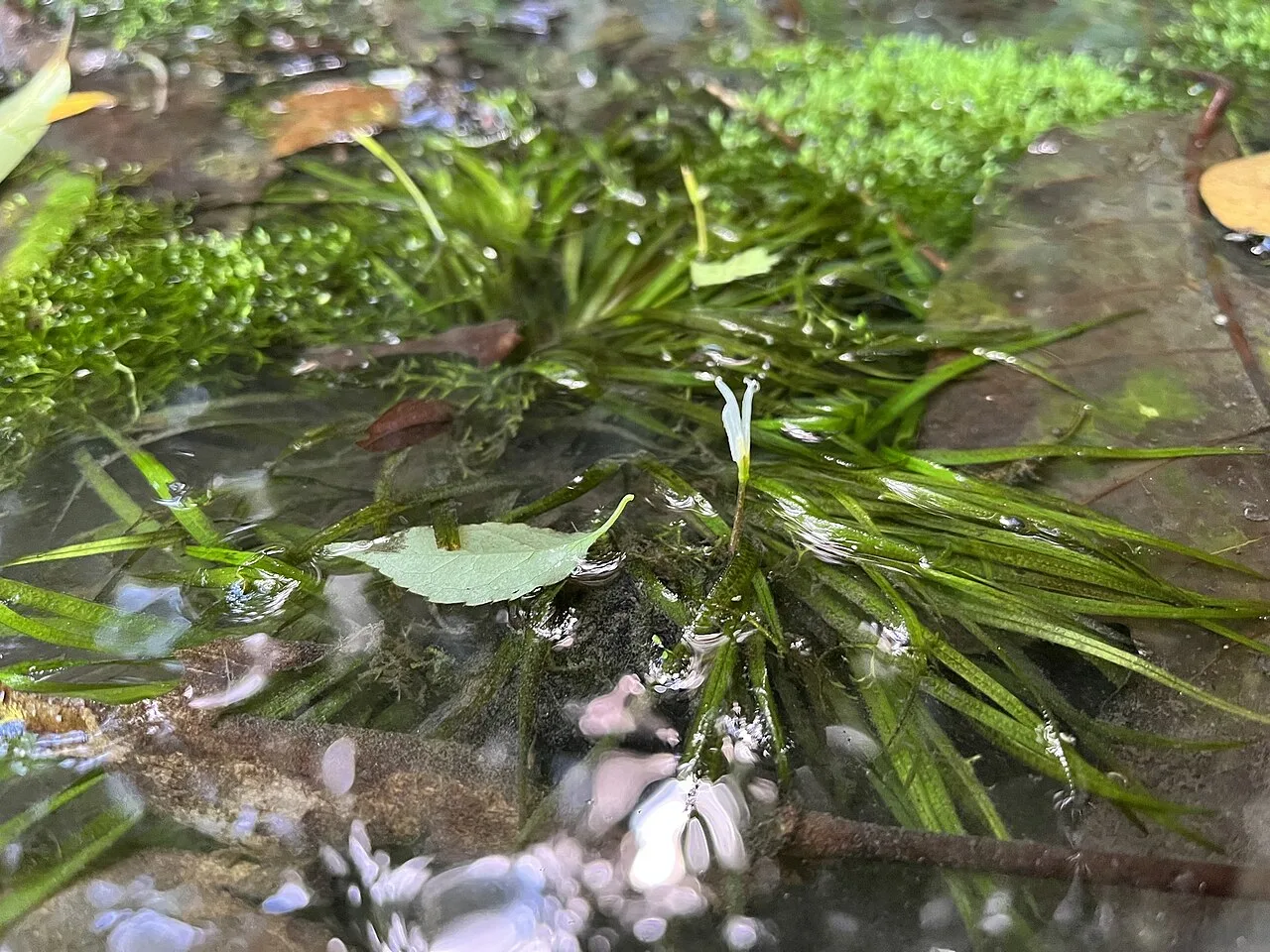
Vallisneria nana sends narrow, often slightly twisted leaves from a small rosette. The height stays at 20 to 40 cm in many tanks, but with little light and a lot of food it can grow longer and lie on the surface. It is not Vallisneria spiralis. The leaves are narrower. The stand looks like a curtain of grass rather than broad ribbons.
Runners wander in every direction. A single pot becomes a row in one summer if it is allowed to.
Natural origin
This describes the origin, not how to furnish the aquarium.
Shallow, bright waters in Australia. The species is widespread in the trade and should be kept as captive-bred stock. Australia stays the coarse origin. The habit is that of a bank grass that needs light from above and closes the substrate with runners.
Light, CO₂ and position
Place
Medium to high light, CO₂ not mandatory, 20 to 28 °C, a nutrient-rich substrate. Background or a row at the side. Set the plants with a gap, not as an impenetrable lump of rock wool. Floating plants overhead make the leaves long and soft.
Neighbours
Slow ground covers lose if the runners run into the foreground. The row belongs at the back. Runners that want to come forward are pulled.
Growth and trimming
Do not cut leaves that are too long back to an artificial height if it can be avoided. The cut edge turns brown and does not keep growing. Better to pull the plant that is too long and keep the shorter daughters. Take yellow leaves on the outside of the rosette.\n\nThe substrate carries the plant more than a high dose in the water column. Pale, narrow leaves under light that is actually enough are often an empty substrate.
Propagation
Separate daughter rosettes with their own roots. Surplus is pulled and discarded or passed on, not released into a natural water. An unlimited stand fills the back wall and then the middle.
More species in this group
Sources & assertions 1
Wikipedia (deutsch)
Texte in Aquarisma sind eigenständig formuliert. Zahlenbereiche folgen den verlinkten Wikipedia-Artikeln, Lizenz CC BY-SA.
- Haltungsbereich nach https://de.wikipedia.org/wiki/Vallisneria