
Crinkled aponogeton
Aponogeton crispus
13 views
A bulb plant from Sri Lanka with long leaves crinkled at the edge. It grows fast, draws a lot of nutrients, and takes pauses.
2 min read · 305 words
Care profile
The care profile is backed by one source.
Lighting
Medium lightThe profile says moderate light.
CO₂
Low CO₂Added CO₂ is stored as helpful, not mandatory.
Growth rate
FastThe profile describes fast growth.
Nutrient demand
MediumNutrient demand is moderate.
Beginner friendly
Beginner friendlyThe published judgement is suitable for beginners.
- Cuttings
Placement in the aquarium
Only the stored position or growth form is highlighted, not every possible layout.
- Background
Home & range
Every named country gets a frame and a circle around known waters in or near that area. Hotspots are orientation, not collection sites. A filled area is the range only when the source names a particular water body.
Botanical overview
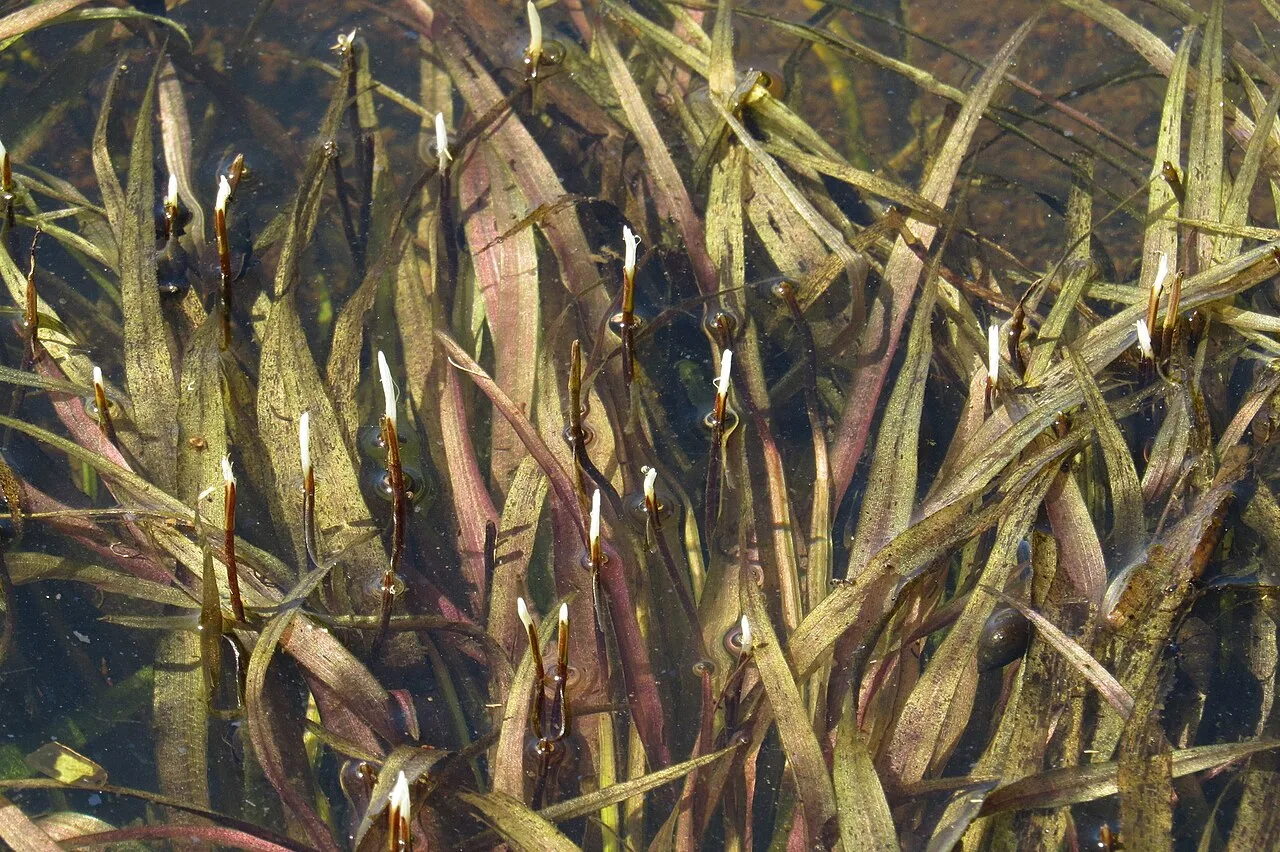
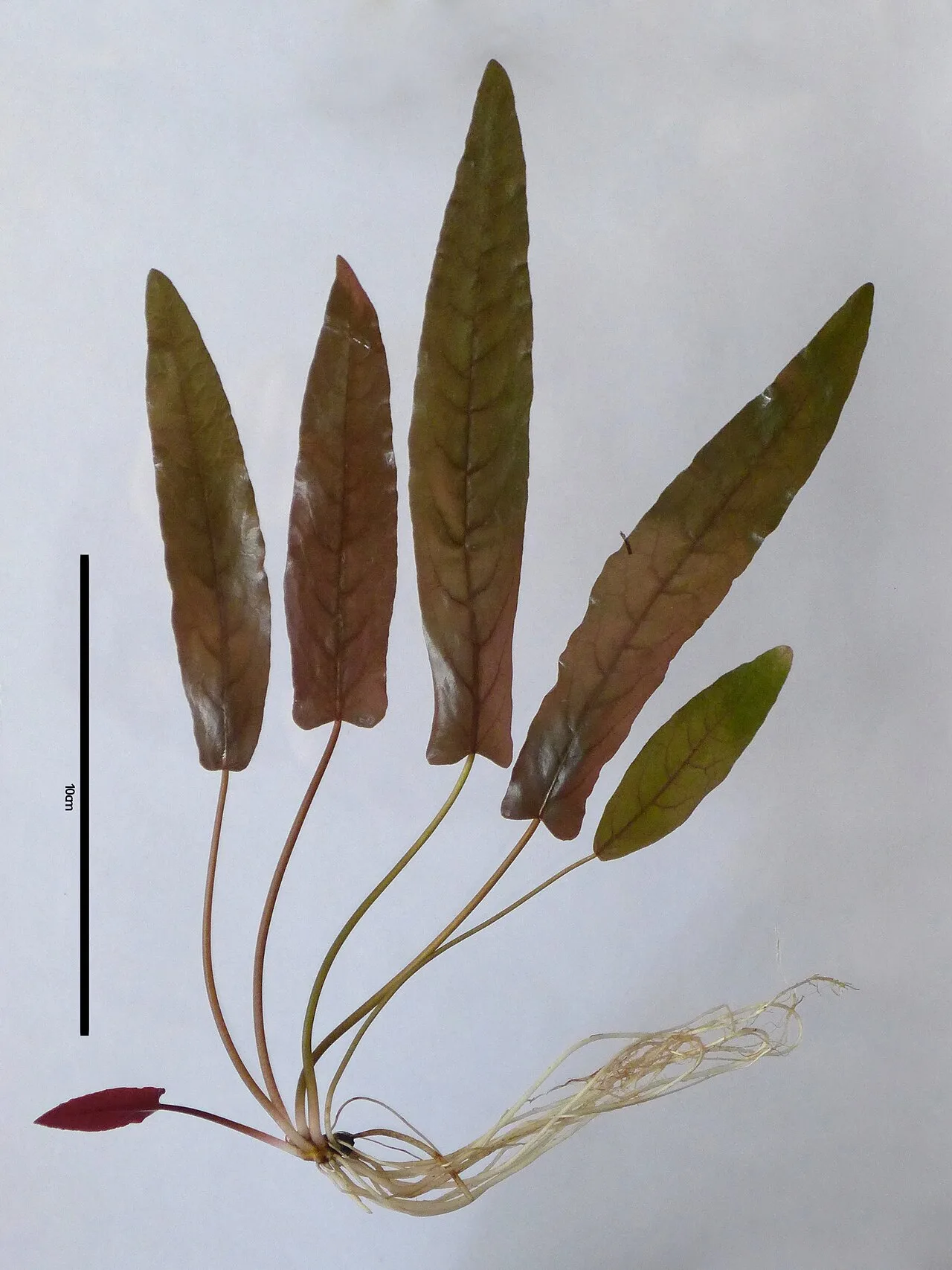
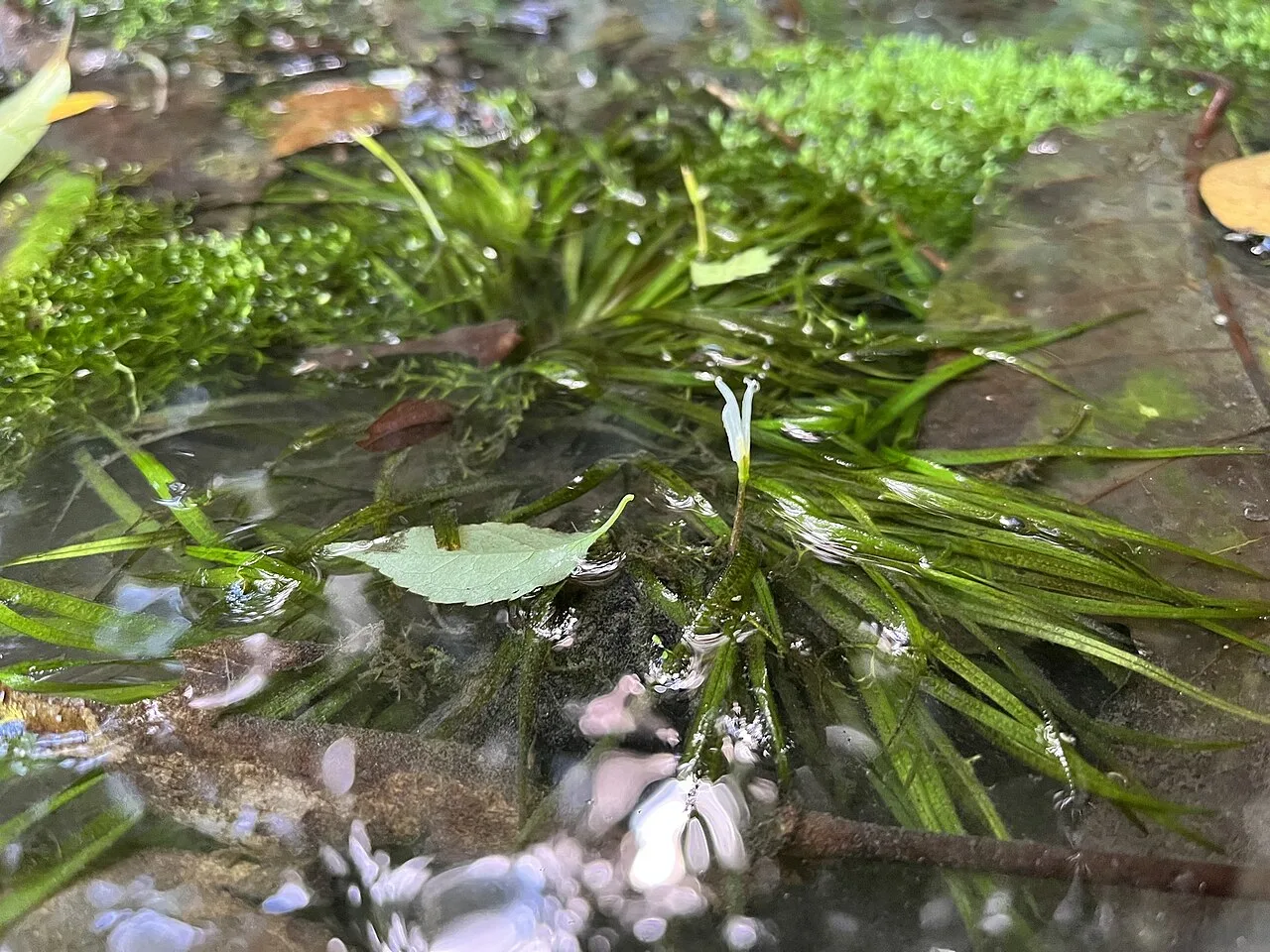
Aponogeton crispus sends from a bulb a rosette of long, ribbon-like, strongly crinkled leaves. The leaves are usually pale green and translucent. A flower can grow above the surface. The species is not Aponogeton madagascariensis, the lace plant, and not the cool-loving A. distachyos.
After a strong growing phase the plant often dies back and stands for weeks with only the bulb. That is a rest, not automatic rot, as long as the bulb stays firm.
Natural origin
This describes the origin, not how to furnish the aquarium.
Sri Lanka, still and slow waters with a soft bottom. The bulb outlasts swings. The leaves use phases with plenty of light and nutrients. Sri Lanka stays the coarse origin.
Light, CO₂ and position
Planting
Medium light, CO₂ not mandatory, 22 to 28 °C. Bulb half free, root zone fertilised. Background or specimen, because the leaves become 30 to 50 cm long and lie over the bottom if the tank is too shallow. Not directly in the filter current, or the leaves lie constantly one way and collect mulm.
Rest
If the leaves fail together and the bulb is firm, take off the remains and leave the bulb alone. Do not dig it up every week. A new shoot comes if the water stays stable. A soft bulb is removed.
Growth and trimming
Cut single old leaves at the base. A clear-cut of every leaf makes sense only when they are algal and worn out. The plant uses a lot of potassium and iron. Holed, glassy leaves with otherwise fast growth are often a nutrient gap, not a lack of light.\n\nBeside a waterweed the aponogeton loses the contest for nutrients, even though it looks large.
Propagation
Daughter bulbs are possible, but not the rule. Seed from a spent flower spike can be grown in shallow water and is slow. Practical propagation in the hobby remains the occasional daughter bulb and buying again, not a weekly cutting.
More species in this group


Sources & assertions 1
Wikipedia (deutsch)
Texte in Aquarisma sind eigenständig formuliert. Zahlenbereiche folgen den verlinkten Wikipedia-Artikeln, Lizenz CC BY-SA.
- Haltungsbereich nach https://de.wikipedia.org/wiki/Aponogeton_crispus