
Bolivian ram
Mikrogeophagus altispinosus
14 views
A pair-forming dwarf cichlid. Males reach 9 cm, females 7 cm. The article gives an age of about 5 years.
2 min read · 209 words
Quick facts
The profile values are backed by one source.
Home & range
Every named country gets a frame and a circle around known waters in or near that area. Hotspots are orientation, not collection sites. A filled area is the range only when the source names a particular water body.
Coarse origin
The circle sits around the country or, a little wider, around known waters there. The points are orientation, not collection sites.
- Bolivia Wikipedia deutsch
- Brazil Wikipedia deutsch
- Bolivia Coarse region of origin
- Brazil Coarse region of origin
Overview
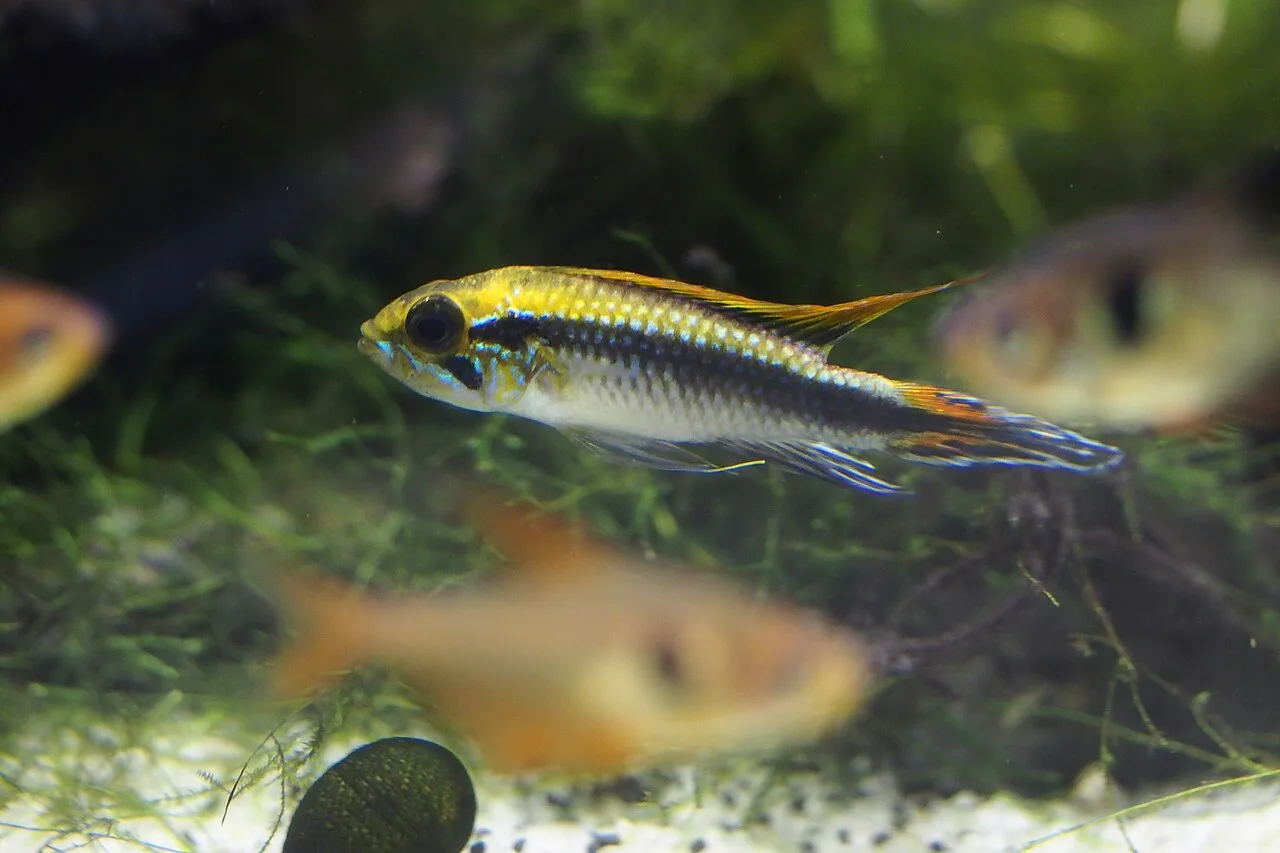
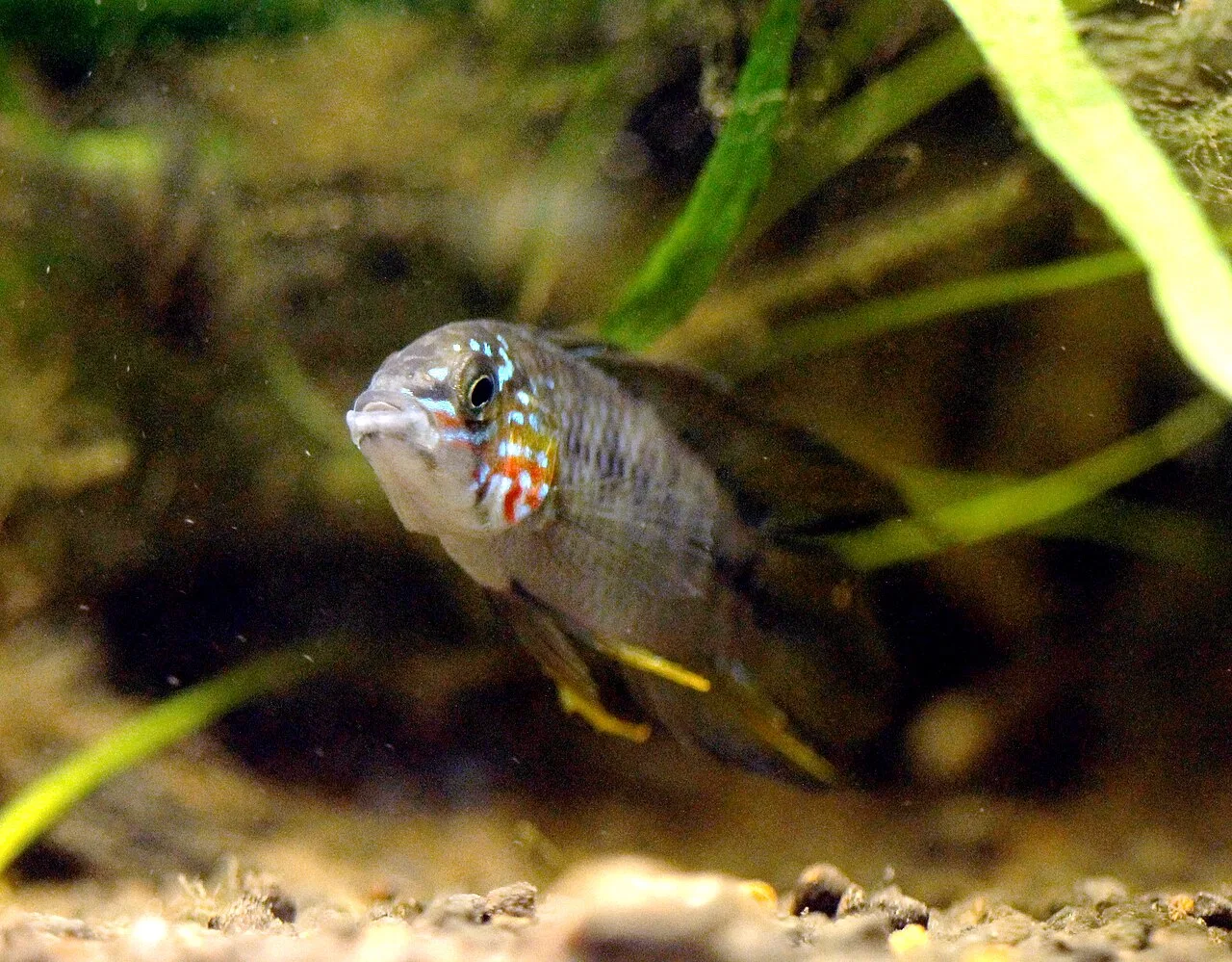
The species lives mostly near the bottom and forms pairs. Males have a longer second dorsal ray. Females often show a little red on the belly and, just before spawning, a short ovipositor.
Origin & habitat
This describes the origin, not how to furnish the aquarium.
It occurs in the Río Iténez in Bolivia and southwestern Brazil, and in the Río Mamoré in Bolivia. No coordinate map is published.
Care
Lengths are up to 9 cm for males and 7 cm for females.
Warmer than a community average, cooler than the ram
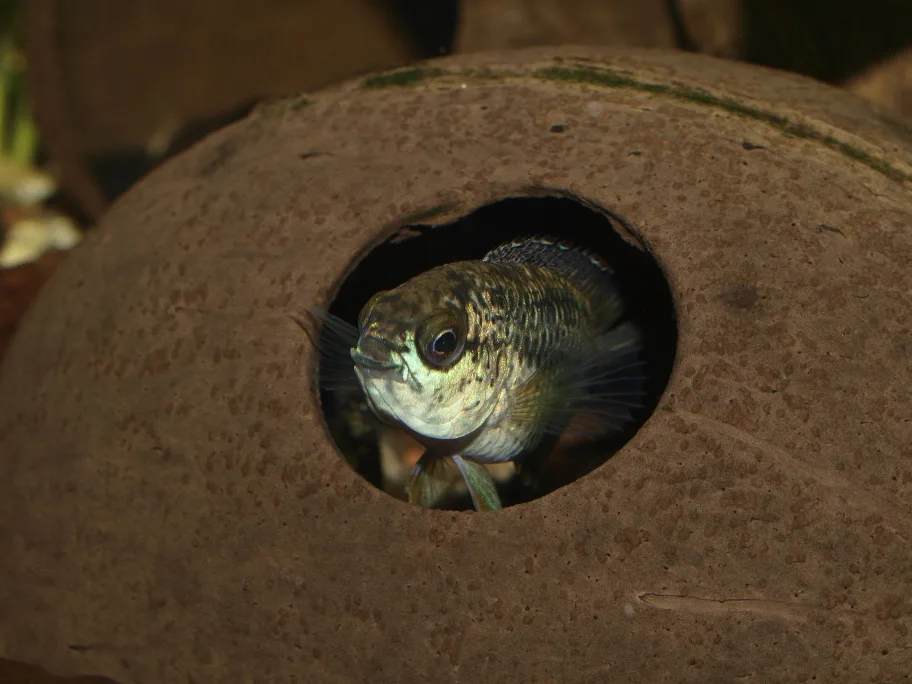
The Bolivian ram reaches about 8 cm and is tougher than Mikrogeophagus ramirezi. 24 to 28 °C is enough. It does not need a permanent 30 °C. pH 6 to 7.5. From about 80 litres for a pair, with sand, a cave or a leaf and hiding places. A pair that does not get on is separated.
While breeding both parents guard. Tankmates have to be able to leave the spawning zone. Shrimp are then eaten. Outside breeding the species is reserved.
Diet
The cited section does not list a diet.
Frozen food, brine shrimp and granules that also reach the bottom. Varied food holds the colour better than a single food.
Reproduction
Sex shows in the second dorsal ray, belly colour and the ovipositor. A rearing protocol and temperature are missing from the cited text. Age is given as about 5 years.
More species in this group

Sources & assertions 1
Wikipedia (deutsch)
Texte in Aquarisma sind eigenständig formuliert. Zahlenbereiche folgen den verlinkten Wikipedia-Artikeln, Lizenz CC BY-SA.
- Haltungsbereich nach https://de.wikipedia.org/wiki/Bolivianischer_Schmetterlingsbuntbarsch