
Endler livebearer
Poecilia wingei
16 views
A livebearing relative of the guppy from two small areas in the Venezuelan state of Sucre. The article reports an endangered listing.
3 min read · 496 words
Quick facts
The profile values are backed by one source.
Home & range
Every named country gets a frame and a circle around known waters in or near that area. Hotspots are orientation, not collection sites. A filled area is the range only when the source names a particular water body.
Coarse origin
The circle sits around the country or, a little wider, around known waters there. The points are orientation, not collection sites.
- Venezuela Wikipedia deutsch
- Venezuela Coarse region of origin
Overview
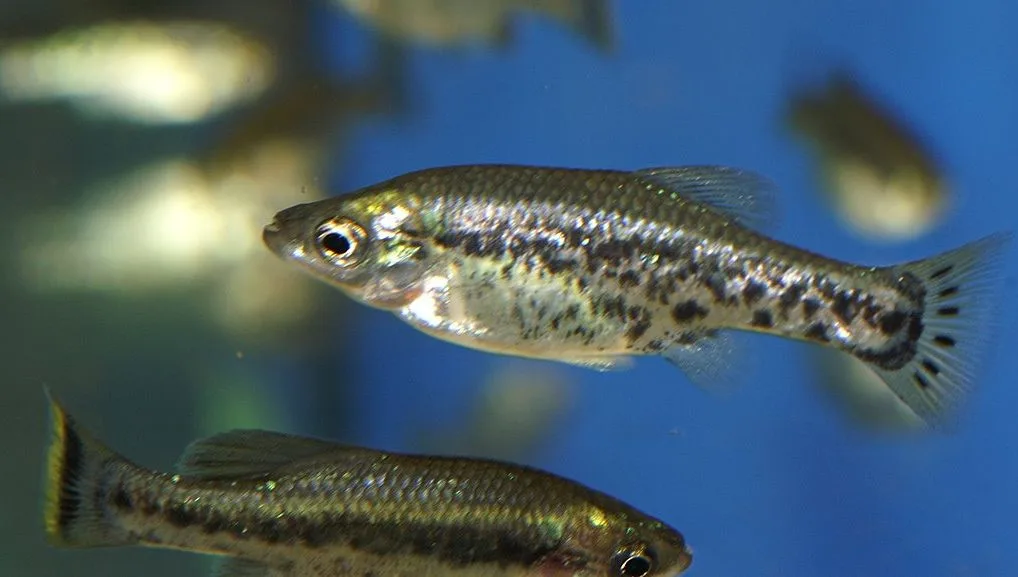
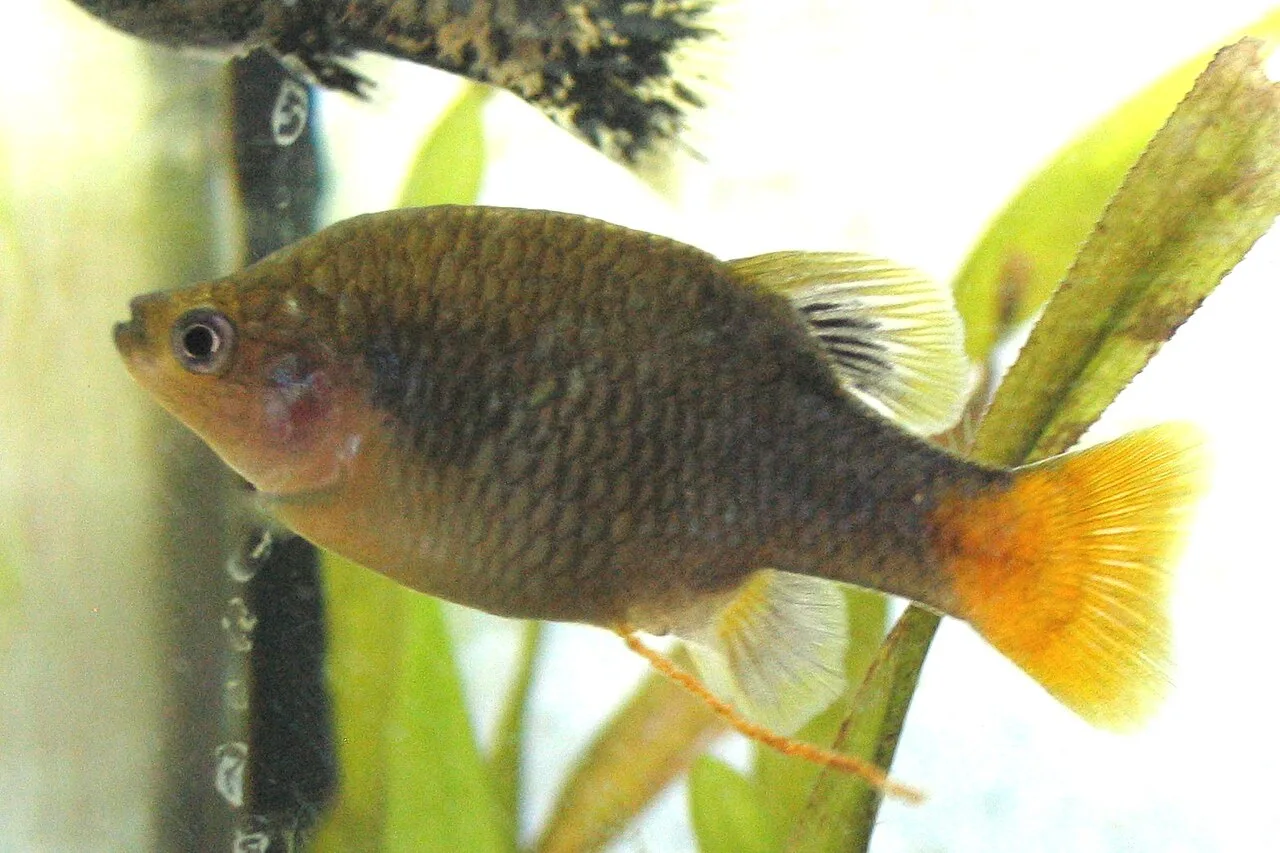
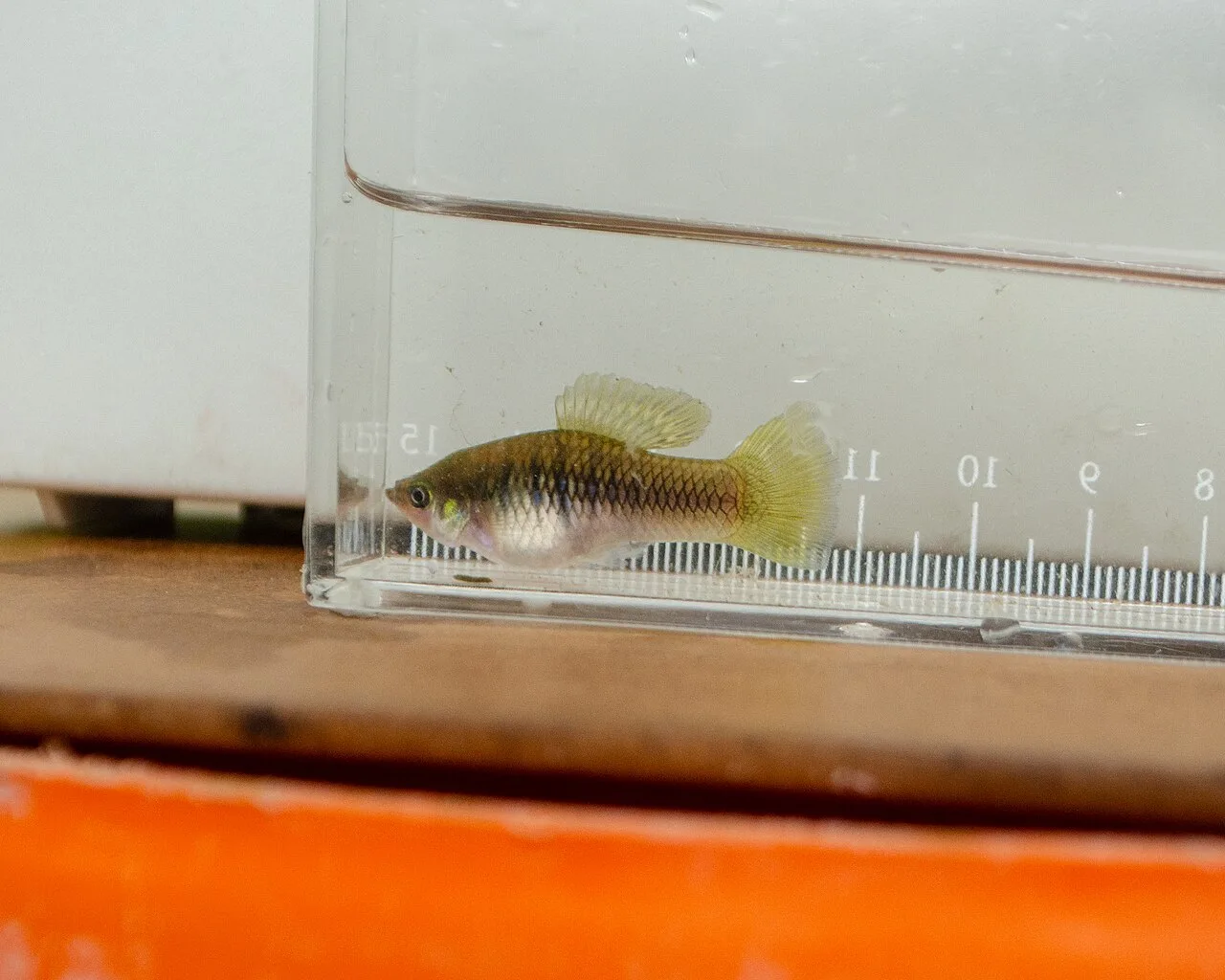
Poecilia wingei was described in 2005 by Poeser, Kempkes and Isbrücker from the Campoma lagoon. Franklyn F. Bond had already sent fish from the Paria Peninsula to the United States in 1937. They were ignored because they were taken for ordinary guppies. In 1975 John A. Endler caught unusual fish in the freshened Laguna de los Patos near Cumaná. Through Donn Rosen and Klaus Kallmann, live fish reached breeders. Molecular data from 2009 placed the Cumaná and Campoma fish in the same species. Differences from the guppy lie in the colour of the males, the structure of the gonopodium and a slight metallic sheen of the females. Females reach about 2 to 2.9 cm standard length, are greyish beige and show a gravid spot. Males stay at 1.5 to 1.96 cm and carry spots and bands. A vertical black band at mid-body is characteristic of Campoma fish. The males court females more intensely and for longer than Poecilia reticulata.
Origin & habitat
This describes the origin, not how to furnish the aquarium.
The species occurs only in two separate areas in Sucre: around the Campoma lagoon near Cariaco, about 100 by 50 km, and near Cumaná in the Laguna de Patos, polluted by rubbish and oil, plus two further waters. Spurs of the Andes separate the region from the rest of Venezuela, where only the ordinary guppy occurs. Near Cumaná there is contact with brackish water. The fish stay mainly near the banks. The article names piranha-like tetras, cichlasomine cichlids and Crenicichla as predators. On 8 March 2021 the species was assessed as endangered on the Red List, published in 2024. Settlement, agriculture, aquaculture, logging, fishing, invasive species, hybridisation with the guppy, wastewater and effects of climate change are named.
Care
The sizes are standard lengths, not total lengths including fins. The older sheet value of 3 cm is replaced by the 2.9 cm standard length of the females.
Small and fertile
The Endler stays smaller than a cultivated male guppy, the males often under 3 cm, the females a little larger. It wants hard to medium-hard water, 22 to 28 °C, a group with several females, and dense plants for the young. From about 40 litres if the tank is not shared with large fish.
Crosses with the guppy are widespread in the trade. Anyone who means the species keeps it apart from guppies. A fish with guppy fins and Endler colour is usually a mix and does not belong in a breeding setup of this species.
Behavior
The text does not state a minimum group size. Male courtship is longer and more intense than in the ordinary guppy. The closer the two species live, the larger the external differences become, according to the article. That is described as a barrier to cross-breeding.
Reproduction
The species is livebearing. Females drop at most 40 young at intervals of 28 to 43 days. Hybridisation with Poecilia reticulata is a threat named in the article, not a keeping recommendation.
Livebearer, and very productive. The young are tiny and survive in moss and floating plants. Without intervention the tank consists of Endlers after half a year. That is the keeping, not an accident.
More species in this group

Sources & assertions 2
Wikipedia (deutsch)
Texte in Aquarisma sind eigenständig formuliert. Zahlenbereiche folgen den verlinkten Wikipedia-Artikeln, Lizenz CC BY-SA.
- Haltungsbereich nach https://de.wikipedia.org/wiki/Poecilia_wingei
Wikipedia
Texte in Aquarisma sind eigenständig formuliert. Zahlen folgen dem genannten Artikel, Lizenz CC BY-SA. Deutsch und Englisch sind dieselbe Enzyklopädie, keine zweite unabhängige Quelle.
- Weibchen erreichen etwa 2 bis 2,9 cm Standardlänge, Männchen 1,5 bis 1,96 cm. Der ältere Steckbrief führte 3 cm.