
Guppy
Poecilia reticulata
15 views
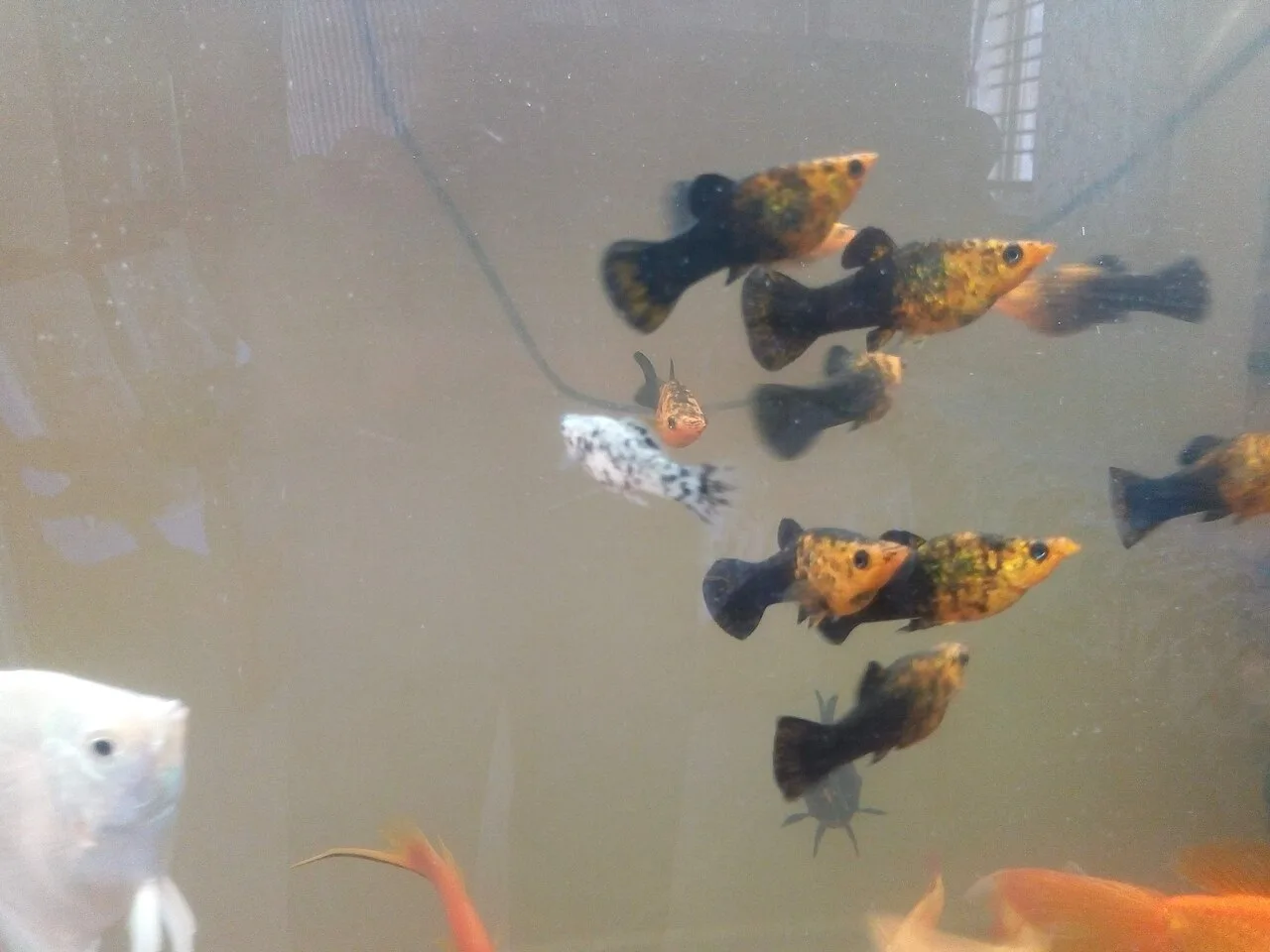
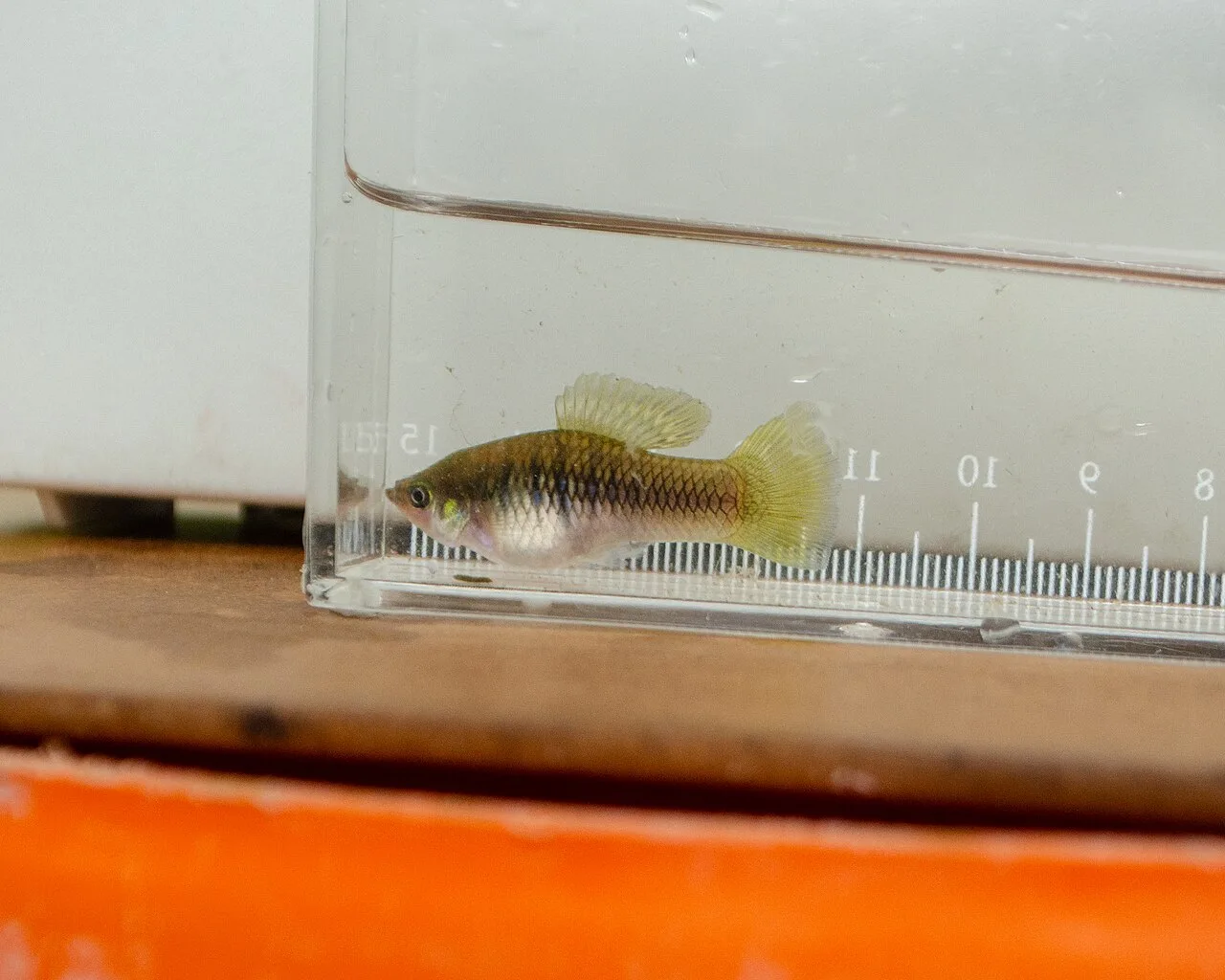
Livebearing toothcarp. Cultivated fish are large and colourful. Wild fish are clearly smaller.
2 min read · 288 words
Quick facts
The profile values are backed by one source.
Home & range
Every named country gets a frame and a circle around known waters in or near that area. Hotspots are orientation, not collection sites. A filled area is the range only when the source names a particular water body.
Coarse origin
The circle sits around the country or, a little wider, around known waters there. The points are orientation, not collection sites.
- Venezuela The source article names Venezuela in particular. The Caribbean and the rest of coastal northeastern South America are also named and are not listed as further countries. Introduced populations are not recorded. Venezuela itself stays a coarse origin and is not filled as a country outline. Wikipedia deutsch
- Venezuela Coarse region of origin
Overview
Cultivated males stay near 3 cm without the tail, and cultivated females pass 6 cm. Wild males stay near 2.5 cm and wild females near 4.5 cm. Males have a gonopodium, which starts to form within a few weeks. Females store sperm, and one store can carry several broods. The article mentions about 20 young per brood. The parents do not guard them and often eat them. Endler’s livebearer, Poecilia wingei, is a different species. Hybrids should not be labelled as this one.
Origin & habitat
This describes the origin, not how to furnish the aquarium.
The article names western Venezuela and the Orinoco, plus Guyana and several Caribbean islands, including Trinidad, Barbados and Grenada. Only Venezuela is mapped, because the article treats it as the centre and the other places have no geometry of their own. Introduced populations worldwide, including thermal waters in Germany and Austria, are not recorded.
Care
16 to 30 °C is possible and 24 to 26 °C is optimal. The sheet stays at 22–28 °C, because possible and optimal diverge and this range sits inside the possible window. pH 6.5–8, tanks from about 60 litres. Plants give the young cover. Home-bred fish tolerate local water better than imports that have been kept with additives.
Diet
Omnivore. Fine food and a plant share. The food has to reach the females, not only the males at the front.
Behavior
Males harass females. Several females per male spread that. The article says crowding increases nipping, and groups reform from familiar fish rather than at random. Toward other fish of a similar size, guppies are usually tolerant. Long fins can provoke a fighting fish. That point is in the fighting-fish article.
Reproduction
Livebearer, without brood care. Females mature at about three months, males earlier. Without intervention the stock grows. Anyone who wants a known parentage separates the sexes before the males colour up.
More species in this group
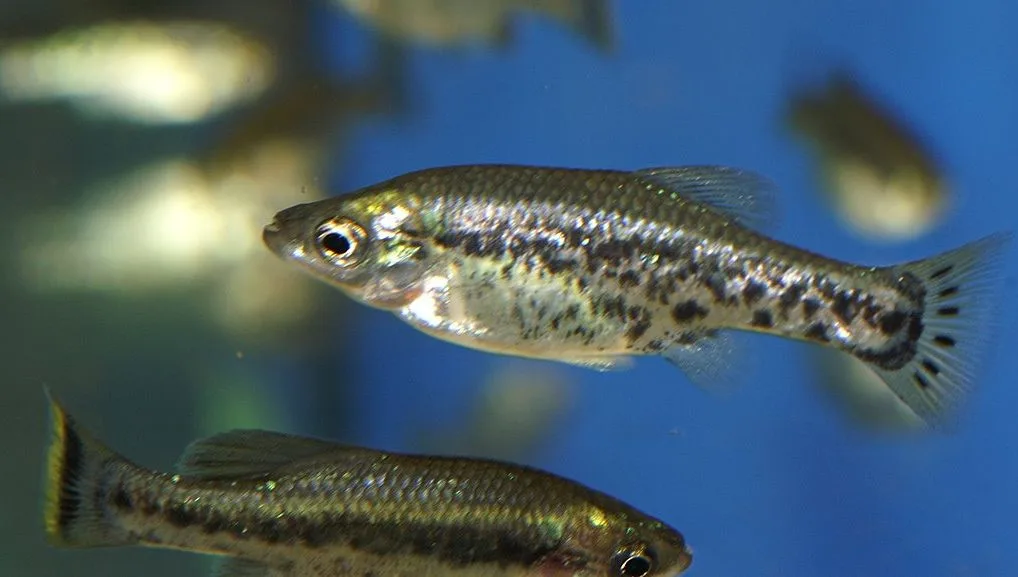
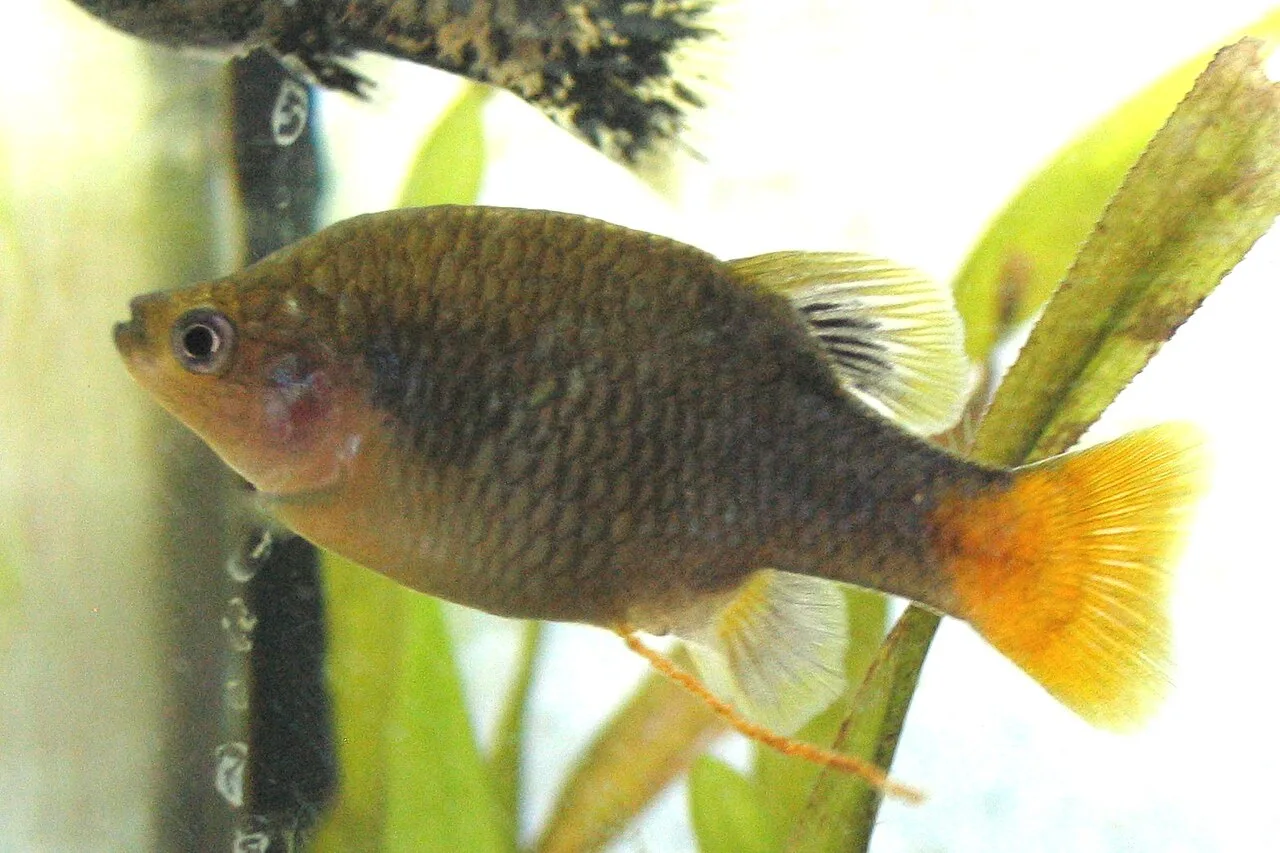
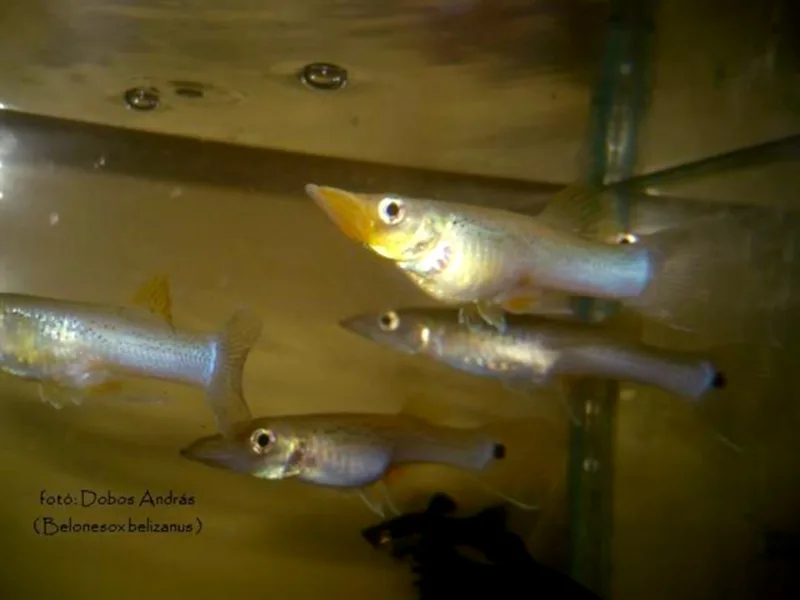
Sources & assertions 2
Wikipedia (deutsch)
Texte in Aquarisma sind eigenständig formuliert. Zahlenbereiche folgen den verlinkten Wikipedia-Artikeln, Lizenz CC BY-SA.
- Haltungsbereich nach https://de.wikipedia.org/wiki/Guppy
Wikipedia
Texte in Aquarisma sind eigenständig formuliert. Zahlen folgen dem genannten Artikel, Lizenz CC BY-SA. Deutsch und Englisch sind dieselbe Enzyklopädie, keine zweite unabhängige Quelle.
- Der Artikel nennt möglich 16 bis 30 °C und optimal 24 bis 26 °C.
- Zuchtweibchen werden ohne Schwanzflosse bis über 6 cm, Wildweibchen bis 4,5 cm. Männchen bleiben kleiner.