
Banded leporinus
Leporinus fasciatus
14 views
A banded tetra that grows large. The juvenile in the shop is not a fish for a 100-litre living-room tank.
2 min read · 213 words
Quick facts
The profile values are backed by one source.
Home & range
Every named country gets a frame and a circle around known waters in or near that area. Hotspots are orientation, not collection sites. A filled area is the range only when the source names a particular water body.
Overview
Leporinus fasciatus wears yellow and black bars and reaches about 25 cm. The mouth is small and strong. Juveniles look harmless and stand in a group. Adults need length, a group, and tankmates that do not meet the mouth or lose their fins.
It is not the striped headstander. The bars run across the body, not as longitudinal stripes. A fish that cruises the glass all day has too little length.
Origin & habitat
This describes the origin, not how to furnish the aquarium.
Rivers of the Amazon basin and the Guianas, often in current. The origin stays coarse. Length and oxygen are the direction. Released animals do not belong in local waters.
Care
Size
24 to 28 °C, pH 6 to 7.5. A group from six, tanks from about 450 litres and 150 cm, with current, wood and a firm cover. The fish jump.
Company
Other large, quick fish. Small tetras are hunted or eaten. Fine plants are torn off. A single fish in a short tank becomes shy or quarrelsome.
Diet
Omnivore. Granules, frozen food, mussel, vegetables. Snails are eaten and still do not replace feeding.
Behavior
A group with space. Too few fish nip. The rank order holds as long as the length is there. An open gap in the cover is a jump.
Reproduction
Egg scatterer without meaningful brood care in the aquarium. A community tank should not be expected to produce young.
More species in this group
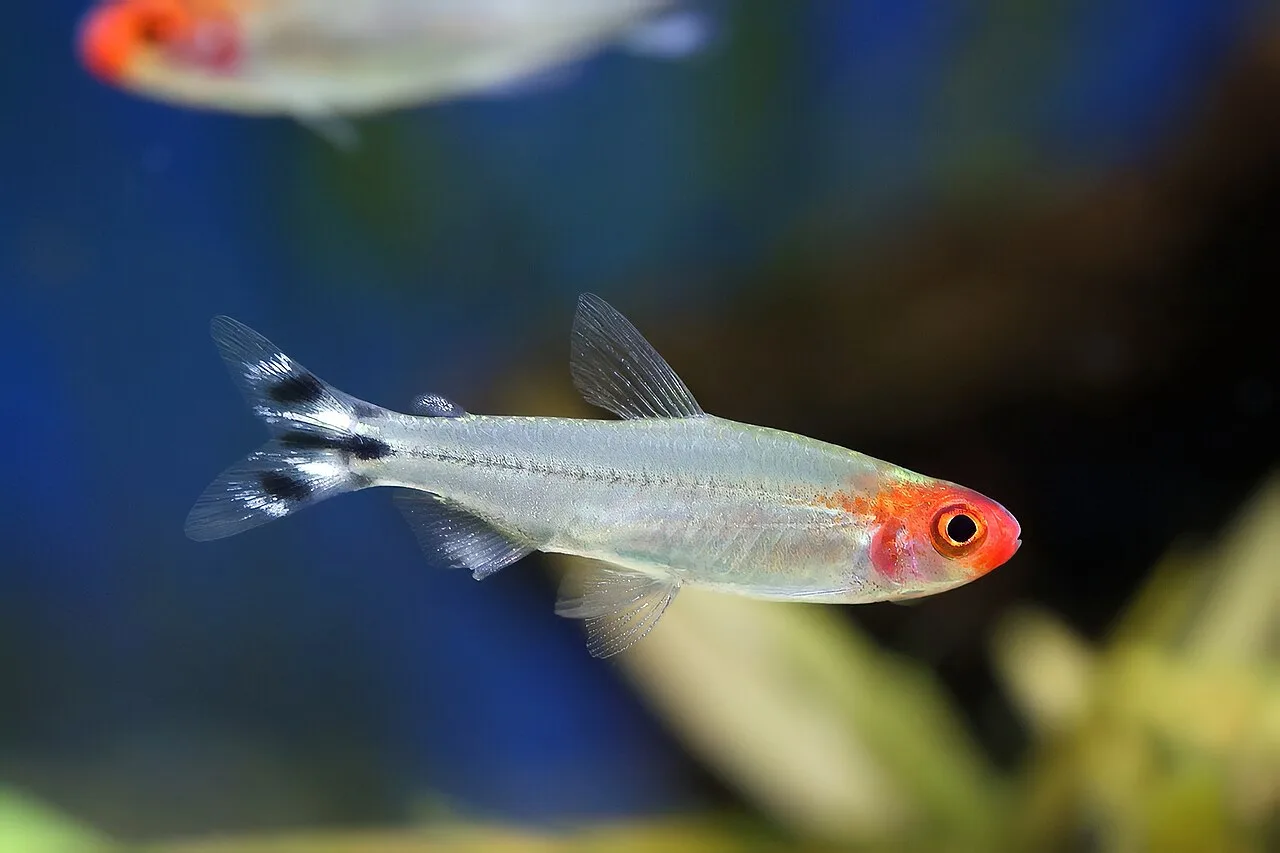


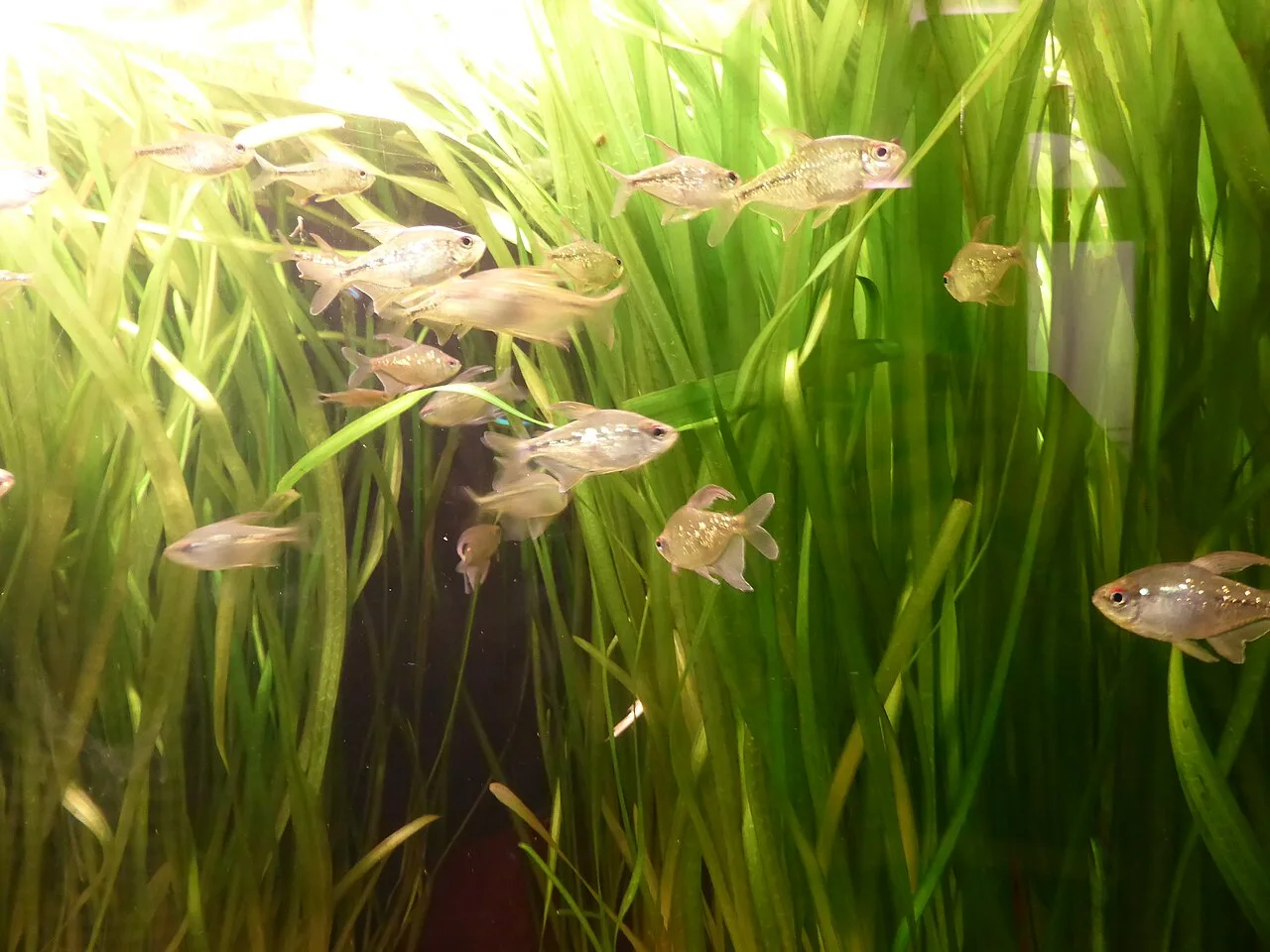
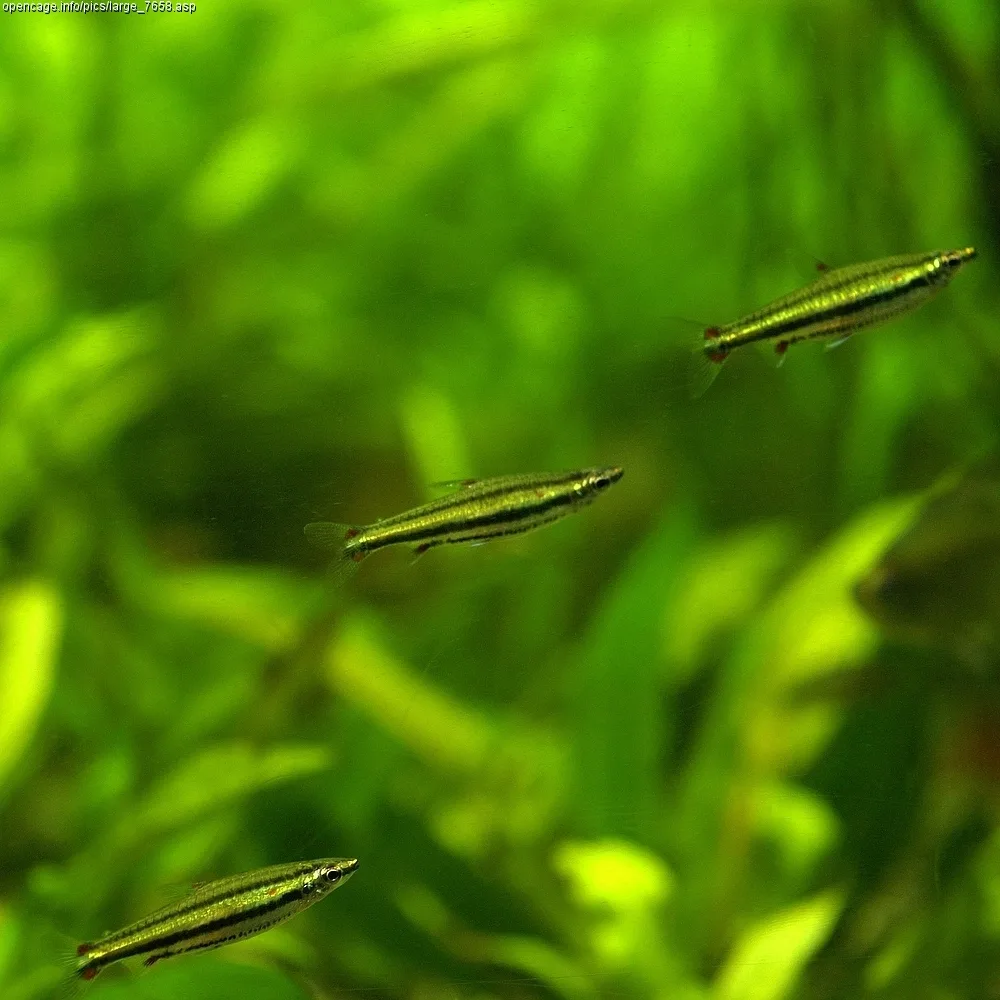
Sources & assertions 1
Wikipedia (deutsch)
Texte in Aquarisma sind eigenständig formuliert. Zahlenbereiche folgen den verlinkten Wikipedia-Artikeln, Lizenz CC BY-SA.
- Haltungsbereich nach https://de.wikipedia.org/wiki/Leporinus_fasciatus