
Black phantom tetra
Hyphessobrycon megalopterus
11 views
A small tetra with a black shoulder spot. Males turn dark in courtship, females stay reddish.
2 min read · 276 words
Quick facts
The profile values are backed by one source.
Home & range
Every named country gets a frame and a circle around known waters in or near that area. Hotspots are orientation, not collection sites. A filled area is the range only when the source names a particular water body.
Coarse origin
The circle sits around the country or, a little wider, around known waters there. The points are orientation, not collection sites.
- Brazil Wikipedia deutsch
- Bolivia Wikipedia deutsch
- Brazil Coarse region of origin
- Bolivia Coarse region of origin
Overview
The article also lists the name Megalamphodus megalopterus. Adults reach 4.5 to 5 centimetres. Males are smoky grey and, in courtship, deep black on the rear third and the fins. Their dorsal fin is enlarged like a flag. Females are pale reddish, with red fins and a smaller dorsal. Both sexes carry a vertically stretched black shoulder spot. The females are the more colourful fish.
Origin & habitat
This describes the origin, not how to furnish the aquarium.
Brazil and Bolivia, in the Rio Guaporé, the upper Río Paraguay and Lago Mapava. The home waters are acidic to very acidic and poor in minerals. One measurement in Lago Mapava gave 29.4 °C, pH 5.7 and general and carbonate hardness below 1 °dH. That is a single lake reading, not a temperature range and not a care value. It is not stored as a span. No map is published.
Care
The cited text gives no aquarium temperature, no recommended pH span and no tank size. The lake reading stays in the origin section.
Black, with a red spot
The black phantom tetra reaches about 4 cm. The males are darker and carry a larger dorsal with a red spot, the females are more reddish. 22 to 28 °C, pH 6 to 7.5, a school from eight, tanks from about 60 litres. Dim light, a dark bottom, plants. The species is peaceful and shows the fin only when it is not being hunted.
A single fish stands pale. Several males spread the display.
Diet
The cited section does not list a diet.
Fine prepared food. Flakes, cyclops, brine shrimp. Several small portions in midwater.
Behavior
The cited text describes the sex difference, not a social setup or a minimum number.
Reproduction
The male courtship colour is described. A spawning protocol is not in the cited section.
More species in this group
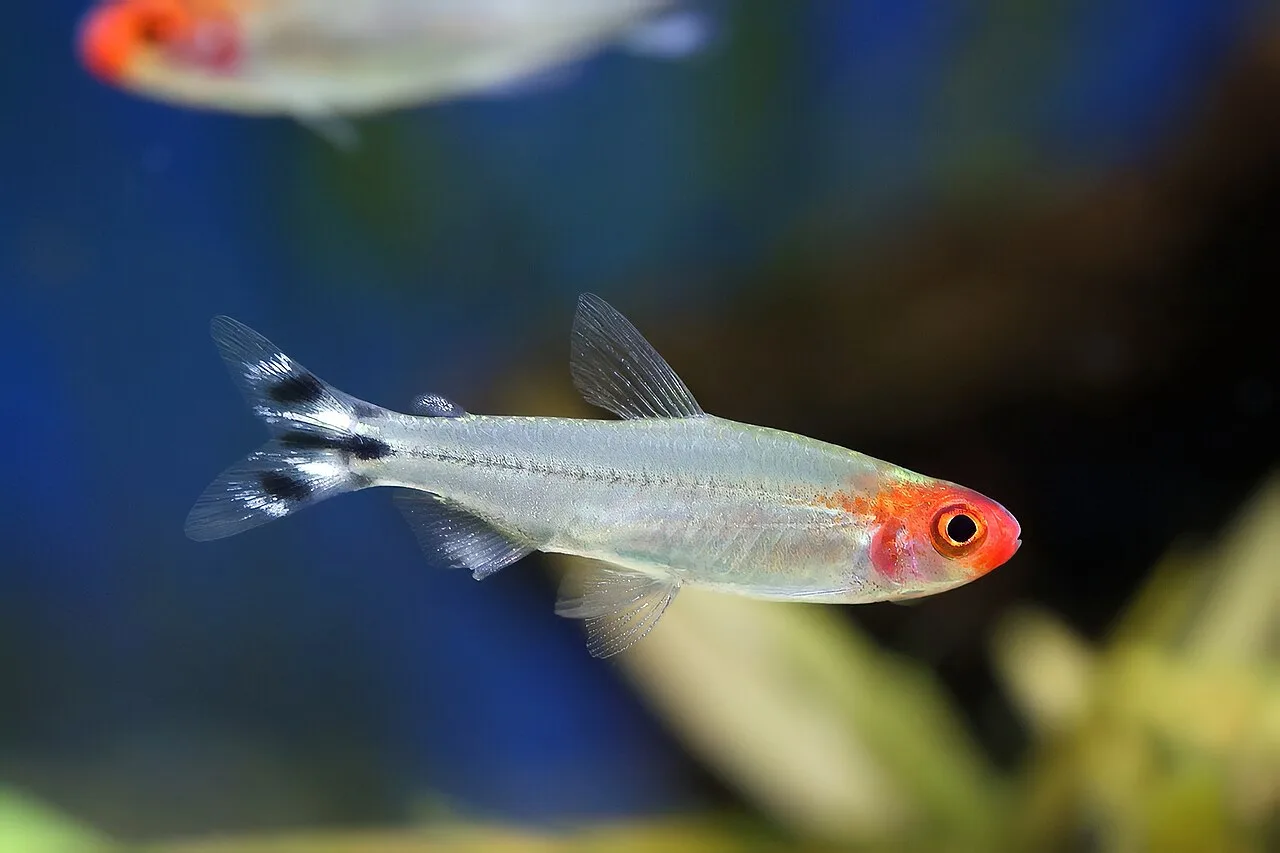


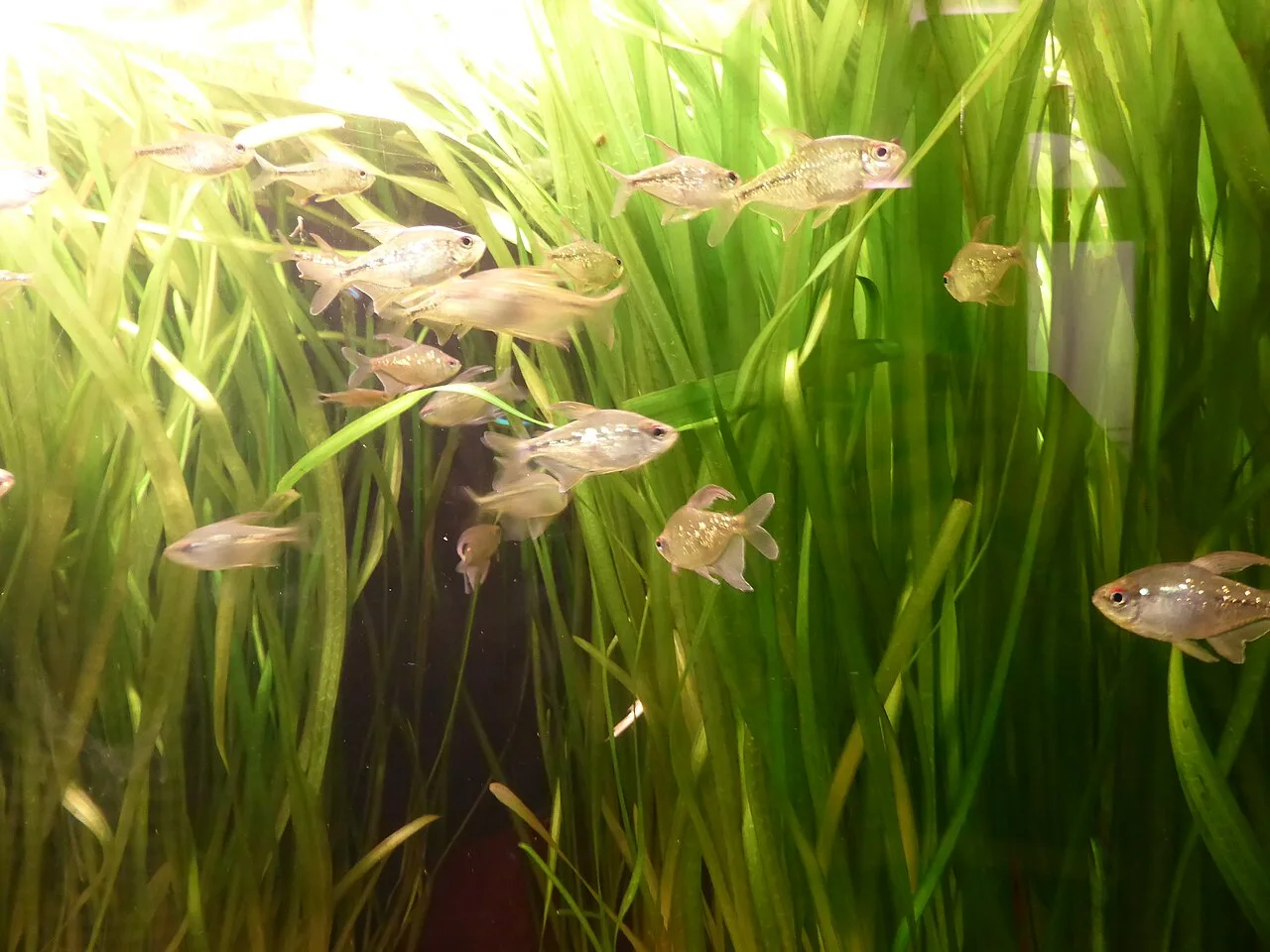
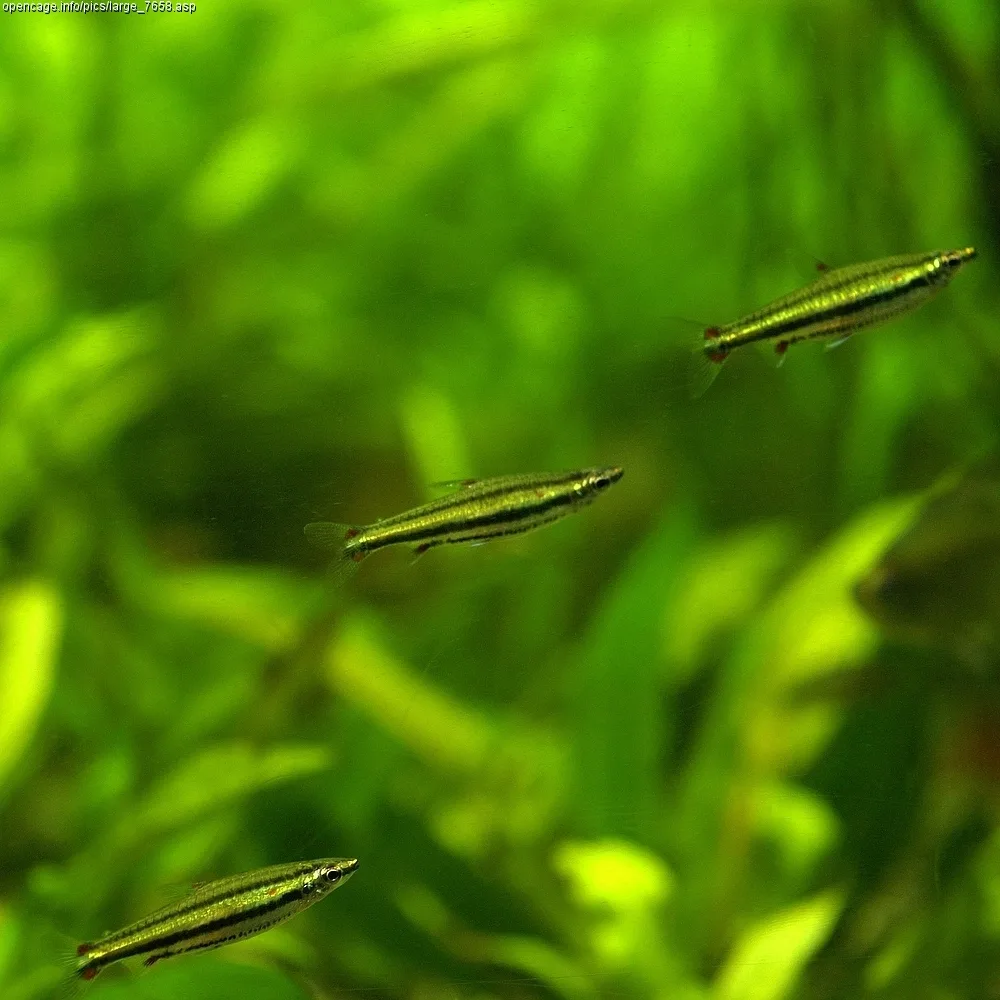
Sources & assertions 1
Wikipedia (deutsch)
Texte in Aquarisma sind eigenständig formuliert. Zahlenbereiche folgen den verlinkten Wikipedia-Artikeln, Lizenz CC BY-SA.
- Haltungsbereich nach https://de.wikipedia.org/wiki/Schwarzer_Phantomsalmler