
Silver hatchetfish
Gasteropelecus sternicla
10 views
A surface fish with a deep chest that jumps out of the water. The tank needs length, a quiet surface and a close cover.
2 min read · 309 words
Quick facts
The profile values are backed by one source.
Home & range
Every named country gets a frame and a circle around known waters in or near that area. Hotspots are orientation, not collection sites. A filled area is the range only when the source names a particular water body.
Overview
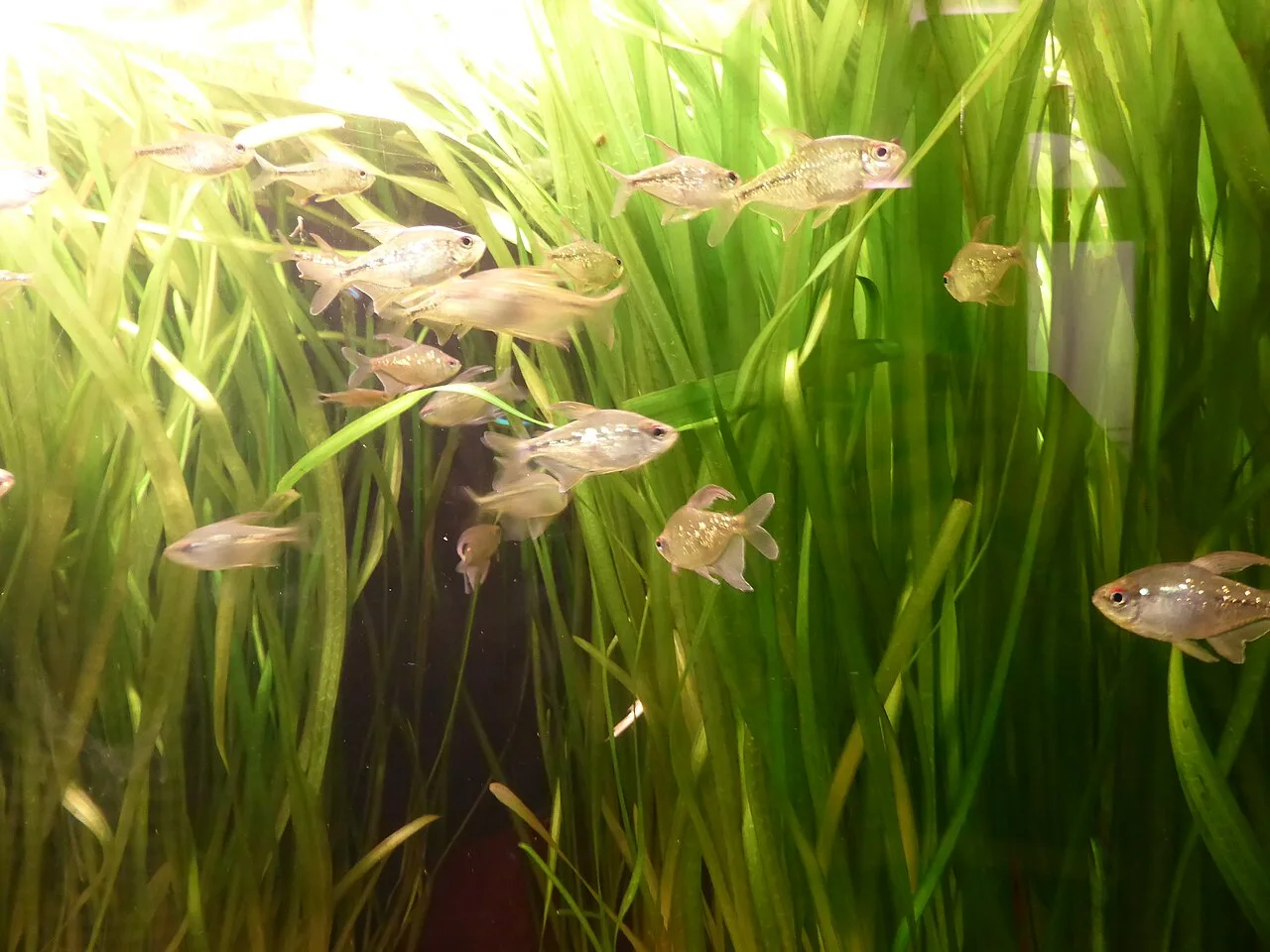
The silver hatchetfish reaches about 6 cm. The chest is deep like a keel, the pectoral fins work like wings. The back is straight, the belly silvery. The species stands directly under the surface and launches upward when startled. A missing cover is not a cosmetic fault. It is the most common loss.
It is not a hatchetfish of the genus Carnegiella, which stays smaller and wears a different pattern. Both want the same zone: above, quiet, covered.
Origin & habitat
This describes the origin, not how to furnish the aquarium.
Slow surfaces of Amazonia and the Guianas, often under overhanging vegetation. The origin stays coarse. Current at the surface pushes the fish into a corner. Cover from floating plants and an open run still belong together.
Care
Size
24 to 28 °C, pH 6 to 7. A group from six, tanks from about 80 litres and above all long, not tall. Floating plants at the edge, the middle of the surface open, the filter current not from above onto the fish. The cover close, including at the cable gaps.
Company
Calm midwater fish. Corydoras below. Above, no second surface hunters that need the same run, and no barbs that push into the surface. The hatchetfish do not feed on the bottom.
Diet
Fine food that stays at the top. Small flakes, brine shrimp, fruit flies, mosquito larvae. If the food sinks at once, they go hungry beside full bottom fish. Several small feeds through the day.
Behavior
A loose group directly under the surface. They do not form a tight ball, but they keep visual contact. A single fish stands shy in a corner. A fright at the tank sends them into the cover. That is the species, not a one-off accident.
Reproduction
Egg scatterer without brood care. The eggs fall into the open or into fine plants. The parents eat them. Breeding is uncommon and needs a separate tank. In a community tank young are not to be expected.
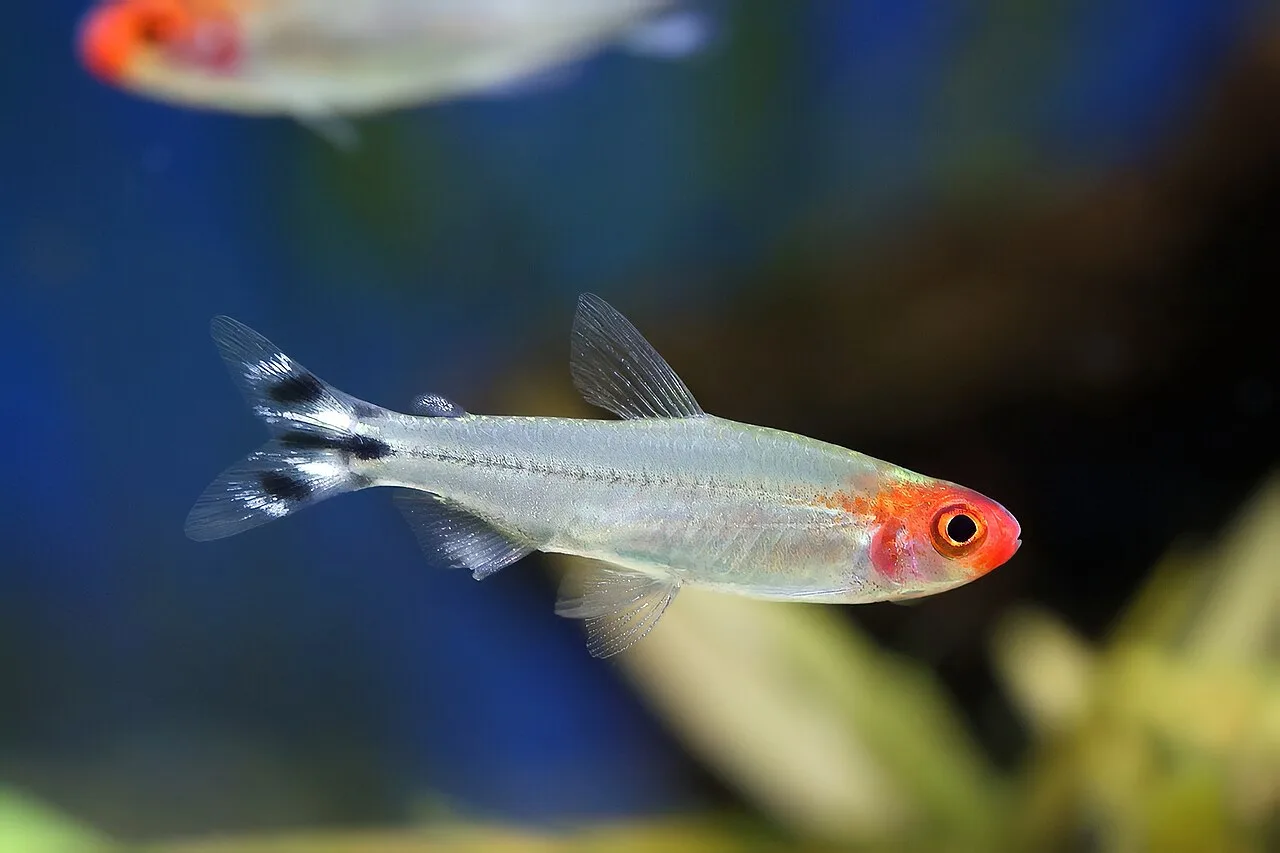
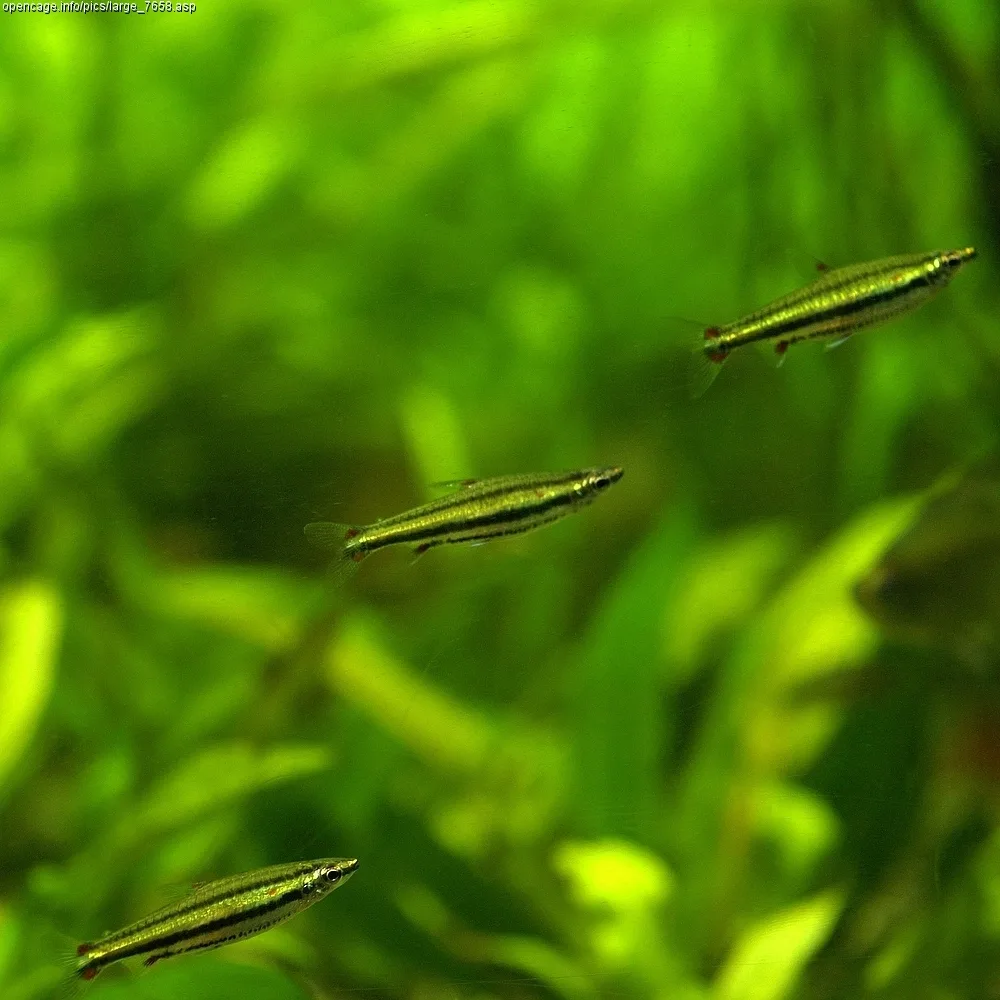
More species in this group


Sources & assertions 1
Wikipedia (deutsch)
Texte in Aquarisma sind eigenständig formuliert. Zahlenbereiche folgen den verlinkten Wikipedia-Artikeln, Lizenz CC BY-SA.
- Haltungsbereich nach https://de.wikipedia.org/wiki/Silberbeilbauch