Amazon sword
Echinodorus grisebachii
26 views
Echinodorus grisebachii includes the trade names amazonicus and bleherae as synonyms. The name Aquarius grisebachii has also been proposed.
- Temperature
- 22 – 28 °C
- pH
- 6 – 7.5 pH
- Lighting
- Medium light
- CO₂
- Low CO₂
- Growth rate
- Medium
- Placement
- Background
3 min read · 362 words
Care profile
Growth form
RosettesPlacement in the aquarium
Highlighted are the areas where the species is typically used.
- Background Along the back wall and the sides. Forms the tall, dense backdrop.
Home & range
Hatched countries are where the species occurs. It lives in particular waters there, not across the whole country. The points name known waters for orientation, not collection sites.
- Country of origin
- Water for orientation
Native
Botanical overview
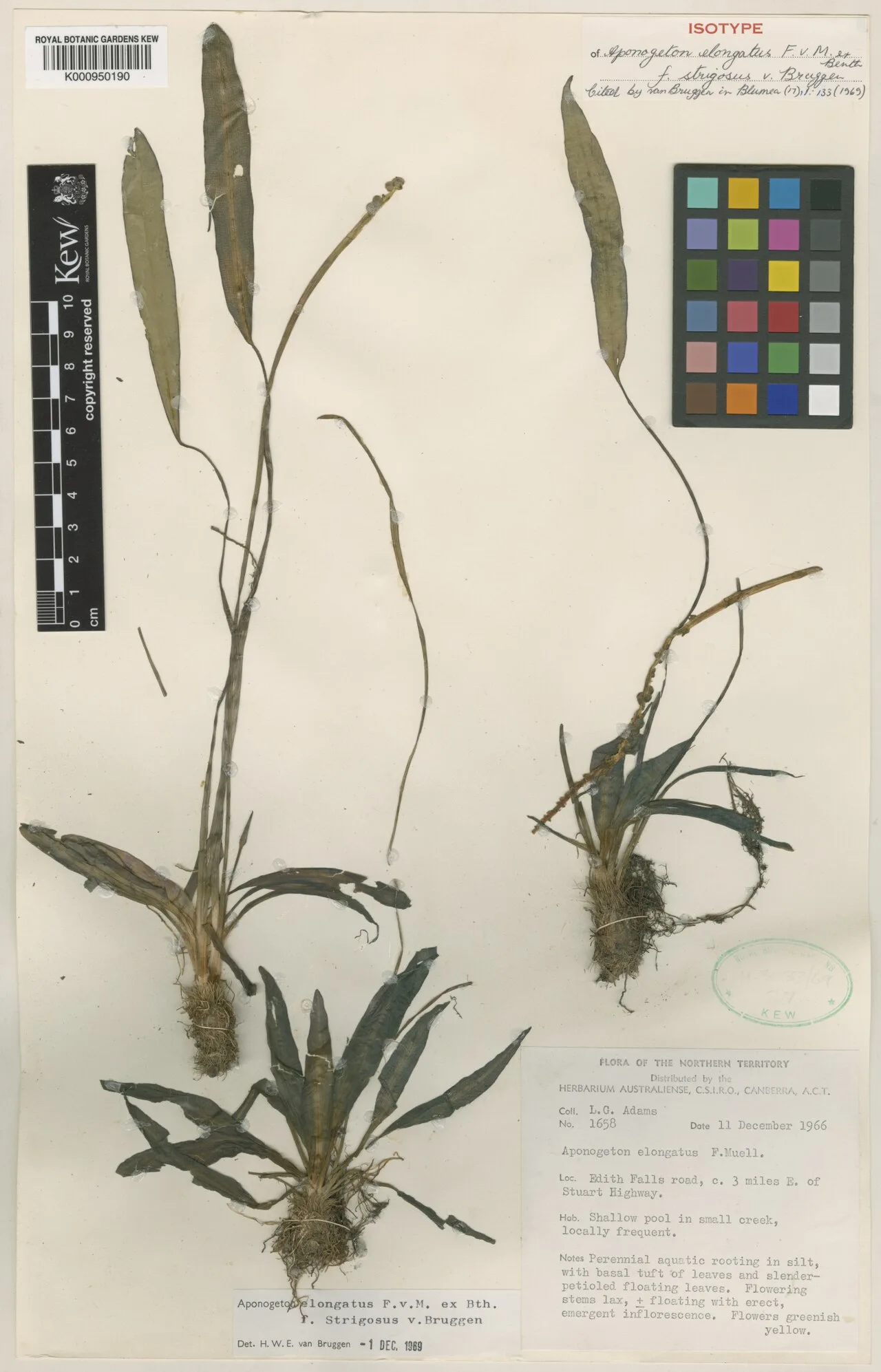
The genus belongs to the water-plantain family. 28 to 32 species are native to the New World. Synonyms of E. grisebachii are amphibius, gracilis, amazonicus, bleherae, parviflorus and peruensis, plus the variety minor. Christenhusz and Byng place it in Aquarius grisebachii. The trade name Amazon sword therefore falls on this synonym group, not on a second species.
Natural origin
This describes the origin, not how to furnish the aquarium.
The genus is New World. No individual countries are named for this species in that section. No map is added.
Light, CO₂ and position
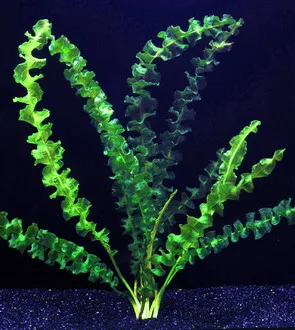
Most species of the genus need large tanks because they grow large. Nurseries have bred smaller cultivars, often with reddish leaves. Wild forms are mostly light to medium green. With space and good light most trade species are undemanding and grow at ordinary living-room temperatures. Some species from temperate regions tolerate about 10 °C briefly, and tropical species cope with about 30 °C. That applies to the genus, not as the span of this one species. 22–28 °C and medium light with low CO₂ work well. Nutrient demand is high.
Rosette and space
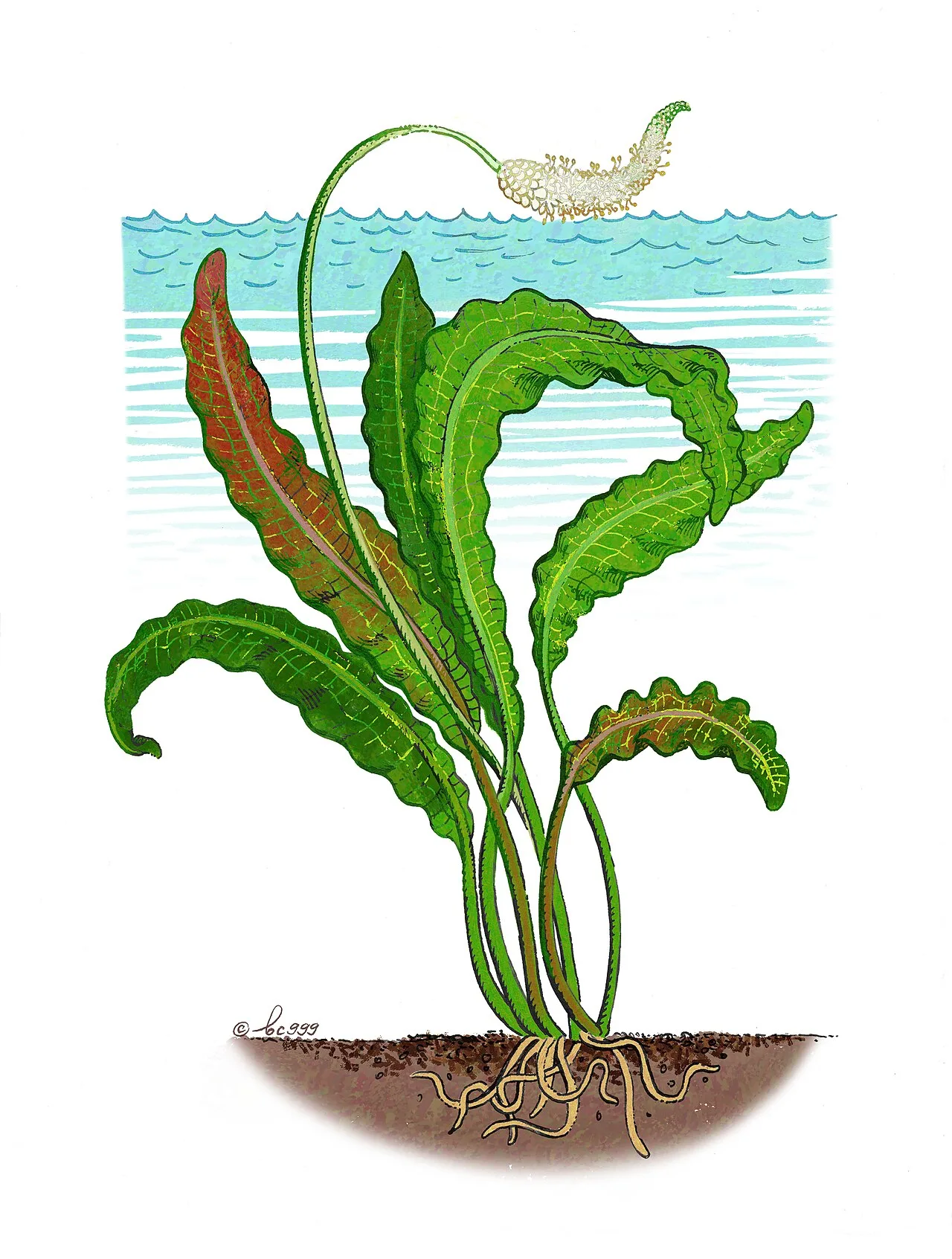
The Amazon sword needs an open rosette. Neighbouring stems that grow into the centre are cut, or the new leaves stay small. The root ball is large. A shop pot is freed of rock wool and set so that the growing point stays free. Set too deep, the new growth stalls.
Fertiliser capsules in the root zone carry the plant for months. A sword fed only through the water column turns pale and makes small leaves, even though the water measures as nutrient-rich.
Growth and trimming
Removing outer old leaves and not setting the rosette too deep is not stated in the genus section. Room for the rosette follows from the size remark.
Outer leaves
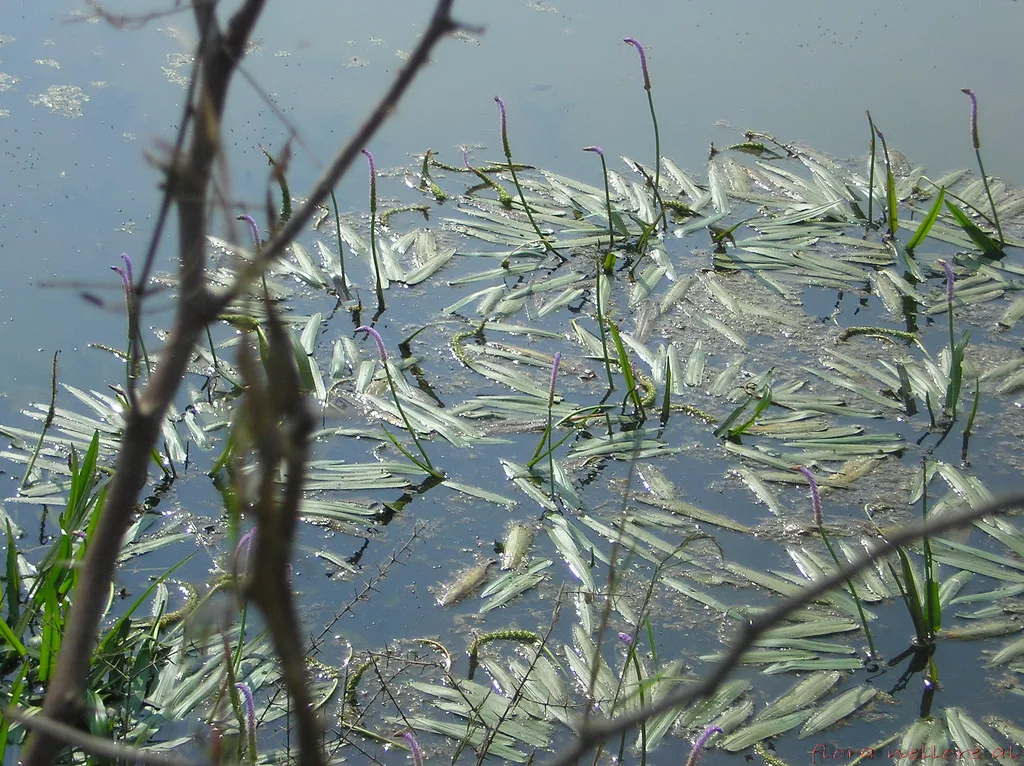
Yellow outer leaves are cut at the stalk right at the rosette. The centre stays untouched. A flower stalk with adventitious plants is a way to propagate and, at the same time, a sign that the plant is sending a lot of energy upward. Anyone who does not want daughters cuts the stalk early and leaves the strength in the clump.
Further care
Reddish cultivars are not separate species and differ from the green wild forms.
Propagation
Adventitious plants can form on the flower stalks.