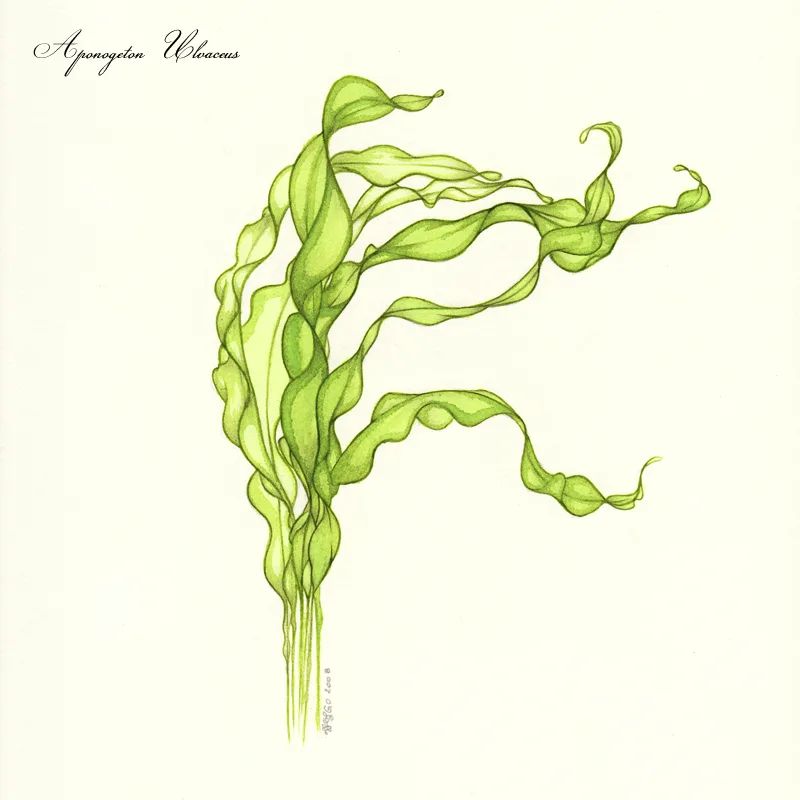
Aponogeton elongatus
Aponogeton elongatus
1 view
An Australian aponogeton with long, delicate, wavy ribbon leaves in green to red-brown.
- Temperature
- 20 – 28 °C
- pH
- 6 – 7.5 pH
- Lighting
- High light
- CO₂
- Medium CO₂
- Growth rate
- Medium
- Placement
- Background
1 min read · 170 words
Care profile
Growth form
RosettesPlacement in the aquarium
Highlighted are the areas where the species is typically used.
- Background Along the back wall and the sides. Forms the tall, dense backdrop.
Home & range
Hatched countries are where the species occurs. It lives in particular waters there, not across the whole country. The points name known waters for orientation, not collection sites.
- Country of origin
- Water for orientation
Native
Botanical overview
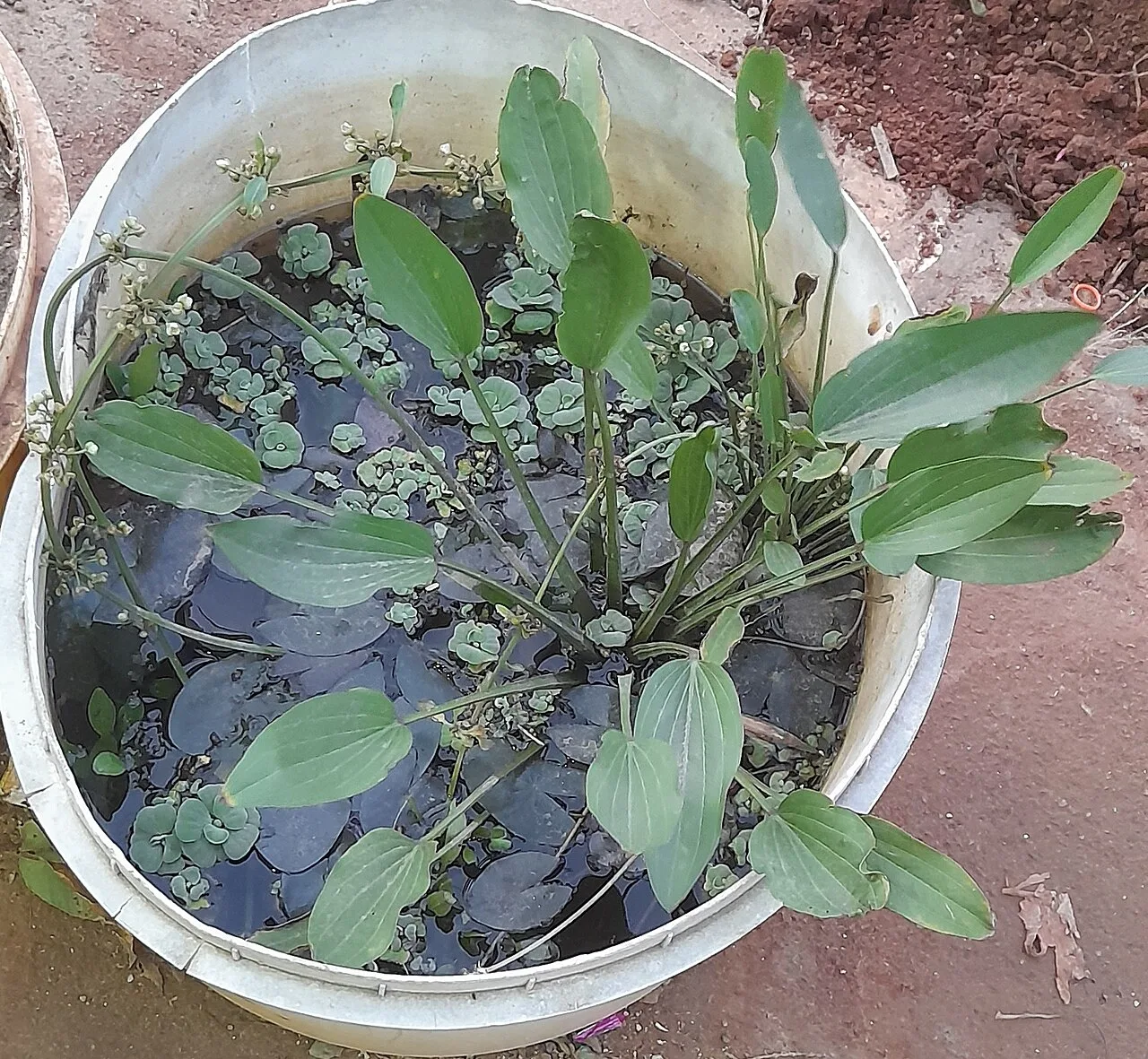
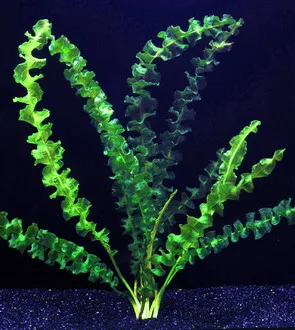
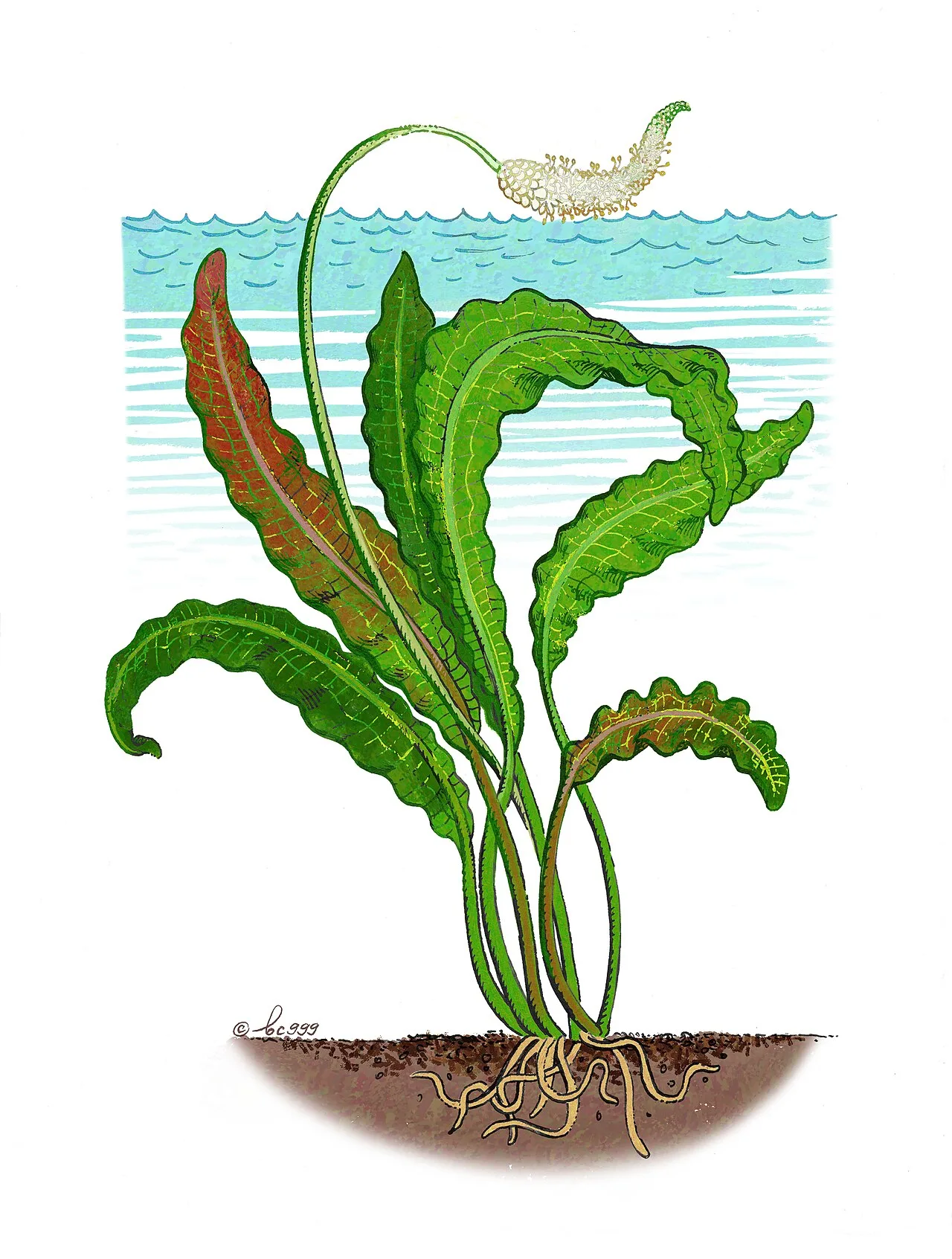
Aponogeton elongatus forms a rosette of very delicate, ribbon-shaped leaves with a wavy margin from a tuber. The colour ranges from pale green through yellow-green to red-brown. In large tanks the leaves reach 40 cm and more.
It is considered demanding: it needs plenty of light and, from time to time, a rest period in which the tuber recovers.
Natural origin
This describes the origin, not how to furnish the aquarium.
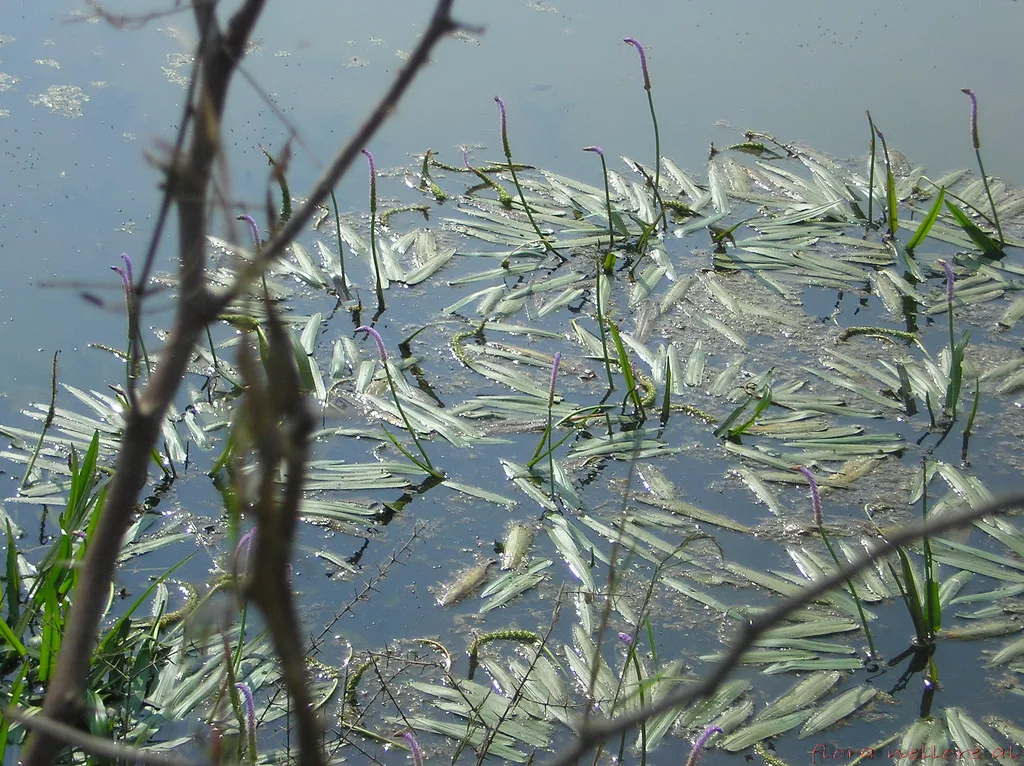
The species is native to Australia, from the north of the continent to north-eastern New South Wales. It grows in still and flowing waters, in shaded and sunny spots alike.
Light, CO₂ and position
Light
High light.
CO₂ and fertiliser
CO₂ helpful, root fertiliser at the tuber.
Position
20 to 28 °C. Background.
Layout and neighbours
The trailing, wavy ribbons look best in the background with gentle current. As a specimen, not in a dense group.
Common mistakes
No rest period: after a few months the leaves get smaller and smaller.
Growth and trimming
Moderate growth. When new leaves get smaller, take the tuber out, keep it cooler and darker for a few weeks and replant it.