Aponogeton natans
Aponogeton natans
2 views
A small aponogeton from South Asia with narrow submersed leaves and floating leaves. Grows from a tuber.
- Temperature
- 22 – 28 °C
- pH
- 6 – 7.5 pH
- Lighting
- Medium light
- CO₂
- Low CO₂
- Growth rate
- Medium
- Placement
- Midground
1 min read · 145 words
Care profile
Growth form
RosettesPlacement in the aquarium
Highlighted are the areas where the species is typically used.
- Midground Between foreground and background. Hides transitions and frames stones and wood.
Home & range
Hatched countries are where the species occurs. It lives in particular waters there, not across the whole country. The points name known waters for orientation, not collection sites.
- Country of origin
- Water for orientation
Native
Botanical overview
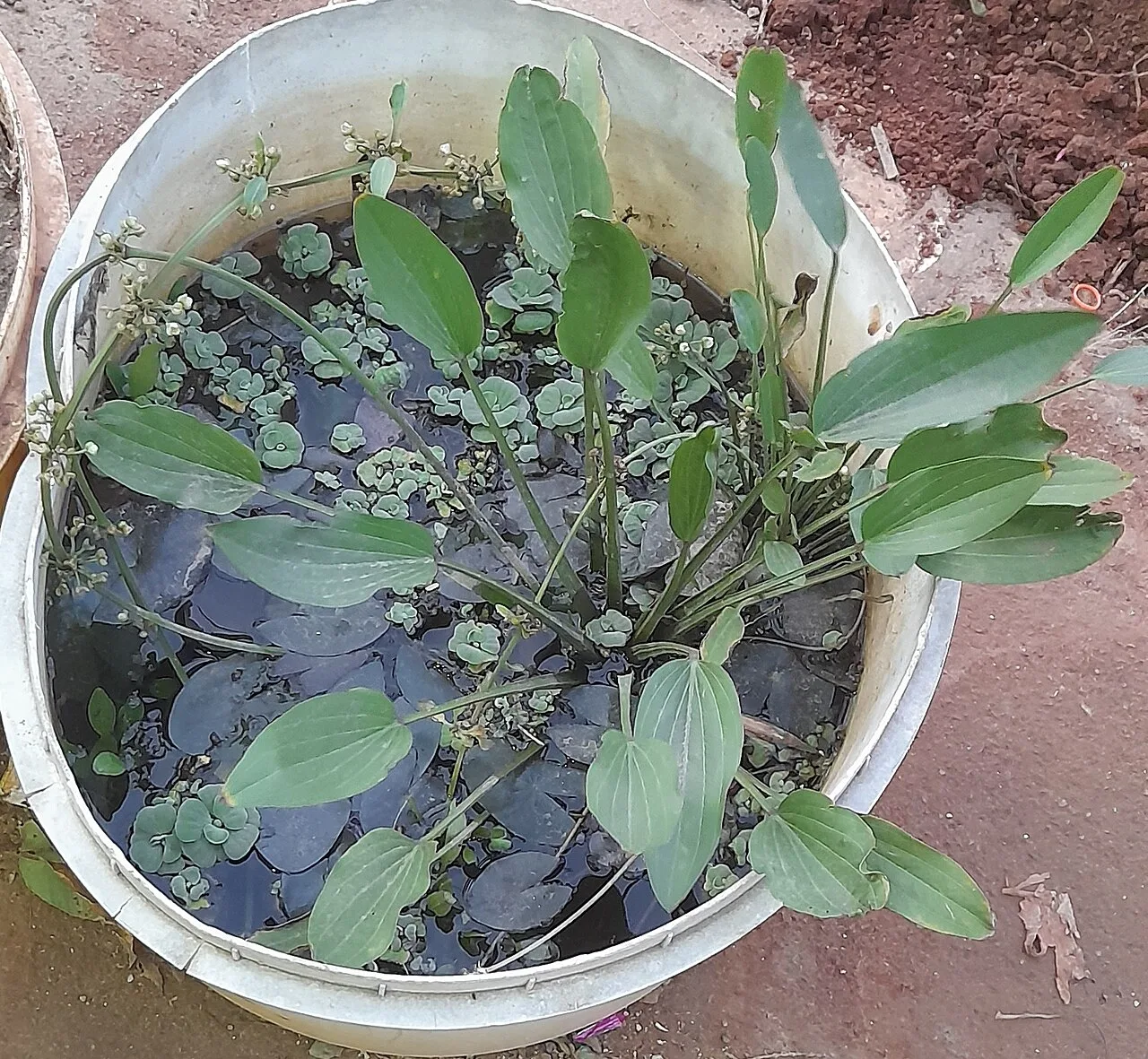
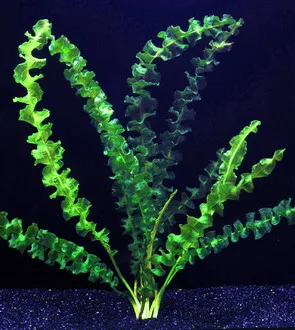
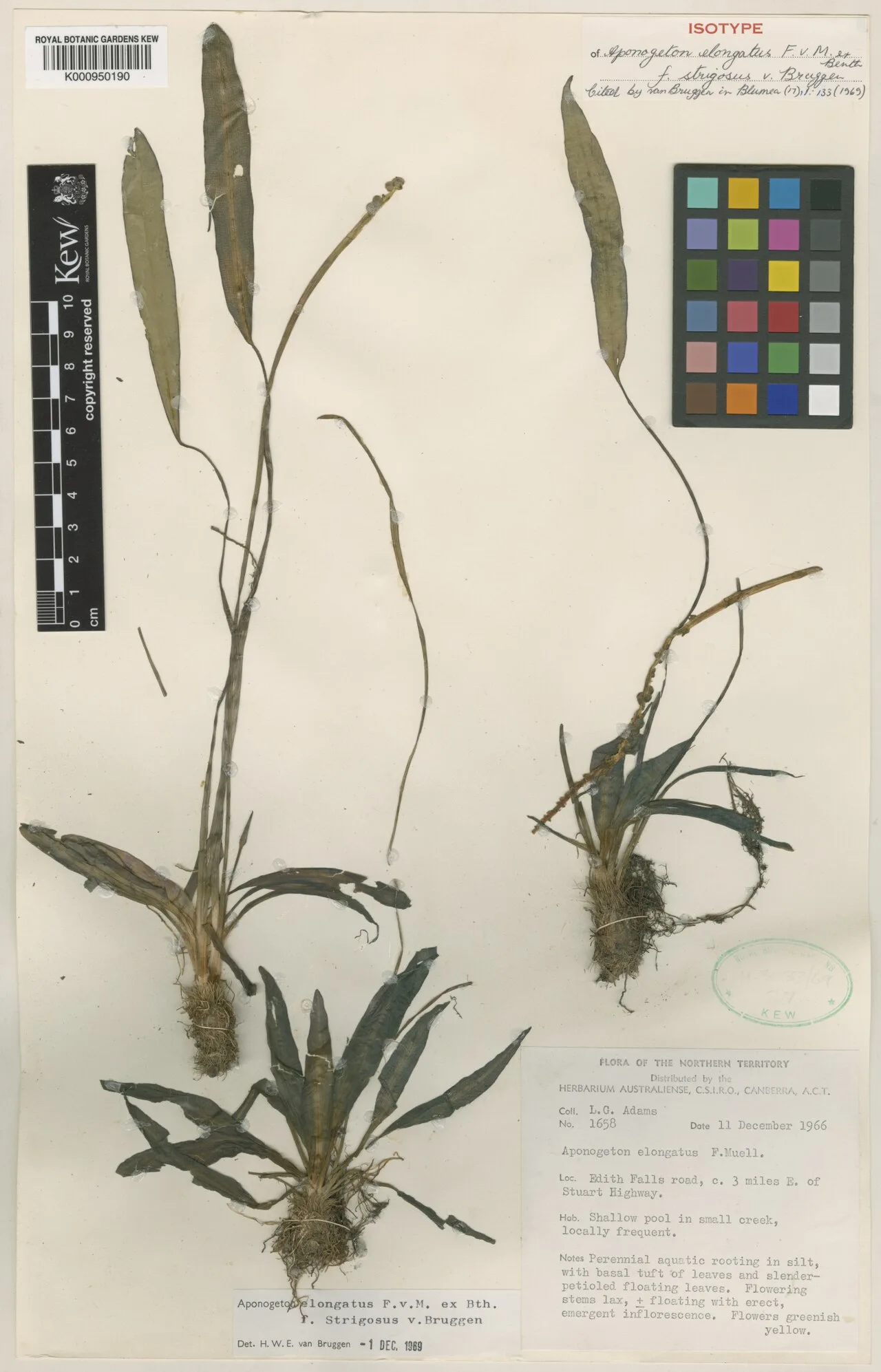
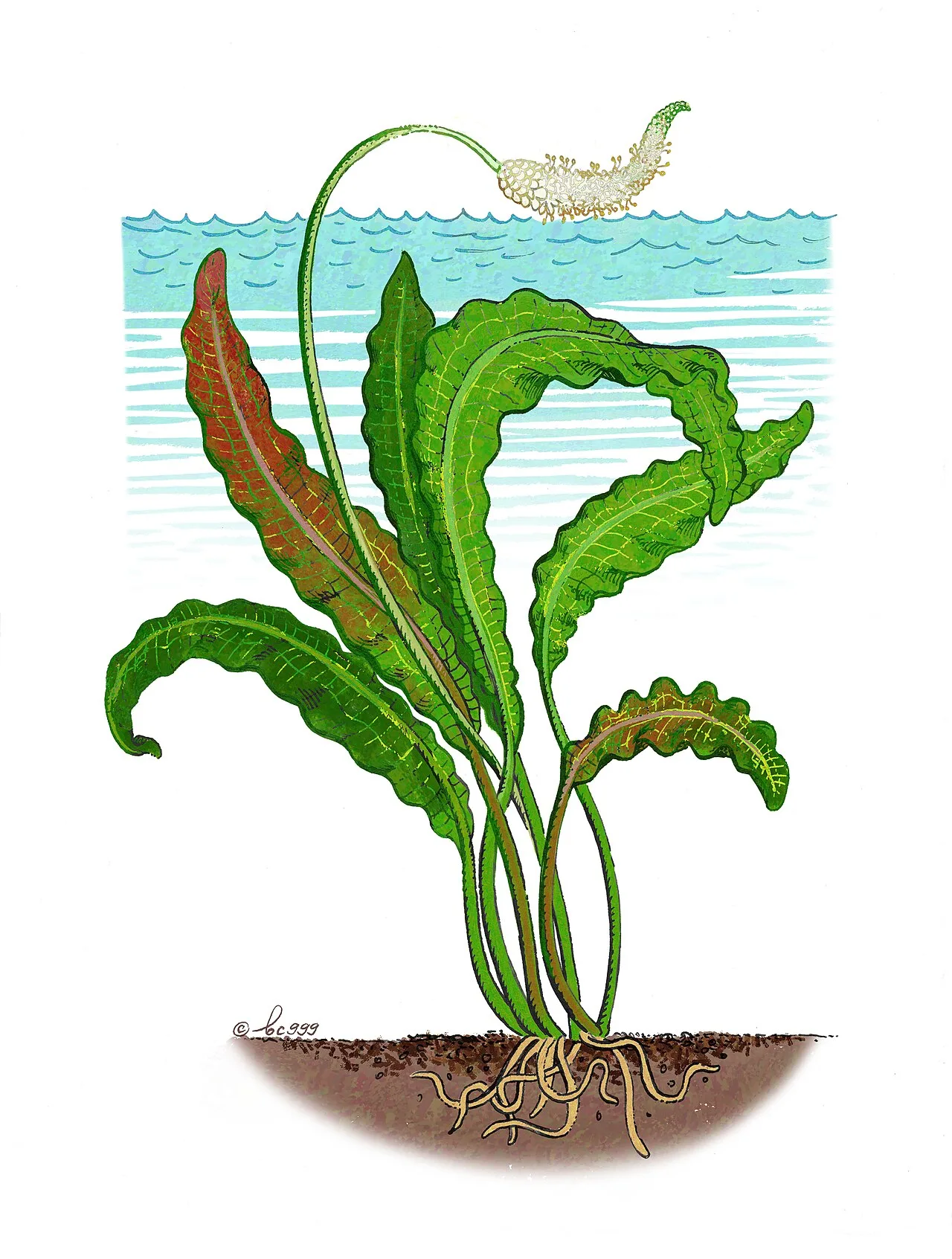
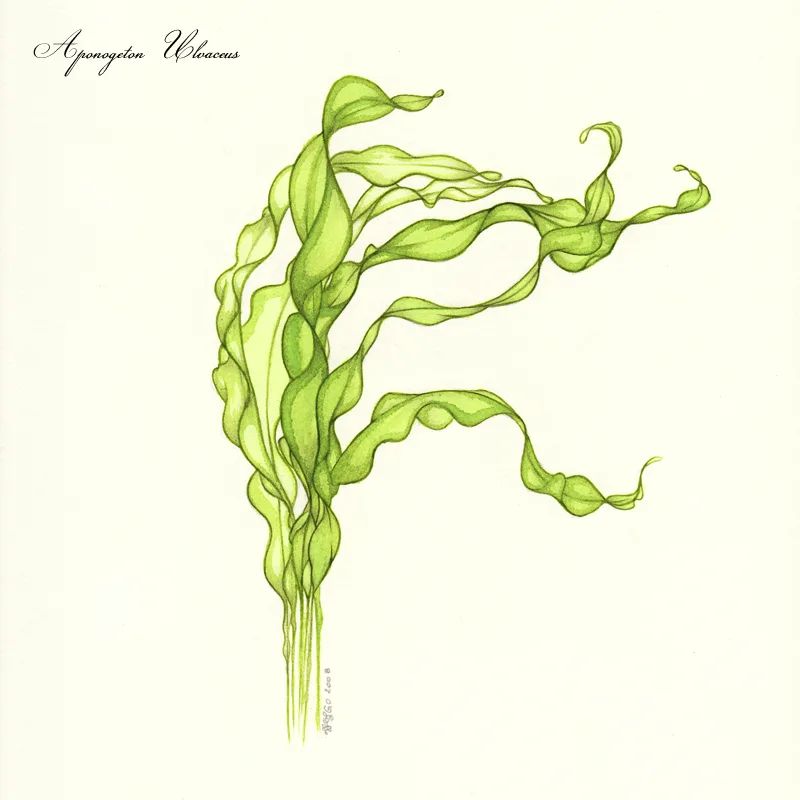
Aponogeton natans forms a loose rosette of narrow lanceolate, smooth-edged submersed leaves from a tuber. Later oval floating leaves appear on long stalks. The inflorescence is a single spike with white to pink-violet flowers. It stays smaller than Aponogeton crispus.
In the aquarium it is an uncomplicated rosette plant for the midground.
Natural origin
This describes the origin, not how to furnish the aquarium.
The species is native to India, Sri Lanka, Bangladesh and Myanmar. It grows in wetlands, pools and rice paddies.
Light, CO₂ and position
Light
Medium light.
Fertiliser
Root fertiliser near the tuber.
Position
22 to 28 °C. Midground.
Layout and neighbours
As a single rosette in the midground of Asian tanks, for example with rasboras and gouramis. Cryptocorynes in front.
Common mistakes
Letting floating leaves grow: they take the light from the submersed plants.
Growth and trimming
Moderate growth. Cut off floating leaves so the submersed leaves get enough light. After a few months the plant may take a rest.