Brazilian micro sword
Lilaeopsis brasiliensis
26 views
A grass-like ground cover from the Americas. A lawn is made from many small portions, not from one pot in the middle.
- Temperature
- 20 – 28 °C
- pH
- 6 – 7.5 pH
- Lighting
- High light
- CO₂
- High CO₂
- Growth rate
- Medium
- Placement
- Foreground
2 min read · 336 words
Care profile
Growth form
Ground coverPlanting and propagation
- Rhizome The creeping rhizome stays free above the substrate. Buried, it rots.
- Runners Forms runners in the substrate that grow into new plants. Separate them once they have their own roots.
Placement in the aquarium
Highlighted are the areas where the species is typically used.
- Foreground At the front of the tank, where the plant stays low and keeps the view open.
- Ground cover Spreads flat over the ground and can form a closed lawn.
Home & range
Hatched countries are where the species occurs. It lives in particular waters there, not across the whole country. The points name known waters for orientation, not collection sites.
- Country of origin
- Water for orientation
Native
Botanical overview
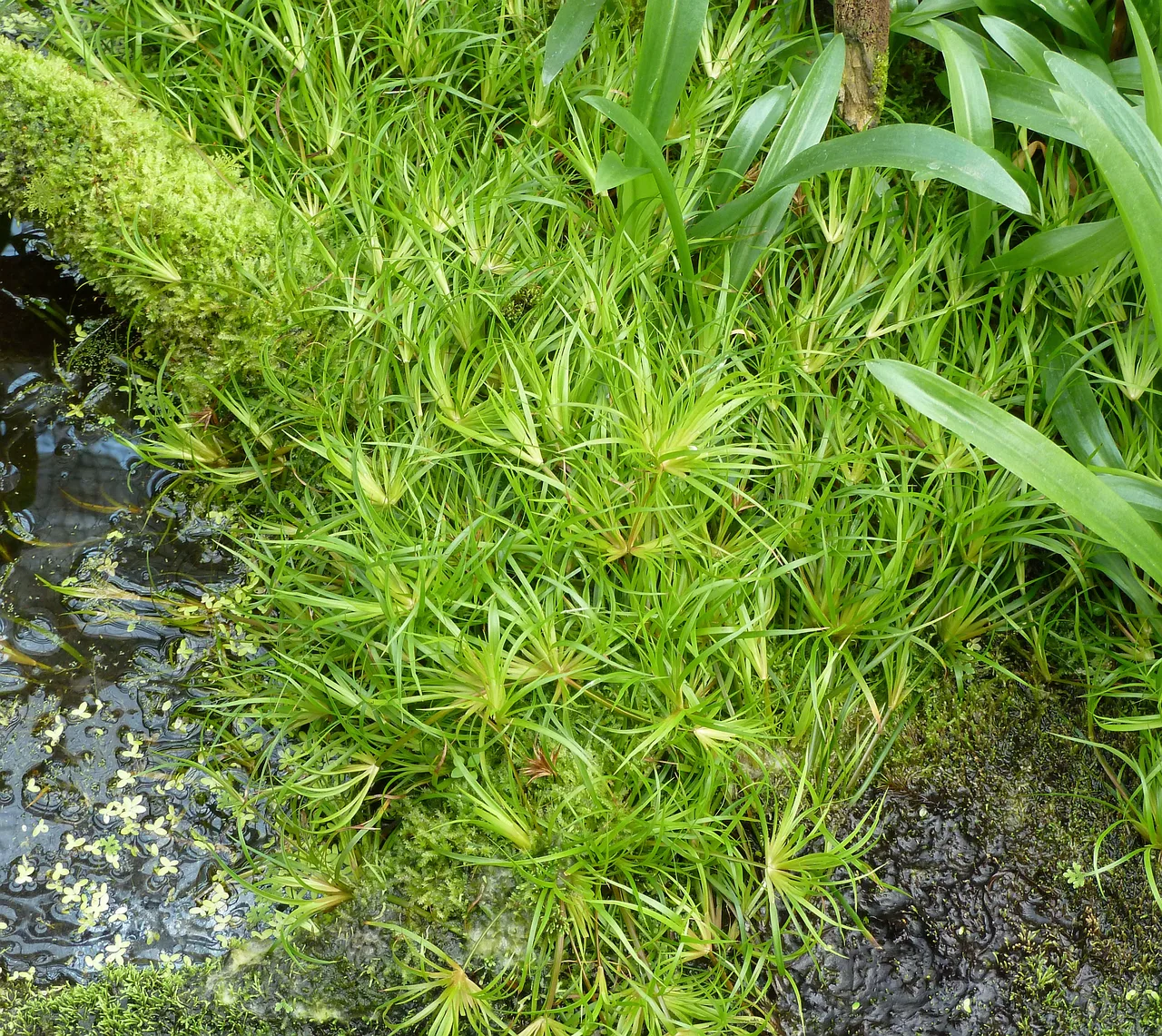
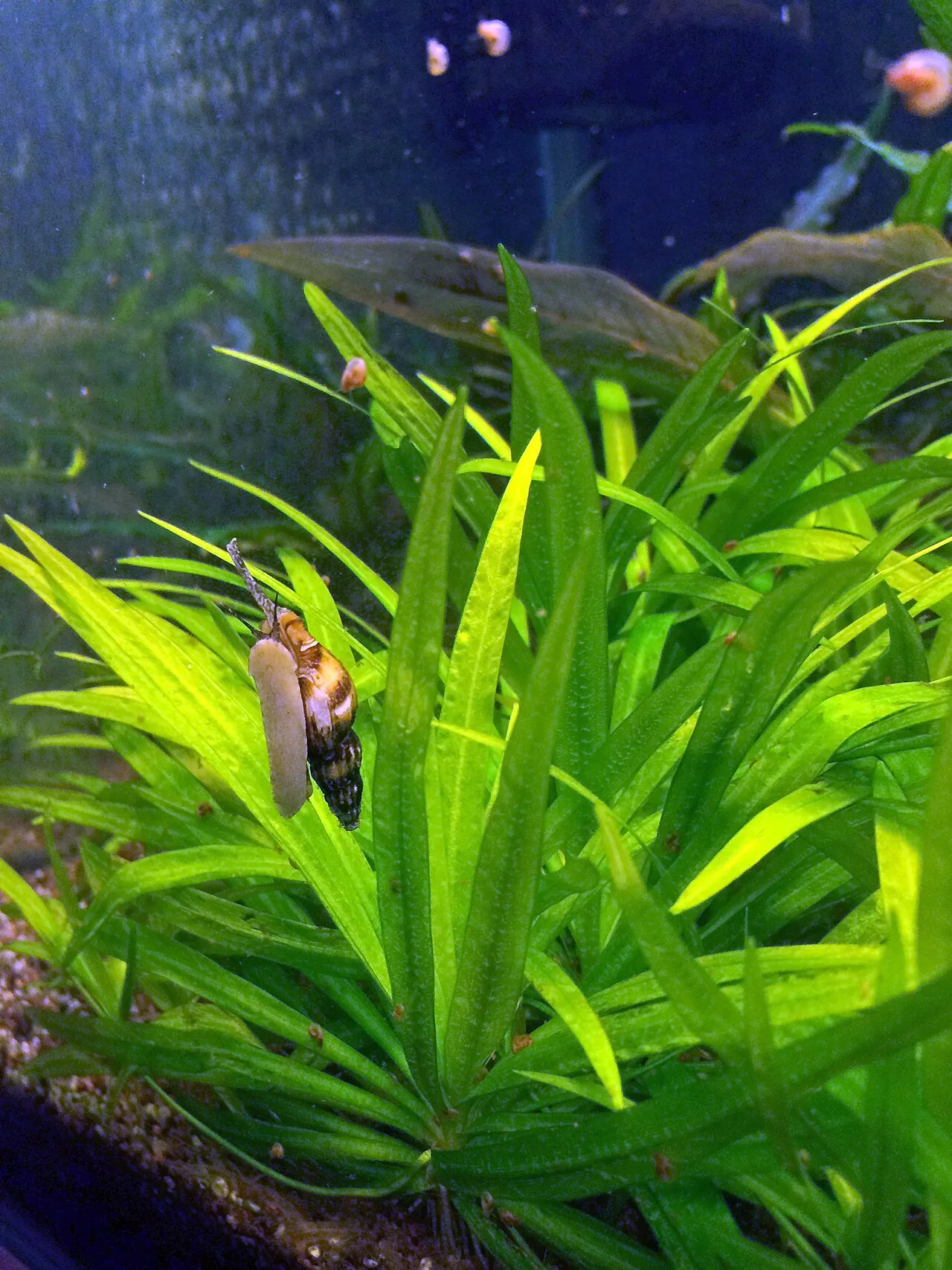
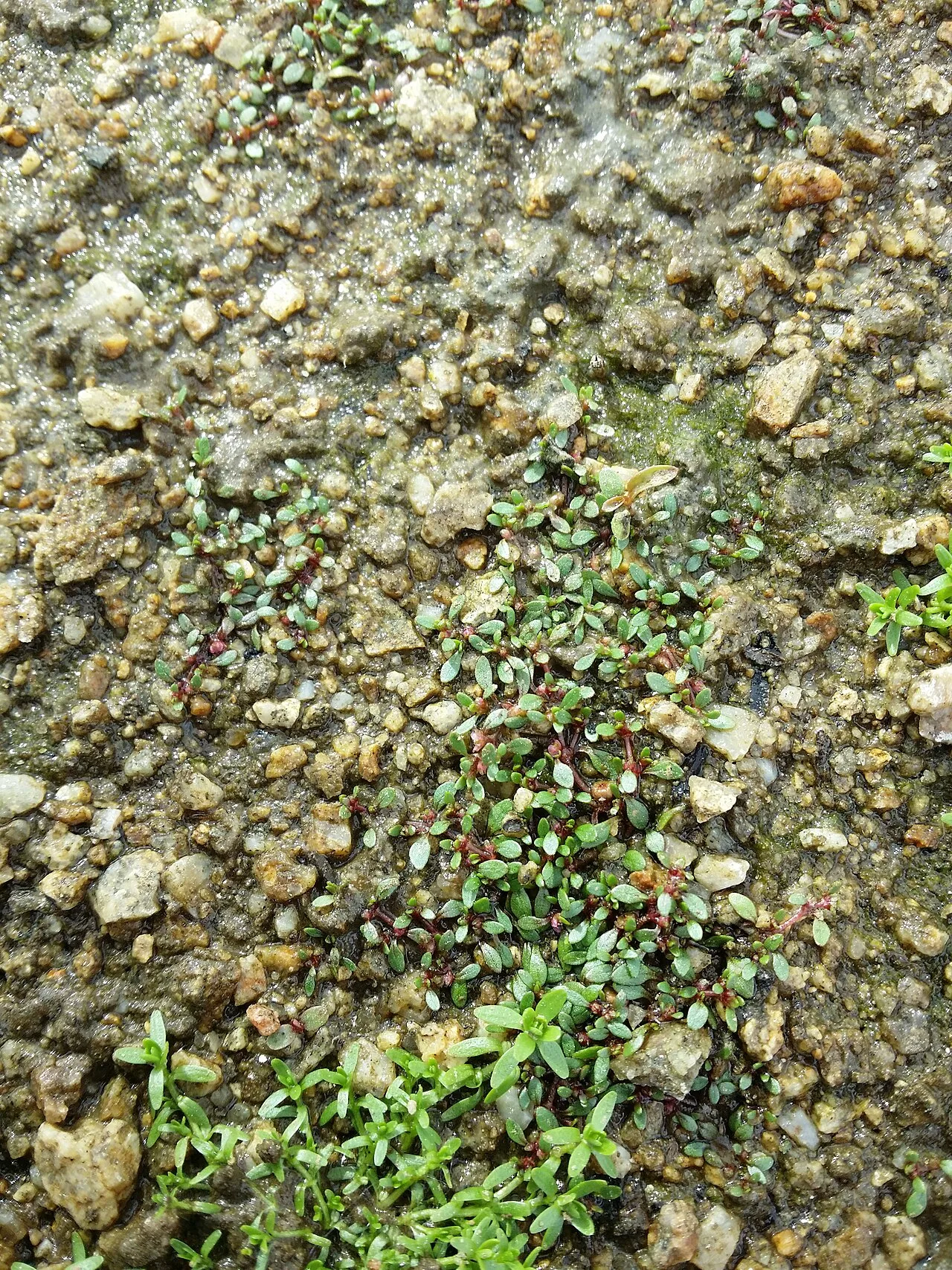
Lilaeopsis brasiliensis sends narrow, pale green leaves from a creeping rhizome. With strong light the height stays at a few centimetres. When the light is missing it rises into a loose tuft of grass. The species is not Eleocharis acicularis. Hairgrass is finer and needle-like. Lilaeopsis has a recognisable flat blade.
In the pot the plant usually sits as a dense mat in rock wool. That mat is divided. A whole cushion rots from below.
Natural origin
This describes the origin, not how to furnish the aquarium.
Shallow banks and swamps in South America, bright and at times flooded. The plant is used to switching between emersed and submerged. In the aquarium it stays submerged if light and substrate are right. South America stays the coarse origin.
Light, CO₂ and position
Lawn
High light, CO₂ recommended, 20 to 28 °C, a nutrient-rich substrate. Set small tufts with tweezers about two centimetres apart. Keep the area free of tall plants beforehand. Two to three months of patience until the runners close.
Without CO₂
The plant survives in medium light without CO₂, but stays taller and gappier. Anyone who wants a short lawn does not get around light and CO₂. A one-off dose of iron does not replace that.
Layout and neighbours
The short, flat leaves form a grassy lawn that needs less light than most carpet plants. It suits foregrounds without strong lighting.
Common mistakes
Nothing much happens for weeks at first. Do not give up too early.
Growth and trimming
Leaves that are too tall are cut like a lawn, not plucked one by one. The cut comes when the area has already closed. Before that it would only weaken the few shoots. Yellow patches are removed together with the piece of rhizome and replaced by a runner from the edge.\n\nSiphon mulm from between the blades at the water change. Otherwise the lawn turns brown from below while the tips are still green.
Propagation
Separate runners with roots and set them into the gaps. That is the propagation and, at the same time, the way an area becomes dense. Seed plays no role.