
Hydrocotyle tripartita
Hydrocotyle tripartita
16 views
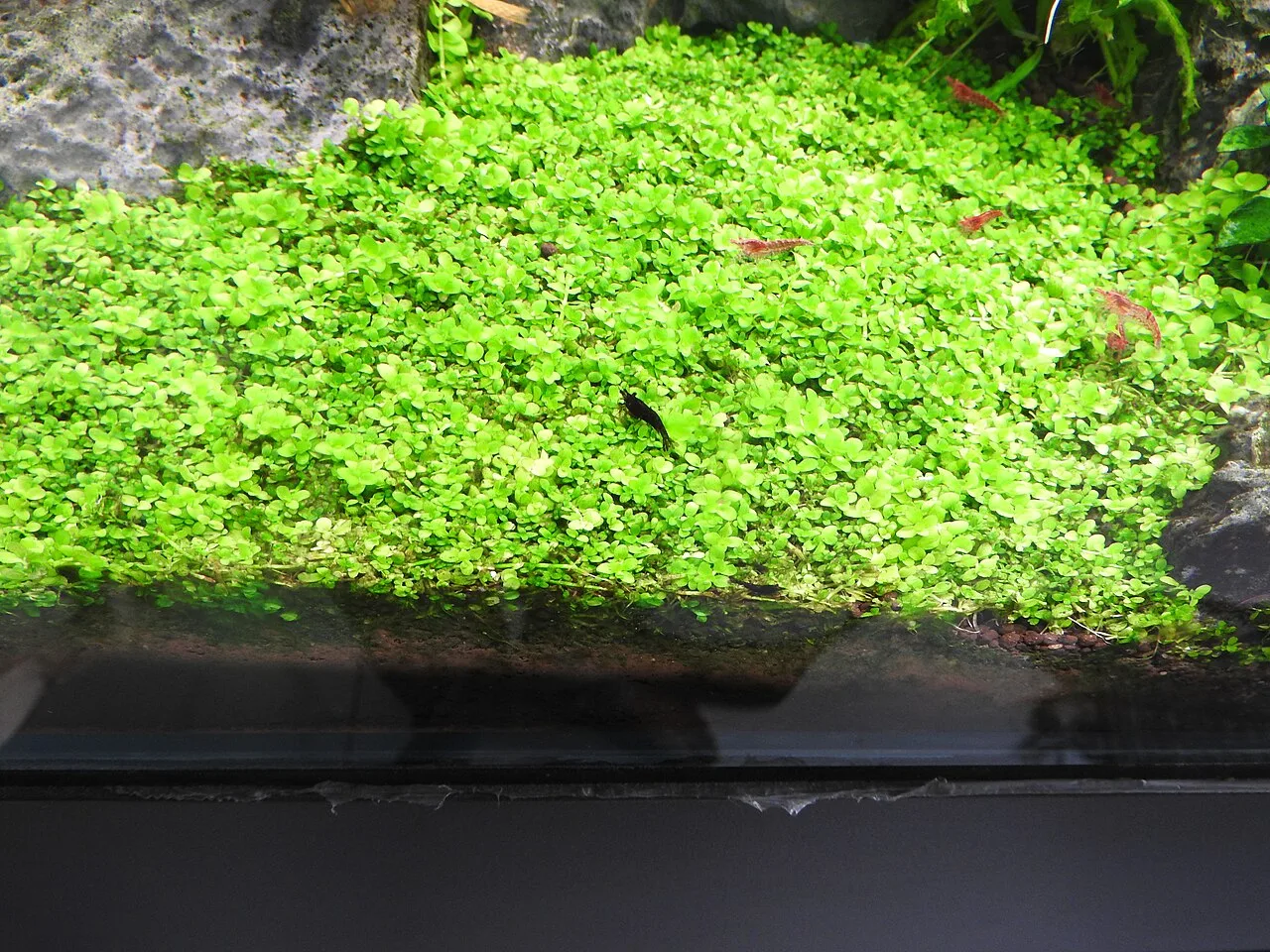
A creeping plant with three-part leaves, grown as a ground cover or as a small bush on wood. It grows fast once the light arrives.
2 min read · 290 words
Care profile
The care profile is backed by one source.
Lighting
High lightThe profile says high light.
CO₂
Medium CO₂Added CO₂ is recommended for the described growth.
Growth rate
FastThe profile describes fast growth.
Nutrient demand
MediumNutrient demand is moderate.
Beginner friendly
ModerateThe published judgement sits between easy and demanding.
- Cuttings
- Runners
Placement in the aquarium
Only the stored position or growth form is highlighted, not every possible layout.
- Foreground
- Ground cover
Home & range
Every named country gets a frame and a circle around known waters in or near that area. Hotspots are orientation, not collection sites. A filled area is the range only when the source names a particular water body.
Botanical overview
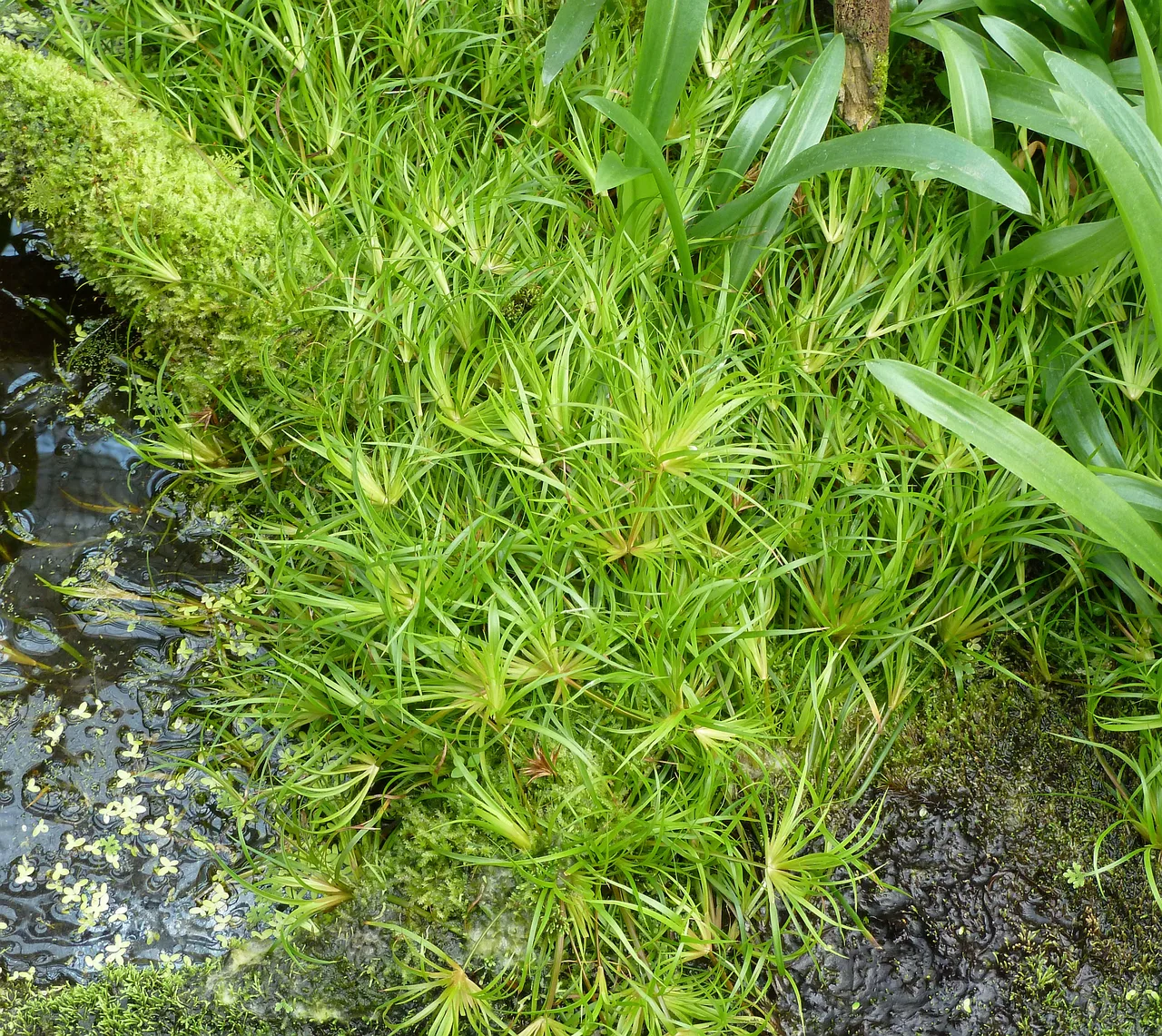
Hydrocotyle tripartita sends small, three-part leaves on a thin stem, suggesting a clover. On the bottom it stays flat. Against a stone, or in low light, it climbs and becomes a loose bush. The form is a question of trimming and light, not of two species.
The stems root at the nodes. A pot is a tangle that has to be taken apart. Set as a lump, it lifts off the substrate after a few days.
Natural origin
This describes the origin, not how to furnish the aquarium.
Damp banks and shallow water in East Asia and Australia, bright and nutrient-rich. The exact natural limit of the form common in the hobby is narrower than the trade route. For the tank the bright, creeping habit matters.
Light, CO₂ and position
Light
High to medium light, CO₂ clearly helpful, 20 to 28 °C. In the foreground, in small tufts with a gap. Or leaned against hardscape, then trimmed regularly, or it lies on the neighbouring plants. Without CO₂ it keeps growing, but taller and more full of holes.
Neighbours
Slow rosettes lose if the pennywort grows over them. It belongs at the edge of a lawn or in an area of its own, not in the middle of Cryptocoryne parva.
Growth and trimming
A weekly trim holds the height. Cut runners are replanted or removed. An uncut stand becomes a cushion whose underside turns yellow and then floats up. Then replant the healthy top layer and discard the rest.\n\nThe plant draws nutrients from the water. In a lean tank it stays pale. A normal complete fertiliser is enough. A substrate fertiliser helps, but it is not the only source.
Propagation
Cuttings with two or three nodes. The lower node into the substrate or tucked under a moss cushion. The species multiplies so fast that the trim is the propagation.
More species in this group
Sources & assertions 1
Wikipedia (deutsch)
Texte in Aquarisma sind eigenständig formuliert. Zahlenbereiche folgen den verlinkten Wikipedia-Artikeln, Lizenz CC BY-SA.
- Haltungsbereich nach https://de.wikipedia.org/wiki/Hydrocotyle_tripartita