
Utricularia graminifolia
Utricularia graminifolia
15 views
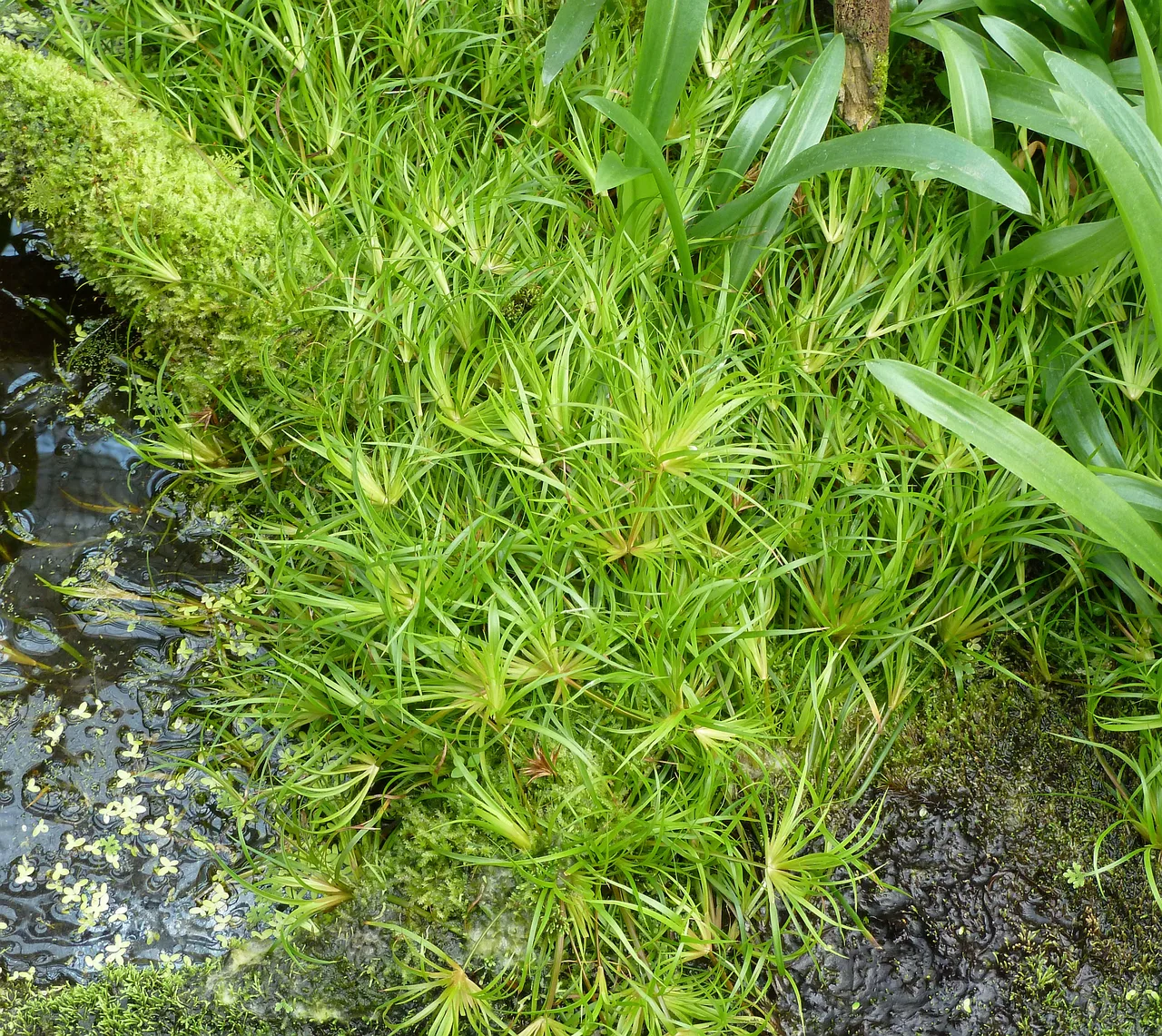
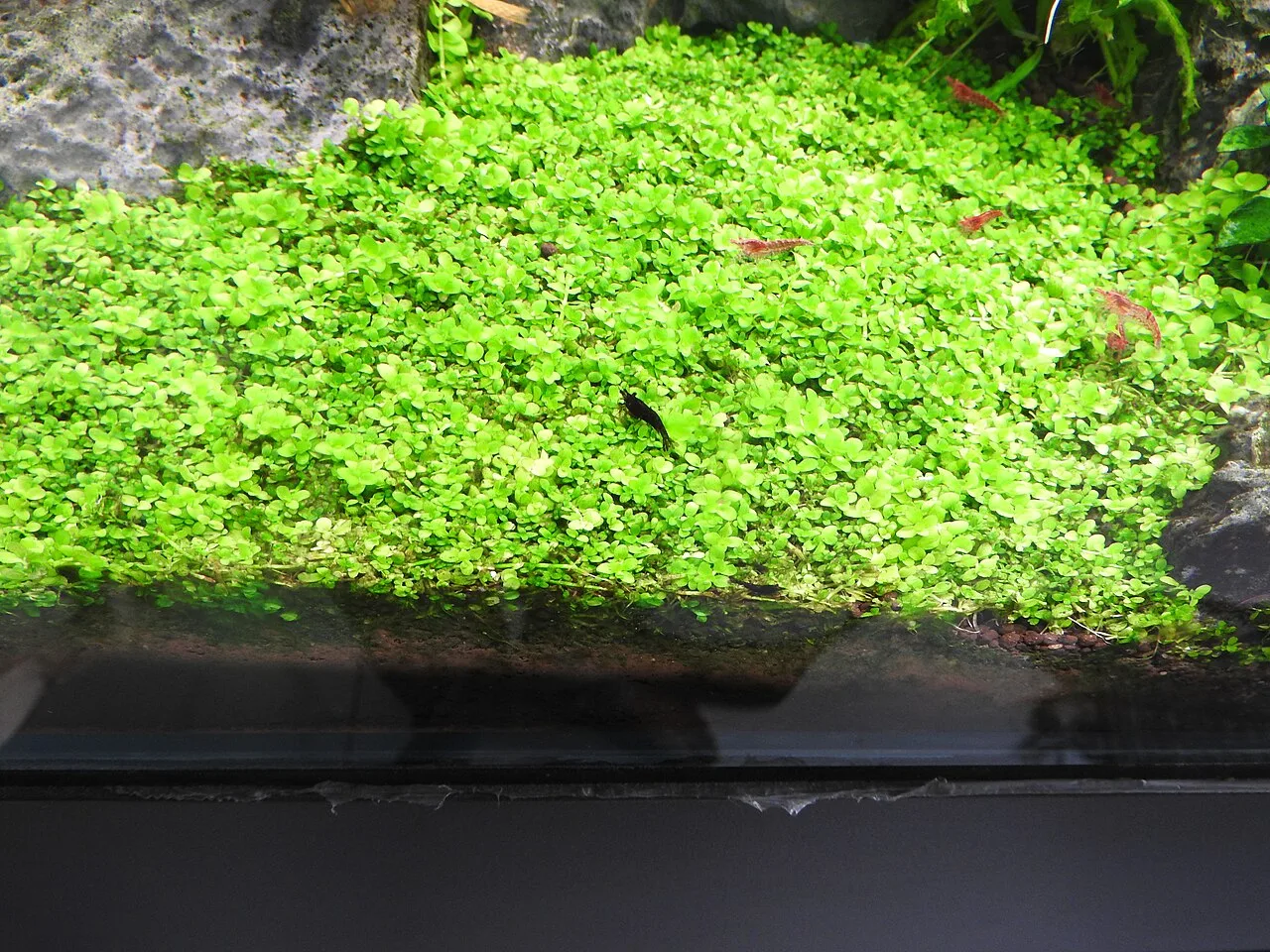
A fine-leaved ground cover that first attaches and then forms a lawn. It is not a grass and not hairgrass.
3 min read · 345 words
Care profile
The care profile is backed by one source.
Lighting
High lightThe profile says high light.
CO₂
High CO₂Added CO₂ is part of the described culture.
Growth rate
MediumThe profile describes moderate growth.
Nutrient demand
LowNutrient demand is low.
Beginner friendly
AdvancedThe published judgement is demanding.
- Attach
- Cuttings
- Runners
Placement in the aquarium
Only the stored position or growth form is highlighted, not every possible layout.
- Foreground
- Ground cover
Home & range
Every named country gets a frame and a circle around known waters in or near that area. Hotspots are orientation, not collection sites. A filled area is the range only when the source names a particular water body.
Botanical overview
Utricularia graminifolia sends thread-fine, pale green leaves and a creeping shoot. Small bladders sit on the shoots, with which the plant catches tiny animals. That is the biology of a bladderwort and not a reason to fear it as a fish-eating plant. The bladders are too small for fish and shrimp.
A freshly set pot often looks unchanged for weeks or even partly comes apart. Afterwards, when the values are stable, the plant closes areas faster than the first impression suggests.
Natural origin
This describes the origin, not how to furnish the aquarium.
Damp, nutrient-poor to moderately rich banks and shallows in Asia, often on poor soils. Asia stays the coarse origin. In the aquarium it grows denser on a leaner substrate and with CO₂ than on a heavily fertilised soil under a weak lamp.
Light, CO₂ and position
The start
High light, CO₂, 20 to 26 °C. Set it in small portions on the foreground, with the rock wool completely removed. Do not fertilise the first period like a Rotala bush. Too much nitrate at the start and an unsettled water change are the common reasons the portions fall apart.
After it attaches
Once the carpet is running, it grows into the neighbouring areas. Tall plants that cast shade hold it back. So does a dense floating cover. Shrimp and small fish bother it little. Digging corydoras lift it off.
Growth and trimming
Threads that are too long are shortened like a fine lawn once the area can carry it. Before that it is left alone. Yellow, mushy patches are siphoned and replaced by a healthy runner from the edge. The plant takes little fertiliser. A normal complete fertiliser in a low dose is enough. A shock dose sets it back.\n\nAlgae in the attaching phase often mean too much light on too little plant mass. Then shorten the lighting period until the area is denser, instead of adding still more fertiliser.
Propagation
Separate runners a few centimetres long and lay them on the substrate or press them lightly. They attach by themselves. A classic cutting with a node in the gravel is unnecessary and often the reason the shoots float up.
More species in this group
Sources & assertions 1
Wikipedia (deutsch)
Texte in Aquarisma sind eigenständig formuliert. Zahlenbereiche folgen den verlinkten Wikipedia-Artikeln, Lizenz CC BY-SA.
- Haltungsbereich nach https://de.wikipedia.org/wiki/Utricularia_graminifolia