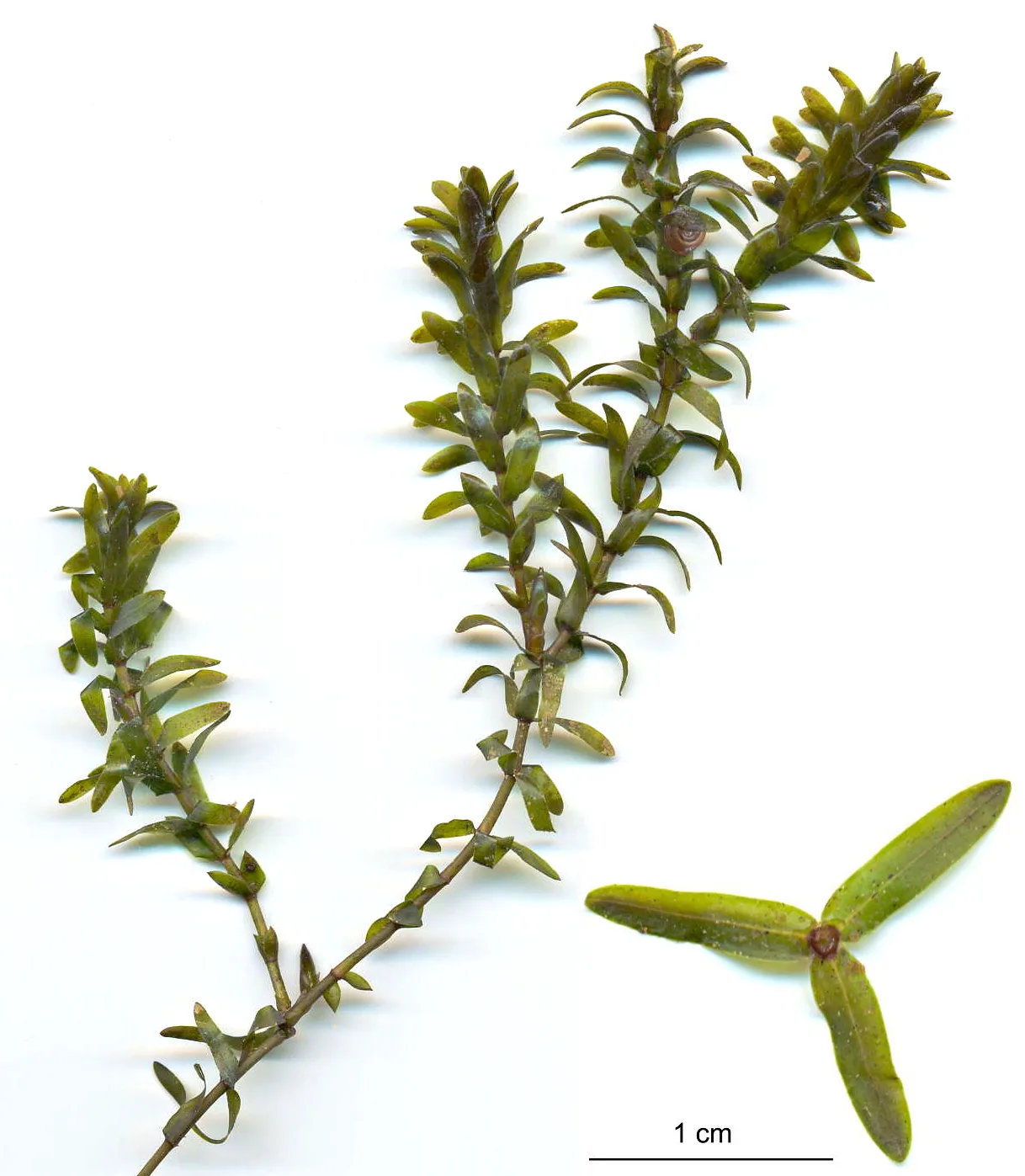
Ammannia gracilis
Ammannia gracilis
31 views
A stem plant from West Africa whose leaves turn orange to red under strong light and CO₂.
- Temperature
- 22 – 28 °C
- pH
- 5.5 – 7.5 pH
- Lighting
- Very high light
- CO₂
- High CO₂
- Growth rate
- Medium
- Placement
- Midground
2 min read · 302 words
Care profile
Growth form
Stem plantsPlanting and propagation
- Cuttings Cut off shoot tips and replant them. This keeps the stand dense and propagates it at the same time.
Placement in the aquarium
Highlighted are the areas where the species is typically used.
- Midground Between foreground and background. Hides transitions and frames stones and wood.
Home & range
Hatched countries are where the species occurs. It lives in particular waters there, not across the whole country. The points name known waters for orientation, not collection sites.
- Country of origin
- Water for orientation
Native
Botanical overview
Ammannia gracilis carries opposite, elongate leaves that wave under water. With a lot of light and CO₂ the plant becomes orange to deep red, in shade green and stretched. The emersed leaves are narrower and tougher. The colour is not a separate clone that can be kept without light.
The stems are brittle. A careless move costs leaves, and the group then stands ragged for weeks, even if the values are right afterwards.
Natural origin
This describes the origin, not how to furnish the aquarium.
Swamps and shallow, bright waters in West Africa, warm and nutrient-rich. The region stays the coarse origin. The place is the sun, not the shade under a floating cover.
Light, CO₂ and position
Conditions
High light, CO₂, 22 to 28 °C, regular fertilising. Midground or background, the stems spaced, not as a tight bundle. The lower leaves still need light. Without CO₂ the tips become small, the lower leaves fall, the stem goes bare.
Jumps
A large water change with completely different water, or a suddenly doubled light, makes whole groups drop their leaves. Better constantly bright than glaring and dark in turn.
Layout and neighbours
The narrow, bronze leaves work best as a group of five to eight stems in front of a calm green backdrop of vallisneria or hygrophila. Fine-leaved plants right next to it blur the structure.
Common mistakes
Too little light: the plant turns green and drops its lower leaves. Too much nitrate with little iron: the tips stay pale.
Growth and trimming
Cut the tips before the base is bare, and replant the tips that are still coloured. Pull bare stumps. Do not crush the leaves. The red colour is light at a moderate nitrate. A lot of nitrate without light makes the plant green and soft.
Propagation
Tip cuttings. Remove the lower leaves, two nodes into the substrate. They root reliably if light and CO₂ were already right before the cut.