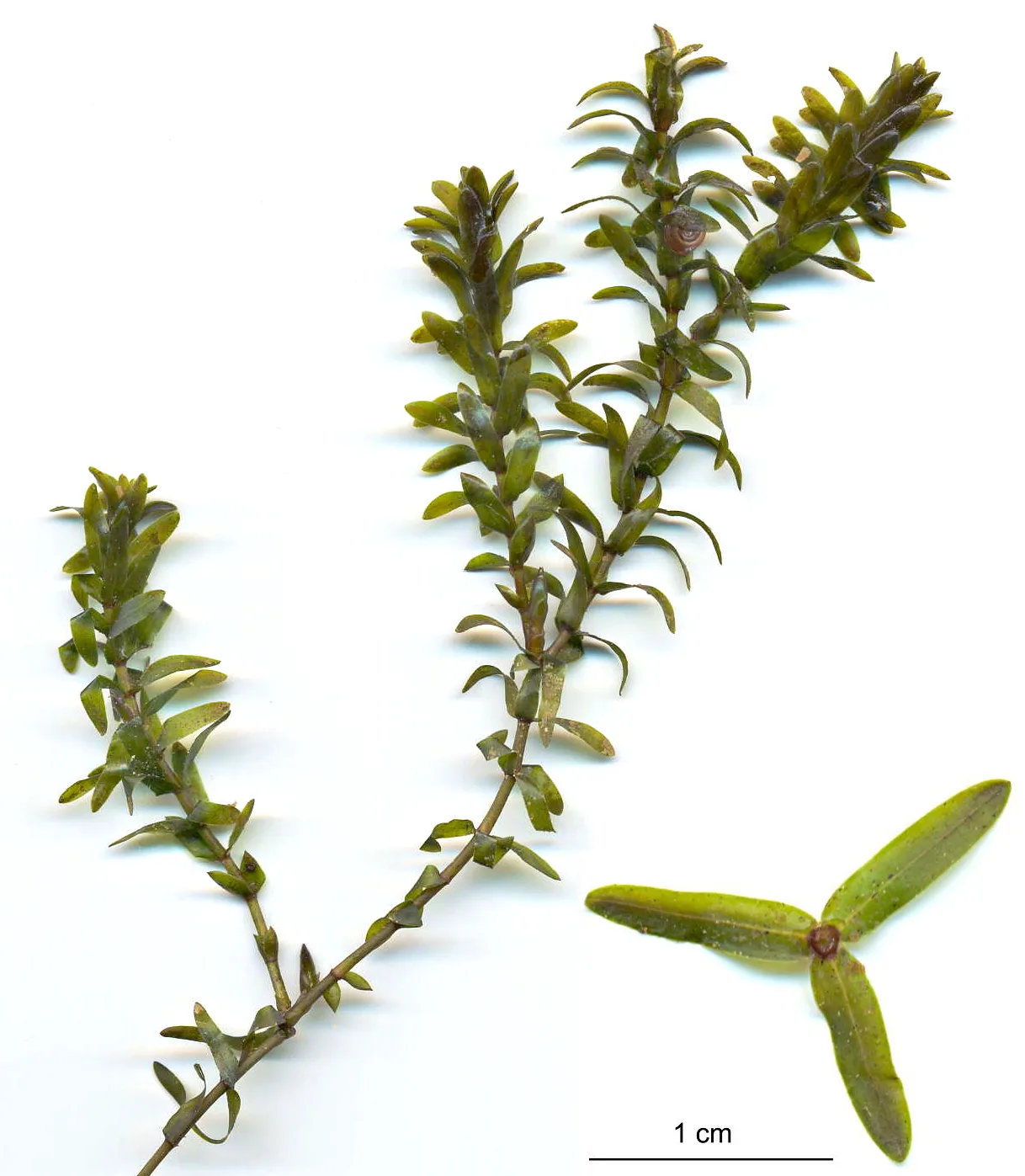
Brazilian pennywort
Hydrocotyle leucocephala
30 views
A fast plant with round leaves, grown as a stem, as a climber or as a floater.
- Temperature
- 20 – 28 °C
- pH
- 6 – 7.5 pH
- Lighting
- Medium light
- CO₂
- Low CO₂
- Growth rate
- Fast
- Placement
- Background
2 min read · 299 words
Care profile
Growth form
Stem plantsPlanting and propagation
- Cuttings Cut off shoot tips and replant them. This keeps the stand dense and propagates it at the same time.
Placement in the aquarium
Highlighted are the areas where the species is typically used.
- Background Along the back wall and the sides. Forms the tall, dense backdrop.
Home & range
Hatched countries are where the species occurs. It lives in particular waters there, not across the whole country. The points name known waters for orientation, not collection sites.
- Country of origin
- Water for orientation
Native
Botanical overview
Hydrocotyle leucocephala carries round, notched leaves on a long, soft stem. It can stand in the substrate, climb wood or float at the surface. The leaves then become larger and tougher. The species is not Hydrocotyle tripartita with the three-part leaves. Anyone who mixes the two loses the clear form of the pennywort.
Growth is fast. Uncut, it lies over ground covers and into the filter. That is the species, not an accident of the first week.
Natural origin
This describes the origin, not how to furnish the aquarium.
Damp banks and shallow water in Central and South America, bright and nutrient-rich. The origin stays coarse. The plant is widespread in the trade and must not be released.
Light, CO₂ and position
Three ways of keeping
Medium to high light, CO₂ helpful but not the condition, 20 to 28 °C. As a background stem with a weekly trim, as a climbing plant on a root, or as a floater in a limited corner. Without a trim it closes the surface and takes the light from the plants below.
Company
Labyrinth fish use the floating leaves. A lawn below them does not. Plant-eating cichlids eat the soft leaves. In a planted community tank with tetras it stays, and it still has to be limited.
Layout and neighbours
The round leaves on long, creeping stems grow to the surface and spread there. As a floating cover it dims light; in the background it looks playful.
Common mistakes
If not trimmed regularly it shades the whole tank.
Growth and trimming
Shorten weekly. Replant tips or leave them as floaters. Pull bare lower stems. Yellow leaves with otherwise fast growth are often an iron shortage in the water column, especially when the plant only floats and reaches no substrate.
Propagation
Every piece of stem with a node keeps growing. Propagation is the trim. Surplus goes into the waste, not into the pond.