Anubias heterophylla
Anubias heterophylla
4 views
A larger anubias from Central Africa with lanceolate, wavy leaves. Hardy and slow.
- Temperature
- 22 – 28 °C
- pH
- 6 – 8 pH
- Lighting
- Low light
- CO₂
- No CO₂
- Growth rate
- Slow
- Placement
- Midground
1 min read · 99 words
Care profile
Growth form
EpiphytesPlanting and propagation
- Attach Fix it to wood or stone with cotton thread, fishing line or plant glue. The roots attach on their own after a few weeks.
- Rhizome The creeping rhizome stays free above the substrate. Buried, it rots.
Placement in the aquarium
Highlighted are the areas where the species is typically used.
- Midground Between foreground and background. Hides transitions and frames stones and wood.
- On rock or wood Tied onto wood or stones rather than planted in the substrate.
Home & range
Hatched countries are where the species occurs. It lives in particular waters there, not across the whole country. The points name known waters for orientation, not collection sites.
- Country of origin
- Water for orientation
Native
Botanical overview
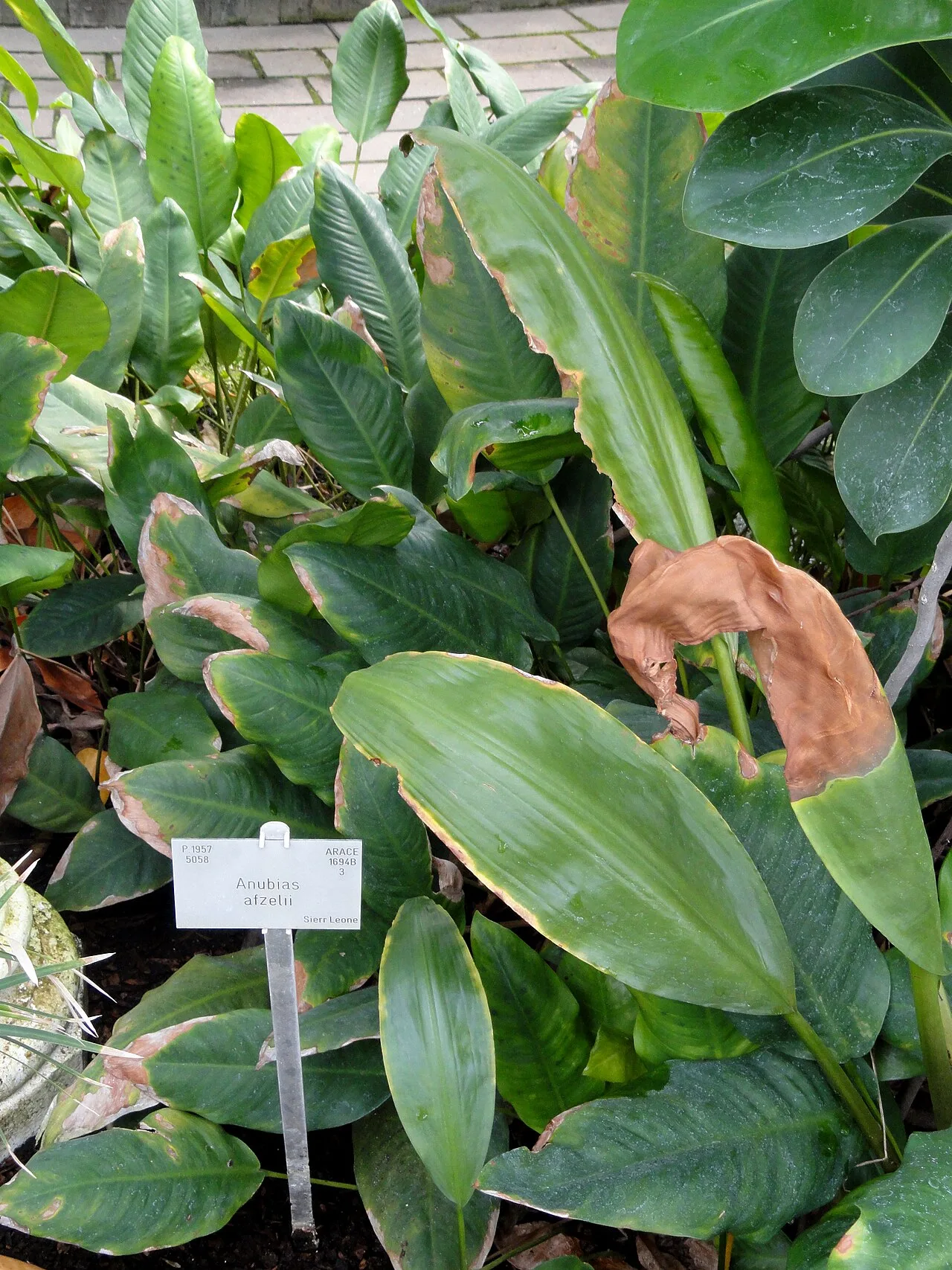
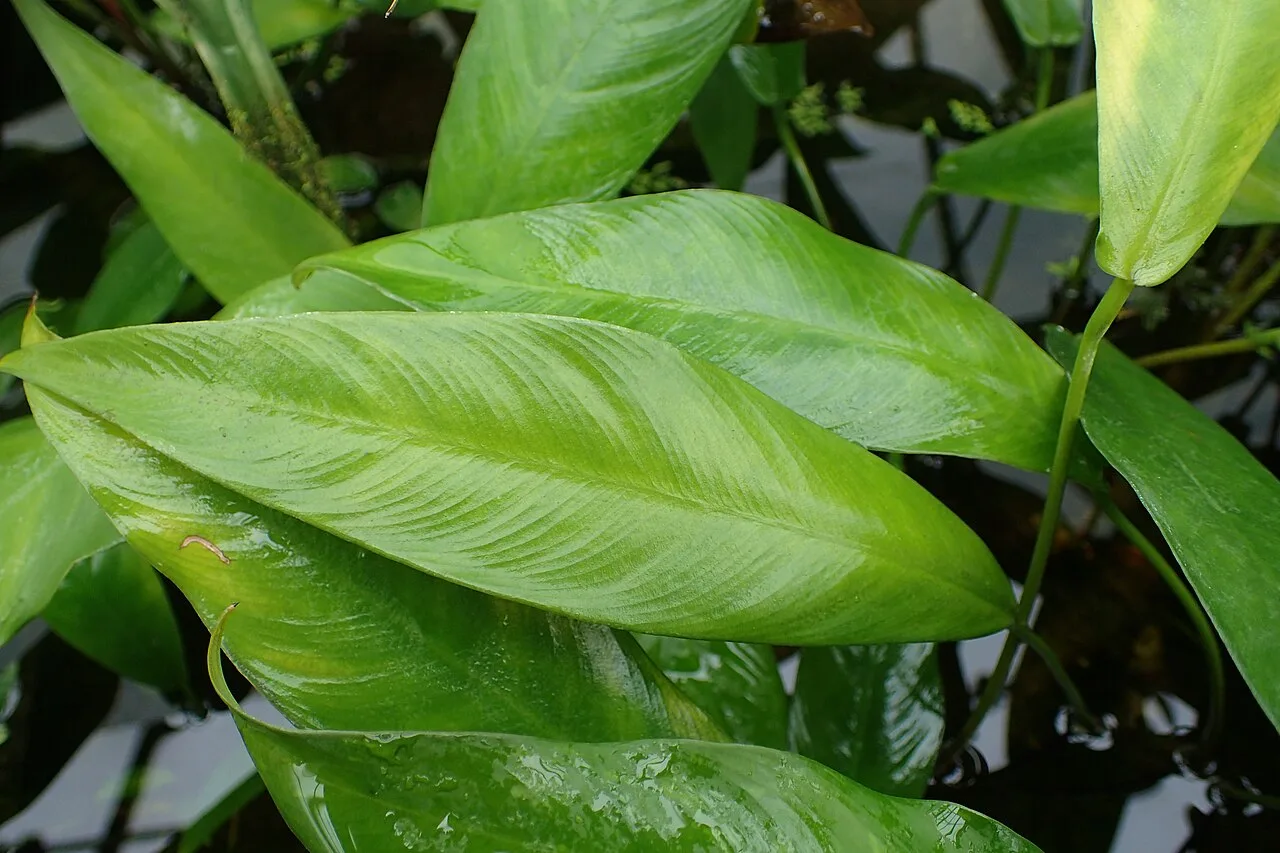
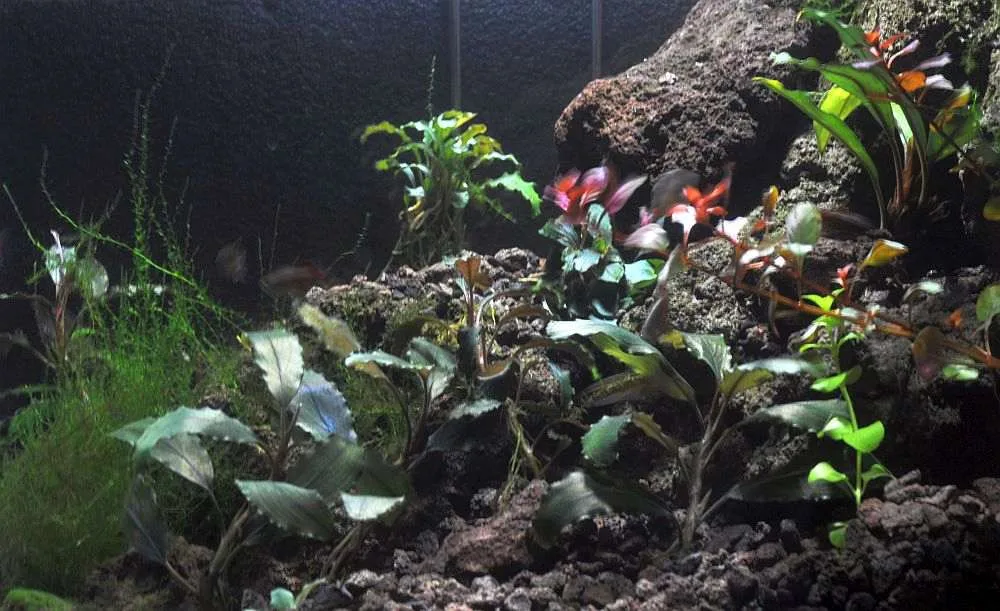
Anubias heterophylla carries lanceolate to elliptic, dark green leaves with a slightly wavy margin on long stalks. The plant grows 30 to 40 cm tall and suits the background or large roots as an epiphyte.
Natural origin
This describes the origin, not how to furnish the aquarium.
The species occurs in Central Africa: Cameroon, Gabon, Equatorial Guinea, the Republic of the Congo and the Democratic Republic of the Congo. It grows on rainforest stream banks.
Light, CO₂ and position
Light
Low to medium light.
Fertiliser
Low demand.
Position
22 to 28 °C. Tied on or background.
Layout and neighbours
On large roots in the background, with smaller anubias in front. Herbivores leave it alone.
Common mistakes
Burying the rhizome.