
Bucephalandra
Bucephalandra pygmaea
17 views
The text is the genus article. Bucephalandra is endemic to Borneo. B. pygmaea is one of several species in the trade, not the whole genus.
3 min read · 503 words
Care profile
The care profile is backed by one source.
Lighting
Low lightThe profile says low light.
CO₂
Low CO₂Added CO₂ is stored as helpful, not mandatory.
Growth rate
SlowThe profile describes slow growth.
Nutrient demand
LowNutrient demand is low.
Beginner friendly
Beginner friendlyThe published judgement is suitable for beginners.
- Attach
- Rhizome
- The rhizome must not be buried.
Placement in the aquarium
Only the stored position or growth form is highlighted, not every possible layout.
- Foreground
- On rock or wood
Home & range
Every named country gets a frame and a circle around known waters in or near that area. Hotspots are orientation, not collection sites. A filled area is the range only when the source names a particular water body.
Botanical overview
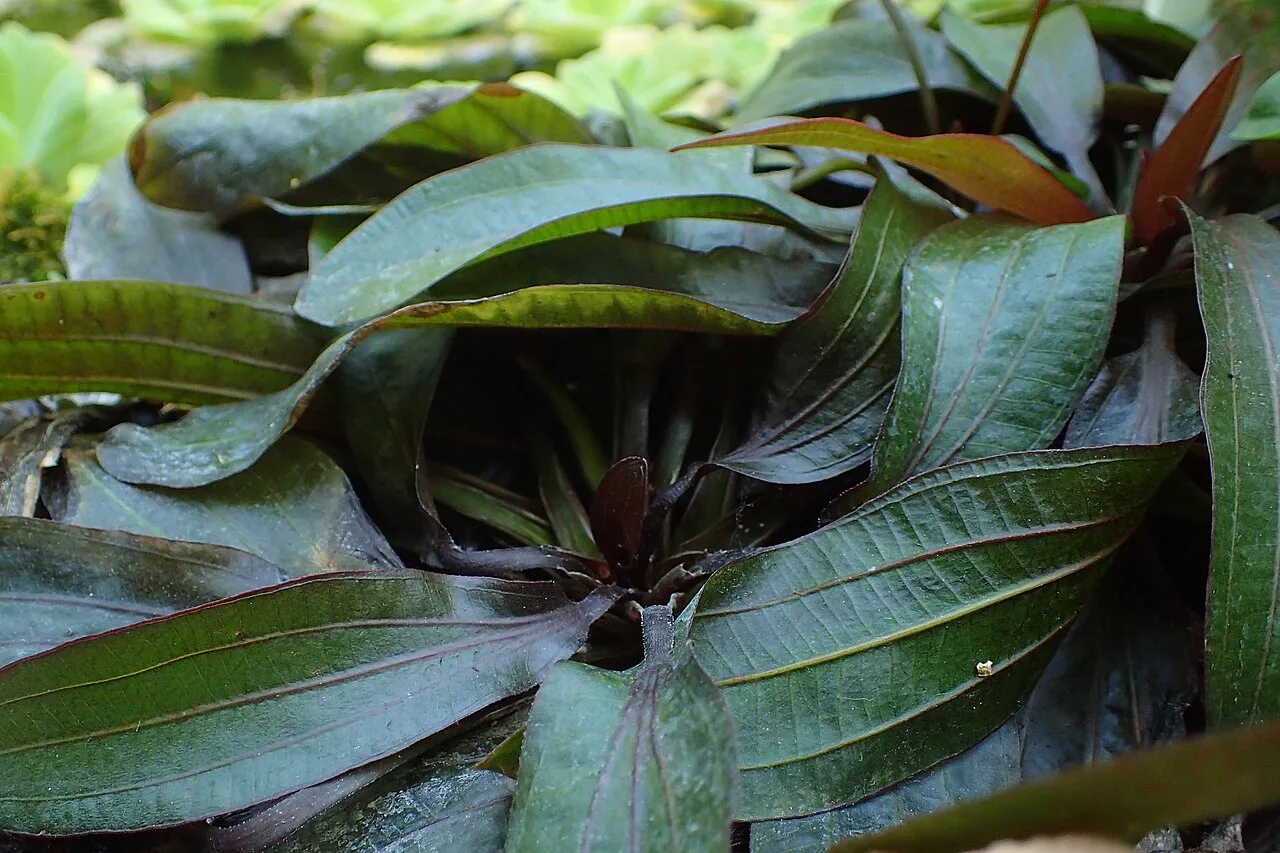
Bucephalandra belongs to the arum family. The name compares the male flowers to a horned bull’s head. Wong, Boyce and Hii had 31 accepted species by 2022. Wong and Boyce expect more than fifty still undescribed. Christel Kasselmann traces the plants common in the trade to seven species, including Bucephalandra pygmaea. Trade names are often colour forms, not extra species. The rhizome must not be buried. The roots cling to stone or wood.
Natural origin
This describes the origin, not how to furnish the aquarium.
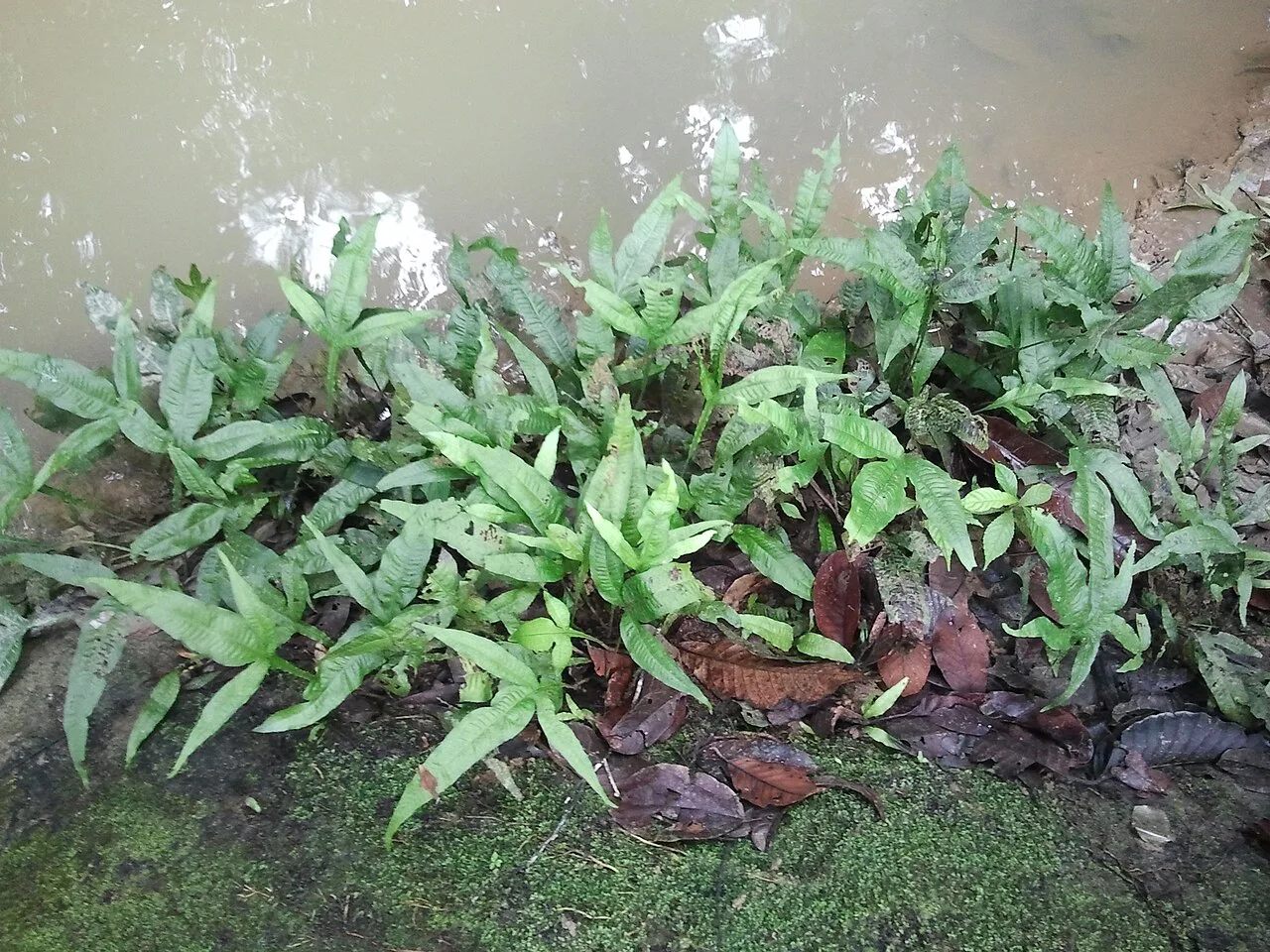
The genus is restricted to Borneo. Twenty of the named species only in Kalimantan, eight only in Sarawak, one in Sarawak and Brunei, two endemic to Sabah. The article gives no separate range for B. pygmaea alone. No country is filled and no country list is built for this one species. The plants are almost always obligate rheophytes on rock in streams, mostly in shade or half-shade. Boyce considers the time fully under water very short, presumably only hours per month. In the rainy season Tomey also found plants about one metre deep in strong current on the Landak. Sites are mostly below 350 m, B. gigantea at 700 m, B. kishii from 1500 m. Those are other species.
Light, CO₂ and position
Fast current with low carbonate hardness and low pH is described, and also sites on limestone and a higher hardness tolerance that is said to be confirmed in aquaria. A temperature span in degrees is missing. The older span of 22–26 °C, “low light” and “CO₂ not required” remains the previous sheet. A bluish sheen on some leaves is explained as iridescence from layered chloroplasts, an adaptation to low light under the canopy. Under water, stomata can look silvery because air sits behind them. Colour develops more readily submerged than emersed.
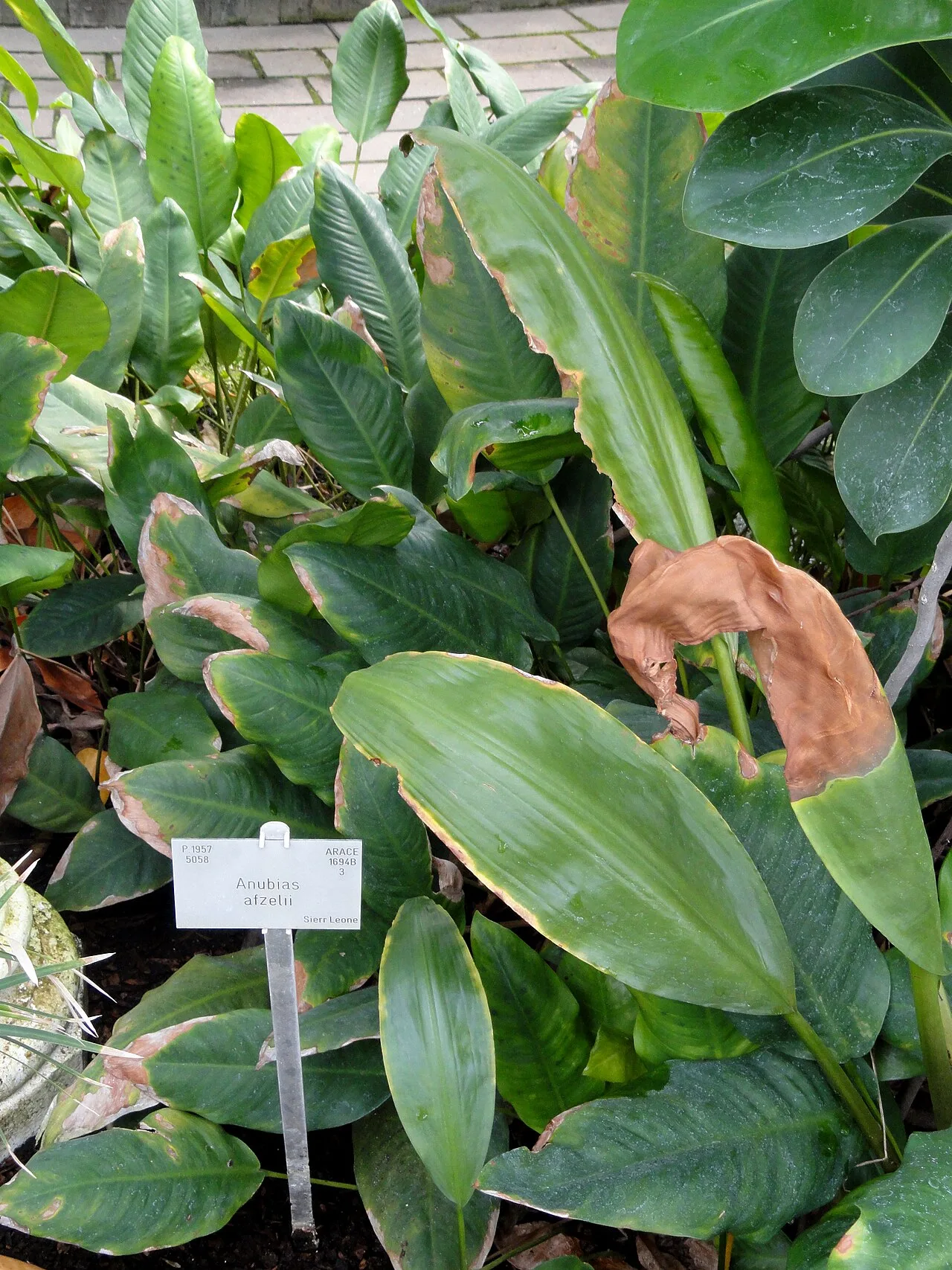
Like Anubias, slower still
Bucephalandra is tied on. The rhizome stays free. Many trade names are forms and origins, not cleanly separated care profiles. Low to medium light, quiet water, CO₂ helpful but not the condition for survival. Under a strong lamp without cover, algae settle on the tough leaves and stay there, because the plant is too slow to shed them.
After tying on, little happens for weeks. That is the attaching, not a bad purchase.
Growth and trimming
Growth is slow. After tying the plant on, clinging roots form gradually. Algae on leaves are not a separate guide in that section.
Further care
Wild collection is a topic of the article because of demand. Captive propagation, in-vitro plants and offsets are named as the alternative. That is not a care figure.
Propagation
Side shoots form on the rhizomes. The rhizome is divided. A species monograph of propagation for B. pygmaea is missing.
Divide outside
The rhizome is divided outside the tank, the cut is rinsed, and the pieces go back only when they no longer bleed milky sap. Rhizomes cut in the tank have been linked with losses of shrimp. Whether that is crystals from the cut or the disturbance is open. The cautious way is to divide outside.
Every piece needs a shoot or an eye. A naked rhizome without a growing tip is a bet.
More species in this group
Sources & assertions 1
Wikipedia (deutsch)
Texte in Aquarisma sind eigenständig formuliert. Zahlenbereiche folgen den verlinkten Wikipedia-Artikeln, Lizenz CC BY-SA.
- Haltungsbereich nach https://de.wikipedia.org/wiki/Bucephalandra