Brookweed
Samolus valerandi
27 views
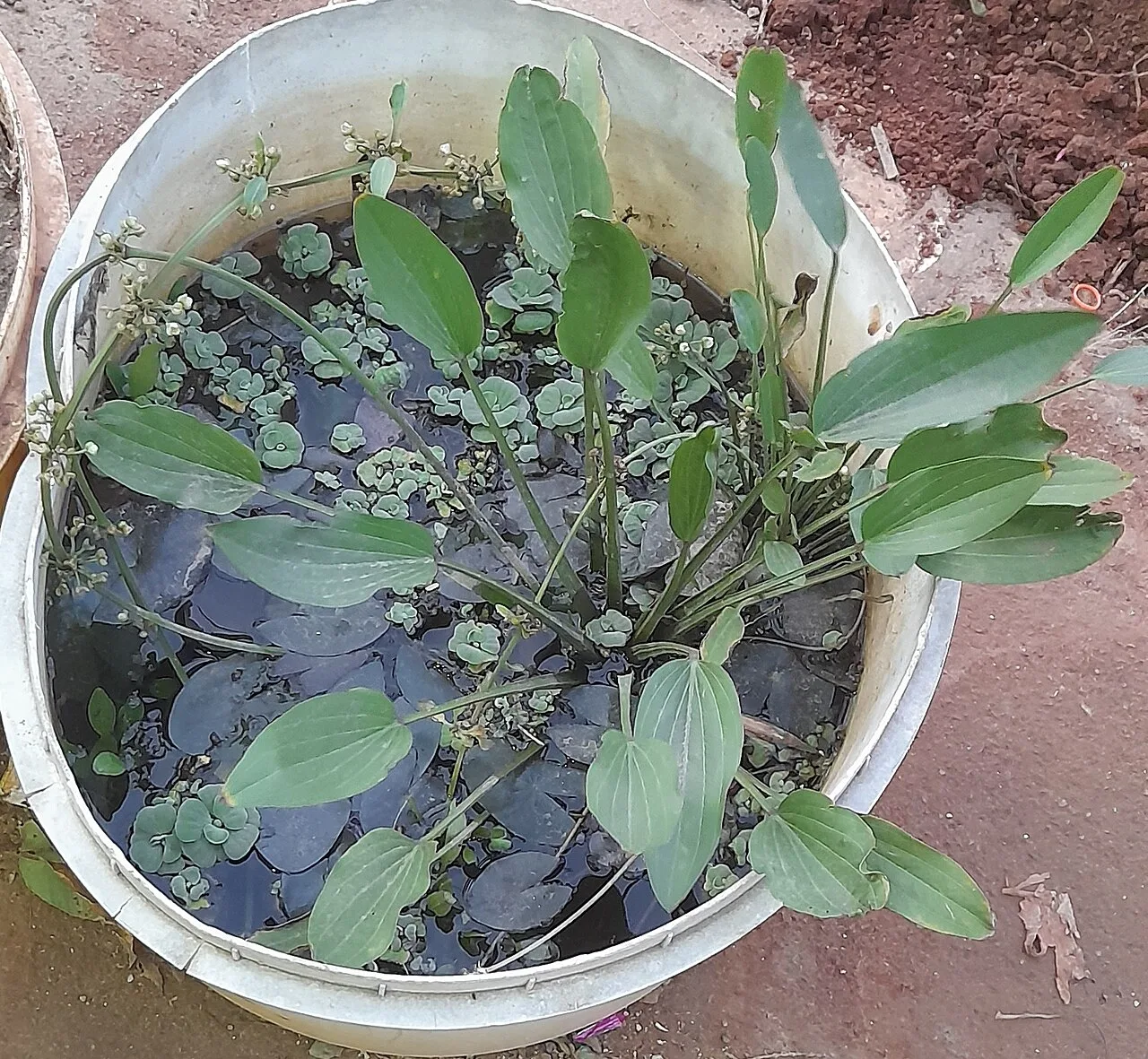
A small rosette with spoon-shaped leaves. It stays compact in cool, bright water and grows long-stalked in a warm tank.
- Temperature
- 10 – 22 °C
- pH
- 6.5 – 8.5 pH
- Lighting
- High light
- CO₂
- Low CO₂
- Growth rate
- Medium
- Placement
- Foreground
2 min read · 251 words
Care profile
Growth form
RosettesPlacement in the aquarium
Highlighted are the areas where the species is typically used.
- Foreground At the front of the tank, where the plant stays low and keeps the view open.
Home & range
Hatched countries are where the species occurs. It lives in particular waters there, not across the whole country. The points name known waters for orientation, not collection sites.
- Country of origin
- Water for orientation
Native
Botanical overview
Samolus valerandi forms a basal rosette of obovate, pale green leaves. Under strong light and in cool water the stalks stay short. In a warm, shaded tank they stretch, and the plant becomes a loose bush instead of a foreground rosette.
It is not a Cryptocoryne and does not drop every leaf after each water change. It does want light down to the substrate and a nutrient-rich bottom.
Natural origin
This describes the origin, not how to furnish the aquarium.
Damp banks, ditches and springy places in Europe and further, often in slightly brackish spots. The origin stays coarse. Aquarium plants do not have to come from wild stocks.
Light, CO₂ and position
Keeping
High light, CO₂ helpful, 10 to 22 °C, a nutrient-rich substrate. Foreground to midground, free of shade. In a discus tank it goes soft and long. In an unheated or weakly heated tank it stays the better plant.
Planting
Do not set the rosette too deep. The crown stays free. Place it once and do not move it every week.
Layout and neighbours
Small, pale green rosettes for the foreground, also in harder or slightly brackish water. A native species.
Common mistakes
Too warm: above 25 °C it does not last long.
Growth and trimming
Take yellow outer leaves. Long stalks are a light problem, not a trim target. More light, or less shade from above, and shorter leaves follow. Fertiliser in the substrate matters more than a high dose in the water column.
Propagation
Separate side shoots with their own roots once they have a small rosette. Seed is possible and slow. The practical propagation is division.