Bucephalandra motleyana
Bucephalandra motleyana
21 views
An epiphyte from Borneo with tough leaves. The rhizome stays free, growth is slow, and many trade names are forms.
- Temperature
- 22 – 28 °C
- pH
- 5.5 – 7.5 pH
- Lighting
- Low light
- CO₂
- Low CO₂
- Growth rate
- Slow
- Placement
- Foreground
2 min read · 293 words
Care profile
Growth form
EpiphytesPlanting and propagation
- Attach Fix it to wood or stone with cotton thread, fishing line or plant glue. The roots attach on their own after a few weeks.
- Rhizome The creeping rhizome stays free above the substrate. Buried, it rots.
Placement in the aquarium
Highlighted are the areas where the species is typically used.
- Foreground At the front of the tank, where the plant stays low and keeps the view open.
- On rock or wood Tied onto wood or stones rather than planted in the substrate.
Home & range
Hatched countries are where the species occurs. It lives in particular waters there, not across the whole country. The points name known waters for orientation, not collection sites.
- Country of origin
- Water for orientation
Native
Botanical overview
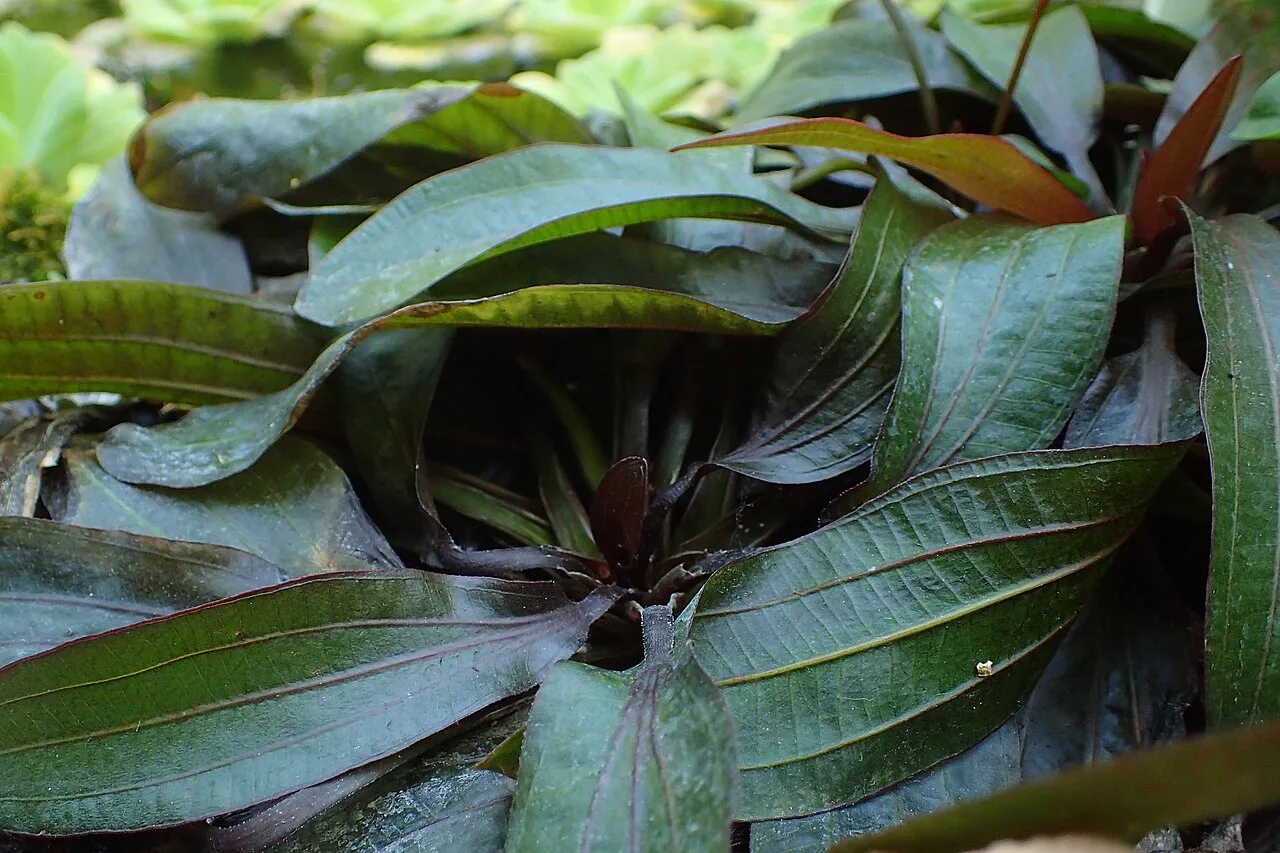
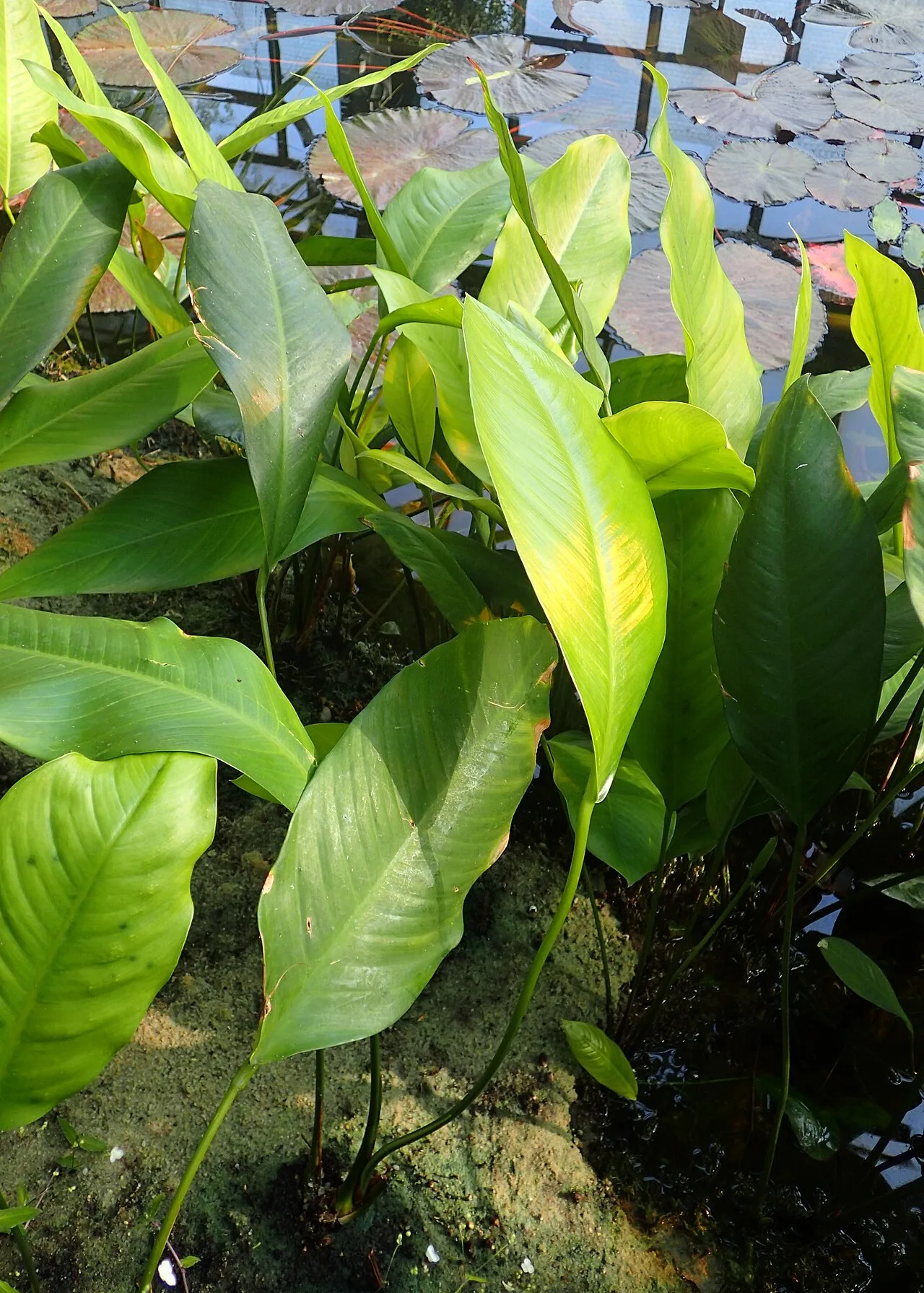
Bucephalandra motleyana sends a creeping rhizome and firm, often slightly waved leaves that can shimmer green, brown or bluish. The colour changes with light and nutrients and is not a certain species mark of every plant that is sold. Many names in the trade are localities, not cleanly separated care profiles.
It is tied on like Anubias. The rhizome must not disappear into the gravel. Under strong light without cover, algae settle and stay, because the leaves last for months.
Natural origin
This describes the origin, not how to furnish the aquarium.
Streams on Borneo, on stone, often in the current and in half-shade. Borneo stays the coarse origin. The rhizome attaches. The roots look for cracks.
Light, CO₂ and position
Tying on
Low to medium light, CO₂ helpful but not the condition for survival, 22 to 28 °C. Tie it to stone or wood, rhizome free, some current. After tying on, little increase for weeks. That is the attaching.
Do not move it
Every removal tears the rhizoids. Choose the place once.
Layout and neighbours
The small, often iridescent leaves look best on stones in stream tanks with clear flow. Wedge several rhizomes into gaps between stones to create cushions like those at the natural sites on Borneo.
Common mistakes
Too much light without competition: green algae on the leaves. Bucephalandra grows so slowly that algae are faster.
Growth and trimming
Cut old, holed leaves at the rhizome. Wipe algae off carefully or sacrifice the leaf. The plant rarely starves. Yellow leaves are often old leaves or a buried rhizome. Fertiliser in the water column is enough.
Propagation
Divide the rhizome outside the tank, rinse the cut, and put it back only when it no longer bleeds milky sap. Every piece needs a shoot. Rhizomes cut in the tank have been linked with losses of shrimp. The cautious way is to divide outside.