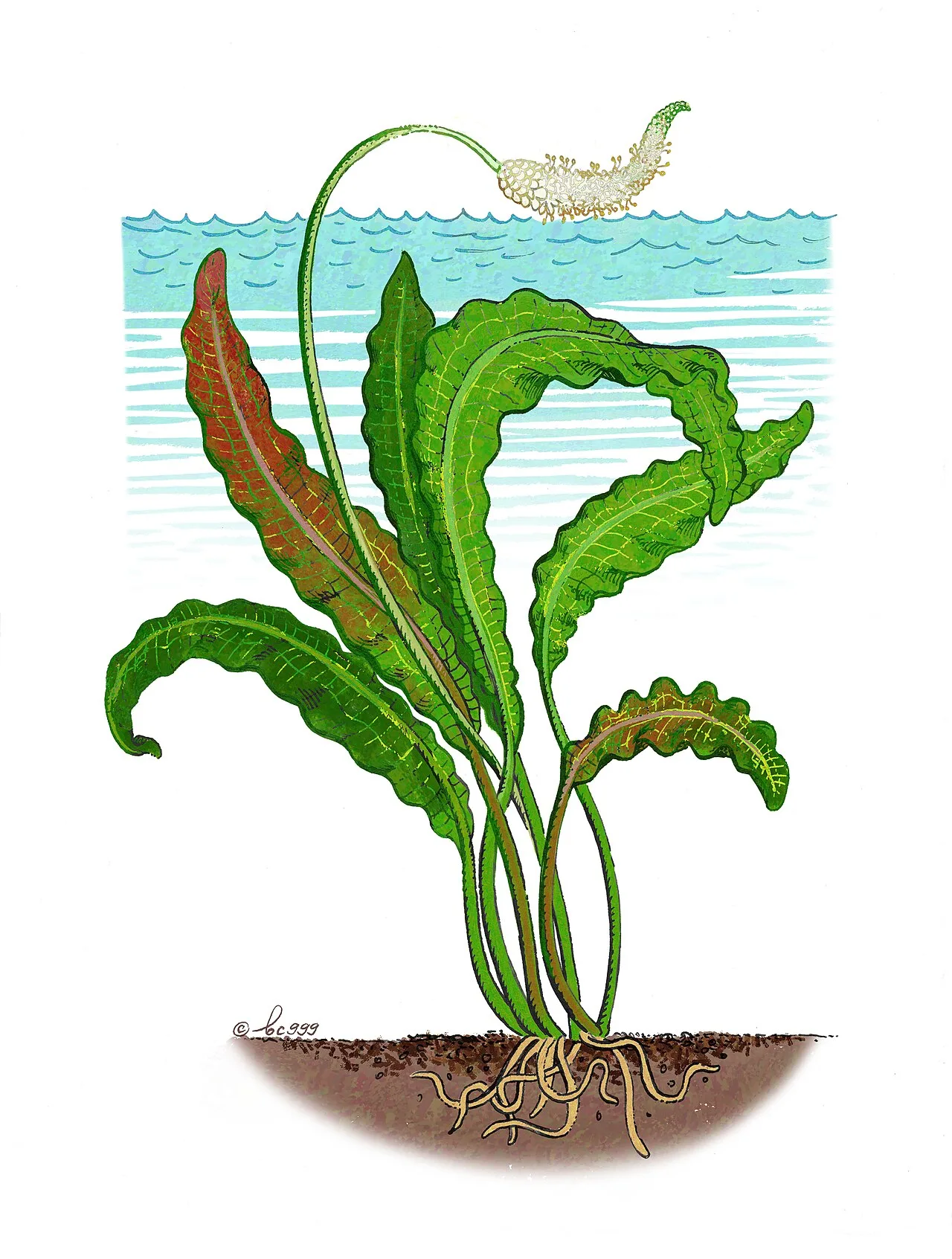
Cape pondweed
Aponogeton distachyos
2 views
A South African aponogeton with floating leaves and fragrant white flowers in a forked spike. For cool tanks and ponds.
- Temperature
- 5 – 22 °C
- pH
- 6 – 8 pH
- Lighting
- Medium light
- CO₂
- No CO₂
- Growth rate
- Medium
- Placement
- Midground
2 min read · 180 words
Care profile
Growth form
RosettesPlacement in the aquarium
Highlighted are the areas where the species is typically used.
- Midground Between foreground and background. Hides transitions and frames stones and wood.
Home & range
Hatched countries are where the species occurs. It lives in particular waters there, not across the whole country. The points name known waters for orientation, not collection sites.
- Country of origin
- Water for orientation
Native
Botanical overview
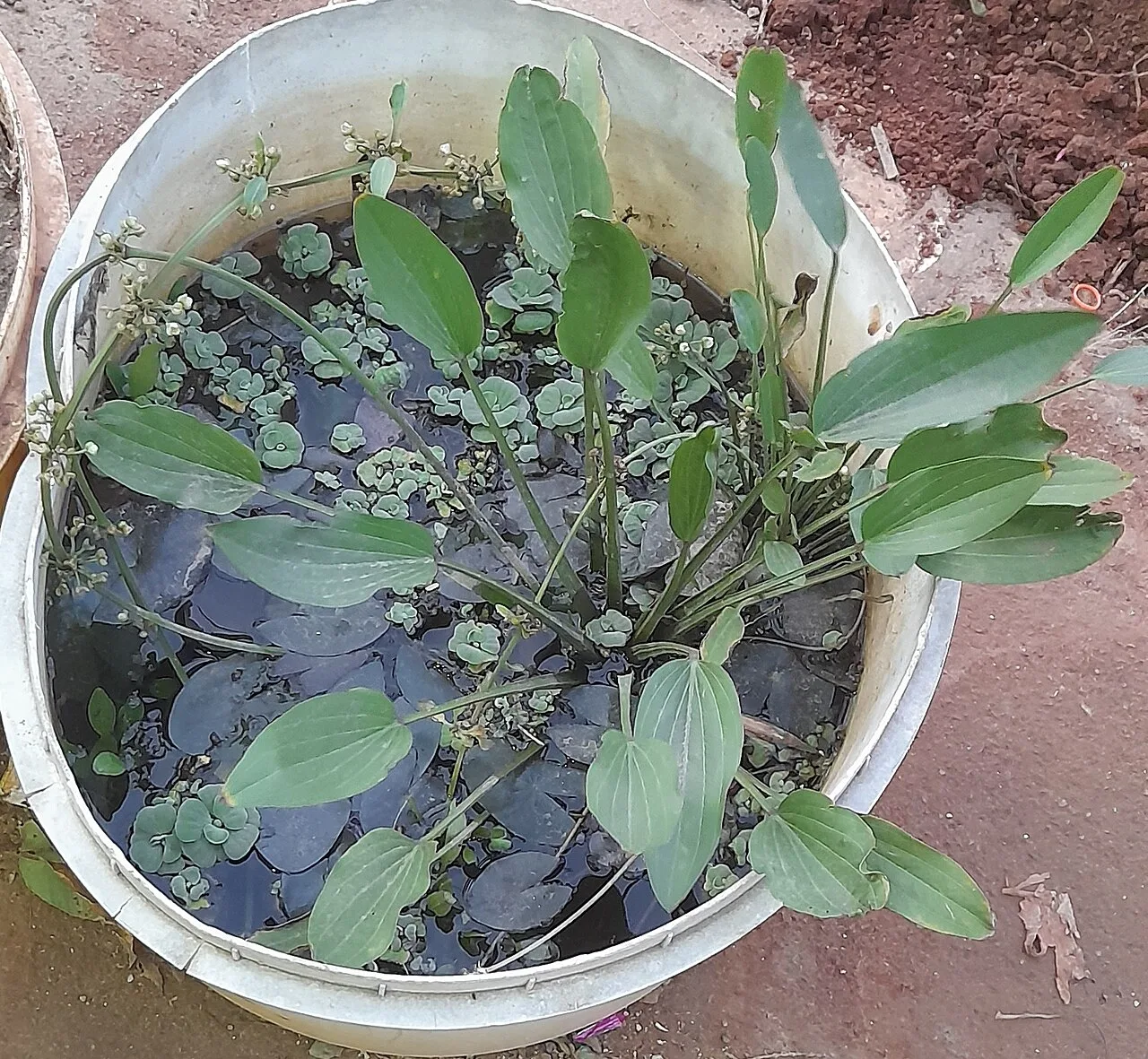
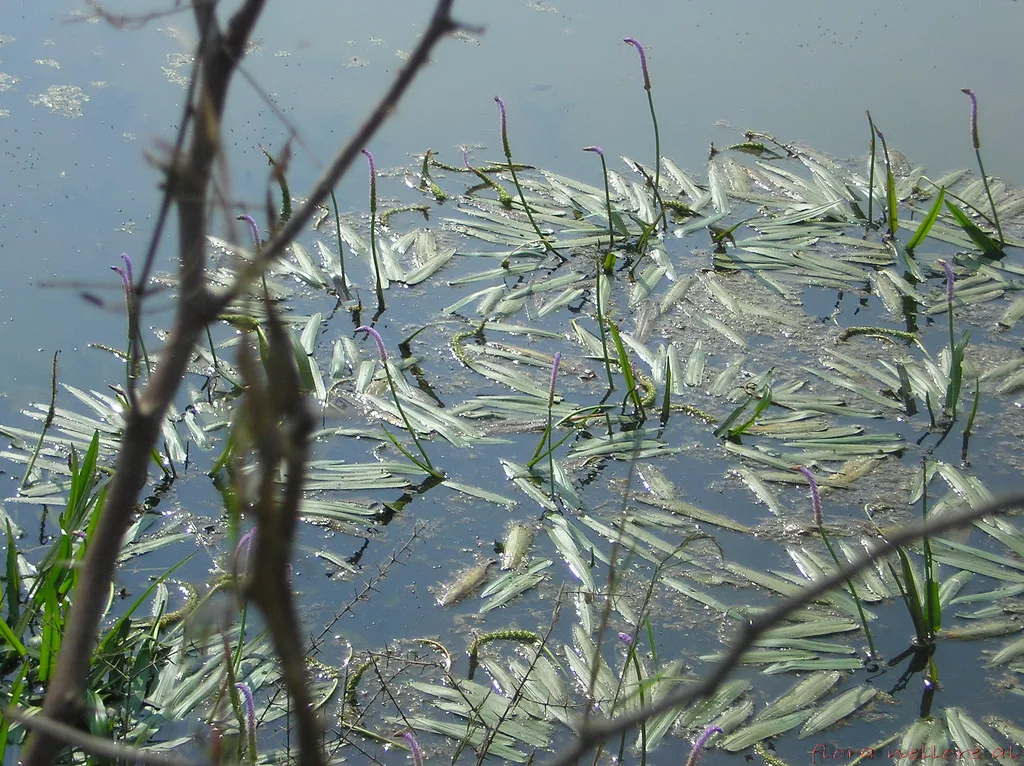
Cape pondweed grows from a tuber and forms oblong-oval floating leaves on long stalks. Its inflorescences are forked into two spikes, and the white bracts smell of vanilla. It grows and flowers in the cool season; in summer heat it often retreats to its tuber.
In an unheated tank or pond it is one of the few aquatic plants that flower in late autumn and spring.
Natural origin
This describes the origin, not how to furnish the aquarium.
The species comes from south-western South Africa, mainly the Cape region. It grows in ponds and seasonal pools that can dry out in summer. It has become naturalised in Europe, Australia and elsewhere.
Light, CO₂ and position
Light
Medium to high light.
Temperature
5 to 22 °C. Only for a short time in tropical tanks.
Position
Midground; set the tuber shallowly into the substrate.
Layout and neighbours
In a mini pond or a shallow, cool tank with an open surface. The fragrant flowers appear when other plants are resting.
Common mistakes
Mistaking the summer rest for dying and discarding the tuber.
Growth and trimming
Moderate growth in the cool season. A summer rest is normal and not a sign of dying.