Christmas moss
Vesicularia montagnei
2 views
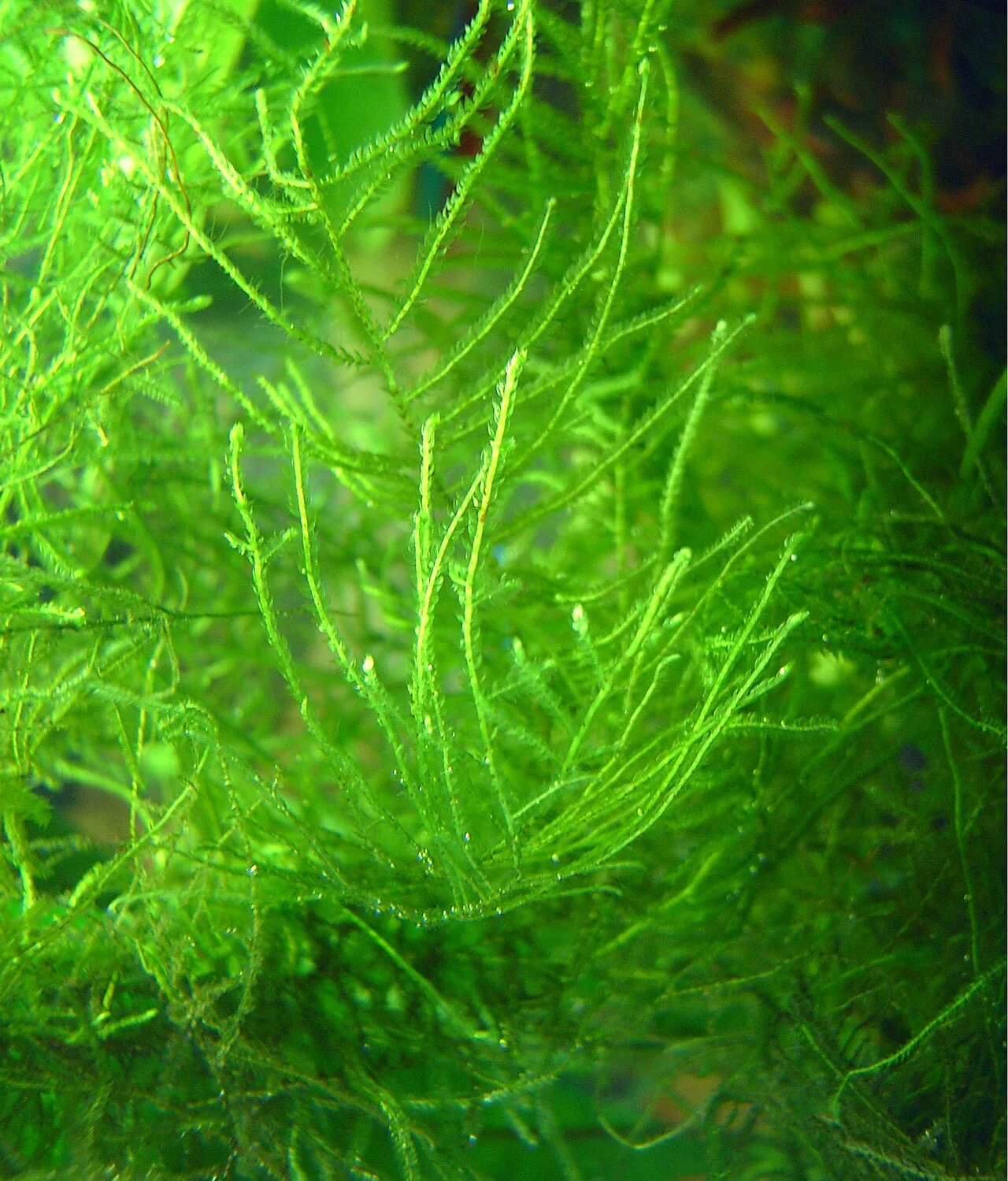
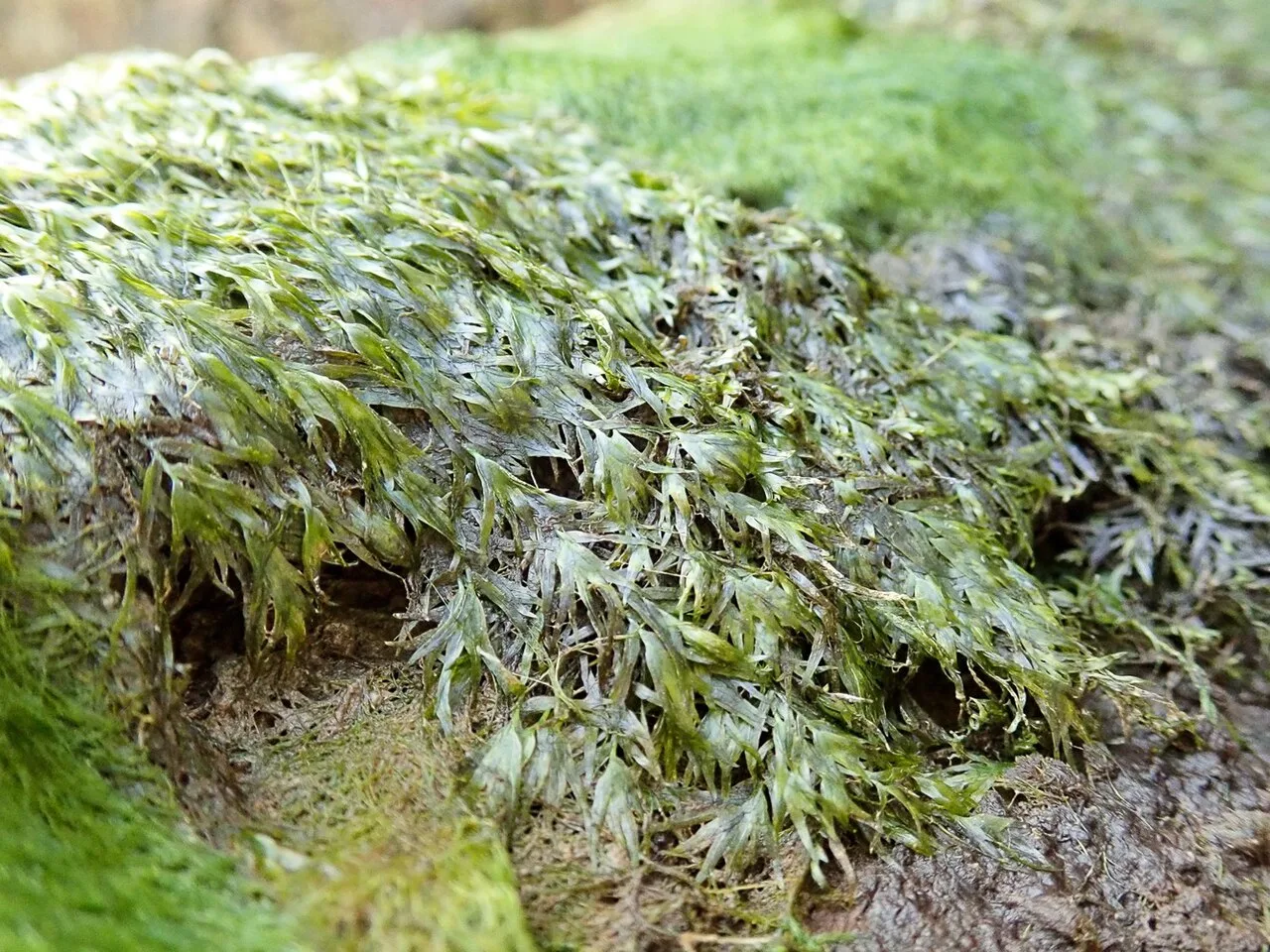
A moss with shoots that stand out in a triangle, growing on wood and stone. It is not Java moss and it is not planted in the gravel.
- Temperature
- 20 – 28 °C
- pH
- 6 – 8 pH
- Lighting
- Low light
- CO₂
- Low CO₂
- Growth rate
- Slow
- Placement
- Midground
3 min read · 362 words
Care profile
Growth form
MossesPlanting and propagation
- Attach Fix it to wood or stone with cotton thread, fishing line or plant glue. The roots attach on their own after a few weeks.
Placement in the aquarium
Highlighted are the areas where the species is typically used.
- Midground Between foreground and background. Hides transitions and frames stones and wood.
- On rock or wood Tied onto wood or stones rather than planted in the substrate.
Home & range
Botanical overview
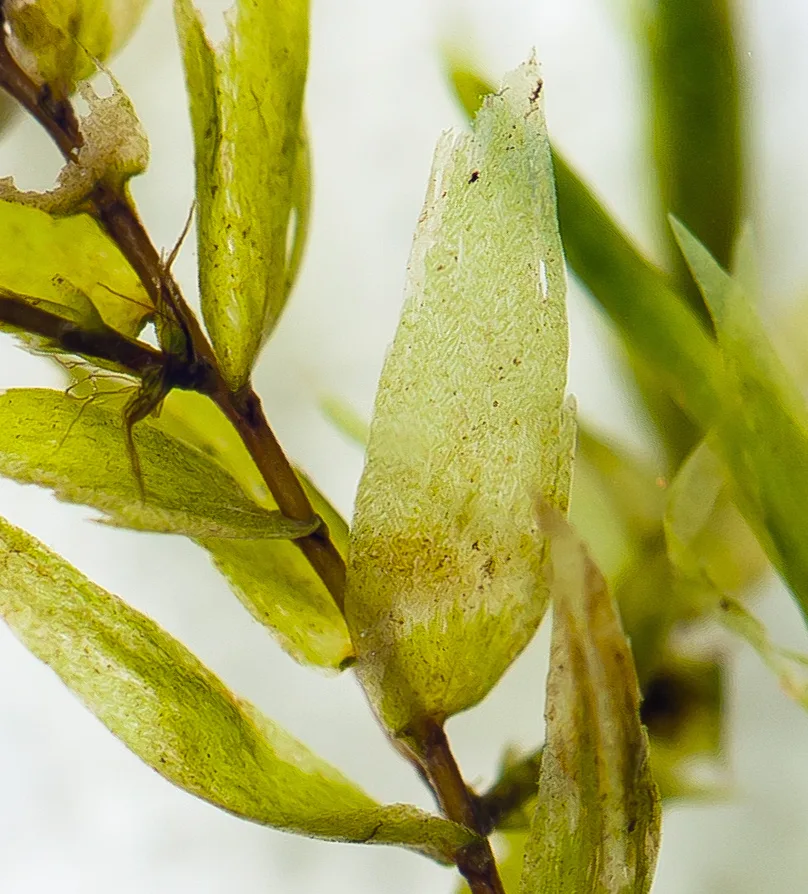
Vesicularia montagnei forms feathery, somewhat triangular shoots that stand out horizontally in good light and suggest a conifer. That is where the trade name Christmas moss comes from. Java moss, Taxiphyllum barbieri, grows more irregularly and more like threads. Anyone who mixes the two loses the clear shape of Christmas moss, because the faster moss covers the surface.
The moss holds with rhizoids. It needs a surface, not a substrate. Pushed into the gravel, the underside rots and the cushion comes loose.
Natural origin
This describes the origin, not how to furnish the aquarium.
Damp rocks and surfaces washed by water in tropical Asia, often in the splash zone and only at times fully under water. Aquarium keeping is permanently submerged and works when the moss is rinsed clean and does not suffocate under mulm. Asia stays a coarse origin.
Light, CO₂ and position
Tying on
Low to medium light, CO₂ not required, 20 to 28 °C. Tie it thinly to wood or stone, or clamp it in a moss mesh. Thick cushions from the start stay brown inside. Current yes, a hard jet straight onto the moss no. It tears the shoots out and collects the mulm exactly there.
A common failure
Mulm in the shoots is the most common death. At the water change, blow the cushion out carefully with a syringe or the hose. Thread algae that have once taken hold do not come back out of the moss. Cut off affected parts. Do not rub them off.
Layout and neighbours
The triangular, fir-like shoots look especially decorative on wood. One of the most beautiful mosses for walls and roots.
Common mistakes
Too warm and too little flow: algae in the moss.
Growth and trimming
Growth is slow and sideways. A cared-for cushion is thinned by taking the upper shoots and tying them on again. The base stays. The moss takes fertiliser in the water column. A substrate fertiliser hardly reaches it.\n\nUnder strong light without CO₂, algae settle sooner than the moss becomes prettier faster. Medium light and clean water beat a glaring lamp.
Propagation
Division of the cushions. Tie small tufts on again and press them until the rhizoids hold. That takes days. In between, do not retie every time just because one shoot sticks out.