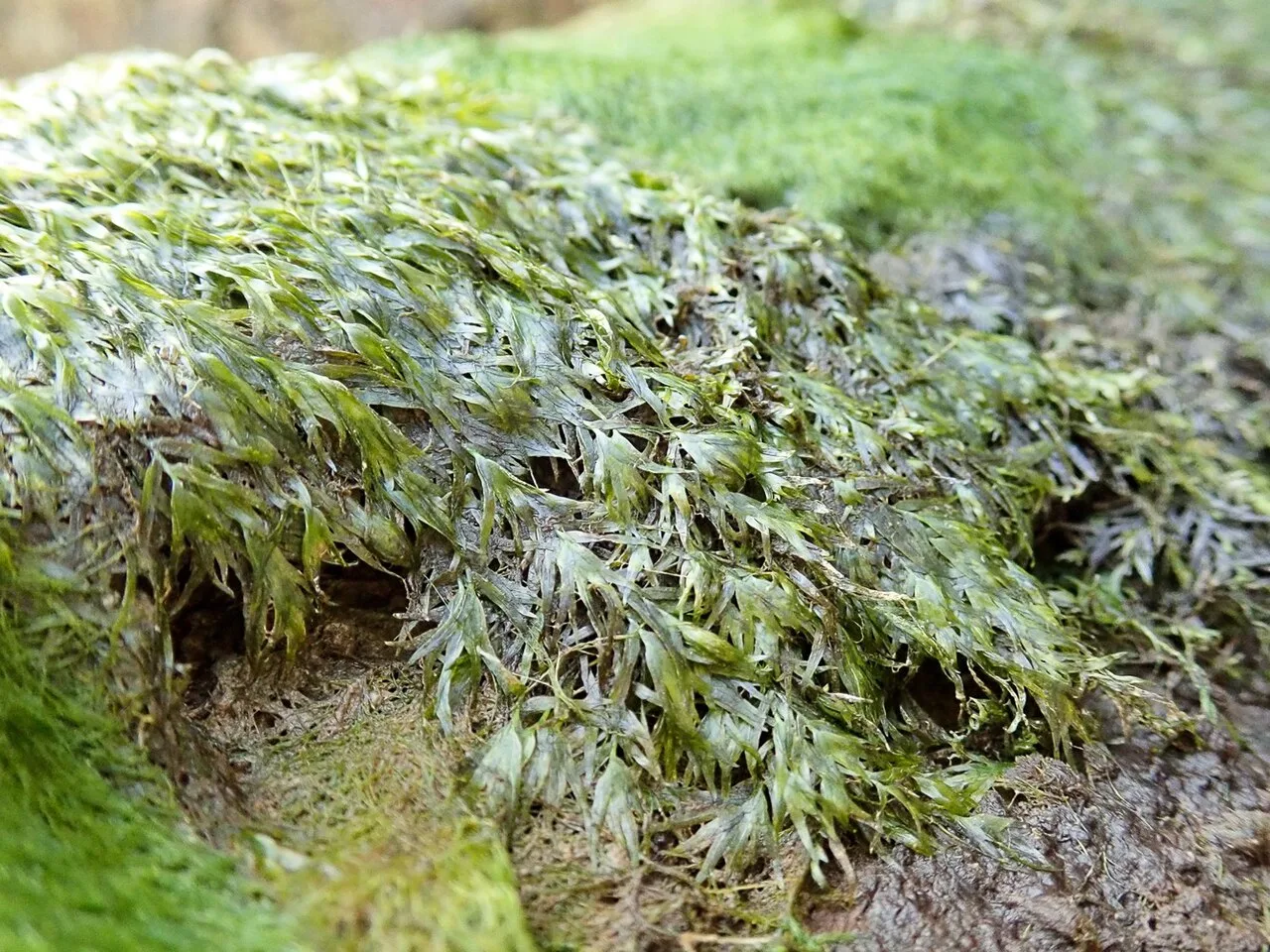
Java moss
Taxiphyllum barbieri
4 views
A moss from Southeast Asia, botanically Taxiphyllum barbieri. The name Vesicularia dubyana belongs to Singapore moss.
- Temperature
- 18 – 28 °C
- pH
- 6 – 8 pH
- Lighting
- Low light
- CO₂
- No CO₂
- Growth rate
- Medium
- Placement
- Foreground
3 min read · 357 words
Care profile
Growth form
MossesPlanting and propagation
- Attach Fix it to wood or stone with cotton thread, fishing line or plant glue. The roots attach on their own after a few weeks.
Placement in the aquarium
Highlighted are the areas where the species is typically used.
- Foreground At the front of the tank, where the plant stays low and keeps the view open.
- On rock or wood Tied onto wood or stones rather than planted in the substrate.
Home & range
Hatched countries are where the species occurs. It lives in particular waters there, not across the whole country. The points name known waters for orientation, not collection sites.
- Country of origin
- Water for orientation
Native
Botanical overview
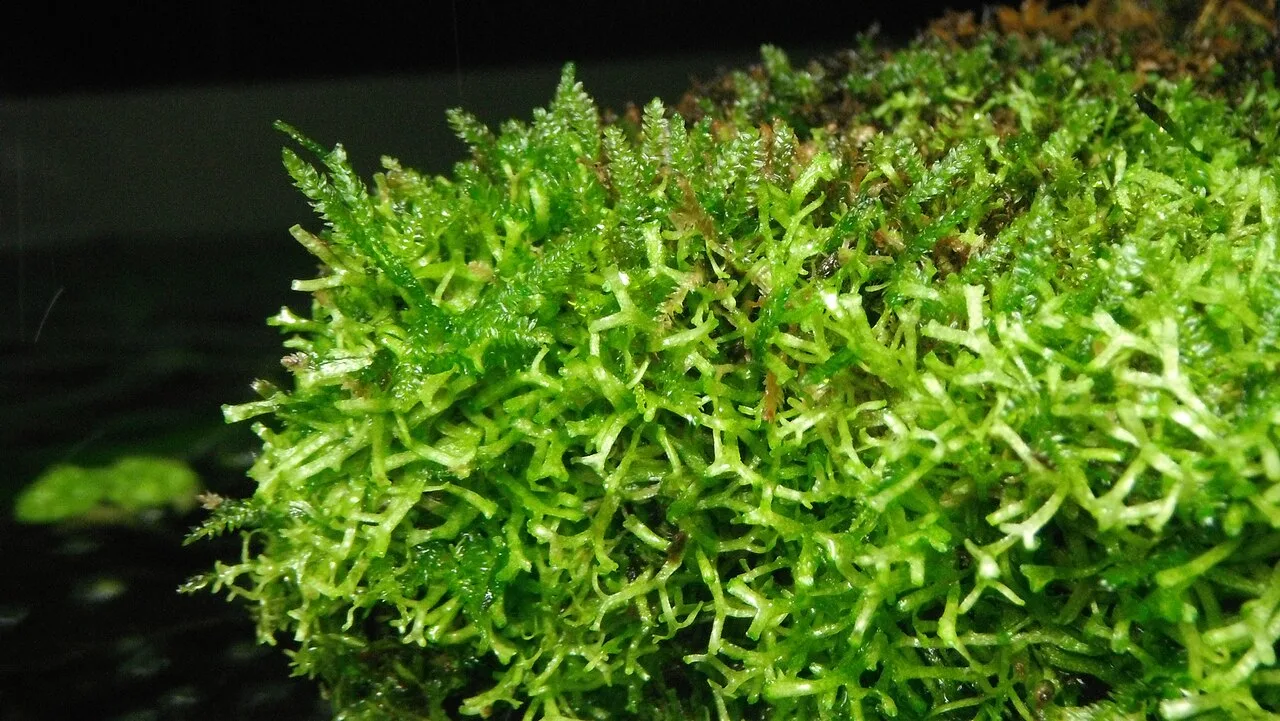
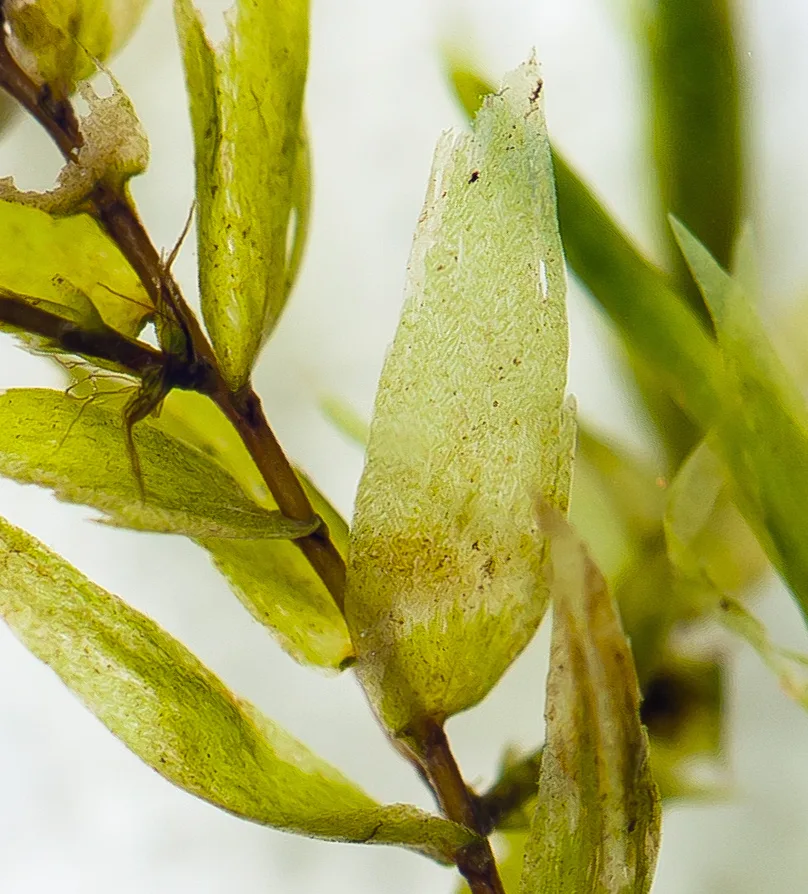
The moss was formerly called Vesicularia dubyana and Hypnum dubyanum. Vesicularia dubyana now refers to Singapore moss. The stems are loosely pinnate and light to deep green. It grows on river banks in and out of the water and is described as undemanding about water quality, supposedly even slightly brackish. Tie it to wood or stone until rhizoids hold. Wedging it between two stones is enough as well.
Natural origin
This describes the origin, not how to furnish the aquarium.
China, Thailand and Indonesia are named. The German name comes from Java, because in the 1930s the Zoological Institute of the University of Vienna obtained the moss from the botanic garden at Buitenzorg on Java. That is the import history, not proof that the species grows only on Java.
Light, CO₂ and position
A wide temperature range is tolerated, and 18–28 °C, low light and no CO₂ work well. Substrate can be soil, stone, wood, tubing or glass, glass only when an algal film gives a hold. In humid terraria it can cover the floor.
A surface, not a lump
Java moss is tied on thinly or wedged between two stones. A fist-sized cushion from the bag stays brown inside, because no water passes through. Better a thin layer that attaches than a lump that falls apart after three weeks.
Low light is enough. Under a very strong lamp without CO₂, thread algae settle and then cannot be pulled out of the moss. Medium light and a current that carries the mulm away are the better combination.
Growth and trimming
Dense cushions collect detritus. They are rinsed and thinned. The moss does poorly with algae.
Mulm
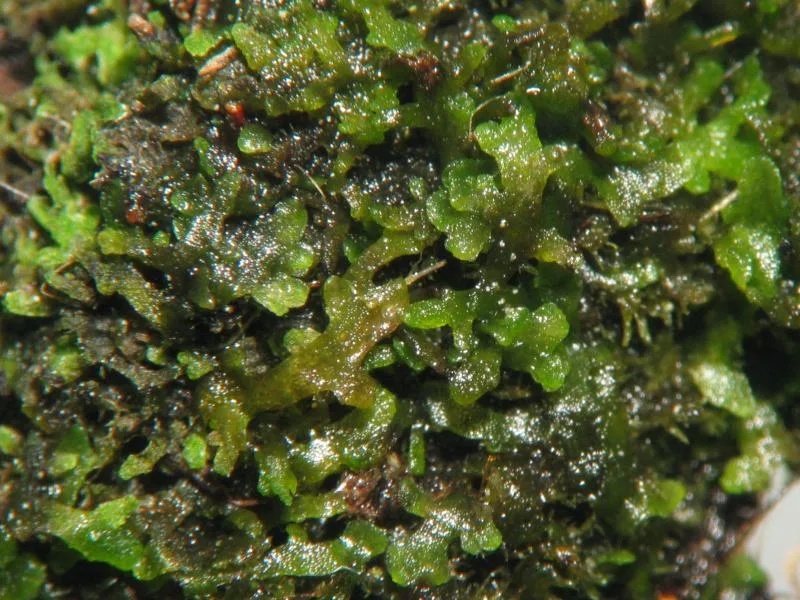
Blow the moss out at the water change. Mulm is fertiliser and suffocation at the same time. A brown underside is cut off, the green top layer tied on again. The moss forgives that. It does not forgive serving as a filter mat for months.
Further care
Small animals live in the cushions. Shrimp of the genus Caridina search them for food. Small fish can spawn in them. That is a use, not a feeding guide for the moss.
Propagation
Above water, brown capsules form. In the aquarium it spreads by fragments, even in moderate light. Spores are then usually not the route.