Mini pellia
Riccardia chamedryfolia
17 views
A liverwort that grows flat and branched over wood and stone. It is tied on thinly and not planted in the gravel.
- Temperature
- 18 – 26 °C
- pH
- 6 – 7.5 pH
- Lighting
- Low light
- CO₂
- Low CO₂
- Growth rate
- Slow
- Placement
- Midground
2 min read · 287 words
Care profile
Growth form
MossesPlanting and propagation
- Attach Fix it to wood or stone with cotton thread, fishing line or plant glue. The roots attach on their own after a few weeks.
Placement in the aquarium
Highlighted are the areas where the species is typically used.
- Midground Between foreground and background. Hides transitions and frames stones and wood.
- On rock or wood Tied onto wood or stones rather than planted in the substrate.
Home & range
Botanical overview
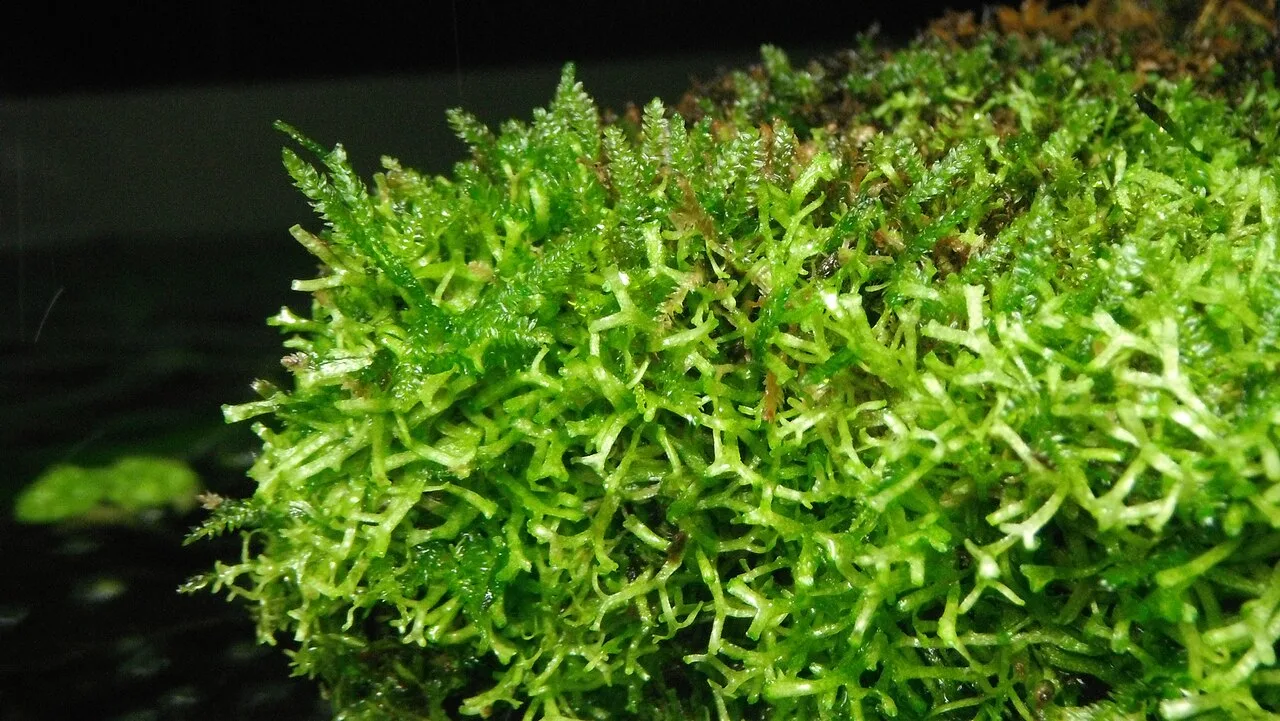
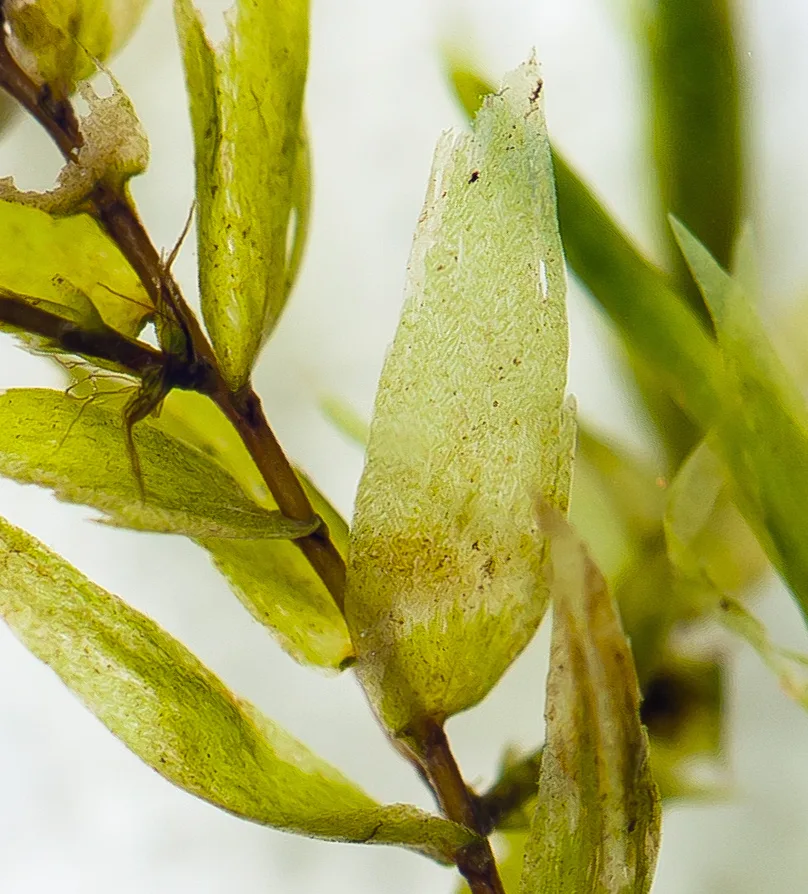
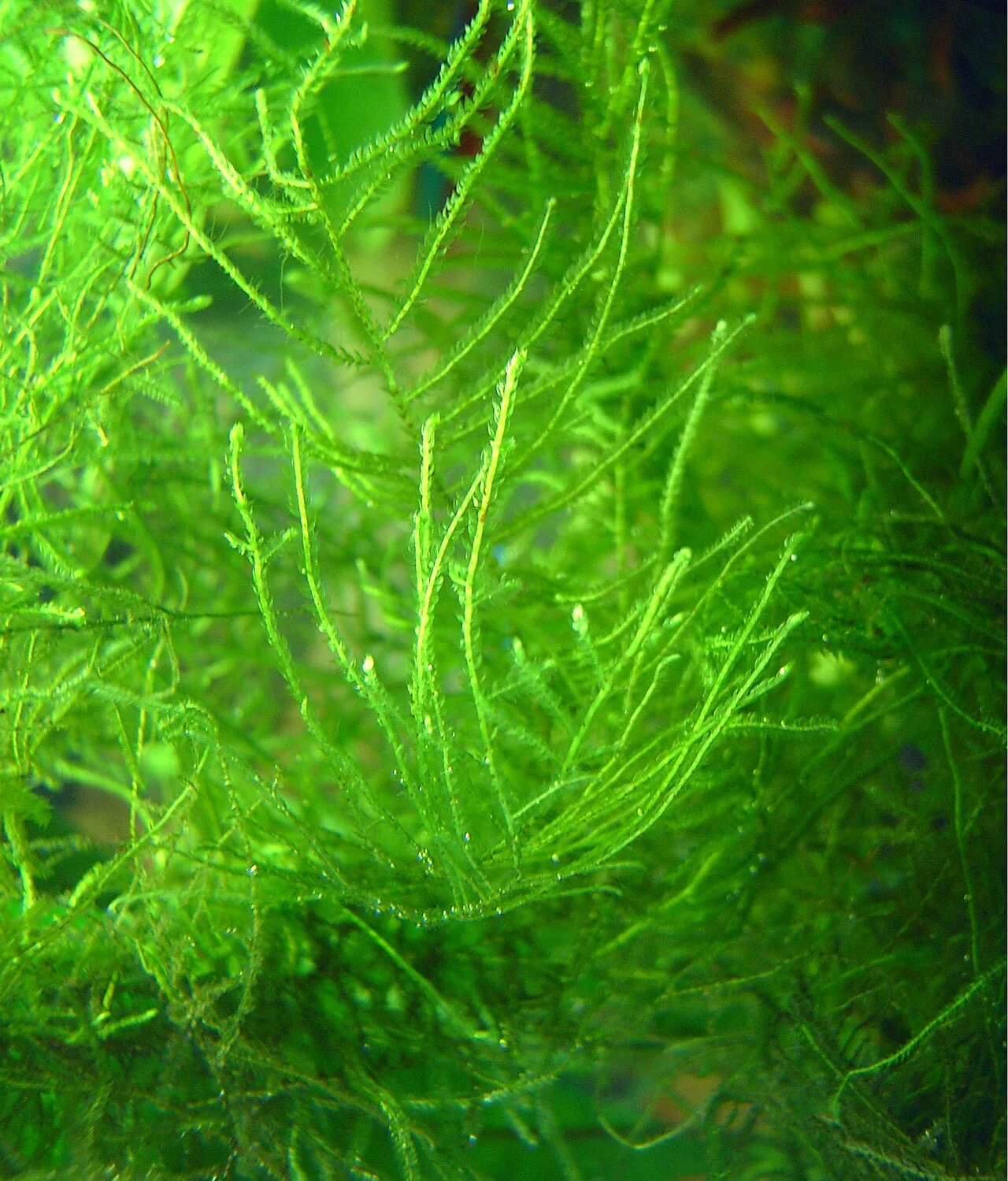
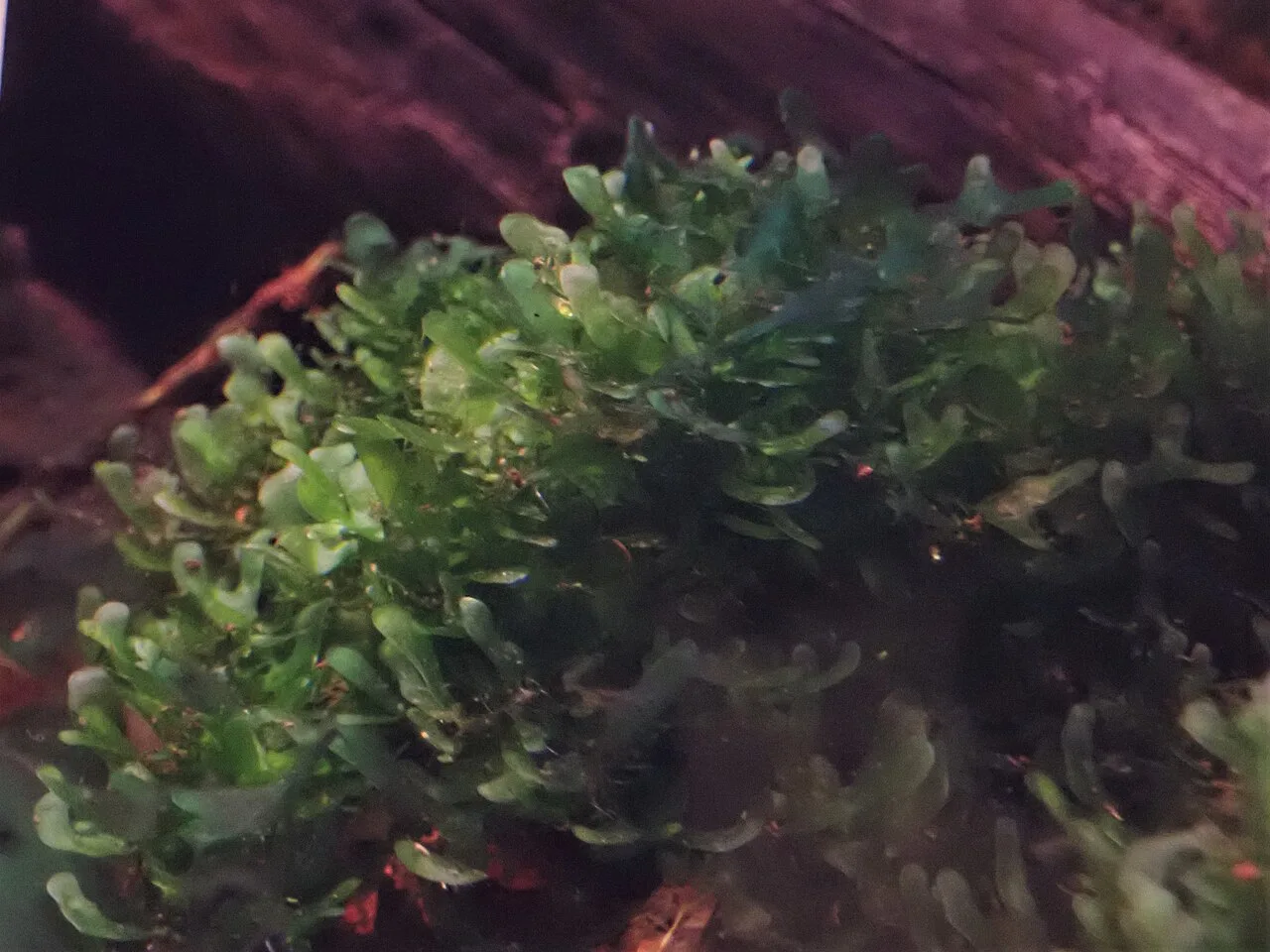
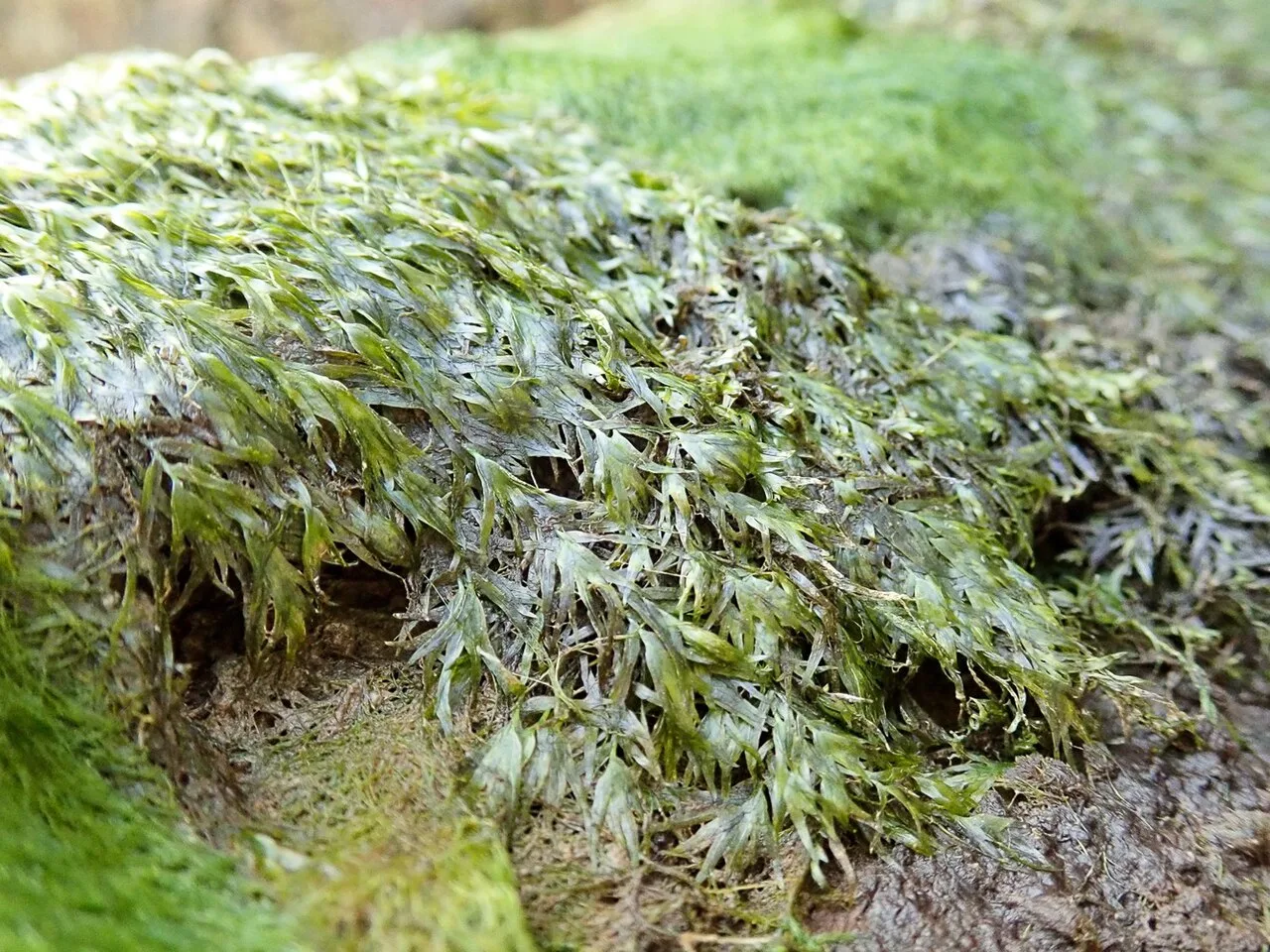
Riccardia chamedryfolia forms dark, forked thalli that lie close against the surface and make a coral-like pattern. It stays flatter than Pelia and attaches better if it is tied on thinly. Thick cushions turn brown inside and come loose. The species is not Java moss and has no threads that claw into wood by themselves.
Under medium light and in clean water it grows slowly into a closed surface. Under glaring light without CO₂, algae settle that can no longer be got out of the forks.
Natural origin
This describes the origin, not how to furnish the aquarium.
Damp rock and wood in clean water, widely spread in temperate and warm zones. A single origin polygon is not drawn here. For the tank, current, cleanliness and a hard surface matter.
Light, CO₂ and position
Tying on
Low to medium light, CO₂ helpful, 18 to 26 °C. Tie it thinly with nylon or a mesh onto stone or wood. Moderate current, so mulm does not lie in the forks. A hard jet tears the moss off.
Algae
Cut off affected parts. Do not rub them. Medium light and clear water keep the form better than maximum brightness.
Layout and neighbours
The fine, branched liverwort forms dense, coral-like cushions on stones and wood. Ideal for shrimp and nano tanks.
Common mistakes
Cushions that are too thick rot inside. Thin out regularly.
Growth and trimming
The increase is slow and across the surface. The top layer can be taken off and tied on again when the cushion grows too thick. Substrate fertiliser hardly reaches it. What it needs is in the water, and it needs little of it. Brown undersides are removed, not pressed down.
Propagation
Tie small forks on again and press them until they hold. Every piece keeps growing. That takes days. In between, do not retie constantly.