Creeping burhead
Echinodorus cordifolius
24 views
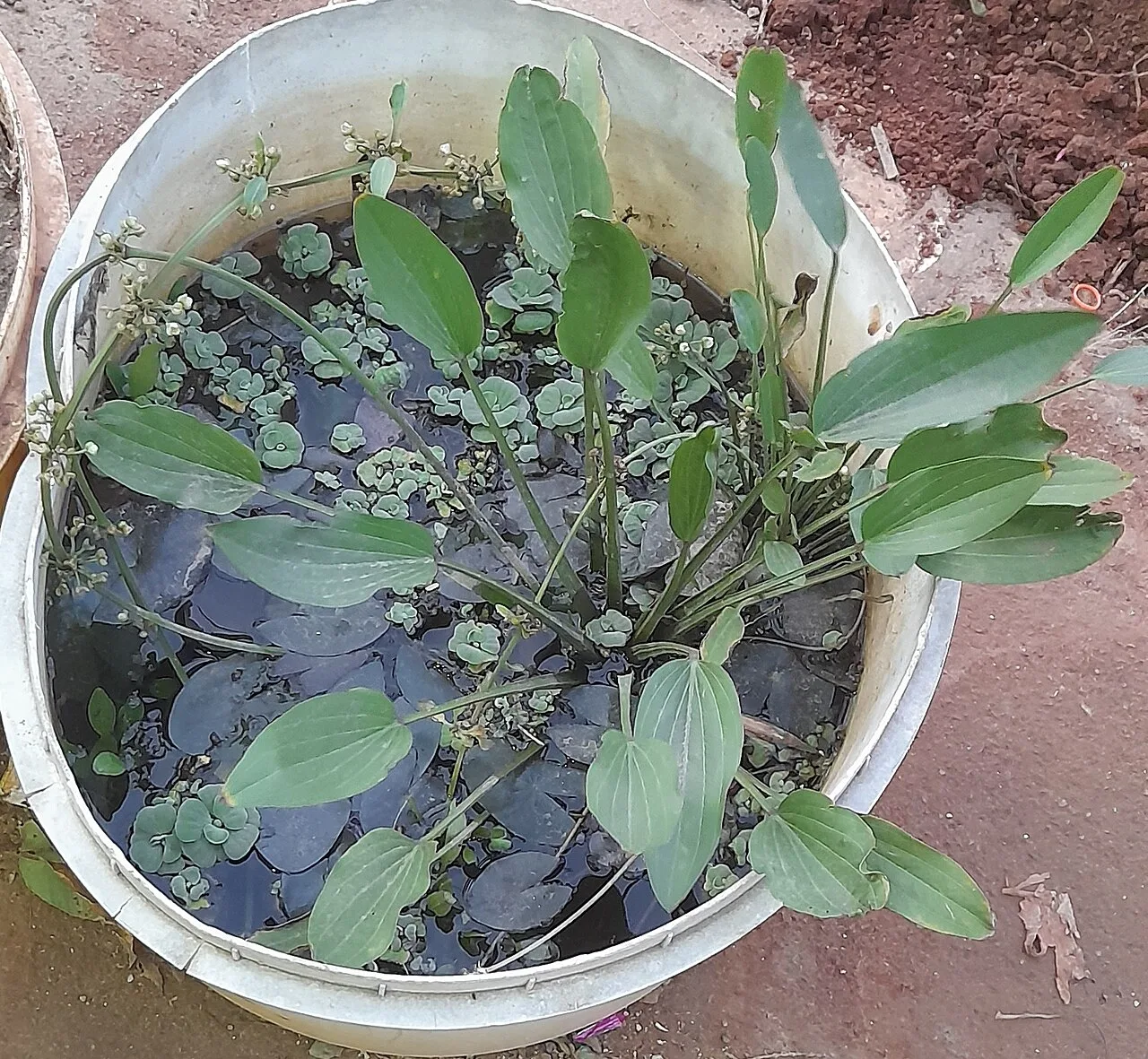
A large sword plant with broad, often heart-shaped leaves. It becomes a specimen and easily grows above the water.
- Temperature
- 20 – 28 °C
- pH
- 6 – 8 pH
- Lighting
- Medium light
- CO₂
- Medium CO₂
- Growth rate
- Medium
- Placement
- Background
2 min read · 288 words
Care profile
Growth form
RosettesPlanting and propagation
- Adventitious plantlets Forms daughter plants on leaves or rhizome. Remove them once they carry a few roots.
Placement in the aquarium
Highlighted are the areas where the species is typically used.
- Background Along the back wall and the sides. Forms the tall, dense backdrop.
Home & range
Hatched countries are where the species occurs. It lives in particular waters there, not across the whole country. The points name known waters for orientation, not collection sites.
- Country of origin
- Water for orientation
Native
Botanical overview
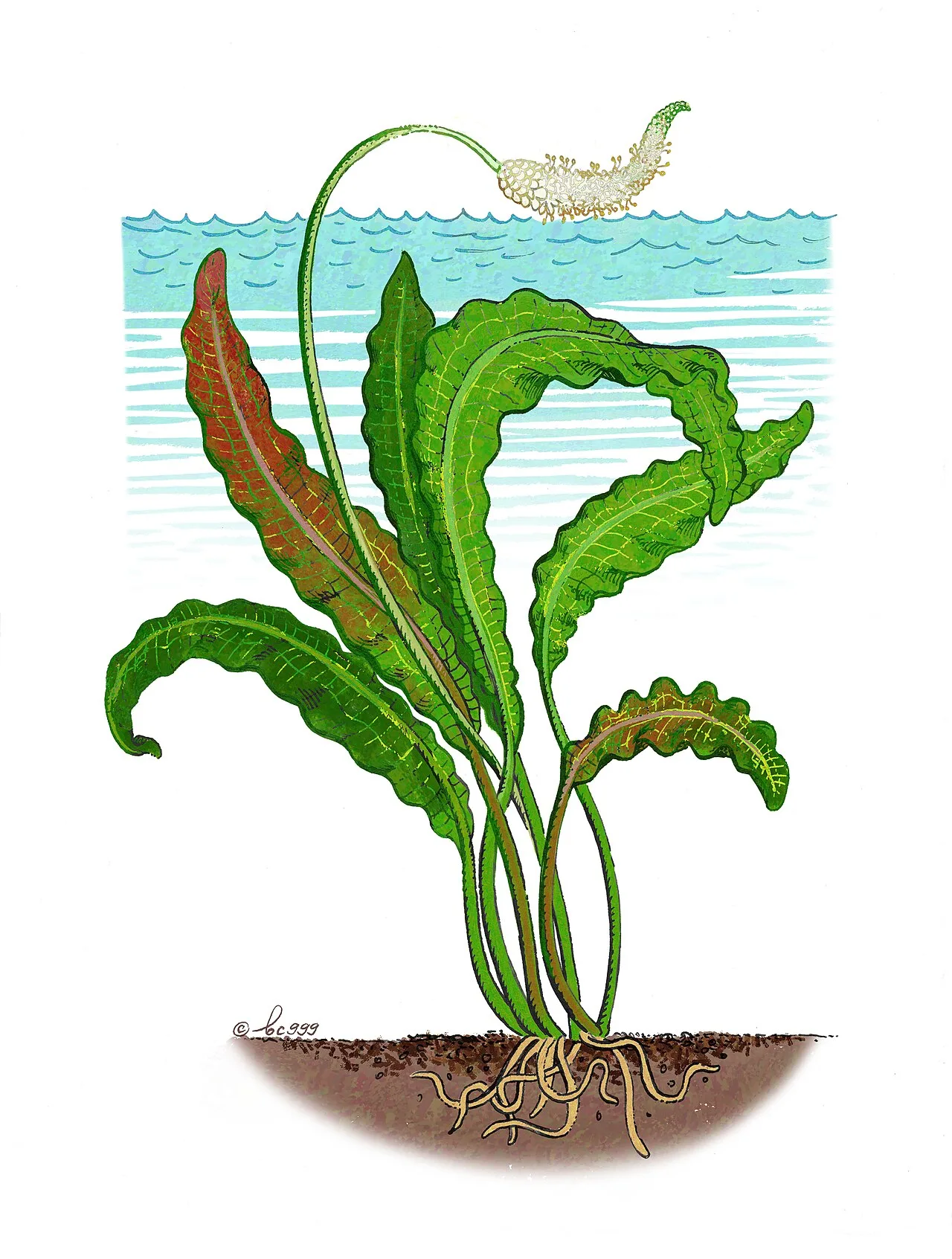
Echinodorus cordifolius forms a rosette of broad leaves. Under water they stay elongate. In a low water level or emersed they become clearly heart-shaped and tougher. The plant grows large. A tank of 40 cm height is quickly too low. Then the leaves lie on the surface and shade everything.
It is not the narrow-leaved sword Echinodorus grisebachii. The leaves are broader, the clump heavier. The root ball needs a nutrient-rich substrate.
Natural origin
This describes the origin, not how to furnish the aquarium.
Swamps and banks in the southern United States and in Central America. The origin stays coarse. The species knows emersed and submerged growth and seeks the light with its leaves.
Light, CO₂ and position
Place
Medium to high light, CO₂ helpful, 20 to 28 °C. Specimen or background, growing point free, root zone with fertiliser capsules. Not in the foreground of a small tank. Plant once.
Above water
In open tanks it pushes leaves and flower stalks above the surface. Anyone who wants to keep the submerged form cuts the aerial leaves off and keeps the light high. Sooner or later it still heads upward again.
Layout and neighbours
A large sword plant with heart-shaped leaves that likes to form floating and aerial leaves. Keep it short in the aquarium, let it grow in a pond in summer. The 'Marble Queen' form is marbled white.
Common mistakes
Leaving aerial leaves. The plant then stops growing under water.
Growth and trimming
Cut yellow outer leaves at the stalk right at the rosette. Do not injure the centre. A plant fed only through the water column makes small, pale leaves. Old algal leaves are removed, not rubbed until they tear.
Propagation
Adventitious plants on the flower stalk, less often division of the clump. The plantlets are taken off when they have roots and several leaves.