Cryptocoryne crispatula
Cryptocoryne crispatula
28 views
A narrow-leaved crypt that forms a grass-like stand in the background and often drops its leaves after a move.
- Temperature
- 22 – 28 °C
- pH
- 7 – 7.5 pH
- Lighting
- Medium light
- CO₂
- Low CO₂
- Growth rate
- Medium
- Placement
- Background
2 min read · 310 words
Care profile
Growth form
RosettesPlanting and propagation
- Runners Forms runners in the substrate that grow into new plants. Separate them once they have their own roots.
Placement in the aquarium
Highlighted are the areas where the species is typically used.
- Background Along the back wall and the sides. Forms the tall, dense backdrop.
Home & range
Hatched countries are where the species occurs. It lives in particular waters there, not across the whole country. The points name known waters for orientation, not collection sites.
- Country of origin
- Water for orientation
Native
Botanical overview
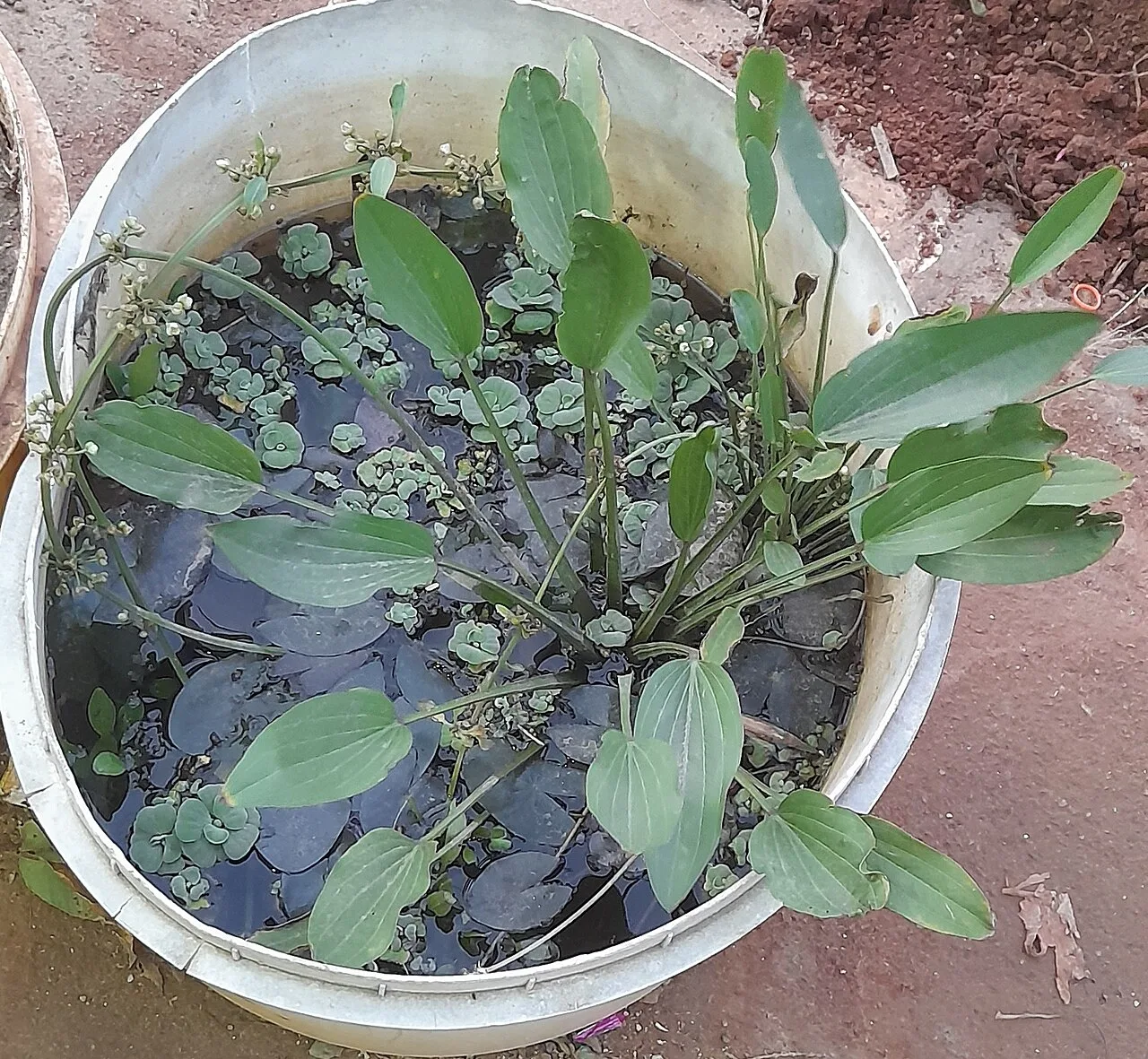
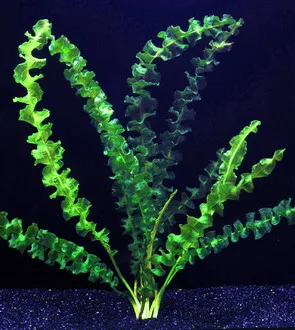
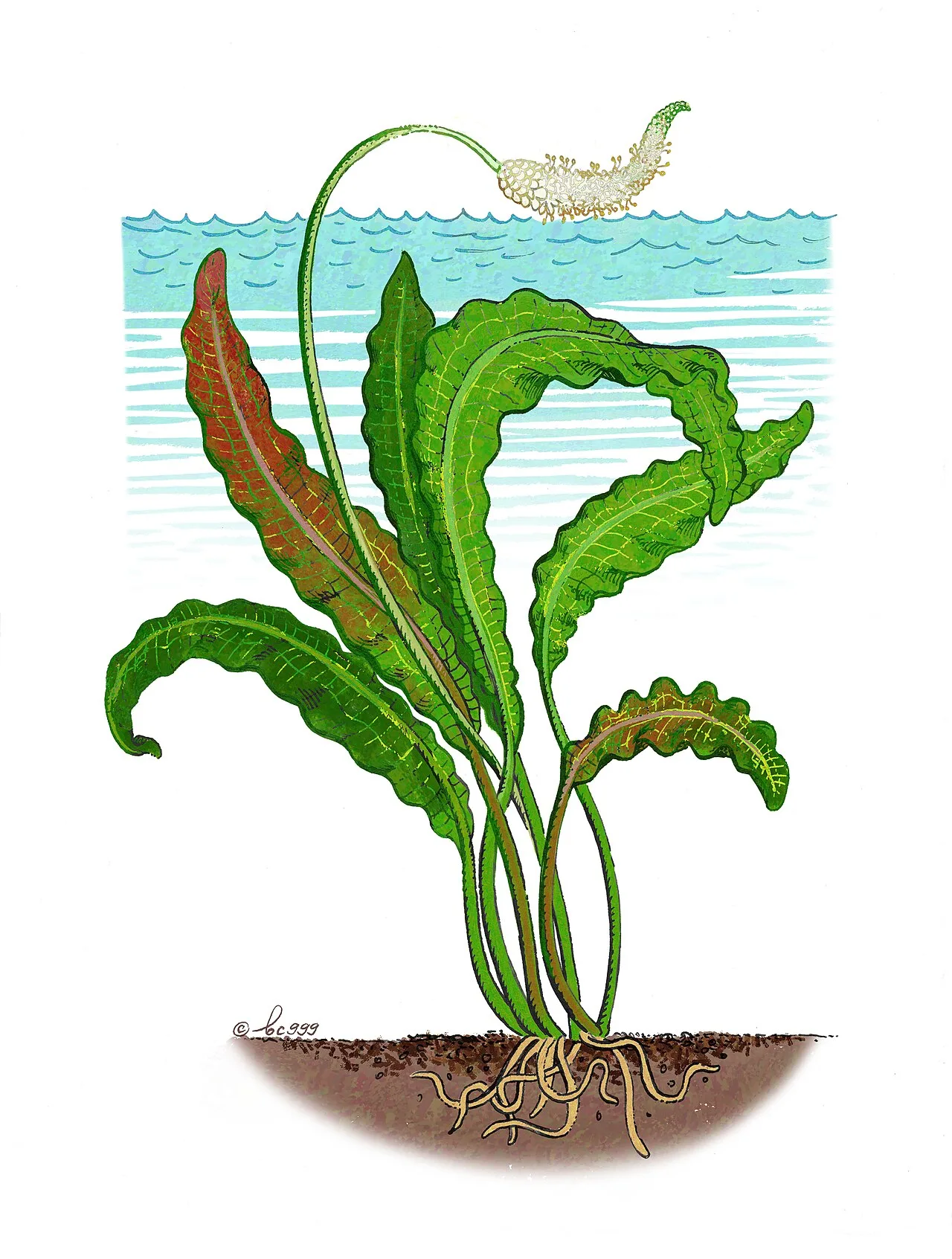
Cryptocoryne crispatula sends long, narrow, often slightly waved leaves from a rosette. Depending on the form they stay green or become brown-red. In a tall tank the leaves can reach the surface and lie over. The species is not a ground cover and not Cryptocoryne parva. It stands in the middle or the background.
After planting the leaves often turn glassy. The crown usually lives. New leaves, used to the tank, come from the centre and look different from the emersed leaves out of the pot.
Natural origin
This describes the origin, not how to furnish the aquarium.
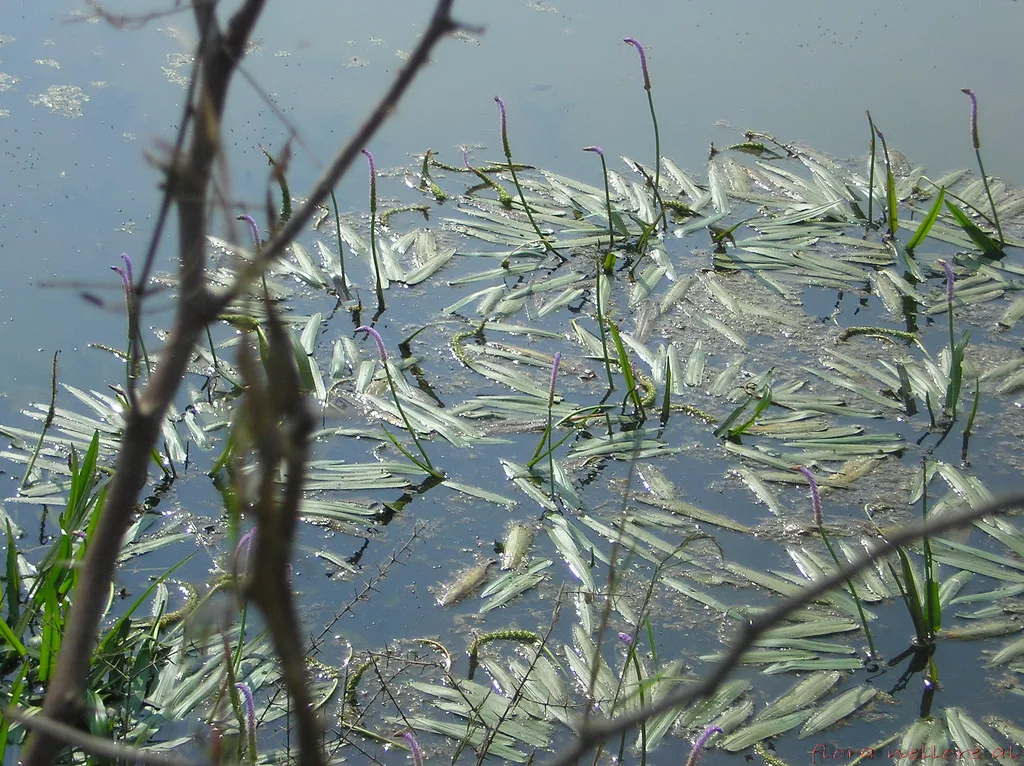
Flowing and still waters in Southeast Asia, rooted in the substrate, the leaves in the current. The countries stay a coarse origin. The grass-like habit explains why a single plant shows little and a group closes the background.
Light, CO₂ and position
Place
Medium light, CO₂ helpful, 22 to 28 °C, a nutrient-rich substrate. Set them with a gap, not as a lump of rock wool. Plant once and leave them. Under a dense floating cover the leaves grow long and pale. Direct, unfertilised glare sets algae on the narrow surface.
Melt
Pull off dead leaves. Do not tear the crown out. Keep the values quiet. A soft base is lost. A firm crown without leaves is a wait of some weeks.
Layout and neighbours
The long, narrow leaves replace vallisneria in the background, even in harder water. The 'balansae' form has bullate leaves and is especially decorative.
Common mistakes
Too little root fertiliser. The leaves then become pale and short.
Growth and trimming
Take yellow outer leaves at the base. Leaves that are too long and lie on the foreground can be cut. The cut edge stays visible. It is prettier to leave the plant further back, where the length fits the tank. Runners stay until the stand is dense.
Propagation
Separate runners with their own roots and several leaves. Propagation is slow. Seed plays no role in the aquarium.