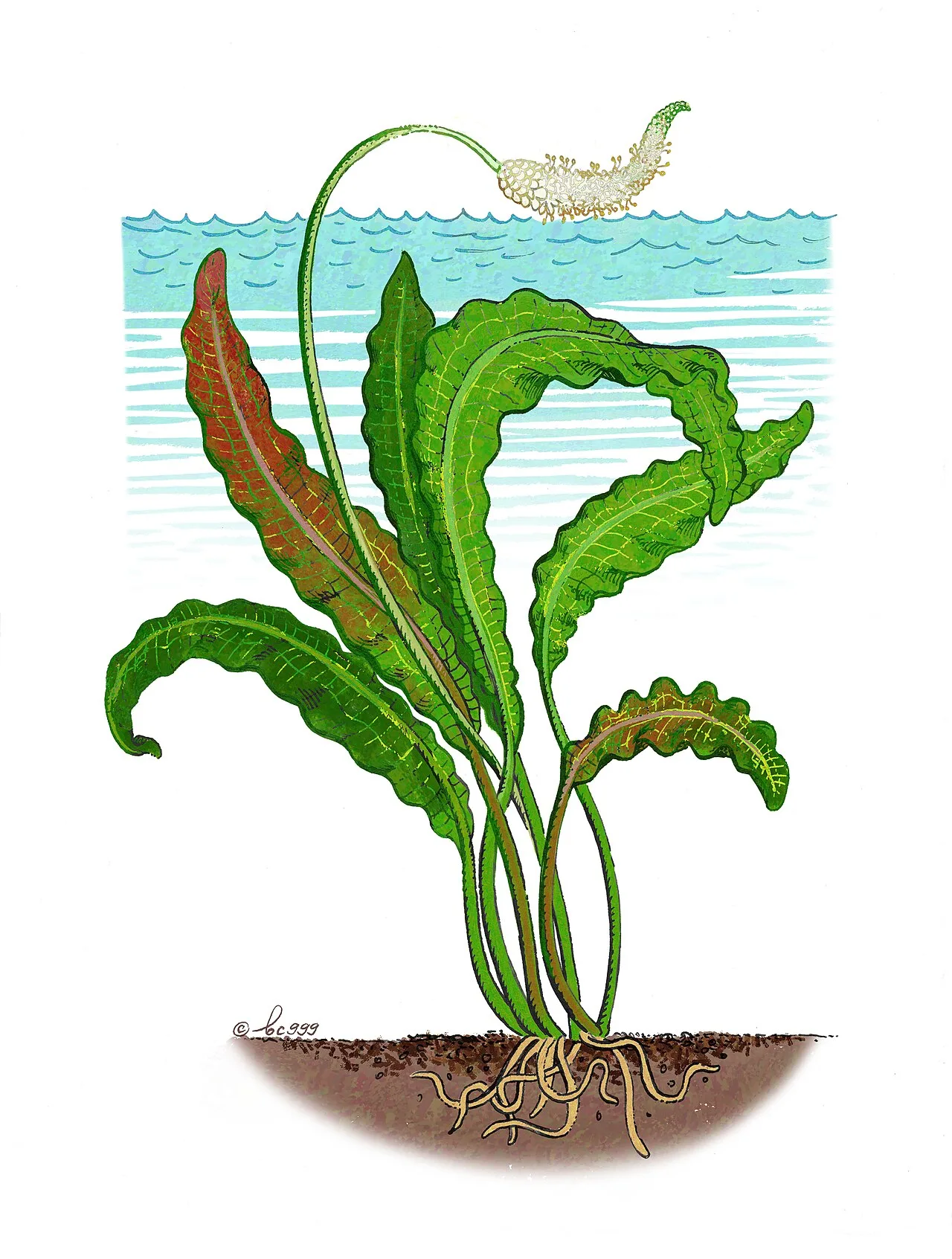
Echinodorus grandiflorus
Echinodorus grandiflorus
1 view
A large South American sword plant, in the trade also as Echinodorus argentinensis. For very large tanks.
- Temperature
- 18 – 28 °C
- pH
- 6 – 7.5 pH
- Lighting
- Medium light
- CO₂
- Low CO₂
- Growth rate
- Medium
- Placement
- Background
1 min read · 168 words
Care profile
Growth form
RosettesPlanting and propagation
- Adventitious plantlets Forms daughter plants on leaves or rhizome. Remove them once they carry a few roots.
Placement in the aquarium
Highlighted are the areas where the species is typically used.
- Background Along the back wall and the sides. Forms the tall, dense backdrop.
Home & range
Hatched countries are where the species occurs. It lives in particular waters there, not across the whole country. The points name known waters for orientation, not collection sites.
- Country of origin
- Water for orientation
Native
Botanical overview
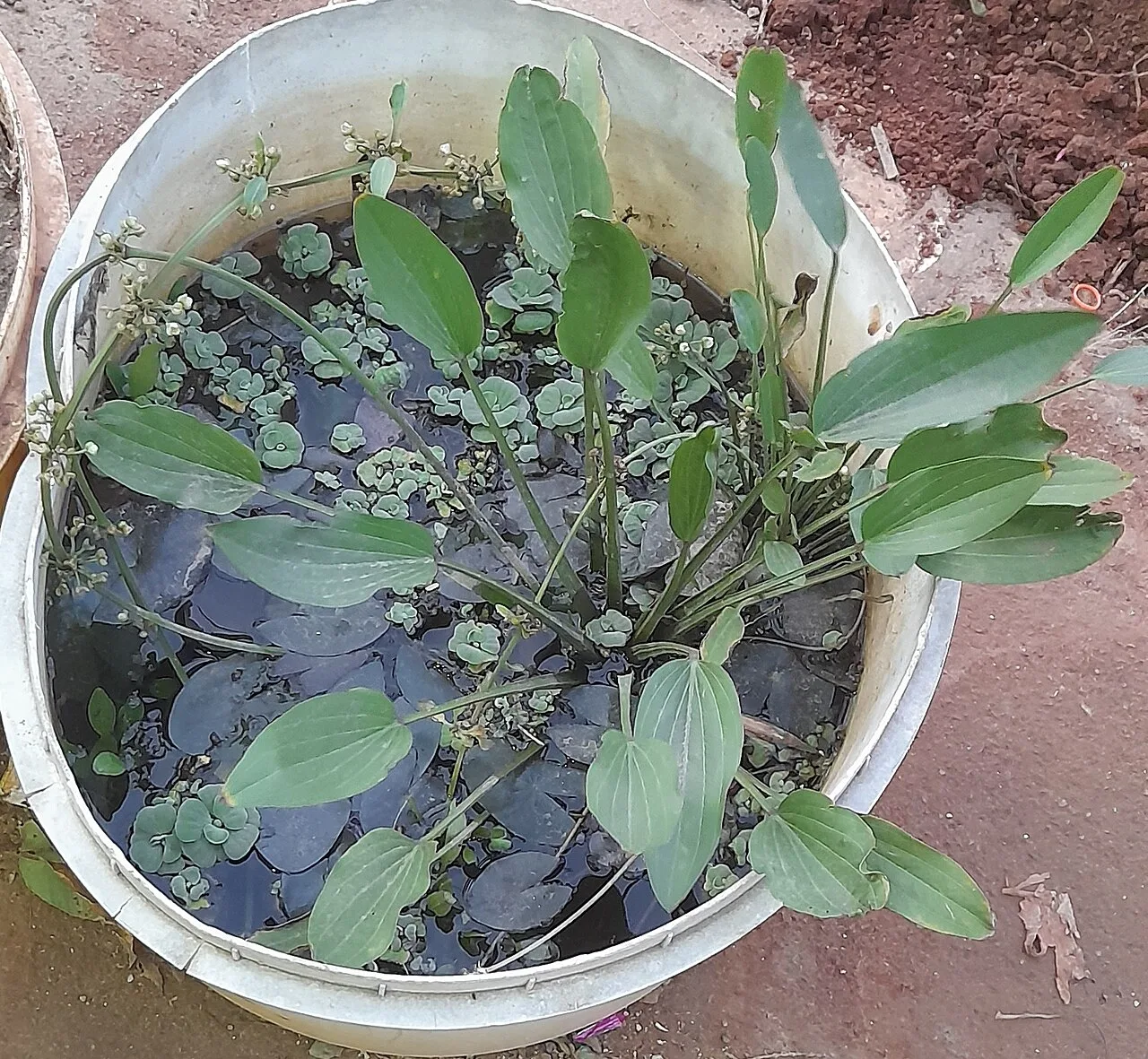
Echinodorus grandiflorus grows large under water: the lanceolate to ovate leaves sit on long stalks and reach 40 cm and more including the stalk. Above water it forms large, heart-shaped, leathery leaves and tall inflorescences with white flowers. Older aquarium literature also lists it as Echinodorus argentinensis. In Brazil it is used as a medicinal plant.
In the aquarium it needs room in height and width. It tends to grow above the surface.
Natural origin
This describes the origin, not how to furnish the aquarium.
The species is native to Brazil, Paraguay, Uruguay, Argentina, Venezuela and Florida. It grows in marshes and on banks, mostly partly above water.
Light, CO₂ and position
Light
Medium light.
Fertiliser
A heavy root feeder; fertiliser balls at the base.
Position
18 to 28 °C. Specimen plant in the background of large tanks.
Layout and neighbours
A specimen plant for very large tanks of 300 litres and more. Shade plants fit underneath.
Common mistakes
Planted in a 100-litre tank: it fills it within a few months.
Growth and trimming
Moderate growth. Cut long leaf stalks heading for the surface early.
Propagation
Adventitious plantlets on the inflorescence.