Eleocharis parvula
Eleocharis parvula
18 views
An even finer hairgrass than Eleocharis acicularis. The lawn stays short only when light reaches the bottom.
- Temperature
- 18 – 26 °C
- pH
- 6 – 7.5 pH
- Lighting
- High light
- CO₂
- Medium CO₂
- Growth rate
- Medium
- Placement
- Foreground
2 min read · 305 words
Care profile
Growth form
Ground coverPlanting and propagation
- Rhizome The creeping rhizome stays free above the substrate. Buried, it rots.
- Runners Forms runners in the substrate that grow into new plants. Separate them once they have their own roots.
Placement in the aquarium
Highlighted are the areas where the species is typically used.
- Foreground At the front of the tank, where the plant stays low and keeps the view open.
- Ground cover Spreads flat over the ground and can form a closed lawn.
Home & range
Hatched countries are where the species occurs. It lives in particular waters there, not across the whole country. The points name known waters for orientation, not collection sites.
- Country of origin
- Water for orientation
Native
Botanical overview
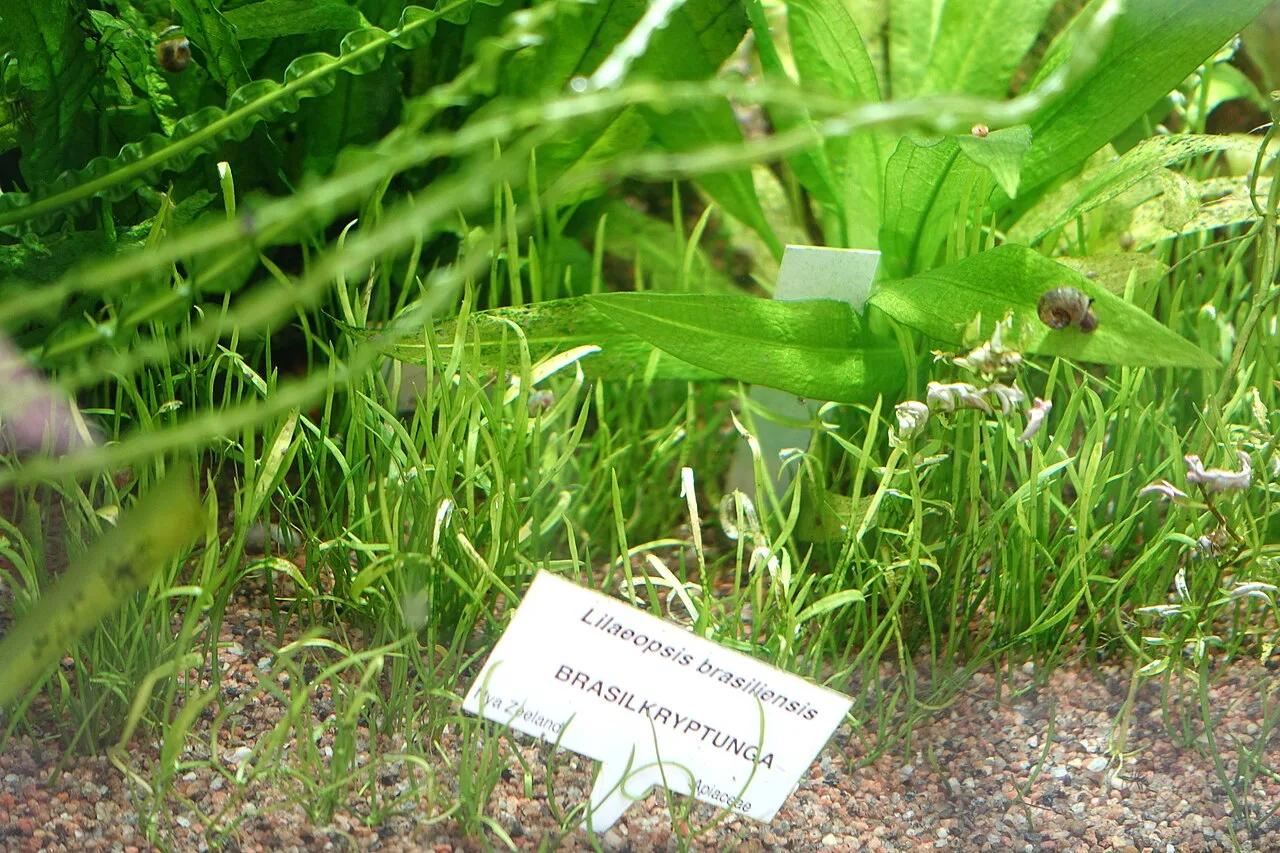
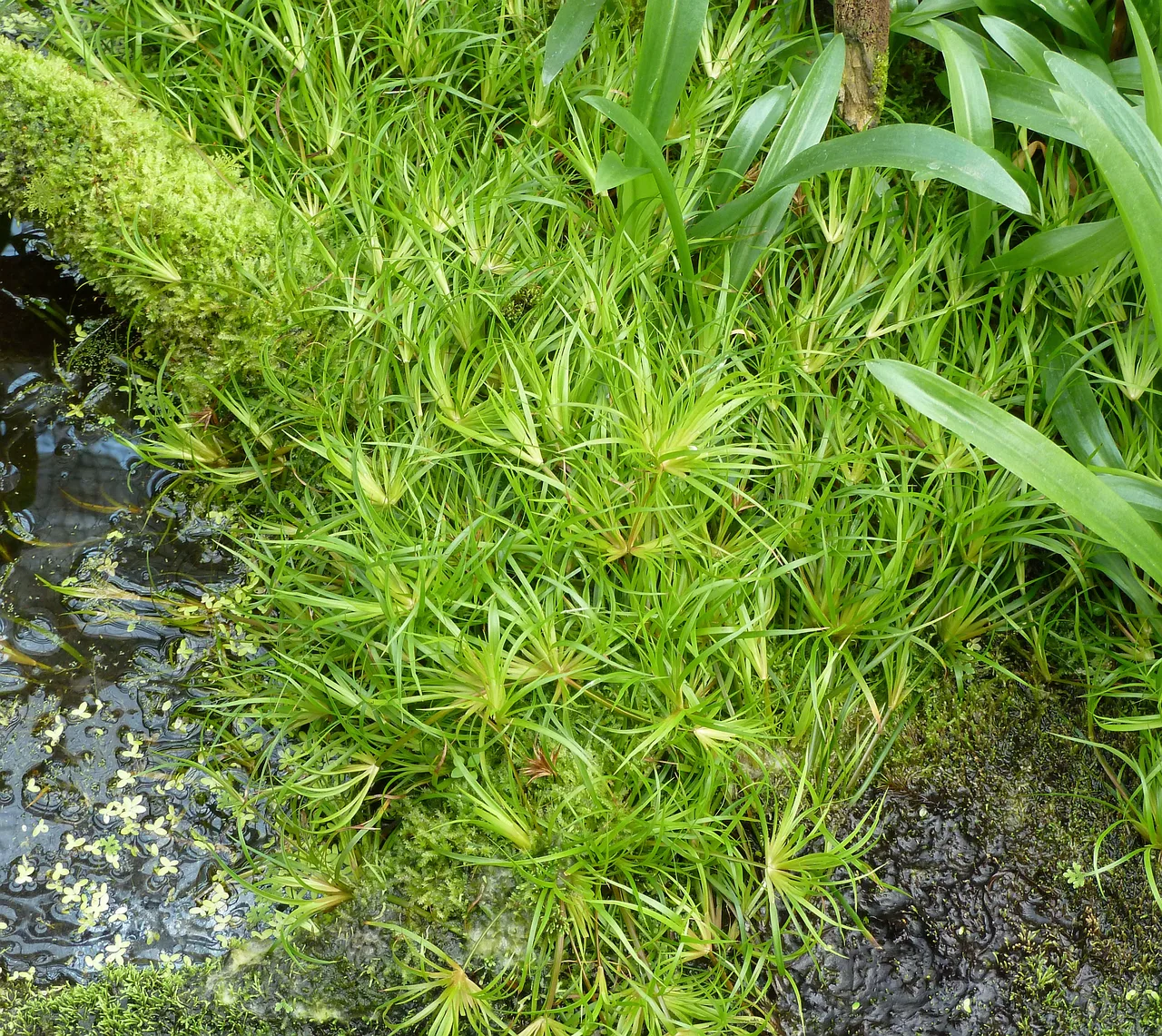
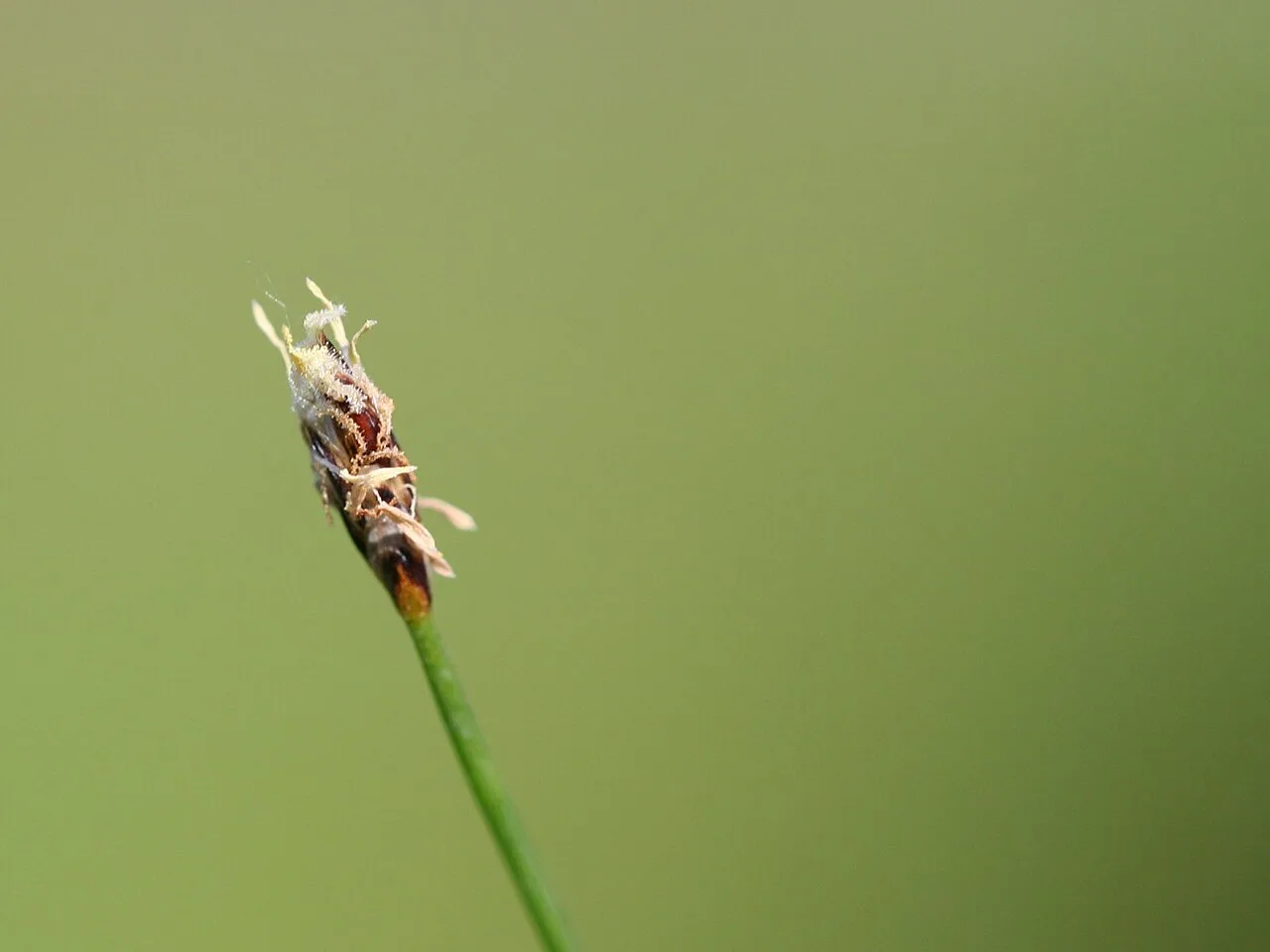
Eleocharis parvula sends very thin, often slightly bent blades from a creeping rhizome. Under strong light the height stays at a few centimetres. In shade the blades grow long and lie over. The species is not Eleocharis acicularis, whose needles are coarser and often grow taller. In the trade both are mixed under the name hairgrass.
A pot is a dense mat in rock wool. The mat is divided into small tufts. A block lifts and rots from below.
Natural origin
This describes the origin, not how to furnish the aquarium.
Shallow, bright banks of the northern hemisphere, also in coastal brackish water. The wide distribution is not a licence to release aquarium plants. For the tank the short lawn under light matters.
Light, CO₂ and position
Lawn
High light, CO₂ recommended, 18 to 26 °C, a nutrient-rich substrate. Small tufts with a gap, the foreground free of shade. The area closes by runners over weeks to months. Without CO₂ it often survives, but stays taller and gappier.
Shade
Floating plants and a dense row of Vallisneria behind it turn the lawn into a long grass. Anyone who wants both keeps the floating cover on part of the surface and the sedge in front of it in the light.
Layout and neighbours
The short culms form a very low lawn, shorter than dwarf hairgrass. Plant it as a carpet in nature aquariums in small portions.
Common mistakes
Planting whole pots as a lump. Divide into 5 to 10 culms and plant with tweezers.
Growth and trimming
Blades that are too long are cut once the area can carry it. Before that the cut weakens the few shoots. Siphon mulm from between the needles, or the lawn turns brown from below while the tips are still green. Yellow patches are replaced together with the piece of rhizome.
Propagation
Separate runners with roots and set them into the gaps. That is the propagation and the way the area becomes dense.