Hydrocotyle tripartita
Hydrocotyle tripartita
33 views
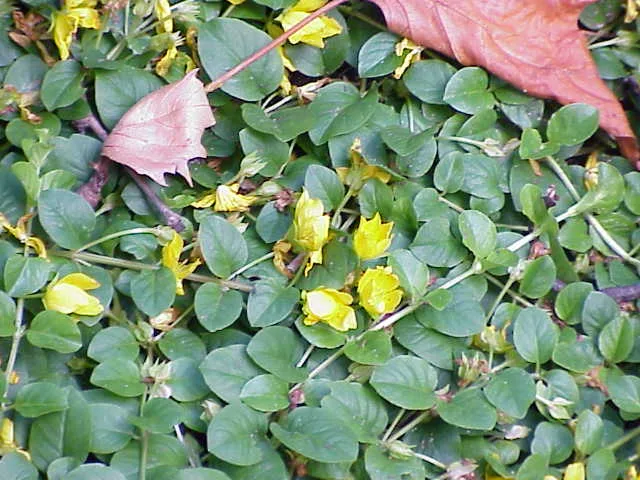
A creeping plant with three-part leaves, grown as a ground cover or as a small bush on wood. It grows fast once the light arrives.
- Temperature
- 20 – 28 °C
- pH
- 6 – 7.5 pH
- Lighting
- High light
- CO₂
- Medium CO₂
- Growth rate
- Fast
- Placement
- Foreground
2 min read · 335 words
Care profile
Growth form
Ground coverPlanting and propagation
- Cuttings Cut off shoot tips and replant them. This keeps the stand dense and propagates it at the same time.
- Runners Forms runners in the substrate that grow into new plants. Separate them once they have their own roots.
Placement in the aquarium
Highlighted are the areas where the species is typically used.
- Foreground At the front of the tank, where the plant stays low and keeps the view open.
- Ground cover Spreads flat over the ground and can form a closed lawn.
Home & range
Hatched countries are where the species occurs. It lives in particular waters there, not across the whole country. The points name known waters for orientation, not collection sites.
- Country of origin
- Water for orientation
Native
Botanical overview
Hydrocotyle tripartita sends small, three-part leaves on a thin stem, suggesting a clover. On the bottom it stays flat. Against a stone, or in low light, it climbs and becomes a loose bush. The form is a question of trimming and light, not of two species.
The stems root at the nodes. A pot is a tangle that has to be taken apart. Set as a lump, it lifts off the substrate after a few days.
Natural origin
This describes the origin, not how to furnish the aquarium.
Damp banks and shallow water in East Asia and Australia, bright and nutrient-rich. The exact natural limit of the form common in the hobby is narrower than the trade route. For the tank the bright, creeping habit matters.
Light, CO₂ and position
Light
High to medium light, CO₂ clearly helpful, 20 to 28 °C. In the foreground, in small tufts with a gap. Or leaned against hardscape, then trimmed regularly, or it lies on the neighbouring plants. Without CO₂ it keeps growing, but taller and more full of holes.
Neighbours
Slow rosettes lose if the pennywort grows over them. It belongs at the edge of a lawn or in an area of its own, not in the middle of Cryptocoryne parva.
Layout and neighbours
This pennywort creeps over the ground and stones and forms a playful, bright green carpet. Draped over hardscape it looks like growth on a stream bank.
Common mistakes
Too little light: the stalks grow long and the plant loses its carpet shape.
Growth and trimming
A weekly trim holds the height. Cut runners are replanted or removed. An uncut stand becomes a cushion whose underside turns yellow and then floats up. Then replant the healthy top layer and discard the rest.\n\nThe plant draws nutrients from the water. In a lean tank it stays pale. A normal complete fertiliser is enough. A substrate fertiliser helps, but it is not the only source.
Propagation
Cuttings with two or three nodes. The lower node into the substrate or tucked under a moss cushion. The species multiplies so fast that the trim is the propagation.