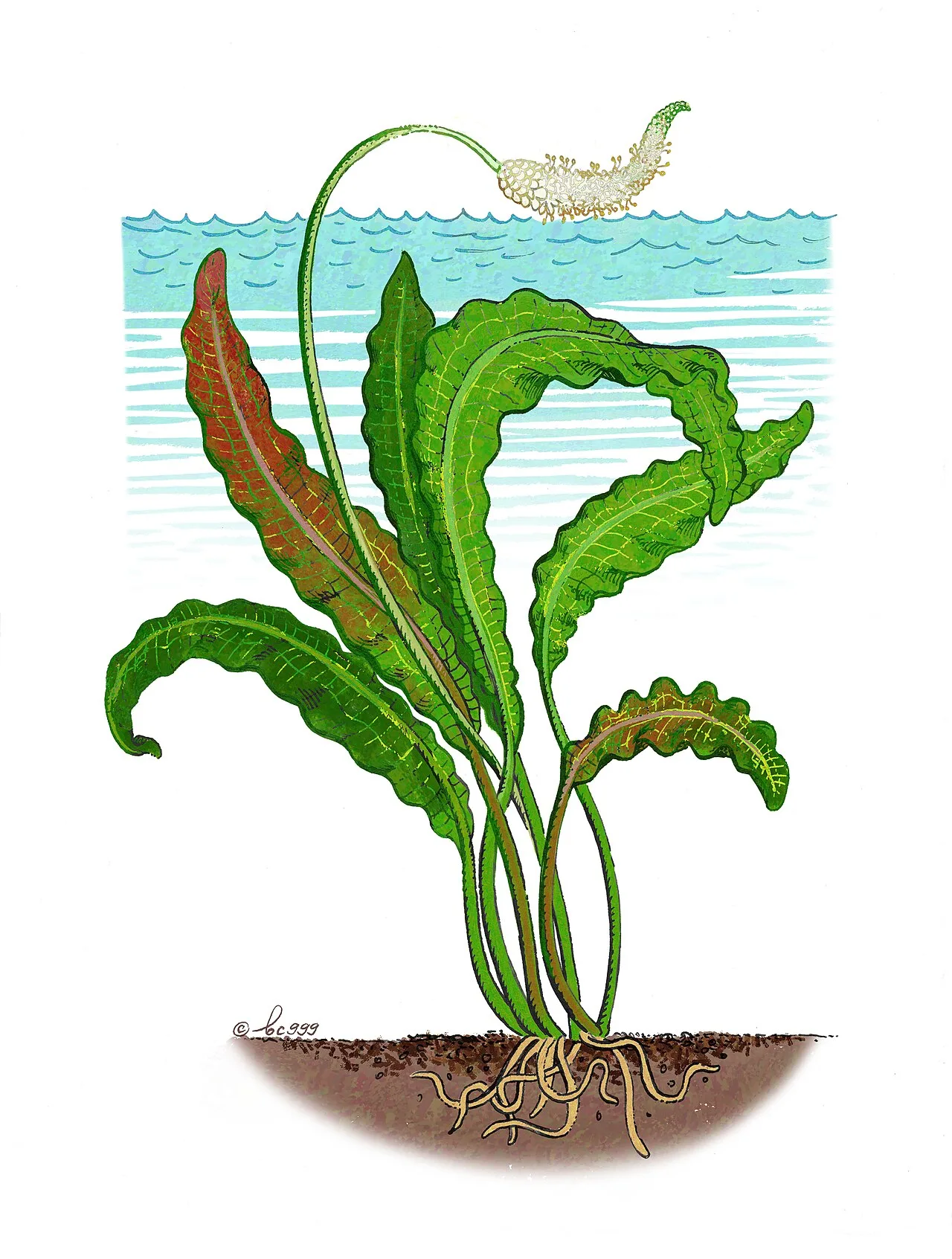
Lagenandra meeboldii
Lagenandra meeboldii
20 views
A rosette from India with tough, often silvery marked leaves. It grows slowly and wants quiet at the rhizome.
- Temperature
- 22 – 28 °C
- pH
- 5.5 – 7.5 pH
- Lighting
- Low light
- CO₂
- Low CO₂
- Growth rate
- Slow
- Placement
- Midground
2 min read · 324 words
Care profile
Growth form
RosettesPlanting and propagation
- Attach Fix it to wood or stone with cotton thread, fishing line or plant glue. The roots attach on their own after a few weeks.
- Rhizome The creeping rhizome stays free above the substrate. Buried, it rots.
Placement in the aquarium
Highlighted are the areas where the species is typically used.
- Midground Between foreground and background. Hides transitions and frames stones and wood.
Home & range
Hatched countries are where the species occurs. It lives in particular waters there, not across the whole country. The points name known waters for orientation, not collection sites.
- Country of origin
- Water for orientation
Native
Botanical overview
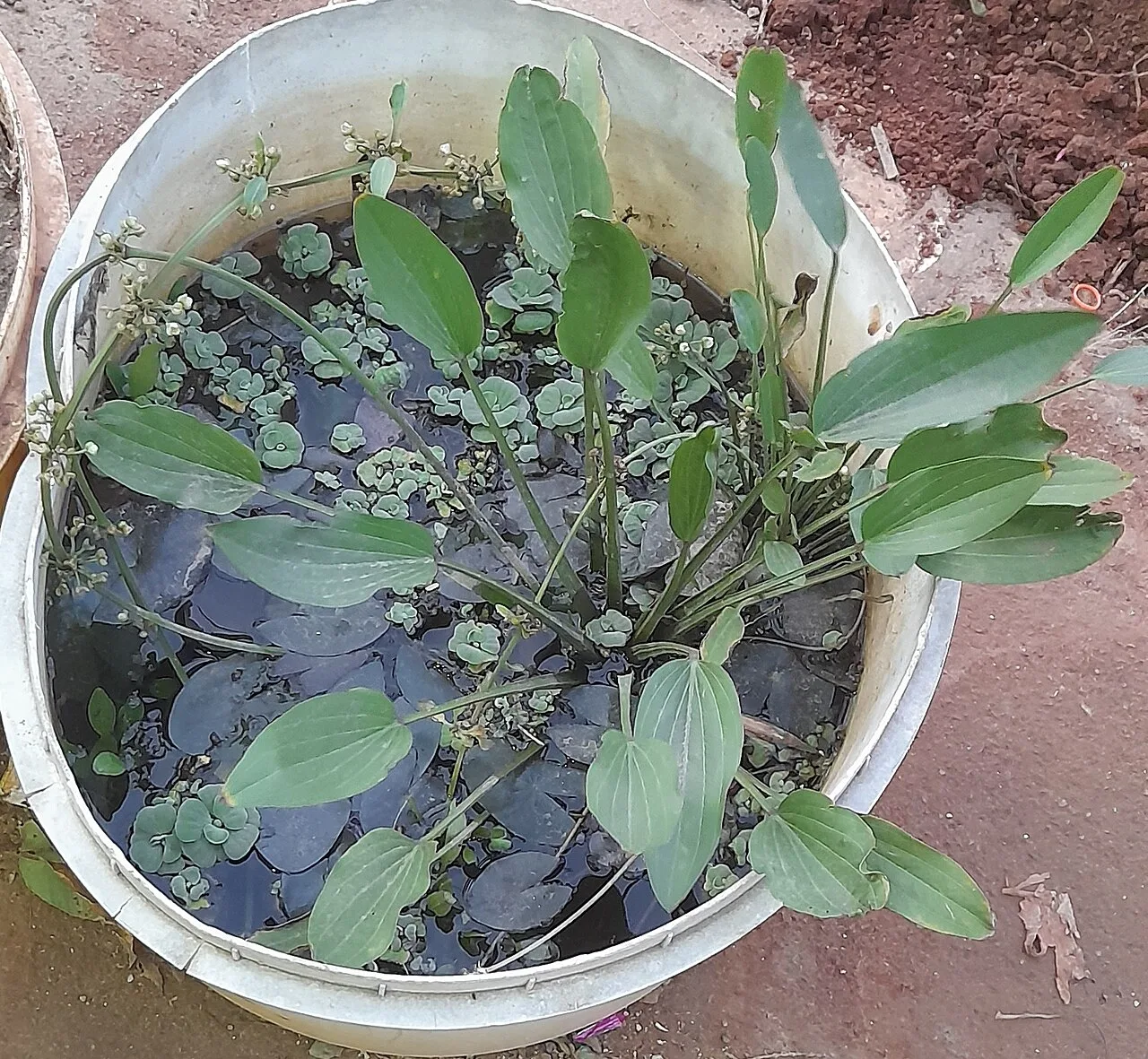
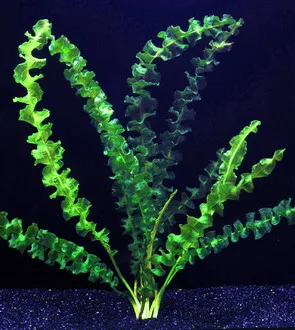
Lagenandra meeboldii sends a creeping rhizome and elongate, tough leaves that are green, silvery hammered or reddish depending on the form. The leaves suggest a crypt, but the plant is another genus and does not drop the whole foliage at every water change. It grows slowly. A new leaf is an event over weeks.
Many trade names are forms. For keeping, light, a free rhizome and a place that is not chosen anew every week are what count.
Natural origin
This describes the origin, not how to furnish the aquarium.
Streams and banks in south-western India, often in shade, the rhizome among stones and in shallow substrate. India stays the coarse origin. The shaded stream explains why the plant collects algae on the tough surfaces under a glaring lamp.
Light, CO₂ and position
Place
Low to medium light, CO₂ helpful, 22 to 28 °C. Rhizome shallow, only the roots in the substrate, or tied on like an Anubias. Do not bury it deep. Midground, with room for the leaves, not under a dense floating cover and not in the hardest cone of light.
Patience
After planting, little happens for a long time. That is the attaching. Moving it tears the roots and sets the clock back. Plant-eating cichlids rasp the new shoots more than the old leaves.
Layout and neighbours
The lanceolate, often reddish leaves grow extremely slowly. In the shady midground next to cryptocorynes they create a calm South Indian scene. Also decorative emersed in a paludarium.
Common mistakes
Impatience. One new leaf a month is normal.
Growth and trimming
Cut old, holed leaves at the rhizome. Do not pull the centre apart. Wipe algae off an otherwise healthy leaf carefully. The plant takes fertiliser from the water and from the substrate, but it is rarely the first to starve. Yellow leaves are often old leaves or a buried rhizome.
Propagation
Separate pieces of rhizome with at least one leaf, better outside the tank, and rinse the cut. Every piece needs a growing tip. A naked rhizome without a leaf is a bet.