Lake quillwort
Isoetes lacustris
1 view
An ancient lycophyte with a rosette of stiff, dark green, awl-shaped leaves. Very slow, very rare.
- Temperature
- 4 – 20 °C
- pH
- 5 – 7 pH
- Lighting
- Medium light
- CO₂
- Low CO₂
- Growth rate
- Slow
- Placement
- Foreground
2 min read · 177 words
Care profile
Growth form
RosettesPlacement in the aquarium
Highlighted are the areas where the species is typically used.
- Foreground At the front of the tank, where the plant stays low and keeps the view open.
Home & range
Hatched countries are where the species occurs. It lives in particular waters there, not across the whole country. The points name known waters for orientation, not collection sites.
- Country of origin
- Water for orientation
Native
Botanical overview
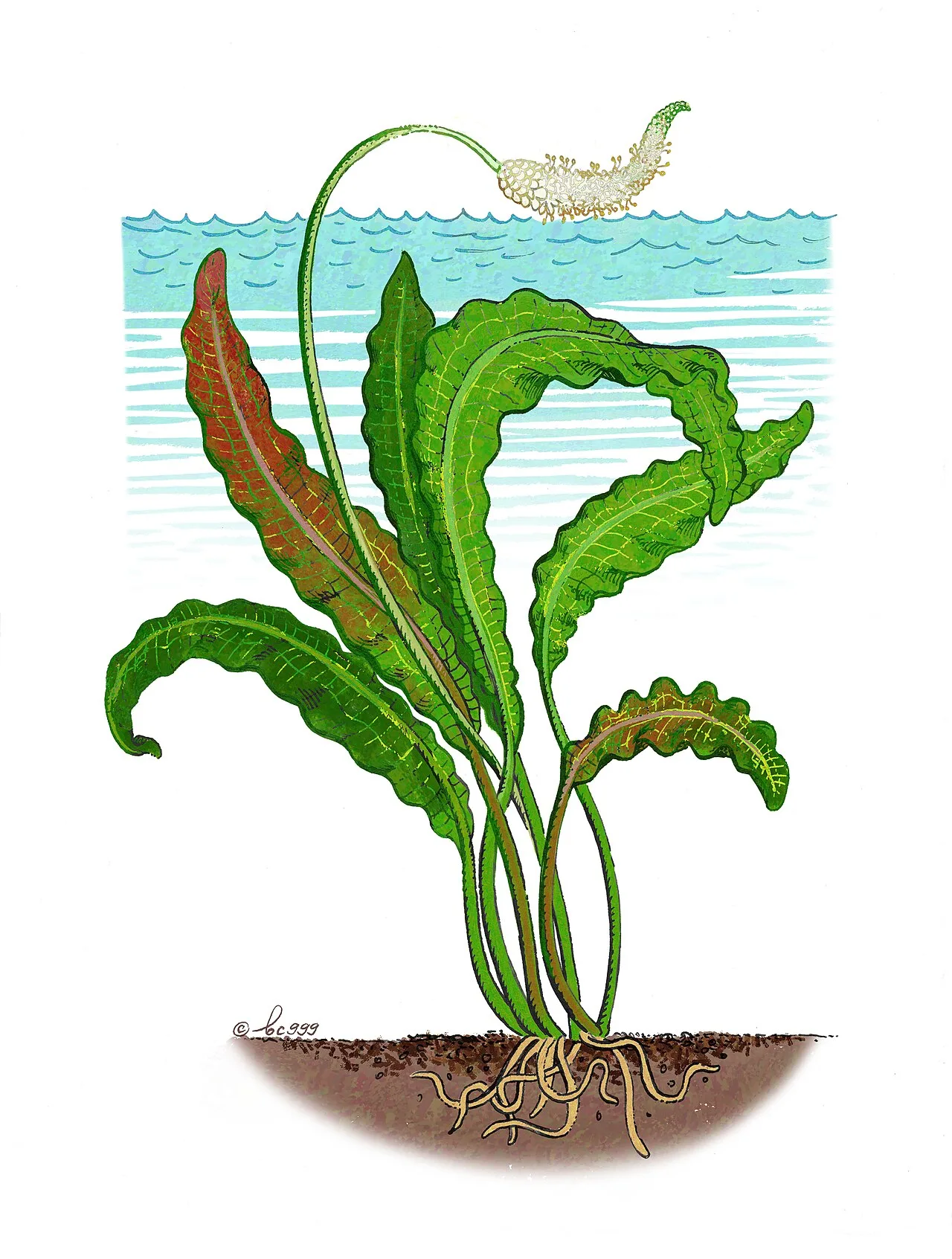
Lake quillwort belongs to an old, distinct group of lycophytes. It forms a rosette of stiff, dark green leaves 8 to 20 cm long that look like rushes. The spore cases sit in the widened leaf bases. The rootstock is short and tuberous.
In the aquarium it looks like a small, tough grass rosette. It needs cool, soft and clear water.
Natural origin
This describes the origin, not how to furnish the aquarium.
The species is boreal, on both sides of the North Atlantic. In Europe its range extends from Poland to north-eastern France, through Scandinavia and the west and north of the British Isles, with further populations in north-eastern North America. It grows in nutrient-poor, lime-poor lakes. In Germany it is very rare and strictly protected.
Light, CO₂ and position
Light
Medium light.
Water
Soft and nutrient-poor.
Position
4 to 20 °C. Foreground, sand.
Layout and neighbours
A rarity for a natural soft-water tank with shoreweed and water lobelia. Few, calm inhabitants.
Common mistakes
Nutrient-rich water: the plant gets covered with algae and dies.
Growth and trimming
Very slow growth. Do not move it; fertilise little.
Propagation
Spores; hardly propagated in the aquarium.