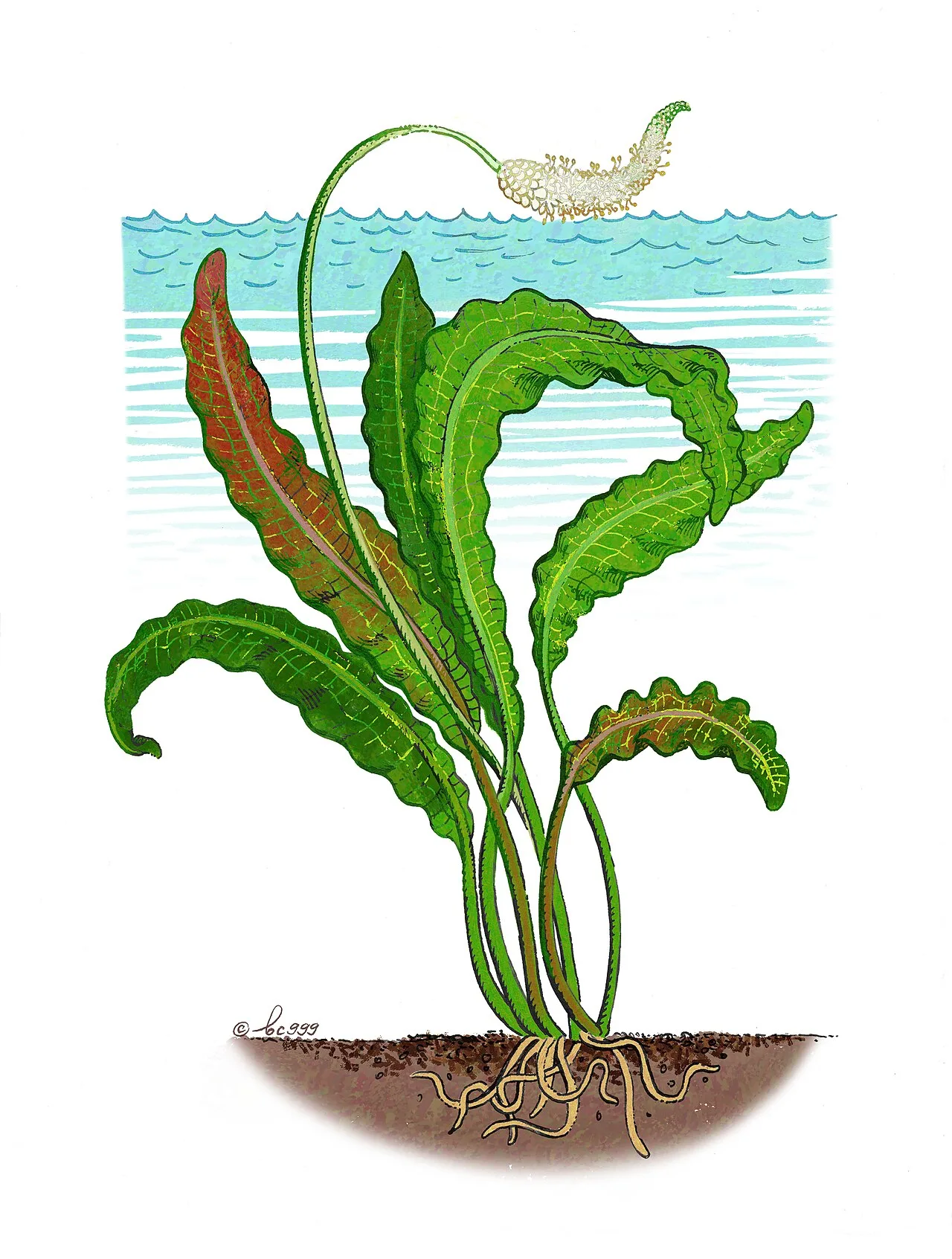
No reviewed photograph has been published for this species.
Ruffled Amazon sword
Echinodorus major
1 view
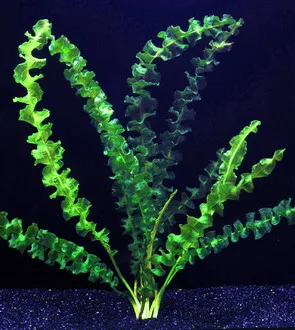
A massive sword plant with long, strongly ruffled leaves. Also known as Echinodorus martii.
- Temperature
- 22 – 28 °C
- pH
- 6 – 7.5 pH
- Lighting
- Medium light
- CO₂
- Low CO₂
- Growth rate
- Medium
- Placement
- Background
1 min read · 157 words
Care profile
Growth form
RosettesPlanting and propagation
- Adventitious plantlets Forms daughter plants on leaves or rhizome. Remove them once they carry a few roots.
Placement in the aquarium
Highlighted are the areas where the species is typically used.
- Background Along the back wall and the sides. Forms the tall, dense backdrop.
Home & range
Hatched countries are where the species occurs. It lives in particular waters there, not across the whole country. The points name known waters for orientation, not collection sites.
- Country of origin
- Water for orientation
Native
Botanical overview
Echinodorus major forms a large rosette of strap-shaped to lanceolate leaves up to 50 cm long. The margin is strongly ruffled and the colour a fresh light green. Older aquarium literature lists it as Echinodorus martii.
In large tanks it is an eye-catcher. It grows fully submersed and only rarely forms aerial leaves.
Natural origin
This describes the origin, not how to furnish the aquarium.
The species comes from eastern Brazil, including Bahia and Minas Gerais. It grows in clear streams and rivers, partly in the current.
Light, CO₂ and position
Light
Medium light.
Fertiliser
Nutrient-rich substrate and fertiliser tabs.
Position
22 to 28 °C. Background specimen from about 200 litres.
Layout and neighbours
The ruffled leaves catch light and movement. Best standing free in the background, with distance to other large plants so the shape shows.
Common mistakes
Tanks that are too narrow: the leaves hit the glass and the surface.
Growth and trimming
Moderate growth. Remove outer leaves as needed. Too little light makes the leaves narrow and long.
Propagation
Adventitious plantlets on the flower stalk.