Water lobelia
Lobelia dortmanna
1 view
A rare rosette plant from nutrient-poor lakes with tubular leaves and pale lilac flowers above water.
- Temperature
- 5 – 20 °C
- pH
- 5 – 7 pH
- Lighting
- Medium light
- CO₂
- Low CO₂
- Growth rate
- Slow
- Placement
- Foreground
1 min read · 164 words
Care profile
Growth form
RosettesPlanting and propagation
- Runners Forms runners in the substrate that grow into new plants. Separate them once they have their own roots.
Placement in the aquarium
Highlighted are the areas where the species is typically used.
- Foreground At the front of the tank, where the plant stays low and keeps the view open.
Home & range
Hatched countries are where the species occurs. It lives in particular waters there, not across the whole country. The points name known waters for orientation, not collection sites.
- Country of origin
- Water for orientation
Native
Botanical overview
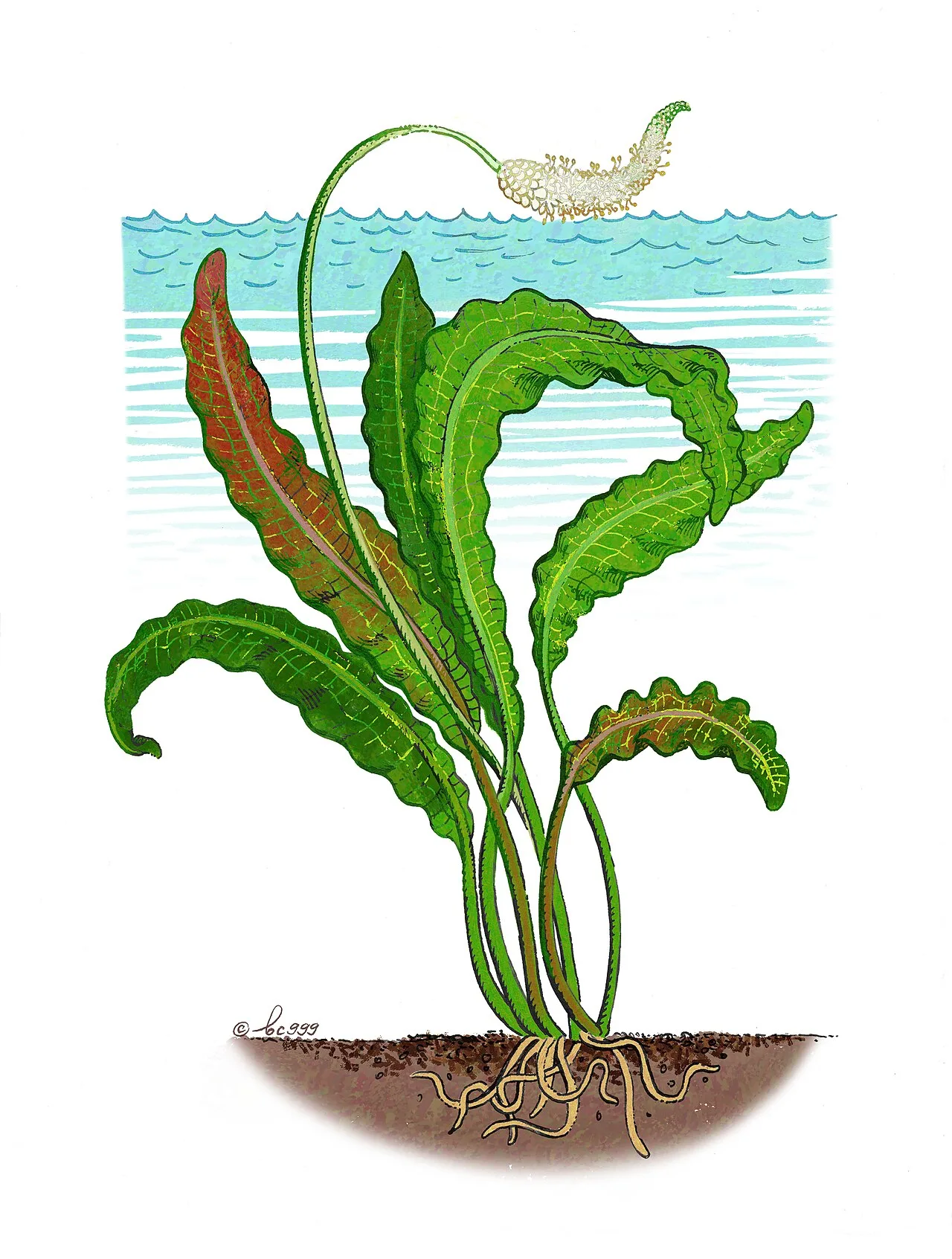
Water lobelia forms small rosettes of thick, hollow, blunt leaves that curve outwards at the bottom. In summer a flower stalk grows above the surface and carries pale lilac to white, nodding flowers. Runners create loose lawns.
In the aquarium it is a rarity for cool soft-water tanks. It grows very slowly and does not tolerate excess nutrients.
Natural origin
This describes the origin, not how to furnish the aquarium.
The species is native to northern and western Europe and north-eastern North America. It grows in clear, lime-poor, nutrient-poor lakes on sand. In Germany it is critically endangered and strictly protected; plants may only come from cultivation.
Light, CO₂ and position
Light
Medium light.
Water
Very soft and nutrient-poor.
Position
5 to 20 °C. Foreground, sandy substrate.
Layout and neighbours
In a soft-water cold-water tank on sand, together with shoreweed and quillwort. A tank modelled on clear Nordic lakes.
Common mistakes
Placed in a normal, fertilised planted tank: algae overgrow the slow rosettes.
Growth and trimming
Slow growth. Fertilise little, keep cool and avoid algae on the leaves.