
Compatibility checker
Does your stock work together?
Put together your tank and stock and see straight away where water values, space, group size or predators clash and what you can do about it.
Result · Excellent
Fine so far
No conflicts found. Add volume, temperature, pH, GH, KH so the tank itself is checked too.
How the score is made up
Partial scores from 0 to 100. Unlike the checks, they also rate how close a value is to the limit, how full the tank is and how large the groups are.
- Water values 95
- Groups 100
Stocking
Enter a volume to see the upper limit. The stock needs about 174 l.
- Banded archerfish 6 × 29 l = 174 l
Space needed
At least 300 l, because of Banded archerfish.
Enter a volume to check the space.
- Banded archerfish 300 l
Water window
Each bar shows one species’ range. The light area is the range that suits all of them, the line is your tank.
Swimming zones
How the stock spreads across the water layers, weighted by space needed.
- Top 100 % Banded archerfish
- Middle free
- Bottom free
Shrimp
Whether shrimp suit this stock and which species fit.
Shrimp are not advisable here
Goes well with it
Species whose water values, space needs and behaviour suit your tank and stock.
-
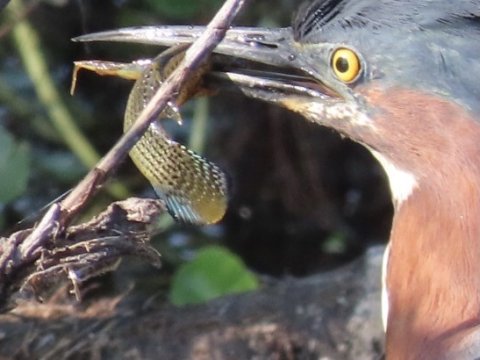 Sailfin molly Poecilia latipinna 22–28 °C · pH 7.5–8.5 · GH 15–30 · KH 10–20 · 12 cm For the free zone: Middle
-
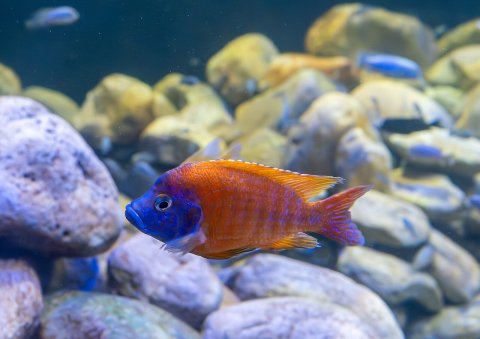 Sunshine peacock Aulonocara baenschi 24–28 °C · pH 7.5–8.5 · GH 10–30 · KH 8–16 · 12 cm For the free zone: Bottom
-
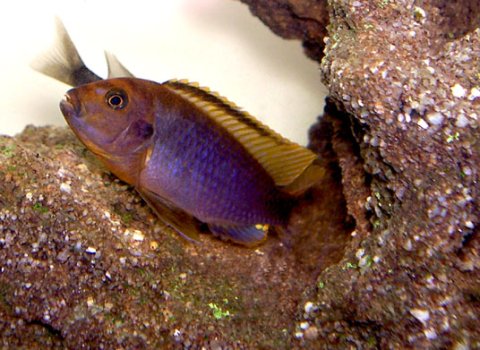 Rusty cichlid Iodotropheus sprengerae 24–28 °C · pH 7.5–8.5 · GH 8–25 · KH 8–16 · 8 cm For the free zone: Middle
-
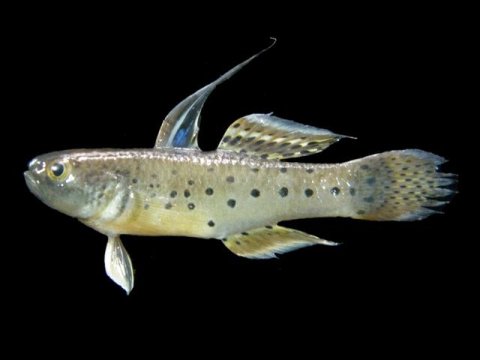 Knight goby Stigmatogobius sadanundio 22–28 °C · pH 7.5–8.5 · GH 10–25 · KH 8–16 · 8 cm For the free zone: Bottom
-
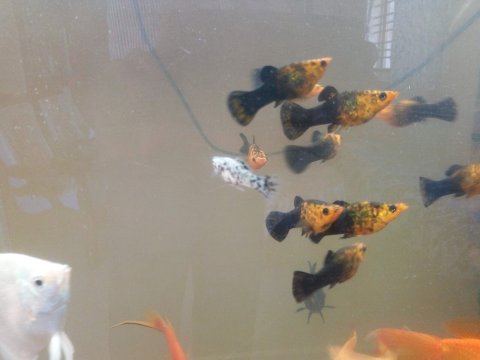
-
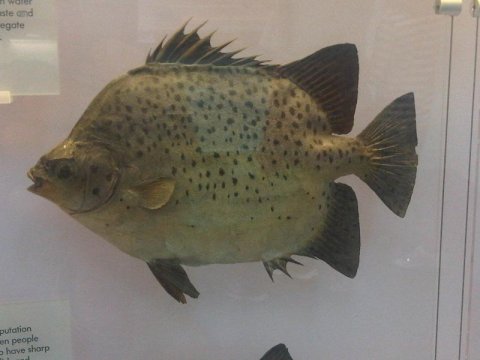 Spotted scat Scatophagus argus 24–28 °C · pH 7.5–8.5 · GH 15–25 · KH 10–20 · 25 cm For the free zone: Middle
-
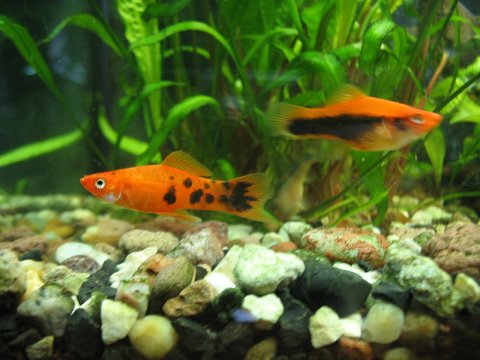 Green swordtail Xiphophorus hellerii 22–28 °C · pH 7–8.5 · GH 10–25 · KH 6–15 · 16 cm For the free zone: Middle
-
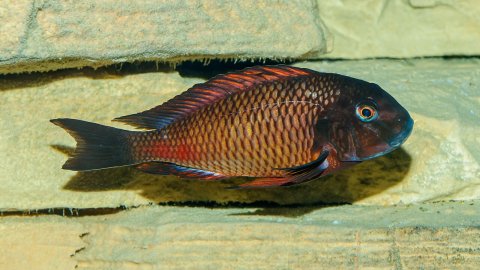
All checks 3/3
3 of 3 passed. Notes count as passed but still affect the score.
- Passed Tank water type Water type (freshwater) suits all species.
- Passed Group size Group sizes are fine.
- Passed Care level All species are considered beginner-friendly or manageable.
Data: values from one source each, a good guide but no guarantee.
Based on the approved care values of the encyclopedia and the active rulebook. Individual animals can differ. Missing data leads to a note, not a rating.