Sailfin molly
Poecilia latipinna
15 views
A large livebearing toothcarp with a high sail on the males. It needs hard, alkaline water, length, and a group in which the males do not all descend on a single female.
- Temperature
- 22 – 28 °C
- pH
- 7.5 – 8.5 pH
- General hardness
- 15 – 30 °dH
- Maximum size
- 12 cm
- Minimum tank size
- 120 L
4 min read · 524 words
Quick facts
Further published values
- Lifespan
- 3 a
Place in the aquarium
Highlighted are the water layer and the spots where the species usually stays in the tank.
- Upper water Usually stays in the top third of the tank.
- Middle water Usually stays in the middle of the tank, between bottom and surface.
- Open swimming space Needs an open area without plants or decor to swim at length. Tank length matters more than height.
Shrimp in the tank
Shrimplets at risk
- Not shrimp safe
- Dwarf shrimp at risk
- Shrimplets at risk
- Shrimp safe
- Adult dwarf shrimp
- Safe
- Shrimplets
- Get eaten
- Safe from shrimp size
- about 2 cm
Adult dwarf shrimp usually get along with the sailfin molly. Although it grows 8 to 15 cm long, it feeds mainly on algae and invertebrates and grazes glass and leaves all day. Shrimp from about 2 cm are rarely chased. Juvenile shrimp moving in the open are eaten, however.
The species needs hard, alkaline water, which Neocaridina tolerate well. Moss and dense plants on the bottom give the young cover. Soft-water Caridina do not fit because of the water values.
Home & range
Hatched countries are where the species occurs. It lives in particular waters there, not across the whole country. The points name known waters for orientation, not collection sites.
- Country of origin
- Water for orientation
Native
Overview
Males carry a gonopodium and, when they are healthy and not suppressed, a sail-like dorsal fin. Females often grow larger and stay without the sail. The species can reach 10 to 12 cm. Black, mottled and leucistic fish are cultivated forms. Wild fish are plainer olive with spots and a smaller sail.
The sailfin molly is not a molly for 40 litres. The black mollies usually sold are often mixes of several Poecilia species. A high sail and the body size point to P. latipinna. A certain separation of the cultivated strains often fails on a single fish.
Origin & habitat
This describes the origin, not how to furnish the aquarium.
Shallow coastal and brackish waters, ditches and river mouths from the south-eastern United States to Mexico. The species tolerates brackish water and also lives in fresh water as long as it is hard and not acidic. Soft, peaty water is the most common keeping mistake.
The wide natural span explains the toughness in hard water and, at the same time, why fish in soft water scratch, clamp their fins and stop feeding.
Care
Water
22 to 28 °C, pH 7.5 to 8.5, hard. A low salt content can help, but it does not replace hardness and cleanliness. Tanks from about 120 litres and 80 cm long for a group. Several females per male. Plants as a visual screen and as extra food. Strong filtration, because the fish eat a lot and load the water quickly.
Company
Other fish that tolerate hard water and are not too small. Platies and swordtails can fit, but they cross with mollies. Anyone who wants to keep the species pure does not put it with other Poecilia. Soft-water tetras and shrimp are the wrong company.
Diet
Mostly plants and aufwuchs, plus small animals. Food with a high plant share, blanched vegetable strips, spirulina and a share of frozen food. The fish graze on the glass and the leaves through the day. One flake in the morning is not enough.
A diet that is too rich in protein produces heavy fish and more algae, because the plant food is missing and the nutrient load rises.
Behavior
Lively, focused on the males, otherwise peaceful. Males show each other the sail. In a group that is too small, one male becomes permanent stress for the females. The females need plants behind which the chase breaks off.
The species stands in the upper and middle water and at the glass. It is not a bottom fish.
Reproduction
Livebearer. The gestation is several weeks. A brood can be large. The parents eat young. Dense plants raise the survival rate. Without intervention the stock grows, and the tank becomes tight before anyone notices.
Females store sperm. A single female can still produce broods after the males have long been removed.
Broods and range
Gestation lasts four weeks on average, and a brood holds 10 to 100 young of 8 mm. Life expectancy is about three years. The species tolerates 4 to 40 °C. Pure wild fish are now documented only from Mexico, because breeding forms and hybrids were released in the USA. As an introduced species it occurs in 29 countries, often released to control malaria. The Amazon molly arose from a cross between a female Atlantic molly and a male sailfin molly.
Gallery
More species in this group
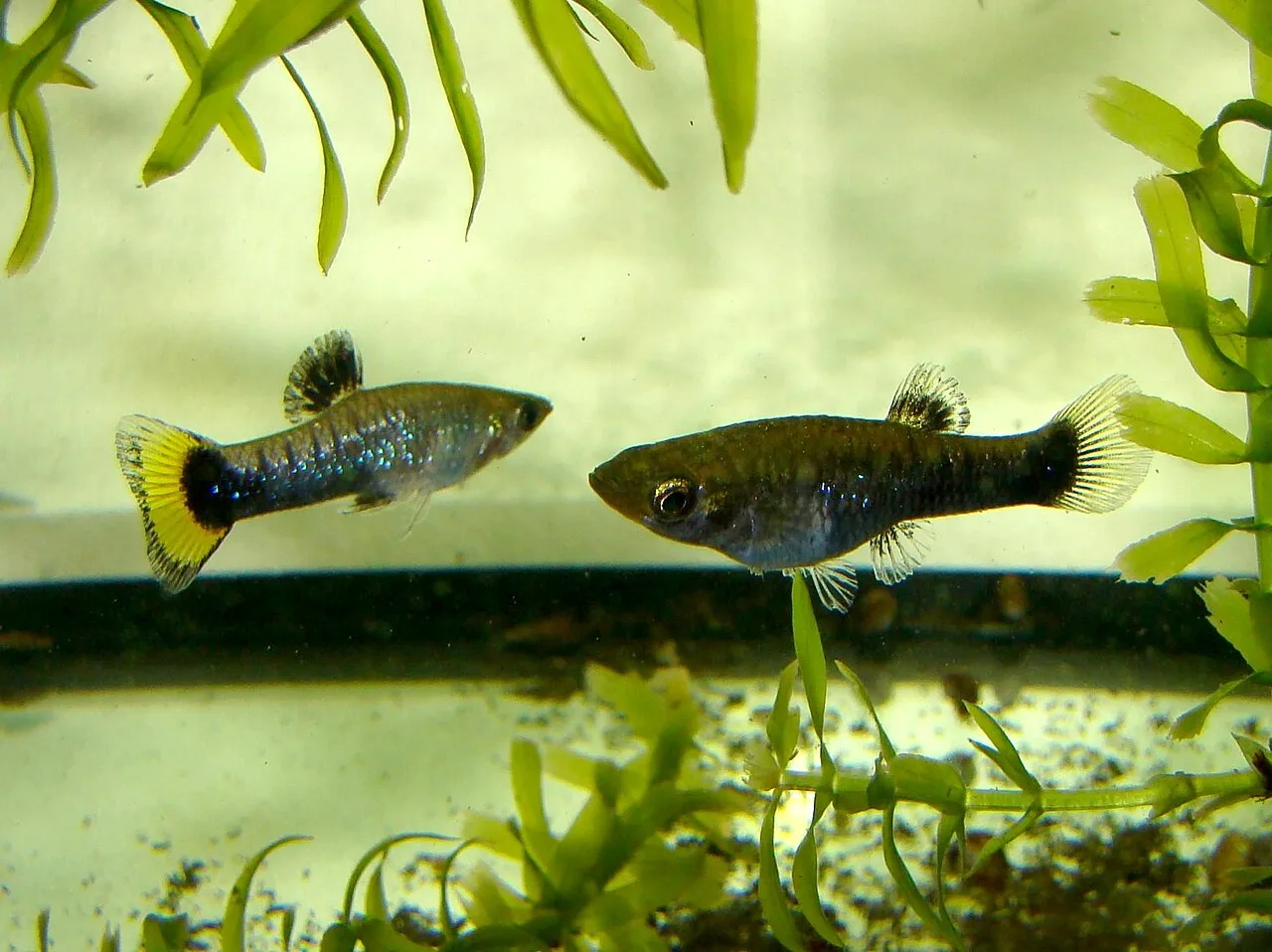
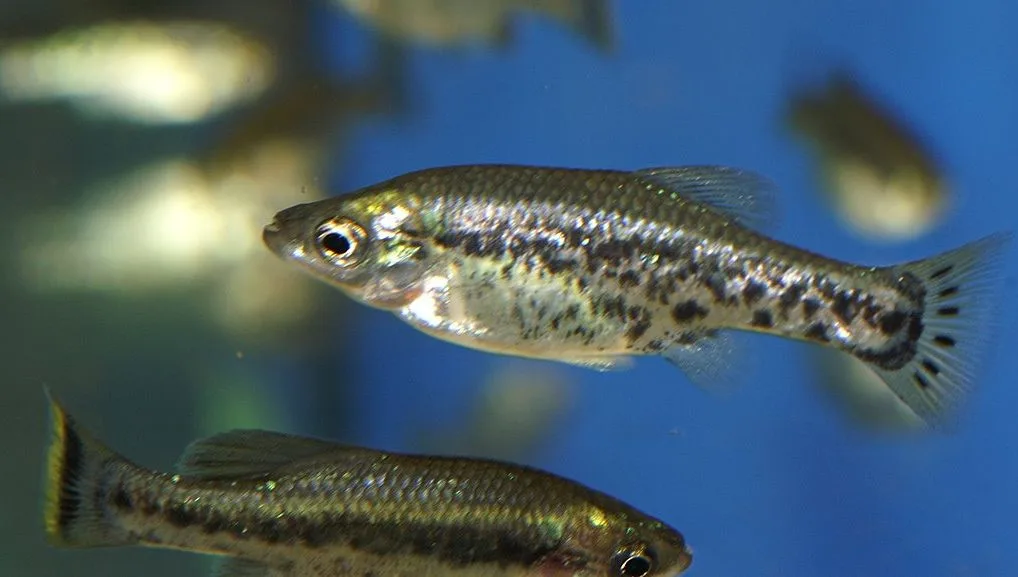
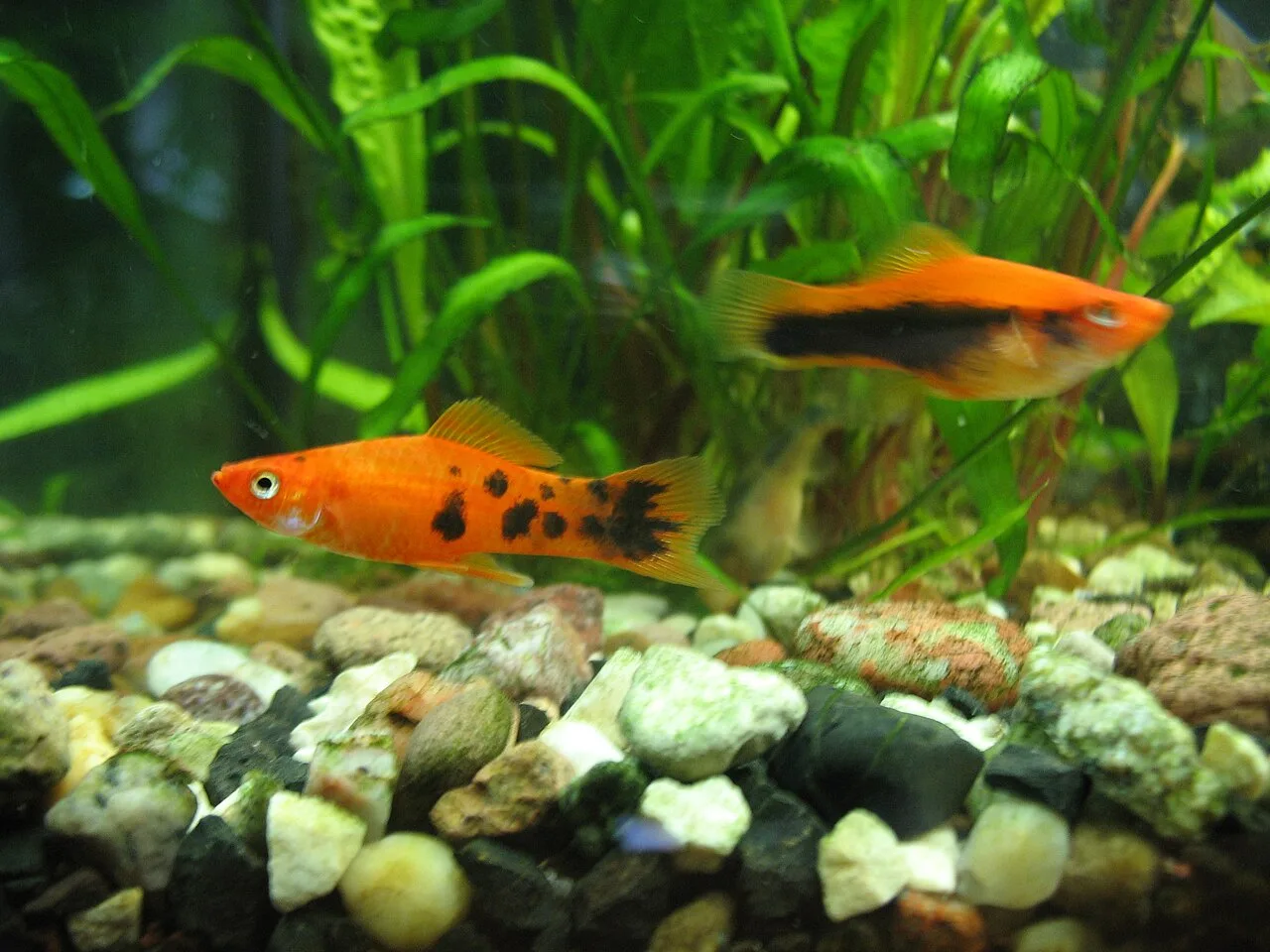

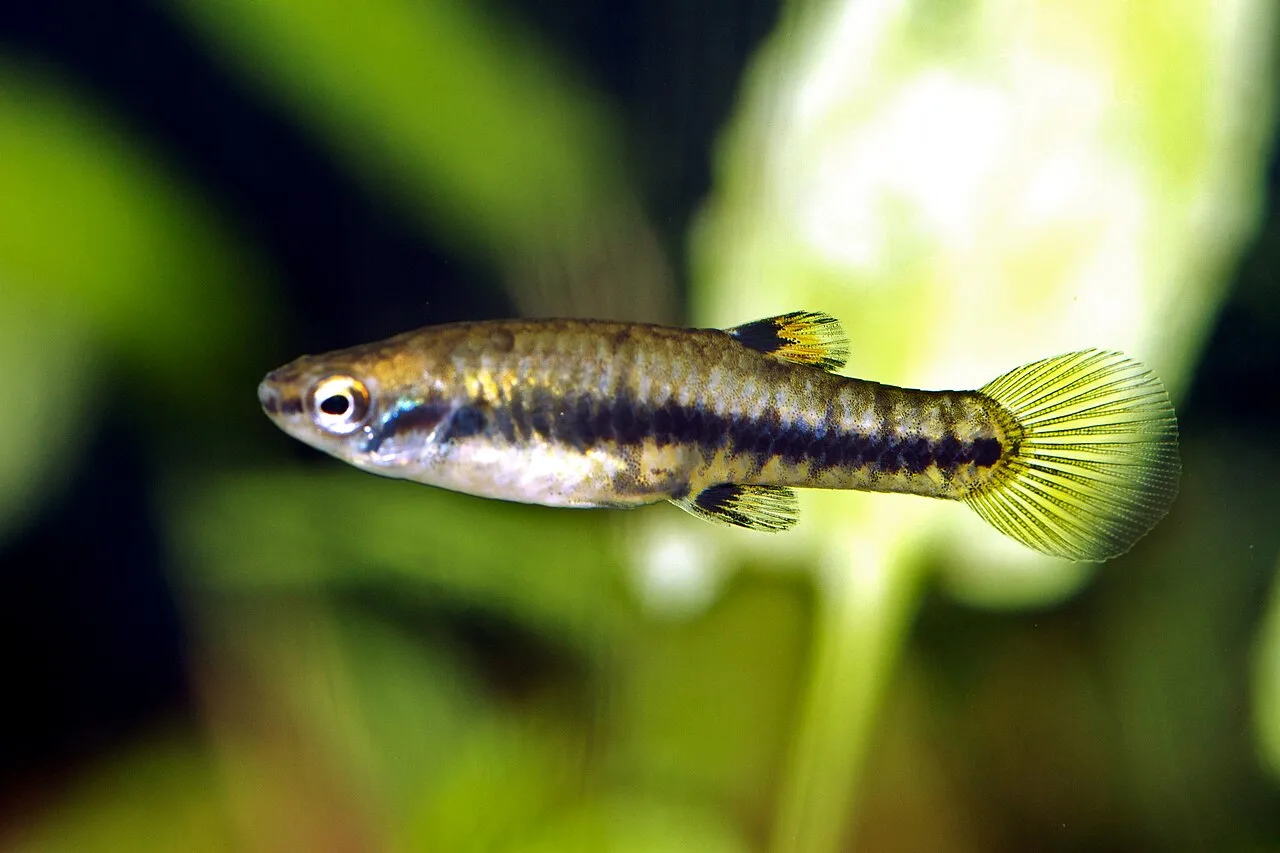
Similar water needs
Species with a similar temperature, a similar pH and a comparable adult size. Whether their behaviour fits as well is what the compatibility check is for.