Blackbelly limia
Limia melanogaster
2 views
A livebearing toothcarp from Jamaica with a blue sheen and a dark belly patch. It grazes algae and wants hard water.
- Temperature
- 22 – 28 °C
- pH
- 7 – 8.5 pH
- General hardness
- 10 – 20 °dH
- Maximum size
- 6 cm
- Minimum tank size
- 60 L
1 min read · 163 words
Quick facts
Place in the aquarium
Highlighted are the water layer and the spots where the species usually stays in the tank.
- Upper water Usually stays in the top third of the tank.
- Middle water Usually stays in the middle of the tank, between bottom and surface.
- Dense plants Looks for dense planting as cover, retreat or grazing ground.
Shrimp in the tank
Shrimplets at risk
- Not shrimp safe
- Dwarf shrimp at risk
- Shrimplets at risk
- Shrimp safe
- Adult dwarf shrimp
- Safe
- Shrimplets
- Get eaten
- Safe from shrimp size
- about 1.5 cm
Adult dwarf shrimp are safe with the blackbelly limia. It stays small and eats mainly algae and aufwuchs, plus small food. Shrimp from about 1.5 cm are no longer prey. Juvenile shrimp are eaten when they move around in the open.
In a tank with hard water sturdy Neocaridina fit well. Moss and dense plants on the bottom secure enough young.
Home & range
Hatched countries are where the species occurs. It lives in particular waters there, not across the whole country. The points name known waters for orientation, not collection sites.
- Country of origin
- Water for orientation
Native
Overview
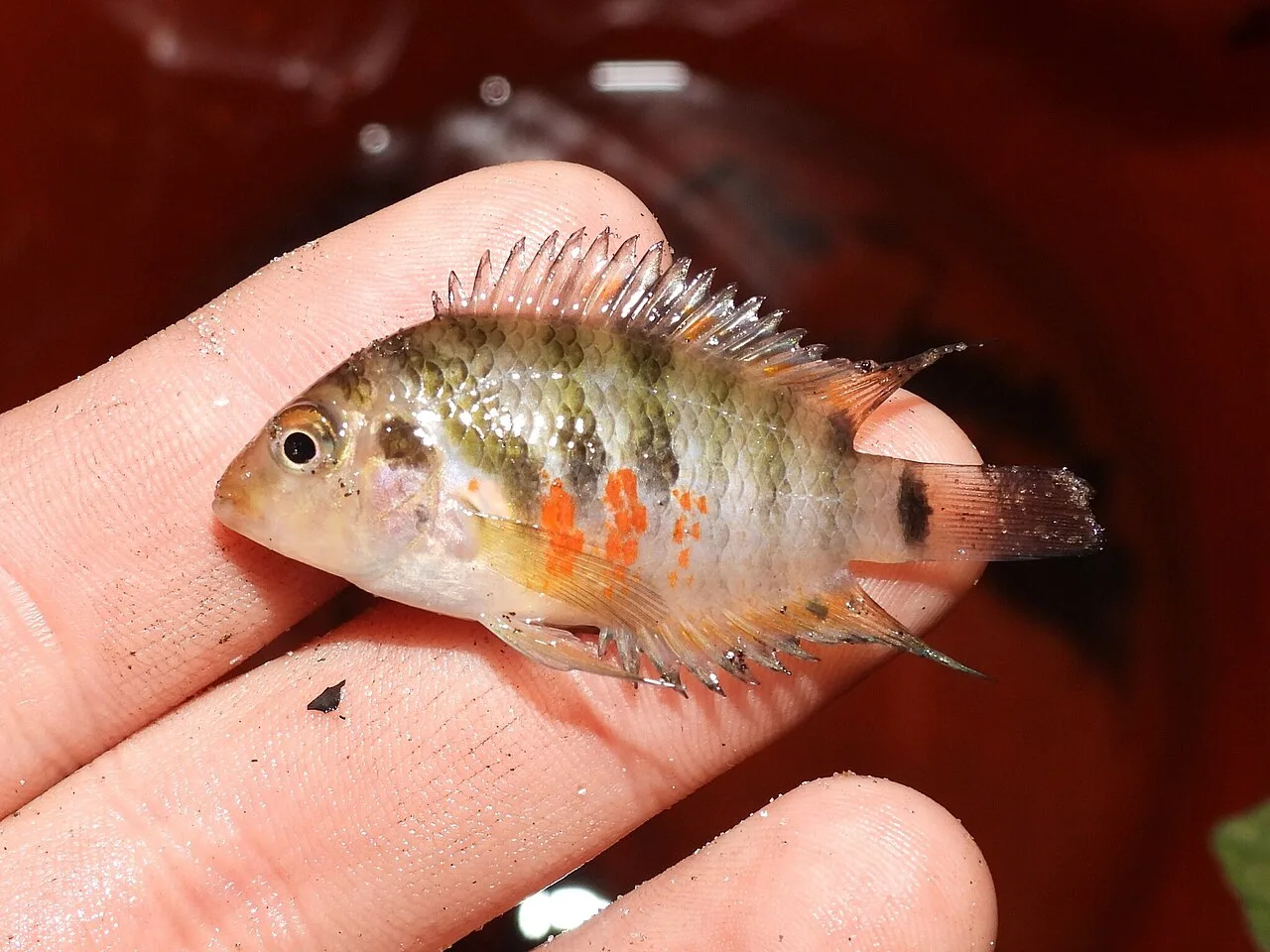
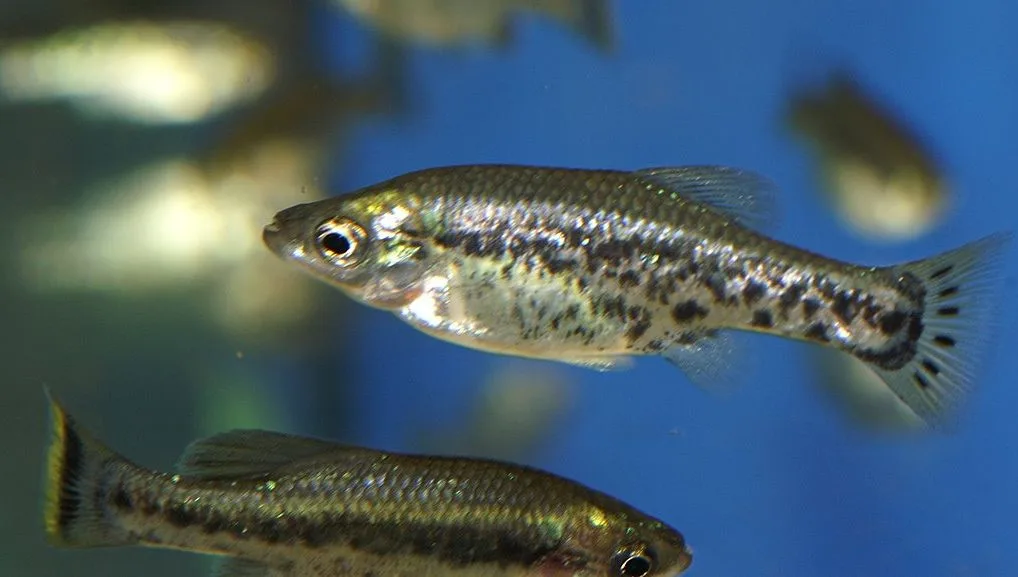
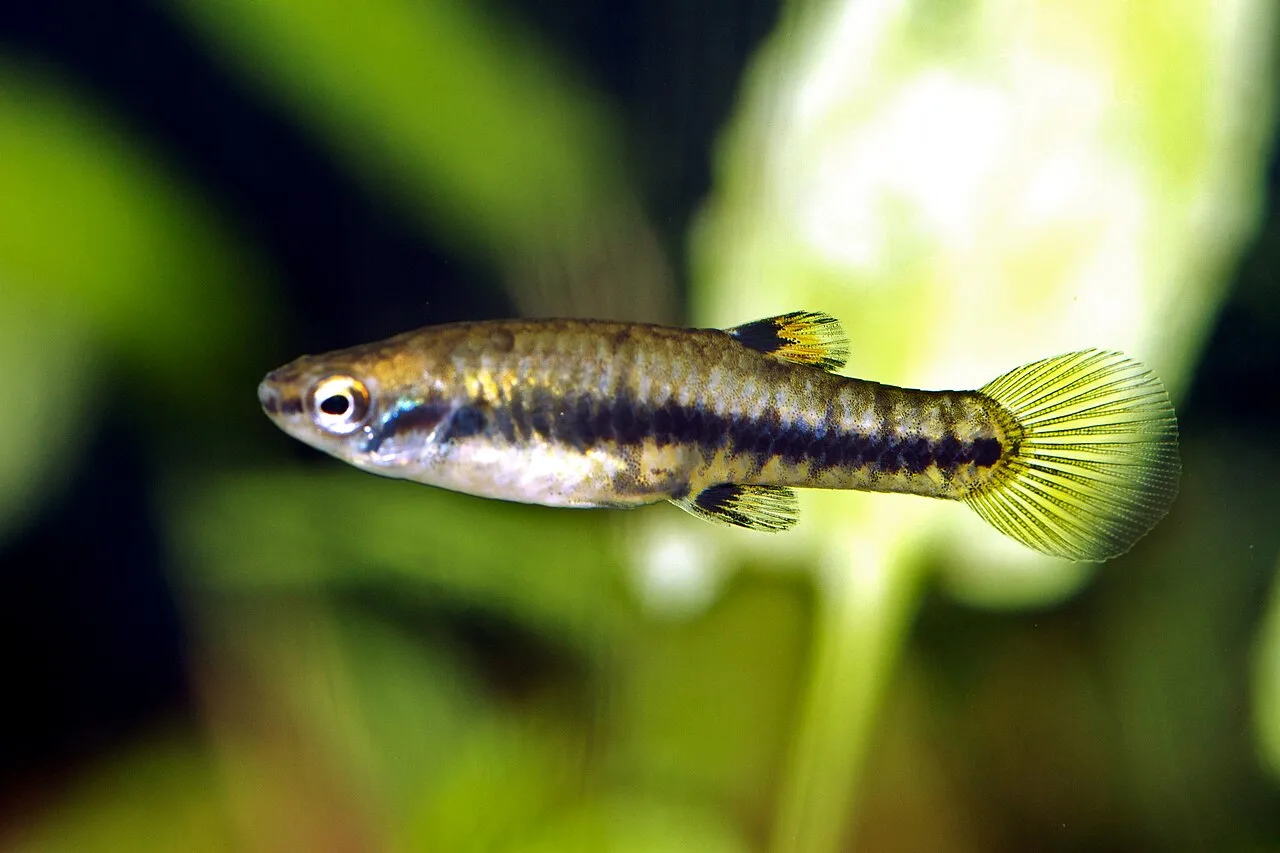
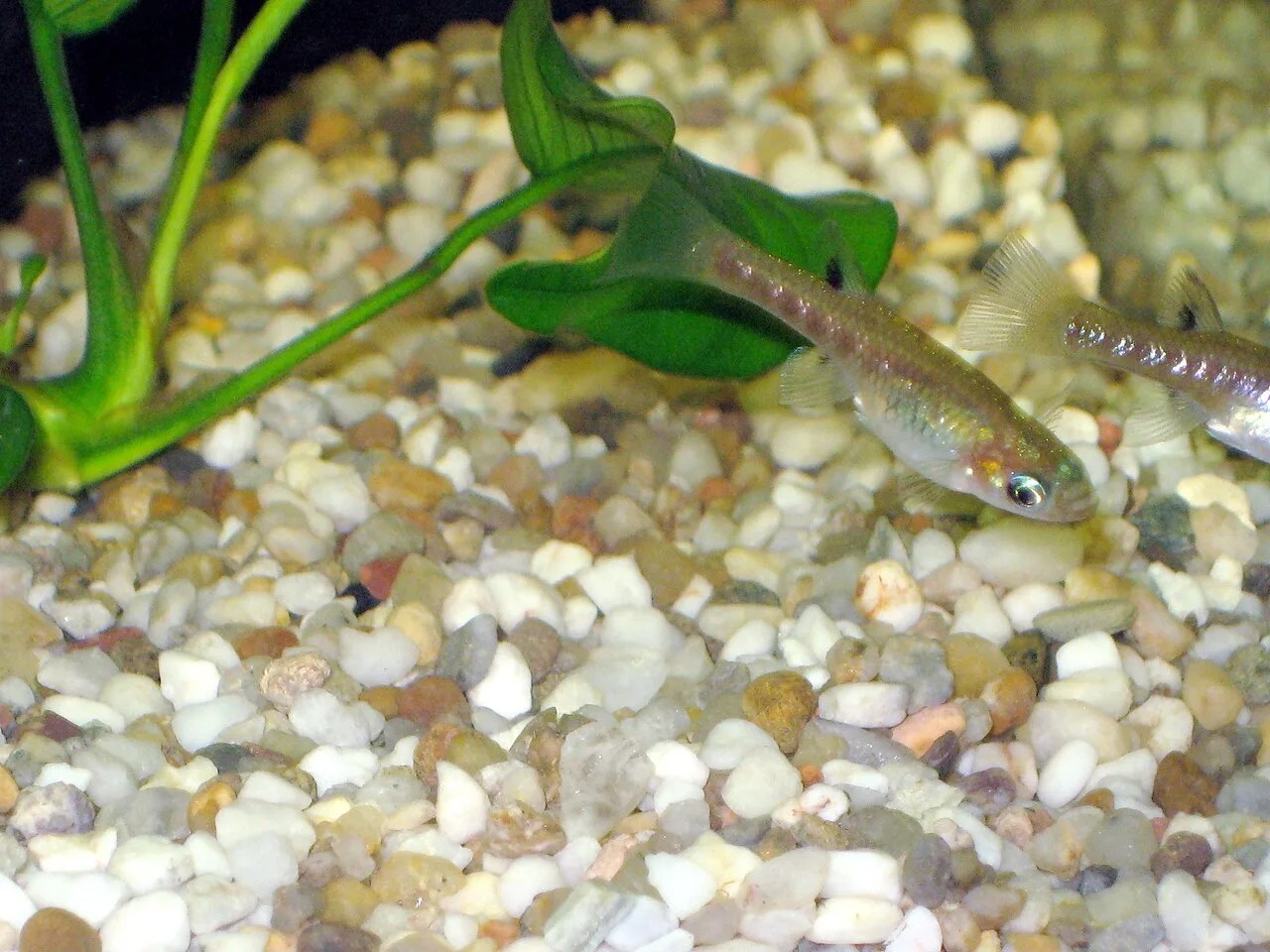
Limia melanogaster stays small: females reach about 6 cm, males about 4 cm. The body shimmers bluish. Males carry dark bars and yellow fins with a dark edge. Females show a large dark gravid spot. The belly is dark.
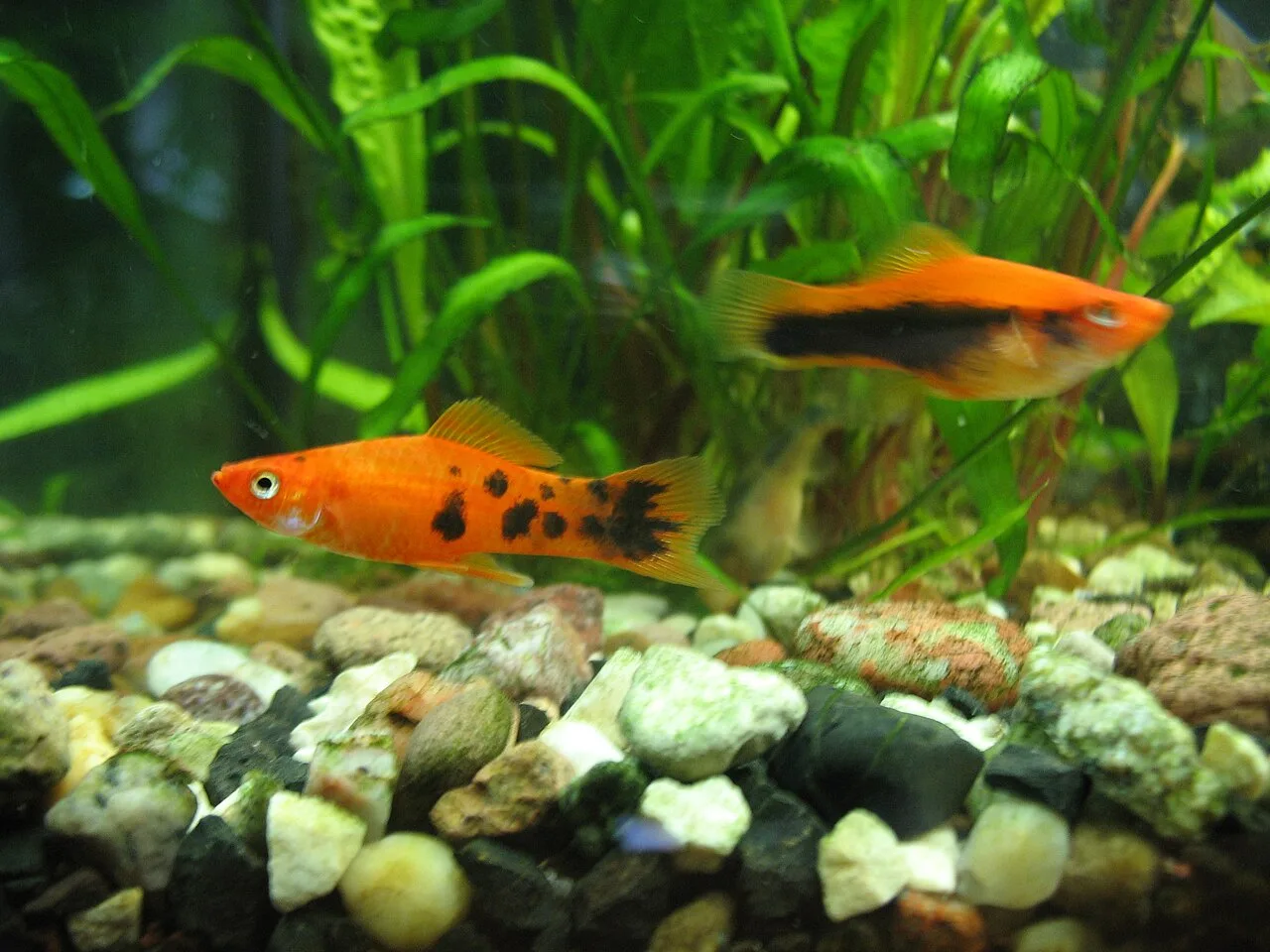
It is not a guppy and not a platy. Its keeping is similar, but the species grazes clearly more algae and needs hard water.
Origin & habitat
This describes the origin, not how to furnish the aquarium.
Waters on Jamaica. The island stays the coarse origin. Hard, warm water with plants and aufwuchs matches that.
Care
Group
22 to 28 °C, pH 7 to 8.5, hard. A group with more females than males, tanks from about 60 litres. Many plants, bright light, some algae growth.
Company
Calm fish that like hard water. Soft-water tetras do not fit.
Diet
Omnivore with a plant share. Spirulina, flakes, brine shrimp, mosquito larvae. Algae on stones and plants are picked at constantly.
Behavior
A peaceful group. Males court constantly. More females spread that.
Reproduction
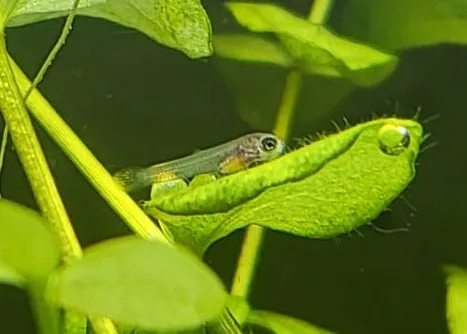
Livebearer. After about four weeks fully formed young are born. Dense plants protect them from the adults.
Gallery
More species in this group

Similar water needs
Species with a similar temperature, a similar pH and a comparable adult size. Whether their behaviour fits as well is what the compatibility check is for.