Convict cichlid
Amatitlania nigrofasciata
22 views
A cichlid that is easy to breed. Males reach 15 cm, females about 10 cm.
- Temperature
- 22 – 28 °C
- pH
- 7 – 8 pH
- General hardness
- 12 – 18 °dH
- Maximum size
- 15 cm
- Minimum tank size
- 150 L
3 min read · 392 words
Fresh water
Quick facts
Place in the aquarium
Highlighted are the water layer and the spots where the species usually stays in the tank.
- Middle water Usually stays in the middle of the tank, between bottom and surface.
- Near the bottom Mostly stays just above the bottom. Food has to reach the substrate.
- Rocks and caves Needs caves, crevices or rockwork as hiding place, territory or spawning site.
Shrimp in the tank
Not shrimp safe
- Not shrimp safe
- Dwarf shrimp at risk
- Shrimplets at risk
- Shrimp safe
- Adult dwarf shrimp
- At risk
- Shrimplets
- Get eaten
- Safe from shrimp size
- No size is safe
The convict cichlid eats shrimp. Males grow up to 15 cm, females about 10 cm. In the wild it eats crustaceans, worms, insect larvae, small fish and plants. During breeding it becomes very territorial and aggressive, digs up the substrate and drives everything away from the cave.
Crustaceans are explicitly on its menu. Even larger shrimp such as Amano shrimp are not safe, and hiding places are uncovered by the digging. Shrimp do not belong in a tank with convict cichlids.
Home & range
Hatched countries are where the species occurs. It lives in particular waters there, not across the whole country. The points name known waters for orientation, not collection sites.
- Country of origin
- Water for orientation
Native
Overview
Males have more extended fins and, later in life, a forehead hump. While breeding they become very territorial and aggressive, dig the substrate and uproot plants. That has to guide the setup and the choice of tankmates. Fry can be reared on Artemia.
Systematics
Albert Günther described the species in 1867. In German it is also called Grünflossenbuntbarsch. It belongs to the tribe Heroini. Former names are Cichlasoma nigrofasciatum, Archocentrus nigrofasciatus and Cryptoheros nigrofasciatum. The placement in Amatitlania goes back to a 2007 revision by Schmitter-Soto.
Origin & habitat
This describes the origin, not how to furnish the aquarium.
They use rocky ground, stones, small caves, roots and plants. In large rivers they stand in shallow, slow water. Temperatures there are 20 to 35 °C. Those are field temperatures, not an aquarium recommendation.
Range
The species lives in rivers and streams of Central America. The western range extends from the Río Sucio in El Salvador to the Río Suchiate in Guatemala, the eastern from the Río Patuca in Honduras to the Río Jutiapa in Guatemala. It has not been recorded in Panama, Costa Rica or Nicaragua. Feral populations from aquarium keeping are known. In Europe they are limited to thermally altered waters such as hot springs and the outflows of power plants, industrial cooling or sewage works.
Care
Males reach 15 cm, females about 10 cm. The tank has to tolerate digging and a territory.
Small, digging, productive
The convict cichlid, Amatitlania nigrofasciata, reaches about 10 cm and is not Maylandia zebra from Lake Malawi. 22 to 26 °C, pH 6.5 to 8, tanks from about 100 litres for a pair, with stones, caves and sand. The fish dig and rearrange the bottom. Plants survive only if they sit firm or are tied on.
A pair. Further conspecifics need more length. While breeding the parents become very decided and drive everything out of the cave zone. The species breeds readily. A plan for the young belongs to the keeping.
Diet
Fry are reared on Artemia.
Omnivore. Granules, frozen food and a plant share. The portions also have to reach the fish that is not standing directly in front of the cave.
Behavior
Very territorial and aggressive while breeding.
In the wild the convict cichlid eats crustaceans, worms, insect larvae, small fish and plants.
Reproduction
Breeding is called easy. Both parents care for the brood. Fry can be reared on Artemia.
The species breeds both in caves and in the open. A settled pair can breed up to once a month.
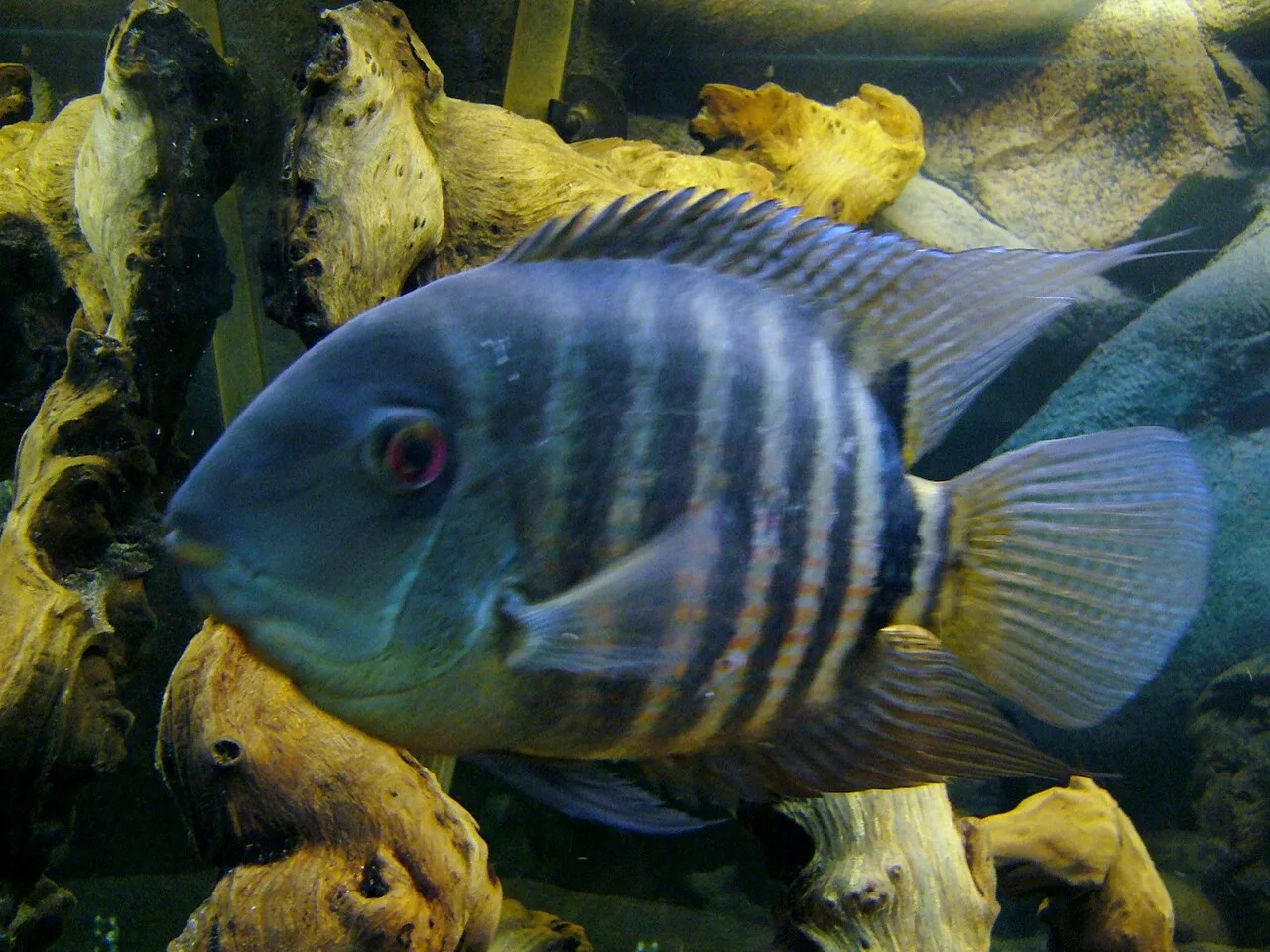
Gallery
More species in this group

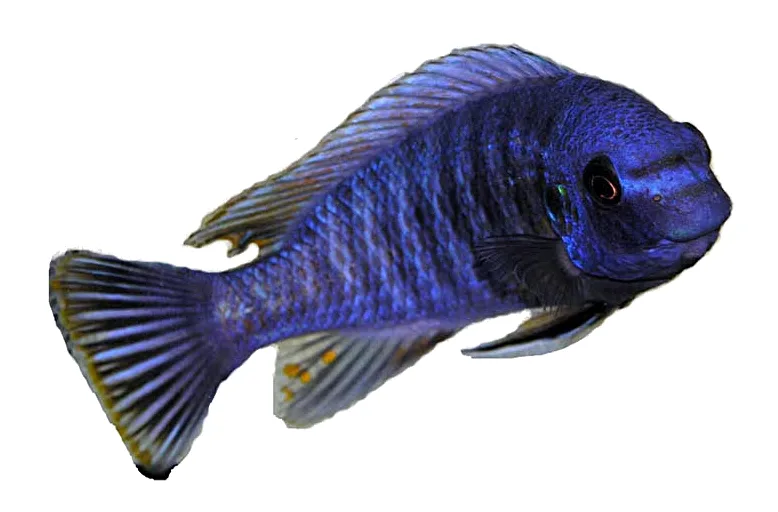
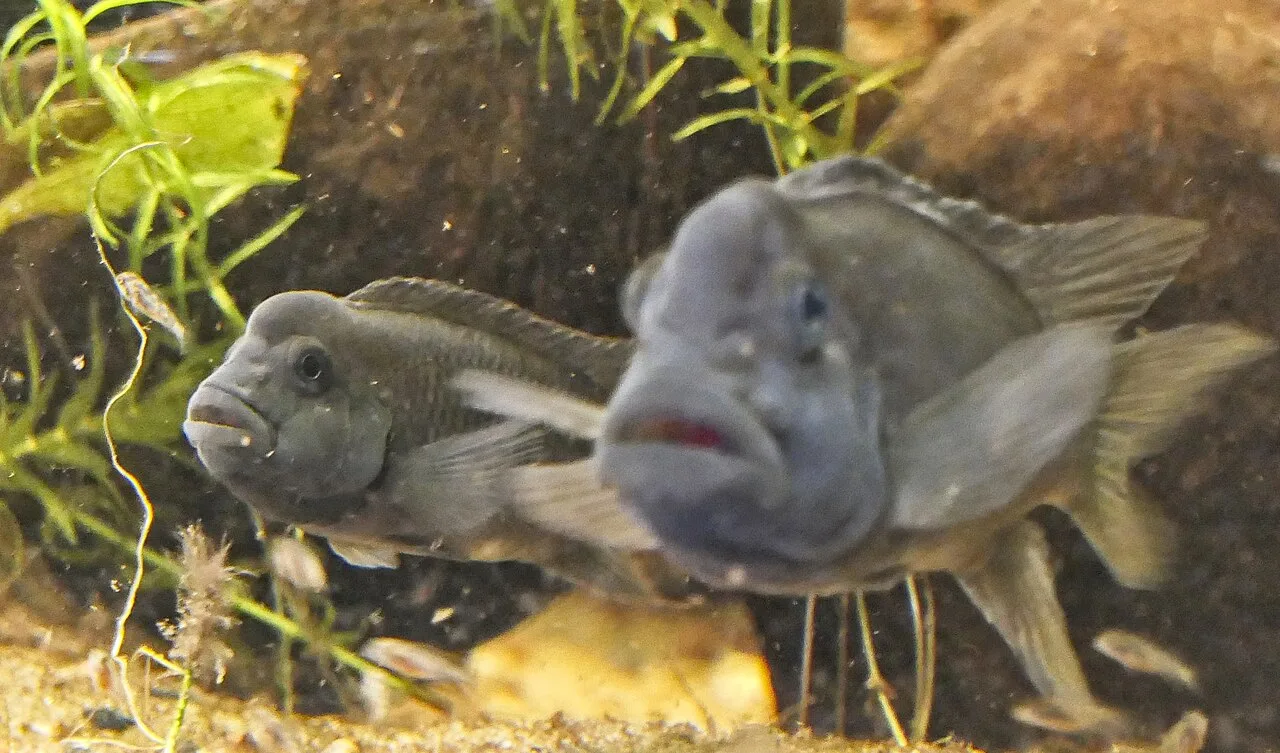
Similar water needs
Species with a similar temperature, a similar pH and a comparable adult size. Whether their behaviour fits as well is what the compatibility check is for.