Banded cichlid
Heros severus
2 views
A large, calm cichlid with an eyespot at the tail base. It lives as a pair and needs a large tank.
- Temperature
- 24 – 29 °C
- pH
- 5 – 7 pH
- General hardness
- 2 – 12 °dH
- Maximum size
- 20 cm
- Minimum tank size
- 300 L
1 min read · 159 words
Quick facts
Place in the aquarium
Highlighted are the water layer and the spots where the species usually stays in the tank.
- Middle water Usually stays in the middle of the tank, between bottom and surface.
- Wood and roots Uses roots as shelter or grazes biofilm from them.
Shrimp in the tank
Not shrimp safe
- Not shrimp safe
- Dwarf shrimp at risk
- Shrimplets at risk
- Shrimp safe
- Adult dwarf shrimp
- At risk
- Shrimplets
- Get eaten
- Safe from shrimp size
- No size is safe
Shrimp are not safe with the banded cichlid. It reaches about 20 cm and eats crustaceans, insects and small fish as well as plants. Dwarf shrimp are eaten straight away, and even Amano shrimp are not safe.
Anyone who wants to keep shrimp keeps them separately. Hiding places help little with a cichlid of this size.
Home & range
Hatched countries are where the species occurs. It lives in particular waters there, not across the whole country. The points name known waters for orientation, not collection sites.
- Country of origin
- Water for orientation
Native
Overview
Heros severus reaches about 20 cm. The body is deep, yellowish green to brownish, with dark bars and an eyespot at the tail base. Males carry a worm-like pattern on the head, and females often a spot in the dorsal fin.
In the trade several Heros species are sold as severum, including Heros efasciatus. Cultivated forms such as the gold severum mostly belong there as well. This profile means severus.
Origin & habitat
This describes the origin, not how to furnish the aquarium.
Rivers in the Orinoco and Rio Negro region. The countries stay a coarse origin. Soft, warm water with wood matches that.
Care
Pair
24 to 29 °C, pH 5 to 7. A pair from about 300 litres and 150 cm. Wood, stones, sturdy plants.
Company
Calm fish of the same size. Small fish are eaten, delicate plants grazed.
Diet
Omnivore with a plant share. Granules, mosquito larvae, mysis, vegetables, spirulina.
Behavior
Calm, territorial when breeding. A pair then defends a larger area.
Reproduction
Open spawner. The parents guard eggs and larvae on wood or stone and lead the young.
Gallery
More species in this group
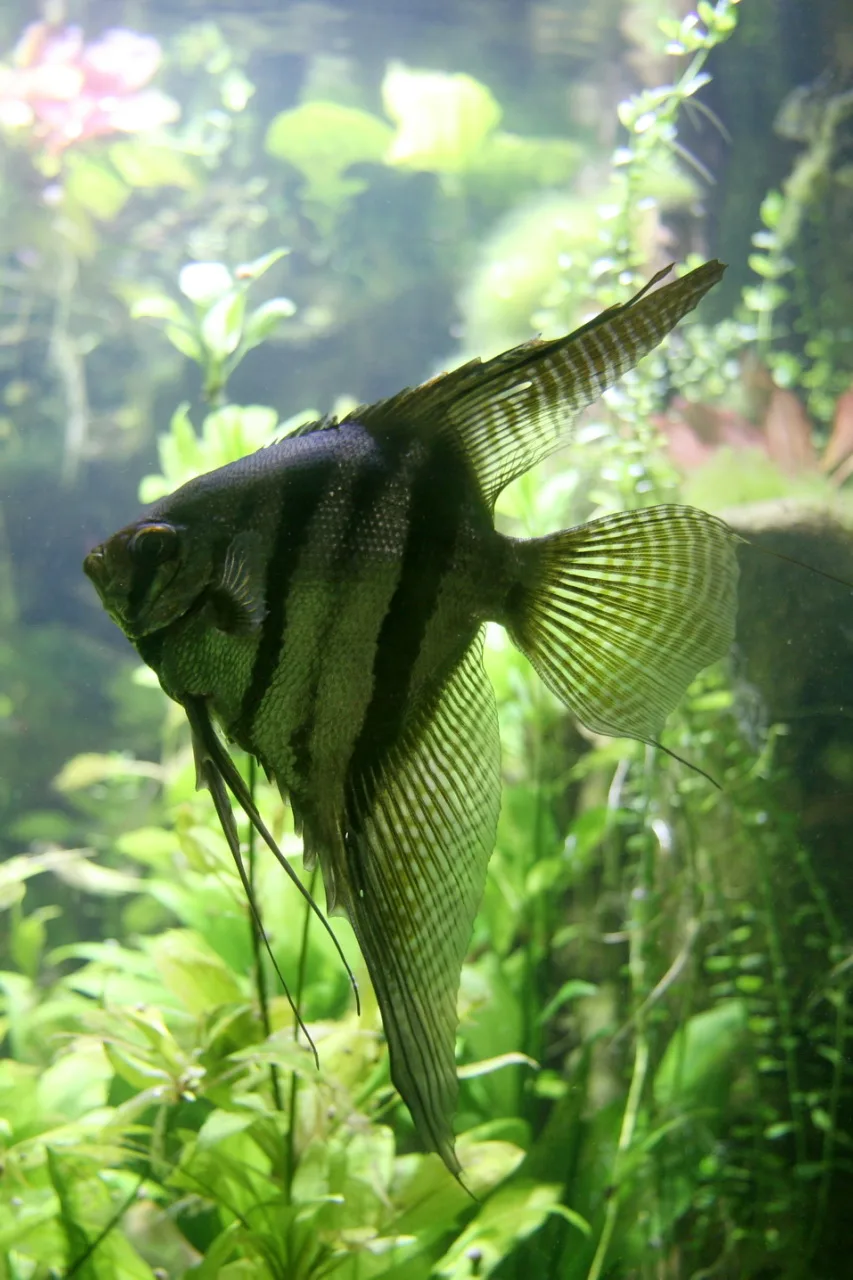
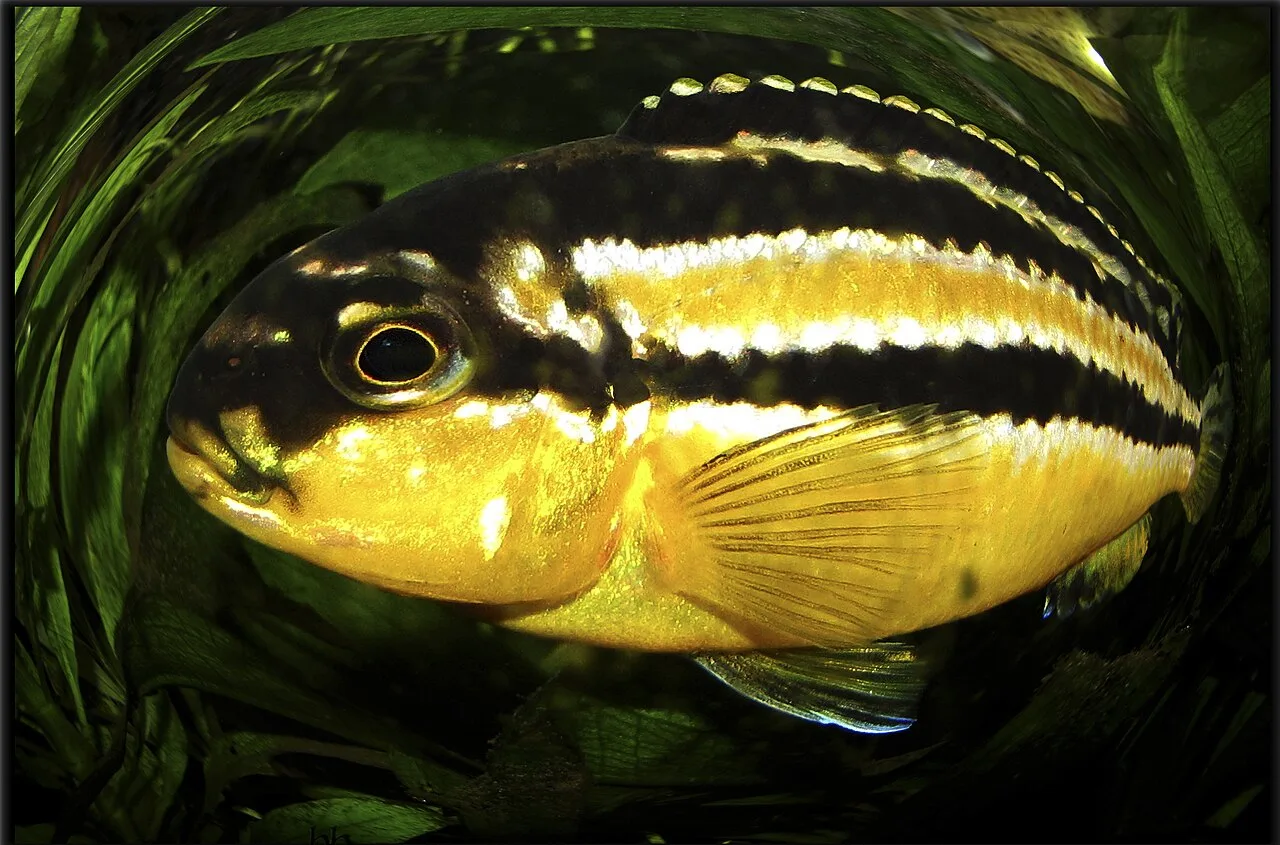

Similar water needs
Species with a similar temperature, a similar pH and a comparable adult size. Whether their behaviour fits as well is what the compatibility check is for.