Upside-down catfish
Synodontis nigriventris
21 views
A squeaker that swims upside down. Males to 9.6 cm. About 25 °C and pH 6 to 7 apply to the waters, not as care values.
- Temperature
- 24 – 26 °C
- pH
- 6 – 7 pH
- General hardness
- 4 – 15 °dH
- Maximum size
- 9.6 cm
- Minimum tank size
- 50 L
3 min read · 442 words
Fresh water
Quick facts
Place in the aquarium
Highlighted are the water layer and the spots where the species usually stays in the tank.
- Middle water Usually stays in the middle of the tank, between bottom and surface.
- Wood and roots Uses roots as shelter or grazes biofilm from them.
Shrimp in the tank
Dwarf shrimp at risk
- Not shrimp safe
- Dwarf shrimp at risk
- Shrimplets at risk
- Shrimp safe
- Adult dwarf shrimp
- At risk
- Shrimplets
- Get eaten
- Safe from shrimp size
- about 4 cm
The upside-down catfish is not safe for dwarf shrimp. It grows to 9.6 cm, is mainly nocturnal and eats small crustaceans, insects and plant matter. At night the catfish search leaf undersides, roots and hiding places where shrimp also sit.
Neocaridina and Caridina are therefore at risk, and their young even more. Larger shrimp such as Amano shrimp from about 4 cm are more likely to be spared. Anyone who wants to breed dwarf shrimp keeps them separately. Anyone who wants to add shrimp should choose robust, larger species and introduce them only once the tank is well run in and densely planted.
Home & range
Hatched countries are where the species occurs. It lives in particular waters there, not across the whole country. The points name known waters for orientation, not collection sites.
- Country of origin
- Water for orientation
Native
Overview
Laterally flattened and deep-bodied. Females fuller in the spawning season.
Features
Males grow to 9.6 cm, and females are fuller, especially when carrying eggs. The body is compressed, deep and scaleless. It carries three pairs of barbels, the lower pair feathered, and the eyes sit close together. The body is light grey to cream with dark brown to black spots that can merge into bands, and the fins are colourless with black dots. The dorsal and pectoral fins each have a strong spine. The dorsal spine is smooth at the front, unlike in other species of the genus.
The belly is dark to black, hence the name nigriventris, black-bellied. This reversed shading fits upside-down swimming: from below the fish is harder to see. Lore Rose David described the species in 1936. The IUCN lists it as least concern.
Origin & habitat
This describes the origin, not how to furnish the aquarium.
Plant-rich banks of larger rivers and swamps of the Congo basin, structured and shaded, about 25 °C, pH 6.0 to 7.0. The Democratic Republic of the Congo stays coarse.
The species lives throughout the Congo basin, in Cameroon, the Democratic Republic of the Congo and the Republic of the Congo. It inhabits structured, shaded waters, plant-rich banks of larger rivers and swamps at about 25 °C and pH 6 to 7.
Care
The water figures stay in the origin text.
The species is often kept and is regarded as well suited because of its small size and peaceful nature. It is, however, also described as sensitive to poor water and white spot disease. The Heidelberg resolutions of the German pet trade association ZZF advise against keeping it.
Diet
In nature the species eats small crustaceans, plant material and insects that fall from bank vegetation. It usually feeds upside down just below the surface or grazes algae from the undersides of leaves. It rarely feeds from the bottom.
Behavior
The fish are mainly nocturnal. Adults swim and rest belly up, and they even swim faster upside down. The more objects nearby, the more often they turn over, and the belly then faces the object. They are rarely seen in open midwater.
Feeding upside down lets the fish reach prey at the surface from below. Another upside-down swimmer, Heterobagrus leucophasis, belongs to a different family, the Bagridae. The ZZF lists all species of the genus on a red list.
Reproduction
Upside-down swimming is the posture that gives the name.
At 25 °C up to 450 eggs were attached in sheltered, dark places. After about a week the larvae hatch, and the yolk sac is used up after about four days. The young first swim normally and turn onto their backs only at about seven weeks. Offspring in aquaria are rare and usually accidental.
More species in this group
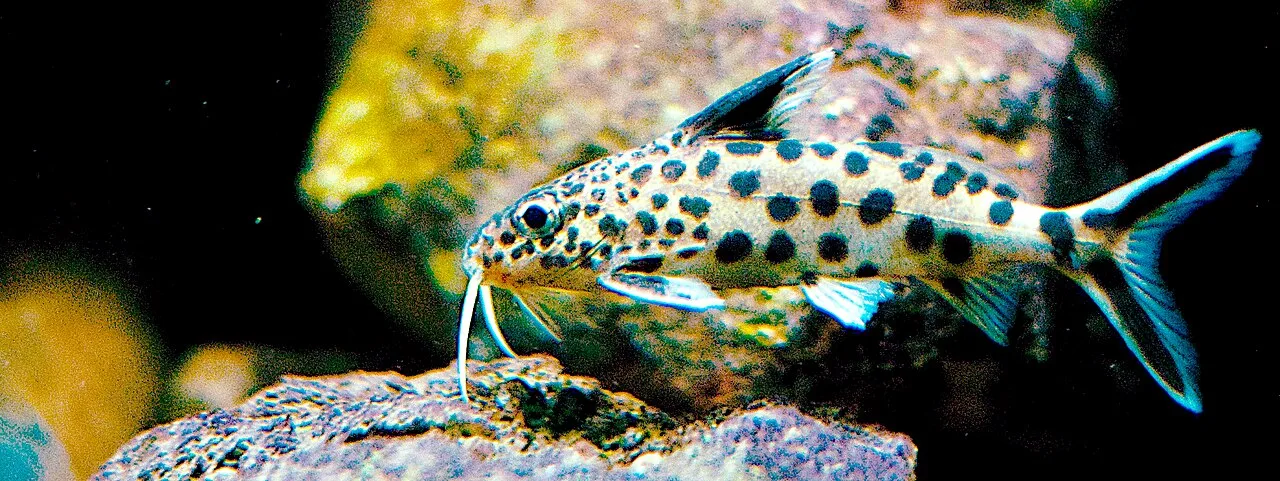
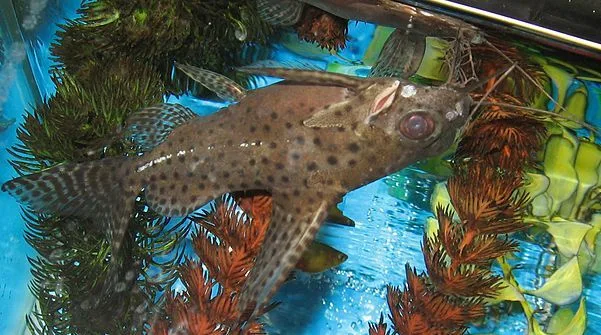
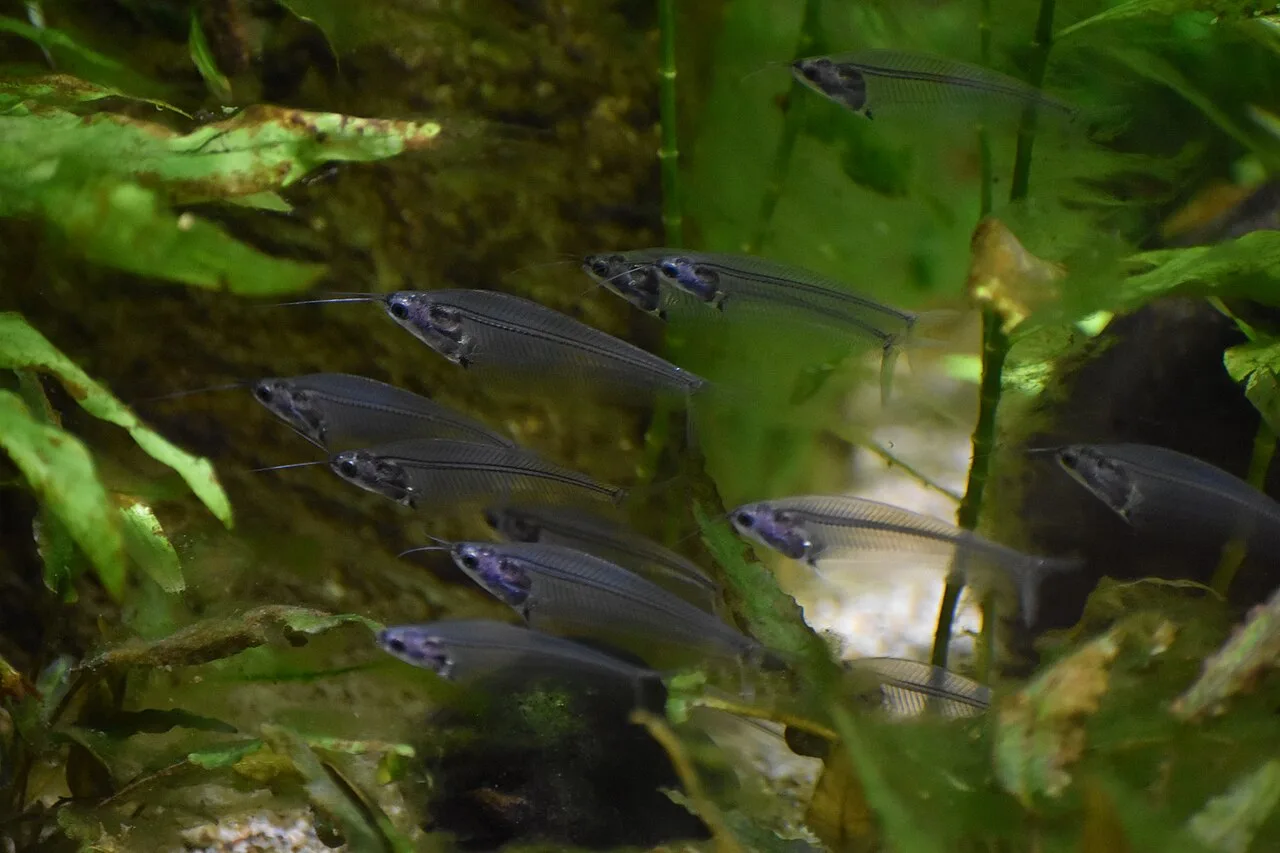
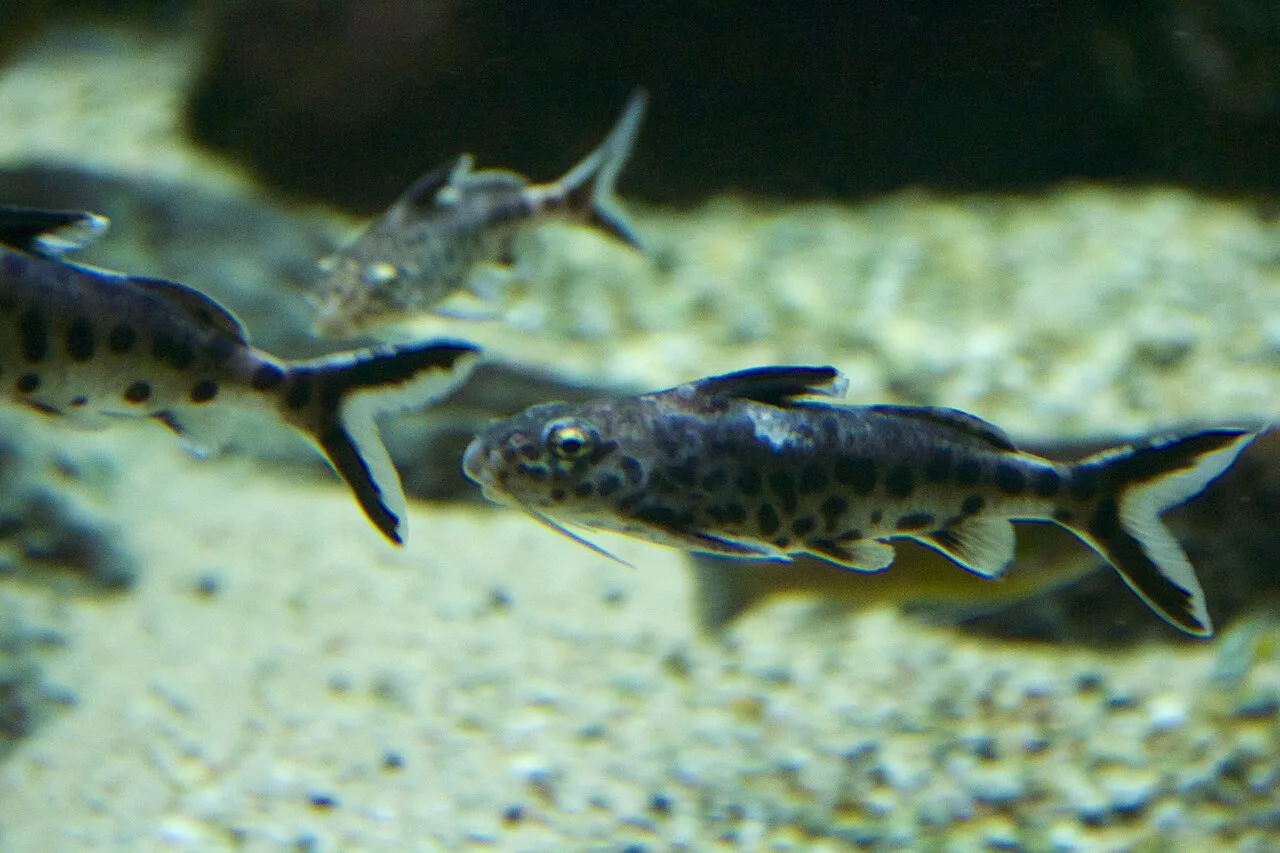
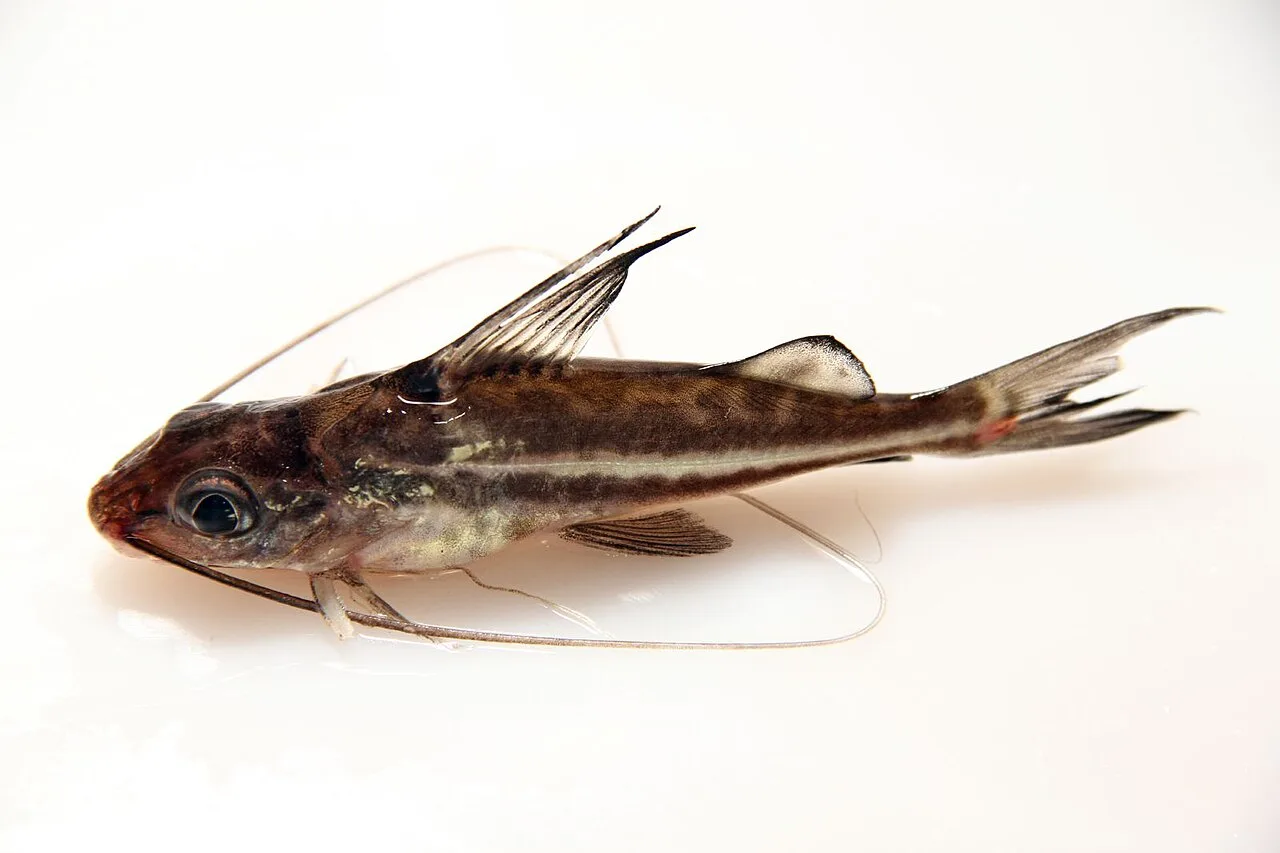

Similar water needs
Species with a similar temperature, a similar pH and a comparable adult size. Whether their behaviour fits as well is what the compatibility check is for.