Cuckoo catfish
Synodontis multipunctatus
25 views
A squeaker from Lake Tanganyika. 12 or 25 cm. No riparian state is named.
- Temperature
- 24 – 26 °C
- pH
- 7.2 – 8.2 pH
- General hardness
- 10 – 20 °dH
- Maximum size
- 25
- Minimum tank size
- 450 L
3 min read · 468 words
Fresh water
Quick facts
Place in the aquarium
Highlighted are the water layer and the spots where the species usually stays in the tank.
- Near the bottom Mostly stays just above the bottom. Food has to reach the substrate.
- Rocks and caves Needs caves, crevices or rockwork as hiding place, territory or spawning site.
Shrimp in the tank
Not shrimp safe
- Not shrimp safe
- Dwarf shrimp at risk
- Shrimplets at risk
- Shrimp safe
- Adult dwarf shrimp
- At risk
- Shrimplets
- Get eaten
- Safe from shrimp size
- No size is safe
The cuckoo catfish eats shrimp and snails. Depending on the account it grows to 12 to 27 cm, mainly eats live food in nature and searches fine sand for food in the aquarium. Because it is active by day and night and forages on the bottom, shrimp find little peace. Dwarf shrimp are eaten, and larger species are not safe from adult fish either. Shrimp do not belong in a tank with this species, and the hard Tanganyika water suits few shrimp anyway.
Home & range
Overview
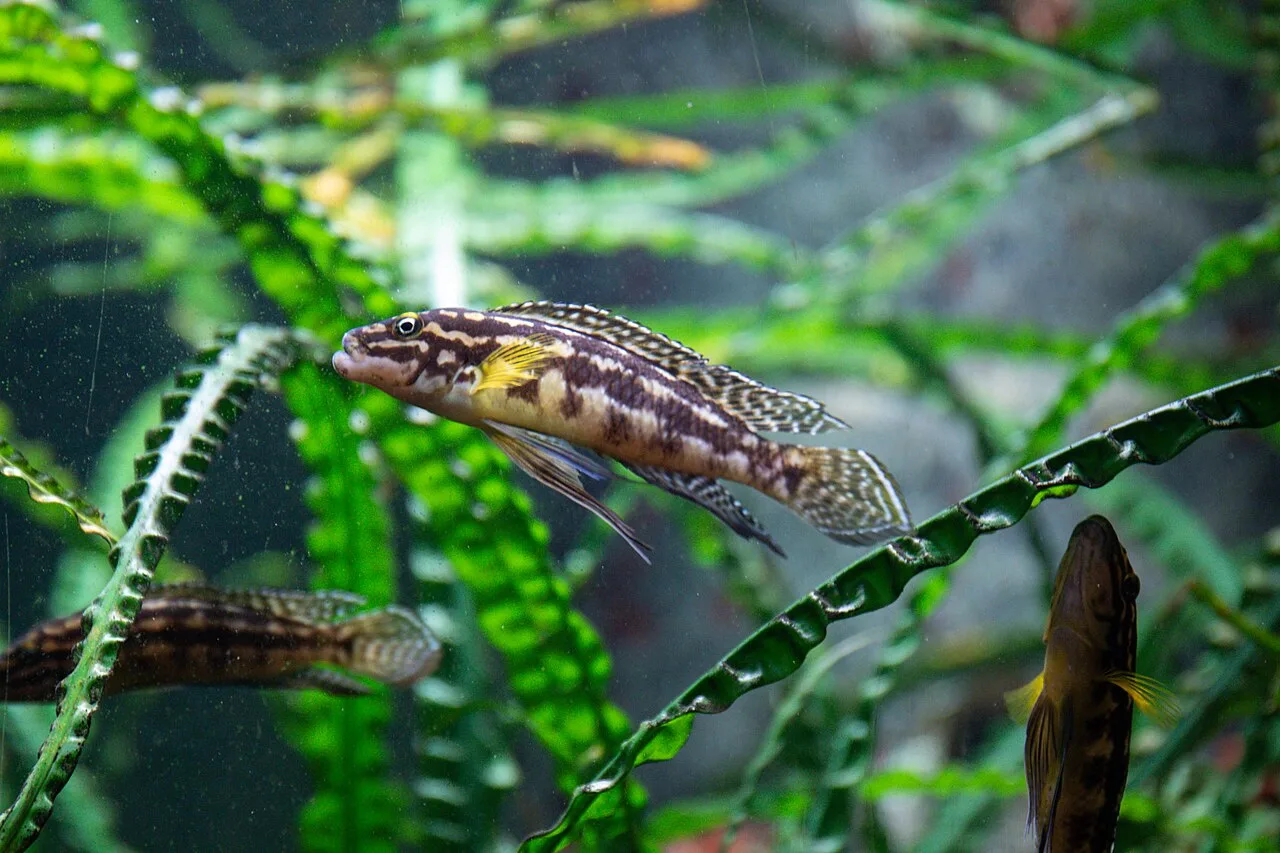
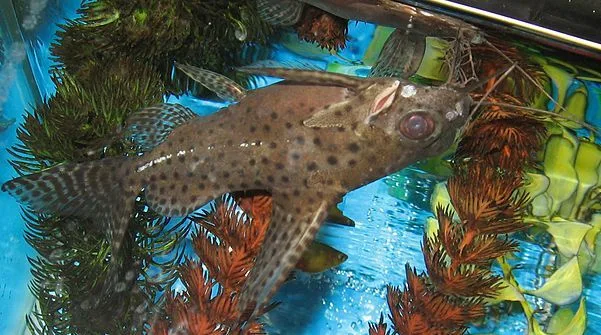
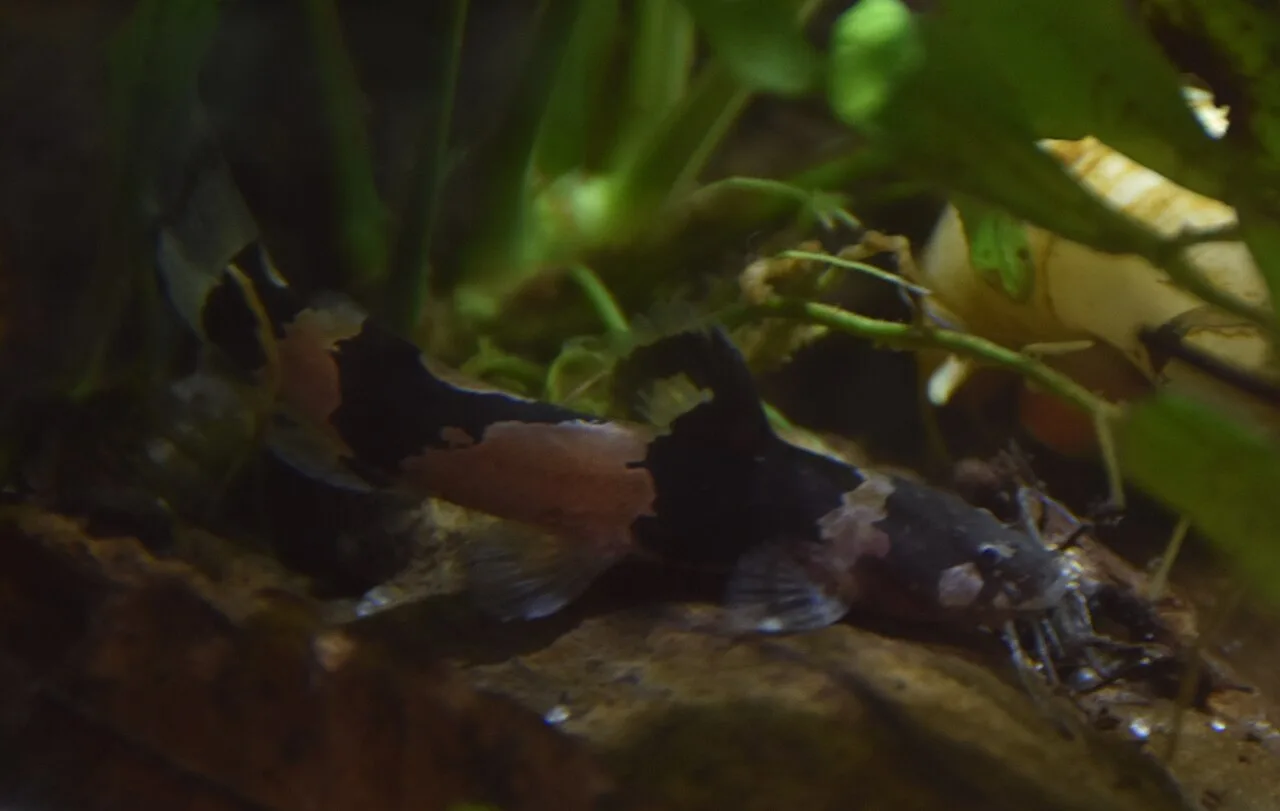
A pale body with large spots. Synodontis grandiops stays smaller and has 7 pectoral rays, this species 8.
Names and features
In German the species is also called multi-spot feather-barbel catfish or multi-spot cuckoo catfish, and in English cuckoo catfish, cuckoo squeaker or multipunk. It belongs to the subfamily Mochokinae in the family Mochokidae. At the base of the pelvic and anal fins the dark triangles are absent or only faint. The fin formula is dorsal II/7, anal III–IV/9–12 and pectoral I/8.
Size figures range from 12 to 27.5 cm total length in the lake, and about 15 cm is given for the aquarium. The species is one of several upside-down catfish in Lake Tanganyika and is closely related to the piscivorous deepwater species Synodontis granulosus. It plays a minor role in local fisheries.
Origin & habitat
This describes the origin, not how to furnish the aquarium.
Lake Tanganyika and tributaries of the Malagarasi, muddy bottom and rubble to 100 m.
The species gathers in large schools at about 40 metres depth.
Care
450 litres for five to eight fish, fine sand, one hiding place per fish. Young fish also in fours or fives in a community tank. 24 to 26 °C, pH 7.2 to 8.2, dGH 10 to 20. Keeping is moderately easy to difficult. Shrimp and snails are eaten.
The cuckoo catfish is a popular addition to cichlid tanks. Towards other Synodontis it can be very aggressive and territorial. Groups of more than three are recommended, so that competition does not focus on two fish, along with enough cover and caves. The catfish are as active by day as by night and quite lively.
Diet
In the wild mainly live food. In the tank frozen food, bloodworms and tablets.
In the lake the species is regarded as a generalist feeder. Synodontis species often eat fish eggs.
Behavior
Older fish become solitary and defend their place.
Reproduction
A brood parasite of mouthbrooding cichlids. The catfish hatch earlier and eat the hosts eggs and larvae. After about two weeks 6 to 15 young leave the mouth. Breeding is described as extremely difficult.
The only known brood parasite among fishes
The species is the only known example of brood parasitism among fishes, comparable to the cuckoo. The main hosts are Ctenochromis horei and Simochromis babaulti. Several adaptations help: large eggs that resemble those of the hosts, small but frequent clutches and fast development compared with other Synodontis. The smell of spawning cichlids attracts the catfish. While the female cichlid collects her eggs, the catfish release and fertilise their own eggs in the middle of the clutch. In the host's mouth the young catfish hatch and eat the cichlid eggs and embryos with well-developed teeth. A study by Blažek and colleagues in 2018 showed that the success of this strategy depends on the shared evolutionary history and the experience of the hosts. In the aquarium breeding has also succeeded with hosts from Lake Malawi and Lake Victoria.
Gallery
More species in this group

Similar water needs
Species with a similar temperature, a similar pH and a comparable adult size. Whether their behaviour fits as well is what the compatibility check is for.